Water at Home · Filters and Treatment
How to Distill Water at Home With a Pot, a Lid and a Cup
The pot-and-lid method Ready.gov gives, what distilling removes that boiling cannot, and when a countertop still pays.
 By the Glubbo Editorial Team · Updated Oct 19, 2026 · 9 min read
On This Page
- How Do You Distill Water at Home?
- How Long Does It Take to Distill Water?
- What Does Distilling Remove That Boiling Does Not?
- What Does Distillation Not Remove?
- Is Home-Distilled Water Safe to Drink?
- Is It Okay to Drink Distilled Water Every Day?
- Does Distilled Water Remove Fluoride?
- Can You Distill Water for a CPAP Machine?
- Is a Countertop Water Distiller Worth It?
- Which Way to Distill Fits Your Situation
- Sources
Short answer
Boil it under an upside-down lid and catch the drips.
- Ready.gov: fill a pot halfway, hang a cup from the lid, boil 20 minutes.
- Distilling removes salts and heavy metals that boiling leaves in.
- It misses chemicals like benzene that boil off with the water.
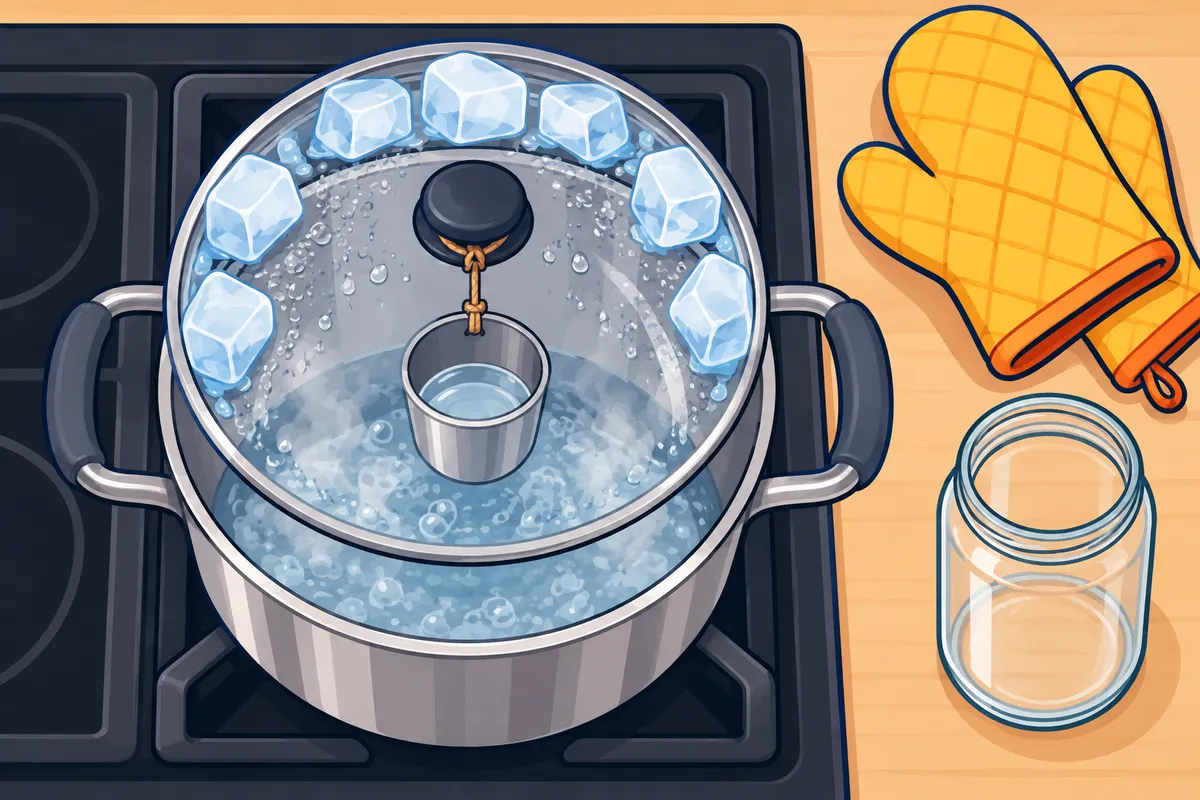
To distill water at home, fill a pot halfway, hang a cup from the lid so it sits above the water when the lid is upside down, and boil for 20 minutes; the water that drips into the cup is distilled. Steam leaves salt, metals and the white crust of hard water behind in the pot, but it carries chemicals with low boiling points along with it.
Distill Water With a Pot, Lid and Cup
- Fill a large pot halfway with water
- Tie a cup to the lid handle so it hangs upright when the lid is upside down
- Put the lid on upside down; the cup must not touch the water
- Boil the water for 20 minutes
- Drink what dripped into the cup; discard what is left in the pot
How Do You Distill Water at Home?
Catch the steam, not the water. Ready.gov gives the method in four sentences: fill a pot halfway, tie a cup to the lid handle so it hangs right side up when the lid is upside down, keep the cup out of the water, and boil for 20 minutes.
The upside-down lid does the work. Its low point sits right over the cup, so steam that cools on the underside runs down to the handle and drips in.
Making the Pot Method Work Better
Four habits decide how much you collect and how clean it stays:
- Use the largest pot you own with a lid that fits it; a domed lid gives the drops a clear low point.
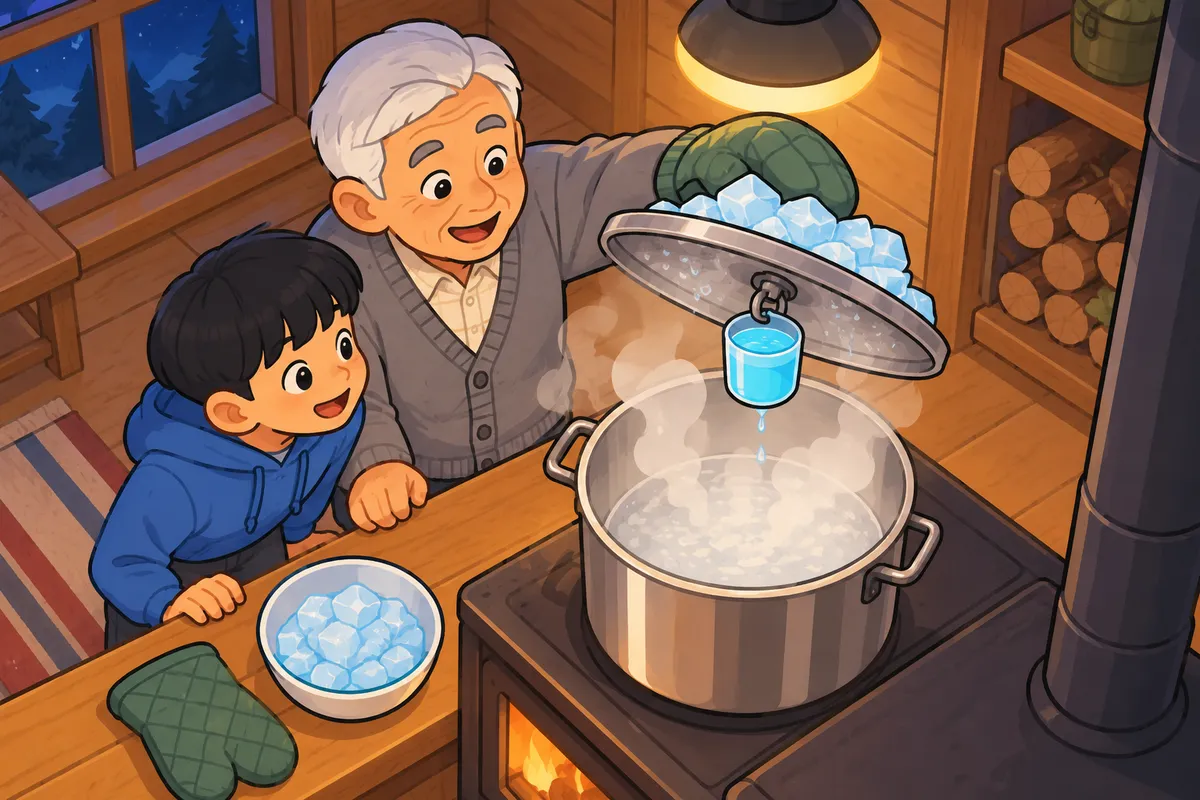
- Pile ice on the upturned lid, because a colder lid turns more steam into drops.
- Keep the boil steady, so splashes from the pot do not jump into the cup.
- Lift the lid with oven mitts and pour the cup out before it cools and drips back.
How Long Does It Take to Distill Water?
The pot method runs 20 minutes per batch, the time Ready.gov gives, and each batch is only as big as the cup. An electric countertop still is faster per gallon but still slow: the University of Nebraska's example unit, at 1,100 watts, takes three hours to distill one gallon.
Penn State gives a similar pace for a typical home unit, about a gallon every four to five hours. Either way, distilling suits a few liters for drinking, not water for a whole house.
- 3 hours
- for one gallon in a 1,100 W home unit
- 3–10 gal
- a day from a typical batch distiller
- 10–15 years
- life of a well-kept unit
What Does Distilling Remove That Boiling Does Not?
Salts, heavy metals and most other chemicals. Ready.gov puts the methods side by side: boiling and chlorine kill microbes but leave heavy metals, salts and most other chemicals in the water, and distillation removes those too.
The reason is where you drink from. After boiling you drink the pot, with everything still in it; after distilling you drink only what left as steam. That is why a long boil raises the lead and nitrate in the pot, while a still leaves them behind.
| In the water | Boiled | Distilled | Why |
|---|---|---|---|
| Germs | Killed | Killed, including germs that resist boiling and chlorine | Microbes cannot ride the steam |
| Lead and other heavy metals | Stay in the pot you drink | Removed | They stay in the boiling chamber |
| Sodium, calcium, magnesium | Stay | Removed | Salts and hardness minerals do not evaporate |
| Nitrate and fluoride | Stay; nitrate gets more concentrated | Removed | They stay in the boiling chamber |
| Benzene, toluene, some solvents | Not reliably removed | Not removed | They boil with the water |
Nebraska Extension puts the share at up to 99.5 percent of impurities, and lists chlorine, chloramines and radionuclides on the removed side too. The CDC's list of what a distiller removes adds arsenic, barium, cadmium and chromium. Nitrate is one reason well owners use stills; Penn State counts distillation among the three treatments that take nitrate out, slow as it is.
What Does Distillation Not Remove?
Chemicals that boil with the water. Nebraska Extension names volatile organic compounds such as benzene and toluene, with boiling points close to or below water's, plus some pesticides and volatile solvents: they turn to vapor with the water and end up in your cup unless another step catches them.
Countertop units handle this in one of three ways:
- Gas vents.
- An activated carbon filter.
- Discarding the first pint (half a liter) of each batch.
A pot and lid has none of those, so water that smells of fuel or solvent is the case where it fails; look for another water source instead.
Is Home-Distilled Water Safe to Drink?
Yes, when the source has no volatile chemicals and the water stays clean after the still. The risk is what touches it next, and two places matter:
- Nebraska Extension warns that bacteria can come back from the outlet spigot of an idle unit.
- The CDC notes that bacteria may grow on a distiller's cooling coils while it is not being used.
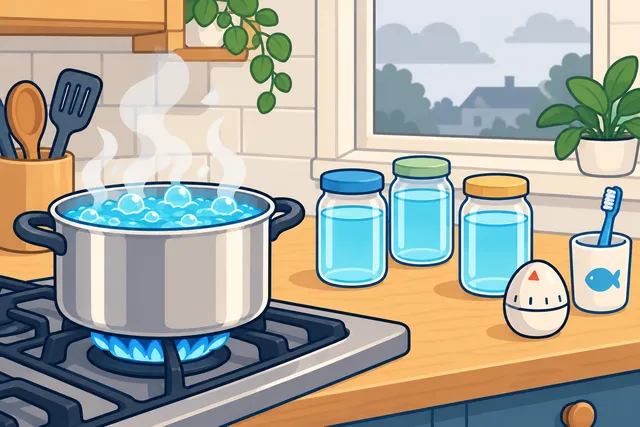
Store it in glass or stainless steel containers, as Nebraska advises. Ready.gov's general rule for water you bottled yourself is to replace it every six months, in food-grade containers you cleaned and sanitized first, and the household emergency supply page covers the rest.
Distilled water tastes flat because the process strips out some oxygen and trace metals, Nebraska Extension says, and that is a taste matter, not a safety problem.
Is It Okay to Drink Distilled Water Every Day?
The question is open. The World Health Organization held an expert meeting in 2003 on the long-term health effects of drinking water that has had its minerals removed, and published it in 2005 as Nutrients in drinking-water; the volume's catalog page describes that scope and states no verdict. Nebraska Extension raises only the flat taste.
For a few days of an outage, none of this matters. If distilled water would be your only drink for months, ask your doctor first.
Does Distilled Water Remove Fluoride?
Yes. Fluoride is a dissolved mineral, and distillation leaves it in the pot along with lead, nitrate and calcium. Penn State lists distillation alongside reverse osmosis and ion exchange as treatments that remove nitrate, and the same chemistry applies to fluoride: it does not evaporate, so it stays behind.
If you live in an area with fluoridated tap water and switch to distilled for a device or a health reason, you lose the fluoride your teeth would have received from the tap. The CDC notes that some home treatment systems remove fluoride, so ask your dentist whether you or your children need a supplement.
Can You Distill Seawater at Home?
The same pot method works on seawater: salt does not evaporate, so what drips into the cup is fresh water. A small cup every 20 minutes is enough for drinking in a coastal emergency, but not for cooking or washing.
Nebraska Extension's figure of 3 to 10 gallons a day from a countertop unit applies to any source water, salt or fresh, though seawater leaves much heavier scale and shortens the unit's life.
Pot, lid and cup
- One cup per 20-minute boil
- No electricity needed
- 5+ hours for one gallon (16 cups)
- No gas vent: volatile chemicals ride the steam
- Good for an outage, not a weekly habit
Countertop distiller
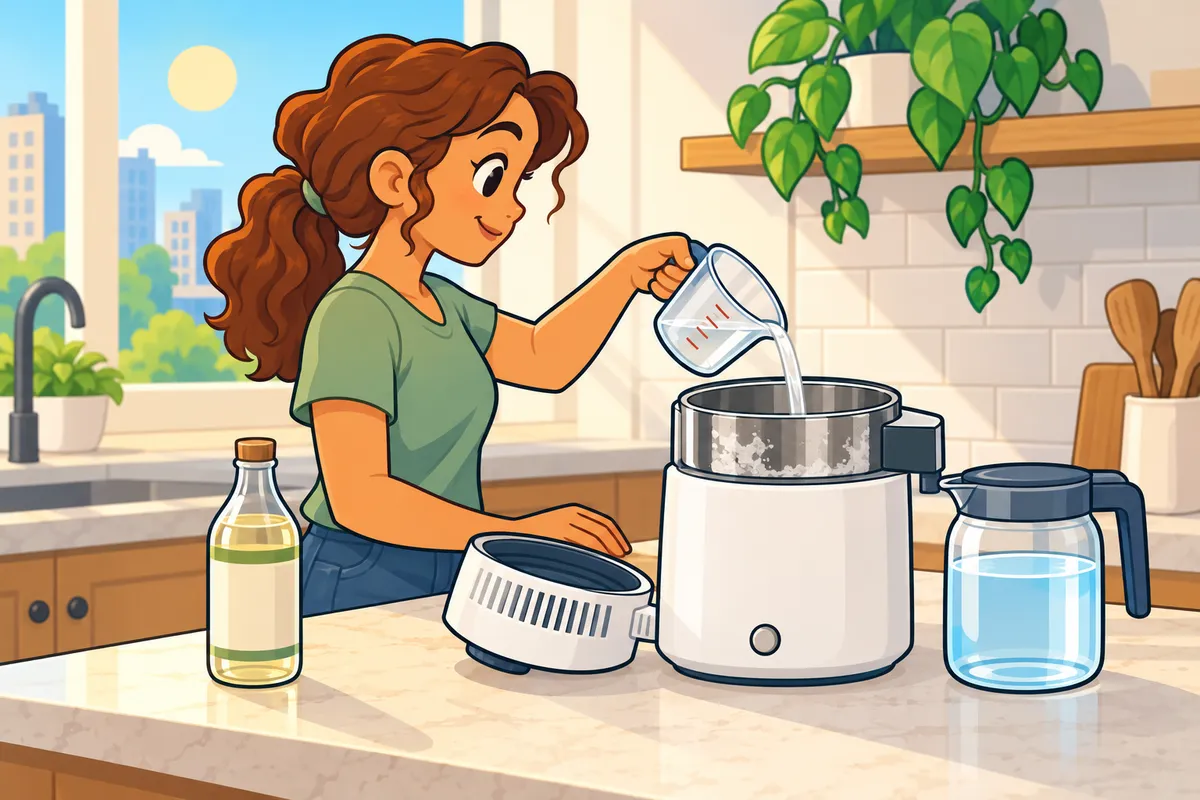
- One gallon in about 3 hours (UNL Extension)
- Uses 1,100 W; 33 cents a gallon at 10 c/kWh
- Gas vent or carbon filter catches volatiles
- 10 to 15 year lifespan with regular descaling
- Good for daily use: CPAP, drinking, formula
Can You Distill Water for a CPAP Machine?
You can make water that counts as distilled, but the Sleep Foundation suggests buying it. Its page on CPAP water, updated in January 2026, names distilled water the top choice because it is free of minerals, says boiled water still holds the minerals it had before, and points to grocery stores, drug stores and CPAP suppliers rather than home distillation.
Manuals differ on which water the tub takes. ResMed's AirSense 11 guide asks for:
- Distilled water in its standard tub.
- Drinking-quality water in its cleanable tub.
So the tub you own decides, and your own manual wins wherever it differs.
A pot gives one cup per 20-minute boil, so filling a tub every night means repeat batches or an electric unit. If you still make your own, keep it in a clean glass or stainless steel container. For a different device in the same bathroom, the bar is higher: a neti pot needs water that is distilled, sterile or freshly boiled.
Is a Countertop Water Distiller Worth It?
Only if you need distilled water every day and accept the power bill. Nebraska Extension calls distillation's running cost among the highest of home drinking water treatments, because electricity is the main cost.
Its example unit uses 1,100 watts for 3 hours, which is 3.3 kWh per gallon, so the cost follows your electricity rate. Penn State puts the energy at about 30 cents a gallon.
| Your rate per kWh | Cost of one gallon | One gallon a day for a year |
|---|---|---|
| 10 cents (Nebraska's example) | 33 cents | about $120 |
| 17 cents | 56 cents | about $205 |
| 30 cents | 99 cents | about $361 |
The CDC lists NSF Standard 62 as the certification for distillation systems, in its guide to choosing home water filters. Nebraska Extension adds that household distillers are not regulated by law and should be listed with Underwriters Laboratories. Units come in stainless steel, aluminum and plastic, and Nebraska's storage advice is glass or stainless steel for the water they make, because plastic can leach trace chemicals into water that has had everything else stripped out.
Care That Keeps a Still Working
Descale the boiling chamber when the mineral line builds up, with a commercial cleaner or a 50 percent vinegar solution; strong mineral acids can damage stainless steel or aluminum. Keep the gas vents clear of scale, replace the carbon filter if the unit has one, and do not leave water sitting in the spout between uses.
Which Way to Distill Fits Your Situation
Match the method to how much distilled water you need and how often.
Your Need, Your Method
- A power cut or a short emergencyPot, lid and cup on the stove
- Distilled water every dayA countertop unit certified to NSF Standard 62
- Water that smells of fuel or solventAnother water source; a still lets those chemicals through
- A CPAP tub or a few liters a month for a deviceA jug sold as distilled
General information for healthy adults, not medical advice. If a doctor has set your fluid amount, follow that.

More in Water at Home

Sources
- Ready.gov (FEMA). Water, 2021.
- University of Nebraska-Lincoln Extension (Dvorak and Skipton). Drinking Water Treatment: Distillation (G1493), 2013.
- US Centers for Disease Control and Prevention. About Home Water Treatment Systems, 2024.
- US Centers for Disease Control and Prevention. About Choosing Home Water Filters, 2024.
- ResMed. A Guide to ResMed AirSense 11 Setup, 2024.
- Penn State Extension (Robillard, Sharpe and Swistock). Nitrates in Drinking Water, 2025.
- Sleep Foundation. Can You Use Purified Water in a CPAP Machine?, 2026.
- World Health Organization. Nutrients in drinking-water, 2005.
Sources checked by the Glubbo Editorial Team on Oct 19, 2026. General information, not medical advice. How we write and check our guides.

