Water at Home · Wells, Storage and Emergencies
What to Do if Well Water Has Coliform Bacteria, Step by Step
What a positive result means, what to drink meanwhile, how bacteria reach a well, and the retest dates that clear it.
 By the Glubbo Editorial Team · Updated Oct 19, 2026 · 10 min read
On This Page
- What Does It Mean if Well Water Has Coliform Bacteria?
- What Is the Difference Between Total Coliform and E. coli?
- What Should You Drink While the Well Tests Positive?
- How Do Coliform Bacteria Get Into a Well?
- What Happens After a Positive Result?
- When Should You Retest a Well After a Positive Result?
- How Much Does Well Water Testing Cost?
- Can Coliform in Well Water Make You Sick?
- Why Does the Well Keep Testing Positive?
- Who to Call This Week
- Sources
Short answer
Stop drinking it untreated, then confirm and fix.
- Drink bottled water, or boil for 1 minute, until the well tests clean.
- E. coli means fecal contamination: stop using the water at once.
- After disinfection, wait 7 to 10 days before the next test.
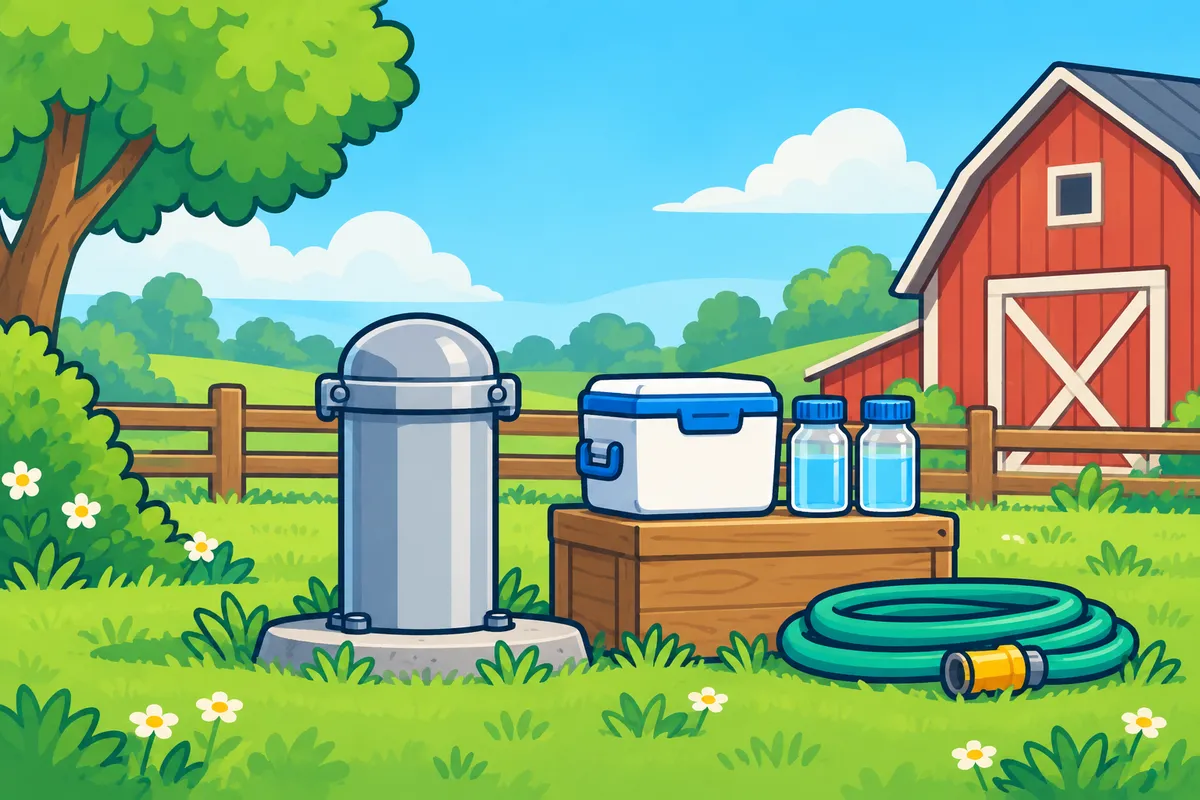
Stop drinking the well water untreated: use bottled water, or boil it at a rolling boil for 1 minute, until a clean retest says otherwise. A coliform result means germs have a path into the well, and the fix is to find that path, close it, disinfect, and prove it with retests days and weeks apart.
On a private well, the EPA notes that the federal government does not regulate your water, and more than 43 million people in the US rely on a well like it. So the next steps are yours, and the usual causes sit at the top of the well, in the cap and the casing.
Total Coliform Only
- Bacteria common in soil and on plants
- A warning that germs can get in
- Confirm with a second sample, boil or buy water meanwhile
E. coli Found
- Bacteria from the gut of warm-blooded animals
- Fecal contamination of the water
- Stop drinking it untreated, today
What Does It Mean if Well Water Has Coliform Bacteria?
It means a path exists for germs to reach your water. The CDC explains that coliforms usually do not make people sick, but a high count suggests that harmful germs, including some viruses, bacteria and parasites, may be there too.
The Minnesota Department of Health puts it the same way: most coliforms do not cause disease, but their presence suggests disease-causing organisms may be in your water. A positive test is a warning about the well, and the well is what you fix.
What the Lab Words Mean
Wisconsin labs report bacteria as "safe", "at risk" or "unsafe". In Wisconsin's guidance, "safe" means no total coliform turned up and you can be reasonably sure the water is bacteriologically safe; "at risk" or "unsafe" means total coliform or E. coli did, and you should not drink the water untreated.
| What the lab reports | What it means | What you do |
|---|---|---|
| Safe, no total coliform | Reasonably sure the water is bacteriologically safe | Keep testing every year |
| At risk or unsafe, total coliform | A path exists for germs to reach the well | Boil or buy water, take a second sample |
| Unsafe, E. coli or fecal coliform | Fecal contamination of the water | Stop drinking it untreated, fix the well now |
| Positive again after disinfection | The cause is still there | Disinfect again, call your health department |
A clean bacteria result covers bacteria only. It does not mean the water is free of chemicals such as nitrate or pesticides, which is why nitrate and pH sit beside bacteria in the four yearly tests for every well: total coliform, nitrate, total dissolved solids and pH.
What Is the Difference Between Total Coliform and E. coli?
Total coliform is a broad group that lives in soil, on plants and in surface water; E. coli is one kind that lives in the gut of warm-blooded animals. Wisconsin says E. coli indicates fecal contamination and represents a serious problem.
Its advice on E. coli is blunt: stop consuming the water and deal with the problem immediately. Many labs now test for both, so one bottle gives you both answers. A general E. coli test cannot show whether a dangerous strain is present, so ask your health department if you suspect one.
What Should You Drink While the Well Tests Positive?
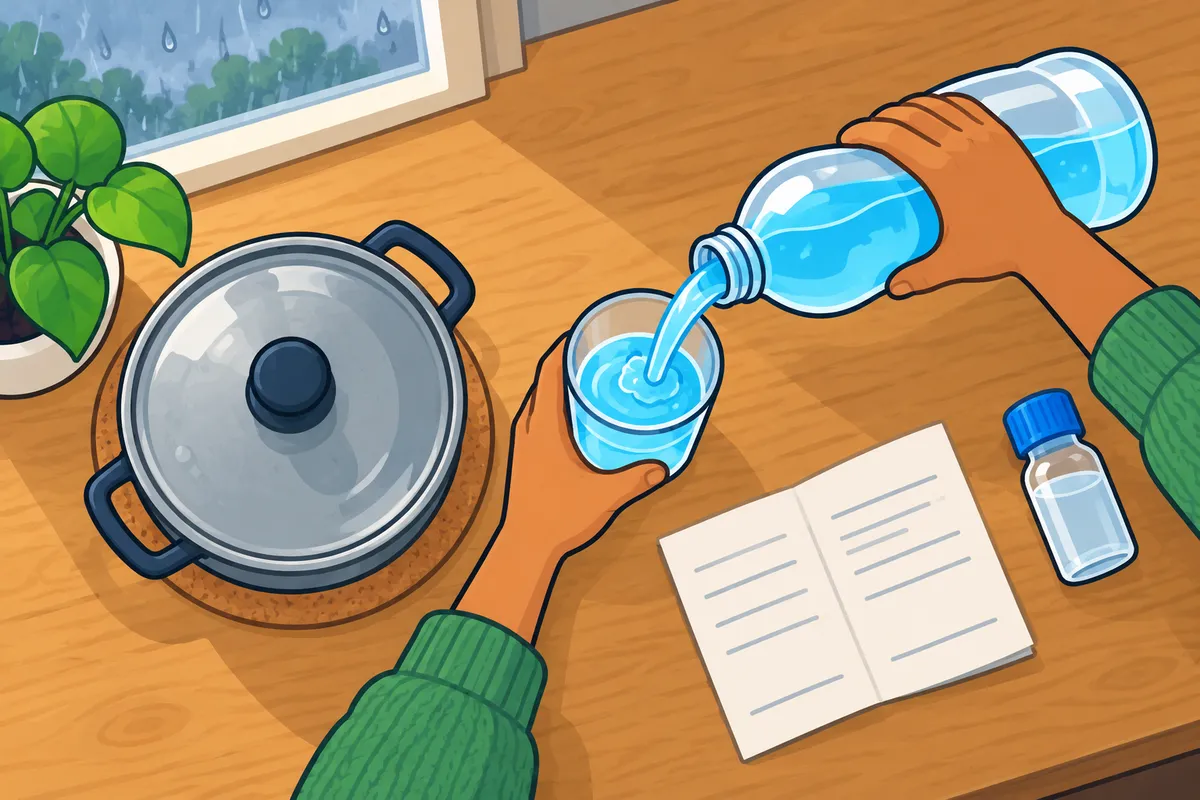
Bottled water, or well water brought to a rolling boil for 1 minute. Wisconsin says not to drink or cook with water reported "at risk" or "unsafe" unless you boil it for at least one minute.
Use it for brushing teeth, washing produce and making ice too, the same kitchen routine as a city boil notice. Minnesota says you can stop boiling once the well is disinfected and no longer tests positive.
When Boiling Is the Wrong Fix
Boiling kills germs but concentrates what stays behind. Minnesota warns not to boil if nitrate or arsenic also turned up in your test, and Wisconsin notes that long boiling can raise nitrate, which makes the water more hazardous for babies.
If the water smells of fuel or chemicals, boiling will not make it safe; drink bottled water and call your health department.
How Do Coliform Bacteria Get Into a Well?
Through an opening at the top, a crack in the casing, or ground that does not filter well. Most bacteria get filtered out as rain and snowmelt soak through soil, Wisconsin explains, but some reach groundwater through coarse soil, fractured rock, sinkholes or a poorly grouted well, and insects or small rodents can carry them past a bad cap.
Where Bacteria Get Into a Well
6 items- A well cap that is loose, broken, missing or not vermin-proof
- Cracks, holes or corrosion in the upper well casing
- A casing that ends in a pit or basement that floods
- A septic system, animal yard or sewer too close to the well
- Pump or pipe work done without disinfecting the parts
- A cross-connection between plumbing and the septic system
The EPA names the same sources from the other side: runoff from rain or snowmelt can wash germs into a well, and septic leach fields, manure piles and manure spreading can reach the water a well draws from.

Walk the Wellhead Before You Call Anyone
Look at the ground first. Soil that has settled into a dip around the casing pools water against it, and Mississippi State's extension service adds that runoff should never reach the well, so check which way the yard slopes.
Then widen the circle. Wisconsin lists abandoned or badly sealed old wells, landfills, sinkholes, quarries and bedrock outcroppings as possible sources, farther out than the septic tank or animal yard most owners think of.
What Happens After a Positive Result?
Confirm it, fix the cause, disinfect, and retest. Wisconsin's first step is a second sample, because a careless first sample can turn positive on its own; if that one is also positive, you boil or buy water and inspect the well. Disinfecting a well, known as shock chlorination, means filling the well and plumbing with a strong chlorine solution for at least 12 hours, the CDC says, and then flushing it out.
Wisconsin and federal guidance recommend a licensed well or pump contractor, because of the electrical and chlorine hazards.
How to Collect the Second Sample
Collect it the way the lab's kit says, and ask the lab to test specifically for total coliform and E. coli. Mississippi State's extension service adds the details that matter at the faucet:
Taking the Retest Sample
- Take the aerator, filter or hose off the faucet first
- Pick the faucet closest to the well, or a different one than last time
- Wash your hands; never touch the inside of the bottle or its cap
- Close it and return it to the lab the way the kit says
If a certified lab is hard to find, the CDC points to your state laboratory certification officer, and the EPA Safe Drinking Water Hotline at 800-426-4791 can also help.
When Should You Retest a Well After a Positive Result?
Wait at least 7 to 10 days after disinfection, so the chlorine has time to flush out and cannot hide bacteria. The CDC then asks for a test in 2 to 4 weeks and again in 3 to 4 months; Wisconsin's own advice is to resample about a week after the flush.
| Test | When | Why |
|---|---|---|
| First retest | 7 to 10 days after disinfection | Chlorine must be gone or the test reads falsely clean |
| Second retest | 2 to 4 weeks after that | Bacteria can return if the fix missed the cause |
| Third retest | 3 to 4 months after that | Covers a change of season |
| Ongoing | At least twice a year after an emergency disinfection | Wisconsin calls early spring and late summer the times wells are most likely unsafe |
What Else Calls for a Test
Any change to the well. The CDC lists:
- A repair or replacement of part of the system
- Flooding
- Land disturbance or waste disposal nearby
- A change in taste, color or smell
- A notice about well problems in your area
- A pregnancy in the home, or a child starting to live with you
Wisconsin adds installing a pump or opening the well for repair.
Should You Disinfect the Well Every Year?
Experts disagree:
- Mississippi State's extension recommends disinfecting once per year, and says you do not have to wait for bacteria to show up.
- Wisconsin tells owners not to chlorinate as regular maintenance unless problems keep returning, because it can plug the pump with sediment or damage the pump and other parts.
Wisconsin also has a caution for part of the state: in the arsenic areas of the northeast, strong chlorine left in the well can release arsenic from the rock, so owners there use a lower concentration and a contractor.
How Much Does Well Water Testing Cost?
A basic coliform and E. coli test costs about $20 to $50 at most state-certified labs, as of 19 October 2026. Adding nitrate, pH and total dissolved solids, the four tests the EPA recommends yearly, typically runs $100 to $150 in total. Some county health departments offer free or reduced-price kits during a well testing drive, usually in spring.
Results take 2 to 5 business days for a standard coliform test, though some labs offer next-day service at a higher price. Ask for the turnaround time when you pick up the kit, because you are boiling your water until the result comes back.
Can You Shower or Bathe With Coliform Water?
For total coliform without E. coli, bathing and showering are generally safe for healthy adults, because skin blocks the bacteria. Wisconsin's guidance focuses on not drinking, cooking with or brushing teeth with the water.
With E. coli, keep the water out of your mouth, eyes and any open wound, and supervise small children in the bath so they do not swallow any. For babies, boil the bath water and let it cool, or use bottled water, until the well tests clean.
Can Coliform in Well Water Make You Sick?
The coliforms themselves rarely do; the germs that travel with them can. Minnesota lists diarrhea, vomiting, cramps, nausea, headaches, fever and fatigue among the symptoms, and notes that babies, children, older adults and people with weakened immune systems are more likely to become seriously ill.
Why Does the Well Keep Testing Positive?
Because the cause is still there. When disinfection does not hold, Minnesota says to work with a licensed contractor, who may need to bail debris out of the well or build a new one, and the CDC asks you to involve your local health department if bacteria persist.
Some wells cannot be repaired. Casings that end in a flooding pit or basement, badly corroded casings and old "stove-pipe" casings are on the same Wisconsin list. For a shallow well near surface water, the Mississippi State guide names a second route: treat the water with distillation, ozone, ultraviolet (UV) light or continuous chlorination, or drill deeper, or connect to a community water system.
Who to Call This Week
Four contacts cover almost every case.
| Who | What they do |
|---|---|
| Certified lab (find one through your state laboratory certification officer) | Sends the kit, tests for total coliform and E. coli |
| Local or state health department, or an agriculture extension agent | Advice on disinfection and sampling; the next call if bacteria persist |
| Licensed well or pump contractor | Inspects the cap and casing, disinfects the well safely |
| EPA Safe Drinking Water Hotline, 800-426-4791 | Directs you to the right local office |
General information for healthy adults, not medical advice. If a doctor has set your fluid amount, follow that.

More in Water at Home
Sources
- CDC. How to Disinfect Wells After an Emergency, 2024.
- CDC. Guidelines for Testing Well Water, 2024.
- Minnesota Department of Health. Bacteria in Well Water, 2025.
- Wisconsin Department of Natural Resources. Bacteriological Contamination of Drinking Water Wells (PUB-DG-003), 2017.
- US Environmental Protection Agency. Potential Well Water Contaminants and Their Impacts, 2026.
- US Environmental Protection Agency. Private Drinking Water Wells, 2026.
- Mississippi State University Extension. What to Do about Coliform Bacteria in Well Water (P3078), 2023.
Sources checked by the Glubbo Editorial Team on Oct 19, 2026. General information, not medical advice. How we write and check our guides.

