Outdoors and Travel · Water on the Trail
How Long to Boil Water to Purify It, at Sea Level and Up High
One minute at a rolling boil, three minutes up high, and why the old 10-minute rule is gone.
 By the Glubbo Editorial Team · Updated Oct 19, 2026 · 8 min read
On This Page
- How Long Do You Boil Water to Purify It?
- How Long Should You Boil Water at High Altitude?
- Do You Need to Boil Water for 10 Minutes?
- What Does a Rolling Boil Look Like?
- How Do You Purify Water by Heat When Fuel Is Low?
- Can You Use Hot Tap Water Instead of Boiling?
- Is Boiling Better Than a Filter or Tablets?
- What Does Boiling Not Remove From Water?
- How to Store and Improve Boiled Water
- Write the Boil Time on the Pot Lid Before You Leave
- Sources
Short answer
One minute at a rolling boil; three above 6,500 ft.
- CDC: 1 minute at a rolling boil kills viruses, bacteria and parasites.
- Above 6,500 ft the CDC asks for 3 minutes; the EPA starts at 5,000 ft.
- Low on fuel: bring it to a simmer, then keep it covered for 30 minutes.
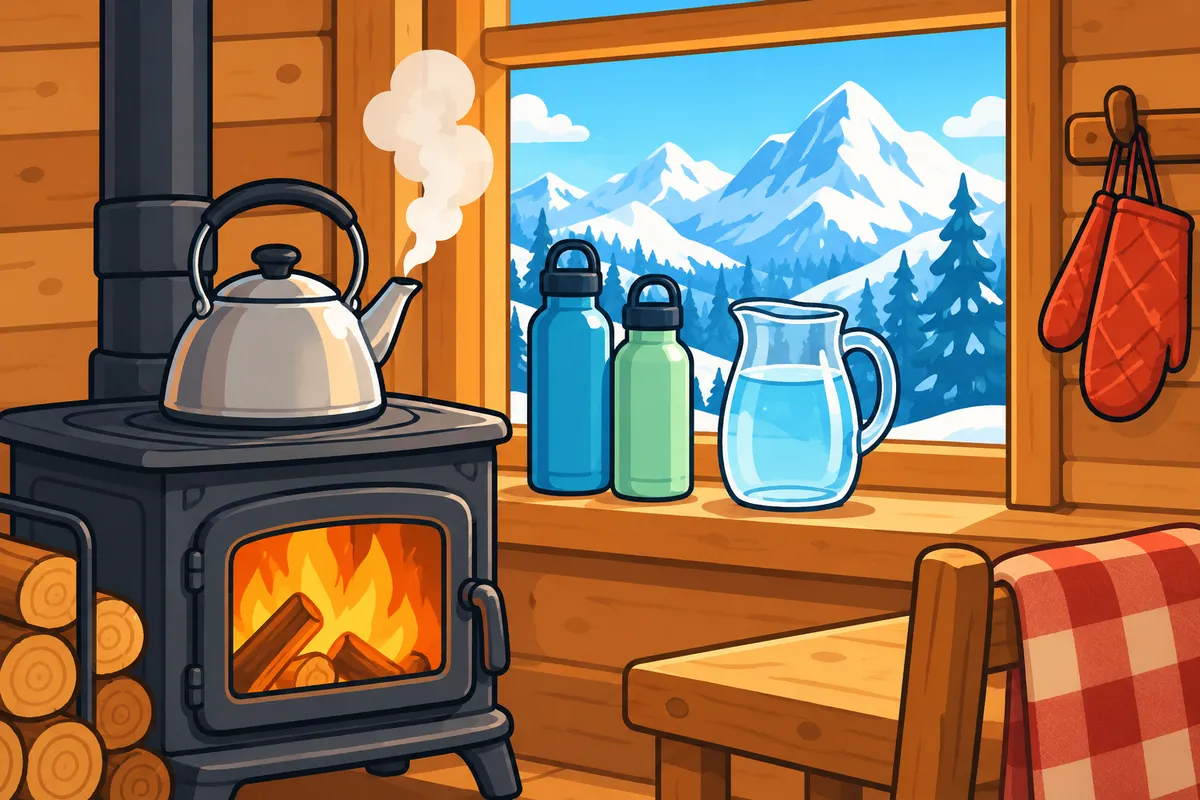
Boil clear water at a rolling boil for 1 minute, and for 3 minutes above 6,500 feet. Most people boil camp water far longer than that, which burns fuel and makes them wait twice as long for the pot to cool.
The rule is short. Altitude is what makes it look complicated, because three trusted sources put the line in three different places.
How Long Do You Boil Water to Purify It?
One minute at a rolling boil. The CDC calls boiling the best way to kill the germs that make you sick. Start the minute only once big bubbles roll across the whole pot, then let the water cool before you drink it.
- 1 min
- at a rolling boil, the CDC and EPA rule below 5,000 ft
- 60 °C
- the heat above which gut germs die quickly (WMS)
- 30 min
- covered hold after a simmer when fuel is short
The World Health Organization puts it even more simply: heating water to a rolling boil is enough to inactivate harmful bacteria, viruses and protozoa. The CDC Yellow Book explains why the rule says a full minute: it covers the variation in how people judge that water is boiling, and adds a margin of safety.
How Long Should You Boil Water at High Altitude?
Three minutes once you are high up. The CDC sets that line at 6,500 feet (about 1,980 m), while the EPA sets it lower, at 5,000 feet (1,000 meters on its own page). The Wilderness Medical Society says one minute is enough at any height.
| Campsite height | CDC | EPA | Wilderness Medical Society |
|---|---|---|---|
| Below 5,000 ft (1,524 m) | 1 minute | At least 1 minute | 1 minute |
| 5,000 to 6,500 ft | 1 minute | 3 minutes | 1 minute |
| Above 6,500 ft (1,980 m) | 3 minutes | 3 minutes | 1 minute |
Each answer has a reason. The CDC and EPA add minutes as a margin, and the WMS reasons from how fast germs die at the lower boiling point.
Why Water Boils Cooler Up High
Air pressure drops as you climb, so water boils at a lower temperature. The WMS guideline lists the boiling point at each height.
Even at 19,000 feet, water boils at 81 °C (178 °F). That is well above the 60 °C at which the WMS says gut germs die quickly, which is why its authors call the drop in boiling point insignificant next to the time germs need. The CDC Yellow Book gives a similar figure of about 83 °C (182 °F) at 16,000 feet.
Which Rule Should You Follow?
Follow the CDC at most campsites. Below 5,000 feet, every source agrees on one minute; above 6,500 feet, the CDC and EPA both say three.
Only between 5,000 and 6,500 feet do the rules split, and there two extra minutes cost little fuel. Short on fuel high up, lean on the WMS reading and the low-fuel method further down. If you are heading high for days, the water you drink at altitude needs its own plan too.
Do You Need to Boil Water for 10 Minutes?
No. The WMS calls the old advice to boil for 10 minutes obsolete: enteric germs, the ones that cause stomach illness, die within seconds at boiling and quickly at any temperature above 60 °C (140 °F).
Longer boiling costs you twice:
- It burns fuel you may need tomorrow.
- It boils off water you carried, so a pot boiled hard for ten minutes ends up with less water in it.
One minute is the whole job.
What Does a Rolling Boil Look Like?
Large bubbles rise from the bottom and break across the whole surface, and they keep coming when you stir.
Tiny bubbles clinging to the pot's sides do not count: that is the stage just before a simmer, and the clock has not started yet.
Boiling Camp Water, Start to Finish
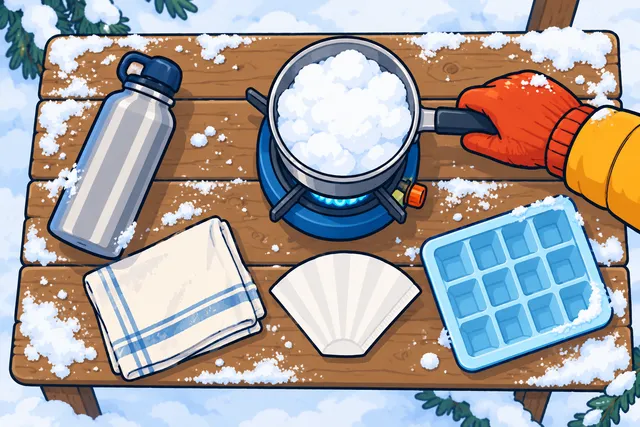
- Pour cloudy water through a cloth first, or let it settle
- Heat until big bubbles roll across the whole pot
- Count 1 minute, or 3 minutes above 6,500 ft
- Lid on, let it cool before you drink
- Pour into a clean bottle with a tight lid
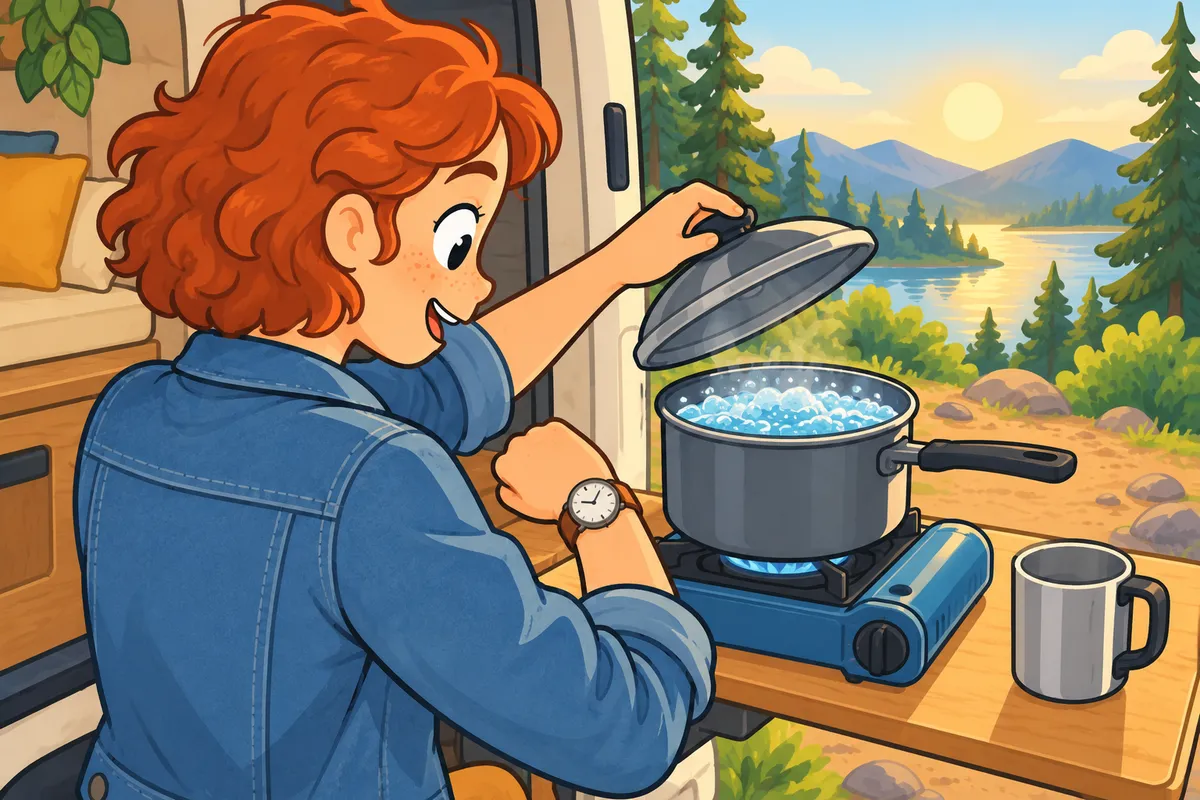
How Do You Purify Water by Heat When Fuel Is Low?
Bring it to the first sign of a simmer, small bubbles rising from the bottom, then take the pot off the stove or turn the flame down and keep the lid on for 30 minutes. The WMS and the CDC Yellow Book both describe this method, and the Yellow Book notes that heat as low as 60 °C works with a 30-minute hold.
It works because killing germs is about temperature and time together. A covered pot holds its heat long after the stove goes off, so you trade a few minutes of fuel for half an hour of waiting.
A thick pot and a windscreen help it stay hot. In freezing wind a thin pot cools fast, so boil the full minute instead. With no fuel at all, the Yellow Book says a reflective solar oven can reach about 65 °C (150 °F) in hot, sunny weather, which falls inside the 60 to 70 °C pasteurization range.
Can You Use Hot Tap Water Instead of Boiling?
Not for drinking. The CDC Yellow Book warns that hot tap water can carry higher levels of metals such as copper and lead than cold, so it should not go in a pot for tea or oatmeal either.
The WMS allows one narrow exception: water that has sat in a water heater for at least 30 minutes and is too hot to keep a finger in for 5 seconds, roughly 55 to 65 °C. It calls that a weak recommendation for short periods when nothing else works, and it warns against making it a habit because of the metals that dissolve at high temperatures.
A kettle or pot on the stove is the safer route.
Is Boiling Better Than a Filter or Tablets?
For killing germs, yes. The CDC ranks boiling first, and filtering then disinfecting the filtered water second.
| What you use | Parasites (Giardia, Crypto) | Bacteria | Viruses |
|---|---|---|---|
| Boiling | Killed | Killed | Killed |
| Filter, pore size 1 micron or smaller | Removed | Not all | Not removed |
| Filter, pore size 0.3 micron or smaller | Removed | Removed | Not removed |
| Reverse osmosis filter | Removed | Removed | Removed |
| Chlorine or iodine tablets | Cryptosporidium survives | Killed | Killed |
A filter wins on other grounds: it clears cloudy water without fuel, and a cartridge keeps working when the canister runs out. Pair it with a disinfectant and you have the CDC's second-best method.
What Does Boiling Not Remove From Water?
Boiling kills germs and nothing else. The EPA says it does not remove heavy metals, salts or most chemicals, and the CDC adds that water with fuel, toxins or radioactive material cannot be made safe this way.
Boiling Leaves These Behind
4 items- Lead and other heavy metals
- Salt: boiled seawater is still seawater
- Most chemicals, fuel and toxins
- Silt and mud, which you strain out first
So boiling is the right tool for a clear mountain lake and the wrong one for a creek below a mine or a flooded road with a fuel sheen. For those, find another source, the same rule the CDC sets for water after a flood or storm at home.
How to Store and Improve Boiled Water
Let it cool with the lid on, then pour it into a clean bottle or jug with a tight cap. The WMS points out that boiling gives no residual protection during storage, so keep the water covered and away from dirty hands and cups.
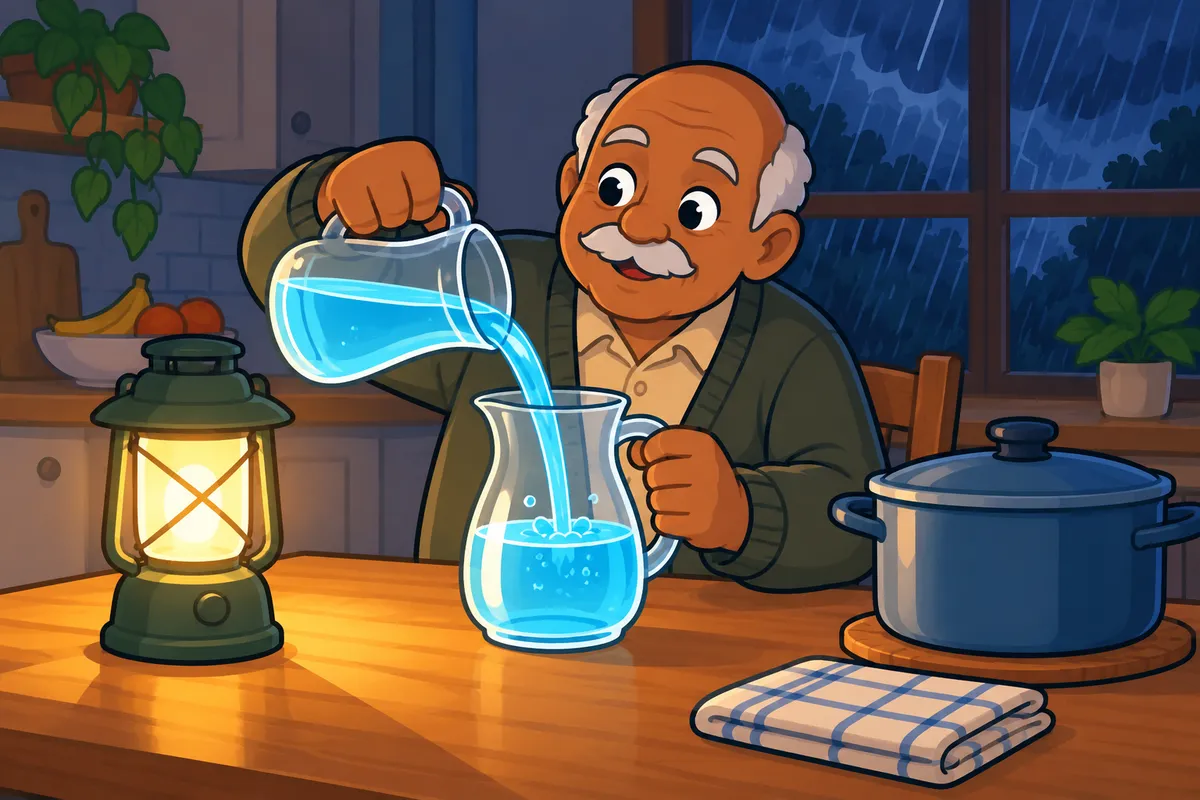
Boiled water tastes flat because the air has been driven out. The EPA suggests pouring it back and forth between two clean containers, or adding a pinch of salt per quart or liter.
Boiling also works at home when the power is out and the tap is suspect. Ready.gov asks for one full minute at a rolling boil there too, allowing for some water to boil away.
A Meadow and a Climbing Camp
Write the Boil Time on the Pot Lid Before You Leave
Look up the elevation of your highest campsite on the map and write the minutes on a strip of tape on the lid:
- 1 minute below 5,000 feet.
- 3 minutes above 6,500 feet.
- 3 minutes in between if fuel allows.
A lid also makes the 30-minute low-fuel method possible.
Boiling is one of four ways to make camp water safe, and filters, tablets and UV each stop a different set of germs. Carry one of them as a backup for the day the fuel runs low.
General information for healthy adults, not medical advice. If a doctor has set your fluid amount, follow that.

More in Outdoors and Travel
Sources
- US Centers for Disease Control and Prevention. About Water Treatment Options When Hiking, Camping, or Traveling, 2025.
- US Environmental Protection Agency. Emergency Disinfection of Drinking Water, 2026.
- Wilderness & Environmental Medicine (Backer, Derlet and Hill). Wilderness Medical Society Clinical Practice Guidelines on Water Treatment for Wilderness, International Travel, and Austere Situations, 2023.
- CDC Yellow Book (Backer and Hill). Water Disinfection for Travelers, 2025.
- World Health Organization. Boil water (technical brief), 2015.
- Ready.gov (FEMA). Water, 2021.
- US Environmental Protection Agency. Basic Information about Lead in Drinking Water, 2025.
Sources checked by the Glubbo Editorial Team on Oct 19, 2026. General information, not medical advice. How we write and check our guides.

