Outdoors and Travel · Water on the Trail
Is It Safe to Drink Water From a Stream? What to Do Before a Sip
Why clear, cold, fast water can still make you sick, and which treatment fits each kind of source.
 By the Glubbo Editorial Team · Updated Oct 19, 2026 · 12 min read
On This Page
- Is It Safe to Drink Water From a Stream?
- Which Natural Water Sources Are the Riskiest?
- Is Fast-Moving Water Safe to Drink?
- Can You Drink River Water If You Boil It?
- Can You Drink Mountain Spring Water?
- Is Snowmelt or Glacier Stream Water Safe to Drink?
- Can You Drink Lake Water?
- What Happens If You Drink Untreated Stream Water?
- What If You Cannot Boil or Filter It?
- How Much Water to Carry So You Rarely Need a Stream
- Can Dogs Drink Stream Water?
- How to Treat Stream Water on Your Hike
- Mistakes That Undo Your Treatment
- Keep the Stream Clean for the Next Hiker
- Mark Your Fill-Up Points Before You Leave the Trailhead
- Sources
Short answer
Not untreated, however clear and cold it looks.
- The CDC says water that looks clean can still carry bacteria, viruses and parasites.
- Giardia can survive weeks to months outside the body, per the CDC.
- Boil 1 minute (3 above 6,500 ft), or filter and then disinfect.
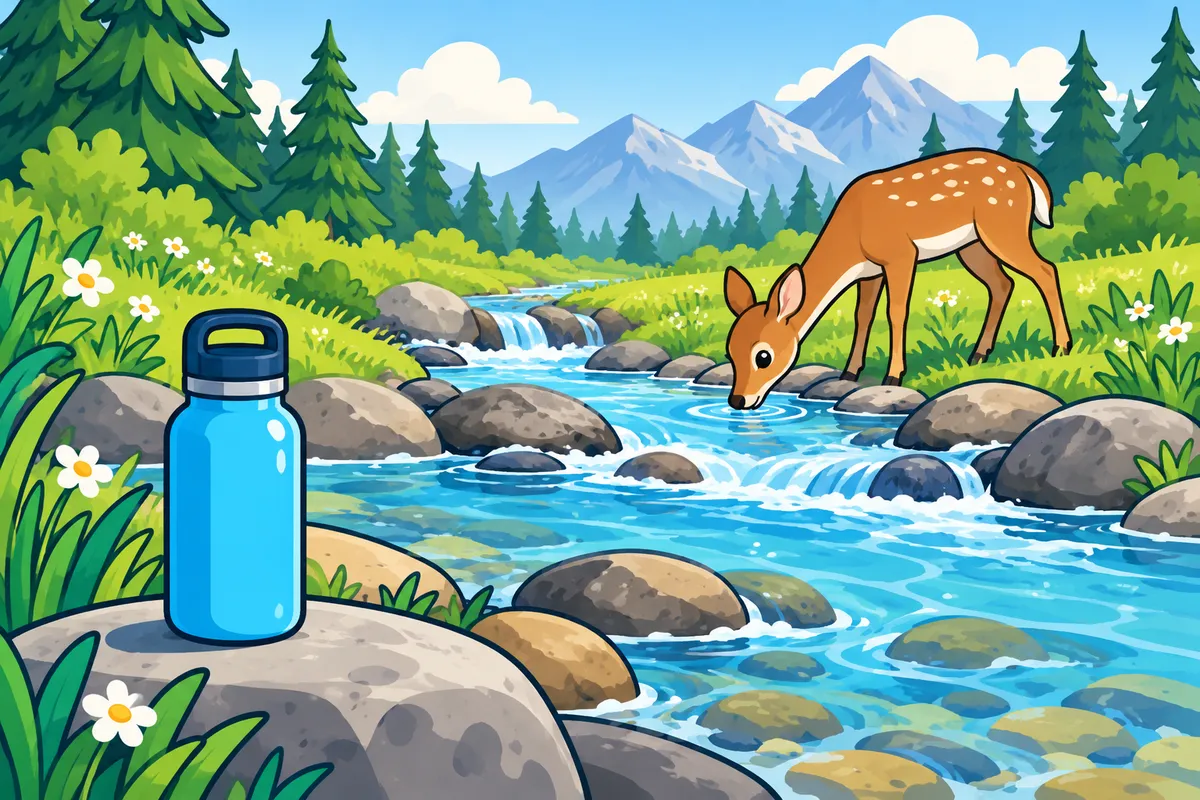
No: treat stream water before you drink it, however clear, cold and fast it looks. The CDC says water that contains bacteria, viruses and parasites sometimes looks clean, and the germs that matter are far too small to see.
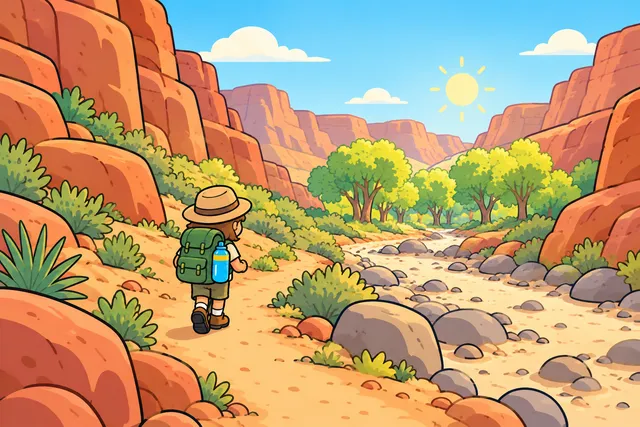
Two hours up a trail with an empty bottle, a stream running past your boots, you can see every pebble on the bottom. That is the moment most hikers are tempted, and nothing about the water can tell you it is fine.
Is It Safe to Drink Water From a Stream?
Not without treating it first. The CDC says to boil water or use another method to remove germs when you are not sure it is safe, and the Wilderness Medical Society recommends treating water wherever there is farm, grazing or human activity upstream. Clear water can still carry Giardia, Cryptosporidium, bacteria and viruses from animals and people upstream.
What a Clear Stream Can Still Carry
4 items- Giardia, a parasite that lives in the gut of people and animals
- Cryptosporidium, which chlorine and iodine tablets do not kill
- Bacteria from animal and human waste
- Viruses, which portable filters do not remove
The WMS guideline is blunt about the senses: appearance, smell and taste are not reliable indicators of whether water is safe from infectious organisms. A sparkling creek and a murky one can carry the same germs.
Where the Germs Come From
From whatever lives or camps upstream. Giardia leaves an infected animal or person in its poop and, the CDC Giardia page says, can survive for weeks to months outside the body.
One beaver dam, one herd of summer cattle or one campsite without a toilet a few kilometers up is enough. The WMS says that upstream use by humans, farm animals or wildlife poses a major risk, and its strong recommendation is to treat water wherever agriculture, grazing or upstream human activity is nearby.
Which Natural Water Sources Are the Riskiest?
Still or murky water near people and animals carries the most risk; clear water high above any trail carries the least. The CDC Yellow Book sorts sources by what is going on around them, and this chart lines up each kind of trail water with what the CDC, the WMS, the EPA and the National Park Service say about it.
| Source | Main risk | What the sources say | Treatment that fits |
|---|---|---|---|
| Clear creek far above trails and pastures | Wildlife upstream | WMS: a weak recommendation to treat even here | Any single step: boil, UV or a filter |
| Stream below camps, cabins or a trailhead | Human waste | Yellow Book: heat or UV, or a filter plus a chemical, or an ultrafilter | Boil, or two steps |
| Brook through cattle grazing | Animal waste, Cryptosporidium | WMS: its strong call to treat; Yellow Book: grazing runoff needs a stronger method | Boil, or filter plus disinfectant |
| Spring | Germs picked up near the surface | NPS Death Valley: boil or treat it | Any single step; more if animals are near |
| Lake or pond, still water | Mud, birds, swimmers | EPA: flowing water is generally better than still; skip floating material, dark color or odor | Settle if cloudy, then boil |
| Silty river after rain | Dirt shields germs; runoff | Yellow Book: clarify first, then add a second step | Settle, strain, then boil |
| Pond with scum or a fuel sheen | Algae toxins or chemicals | CDC: boiling or disinfecting cannot make chemicals or toxins safe | None: find other water |
Sources: CDC Yellow Book, WMS 2023, NPS Death Valley, EPA, CDC.
Is Fast-Moving Water Safe to Drink?
No, speed does not clean water. A rushing stream carries the same germs as a slow one, only faster, and none of the CDC or WMS guidance gives moving water a pass.
What fast water does give you is less silt and fewer algae than a still pond. The EPA says it is generally better to use flowing water than still, stagnant water, and to skip any water with floating material, a dark color or a questionable odor. That makes it the better source to collect from, and you still treat it.
Can You Drink River Water If You Boil It?
Yes, for germs. A rolling boil for 1 minute kills viruses, bacteria and parasites, the CDC says, or 3 minutes above 6,500 feet; if the river is brown, let it settle and pour it through a cloth first.
Boiling has a limit, and rivers test it. A river collects runoff from roads, farms and towns, and the CDC warns that you cannot make water with harmful chemicals, toxins or radioactive material safe by boiling it.
So boil a clear river in wild country with confidence, and skip one that runs below a mine, an industrial site or a farm spraying fields, because the minutes and altitude rules for boiling only cover germs.
Can You Drink Mountain Spring Water?
Treat it like any other surface water. The CDC lists untreated water from springs alongside lakes, rivers and shallow wells as a way people catch Giardia, and Death Valley National Park tells hikers to "boil or treat water from these sources before using."
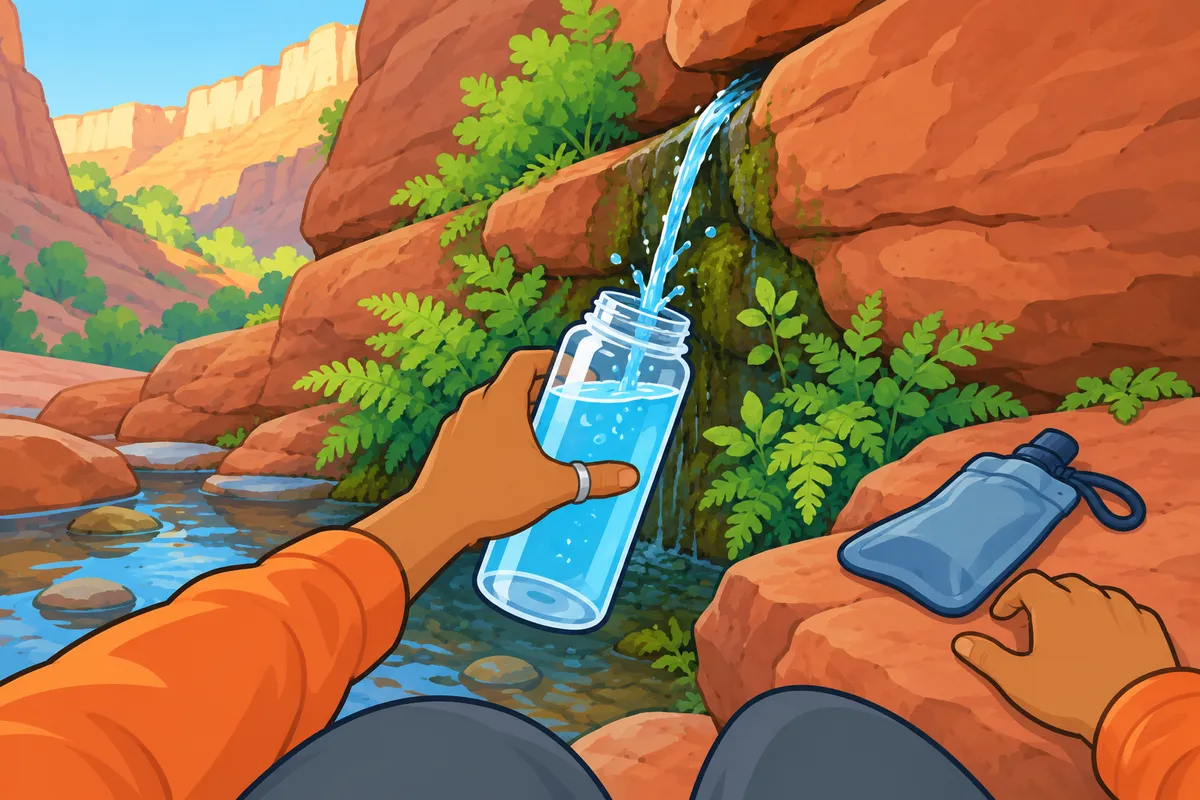
Springs fool people because the water comes straight out of the ground. But the hillside above may hold animals, and the water can surface, pool and pick up germs before it reaches your bottle.
In dry country, the same park's rangers add that springs "are rare and should not be considered reliable", so never plan a route that depends on one.
Is Snowmelt or Glacier Stream Water Safe to Drink?
Treat meltwater from a snow patch or a glacier like any other stream: cold does not make it clean, and animals and hikers use snowfields too. Snow or ice you melt at camp has its own guide.
Can You Drink Lake Water?
Only treated, and only from a part of the lake that looks clean. The EPA says to skip a source with any of these:
- Floating material in the water
- A dark color
- A questionable odor
Cloudy water can still be used: let it settle and pass it through a cloth or coffee filter before treating it.
Some lake water no treatment can save. The CDC's algal bloom page describes blooms that look like "foam, scum, mats, or paint on the surface of the water", or that turn it green, blue, brown or red. If a lake or pond looks like that, do not drink from it, and keep animals out: the CDC says they can get very sick or die within hours.
What Happens If You Drink Untreated Stream Water?
Often nothing, and sometimes a gut infection that starts a week or two later. Giardia is the classic hiker's illness: the CDC says symptoms usually begin 1 to 2 weeks after infection and usually last 2 to 6 weeks.
The delay is what makes it hard to trace. By the time you feel ill you are home, and the stream from two weekends ago is the last thing on your mind.
How Soon Giardia and Crypto Start, and How Long They Last
Cryptosporidium, the other common parasite in surface water, starts sooner. The CDC Crypto page says symptoms generally begin 2 to 10 days after infection, 7 on average, and last 1 to 2 weeks; its most common sign is watery diarrhea, and some people have no symptoms at all.
| Parasite | Symptoms usually begin | Usually last | First sign | Killed by chlorine/iodine? |
|---|---|---|---|---|
| Giardia | 1 to 2 weeks after infection | 2 to 6 weeks | Diarrhea 2 to 5 times a day, and growing tiredness | Yes, with enough time |
| Cryptosporidium | 2 to 10 days (average 7) | 1 to 2 weeks | Watery diarrhea, or none at all | No |
Sources: CDC Giardia, CDC Crypto, CDC emergency treatment, WMS 2023. The last column asks about chlorine or iodine at trail doses.
What to Do If You Already Drank It
Nothing yet, unless you feel ill. Note the date and the place, then watch for diarrhea, cramps or nausea over the next two weeks, the window both CDC pages give for these parasites to show up. If symptoms start, call a healthcare provider and say you drank untreated water.
Giardia adds gas, greasy stool that can float and a growing tiredness to the usual diarrhea and cramps. The fluid loss is the part you can act on at home: drink plenty of fluids while the diarrhea lasts.
What If You Cannot Boil or Filter It?
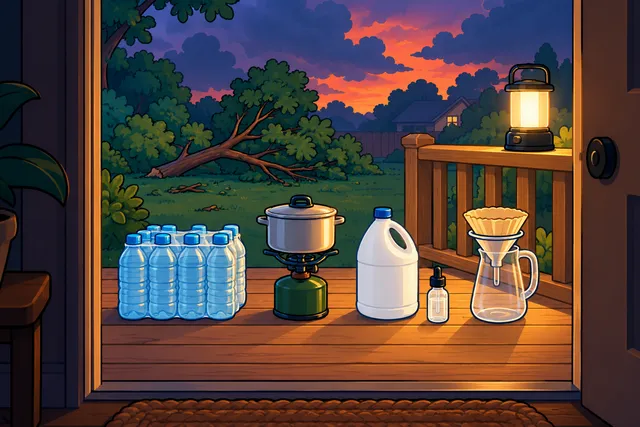
Pick the best source you can reach, then use whatever treatment you have. The Yellow Book lists several single steps for wild water with little human or animal activity: heat, UV light, a microfilter or a chemical disinfectant.
Three of those steps, with their limits:
- A UV pen needs clear water, because suspended particles shield germs from the light, so strain or settle a cloudy jug first.
- Chlorine dioxide tablets kill Giardia and are somewhat effective against Cryptosporidium, the CDC says, and the Yellow Book adds that tablets and drops need several hours of contact time.
- Bleach works against bacteria and viruses with a 30-minute wait.
How Much Water to Carry So You Rarely Need a Stream
Death Valley's park service gives two starting points:
- At least 2 liters for a short winter dayhike
- 1 gallon or more for longer warm-season hikes and overnighters
Count the stream stops on the map and carry enough to reach the next one that is easy to treat. Hourly amounts for a day on the trail depend on heat, pace and climb, and the hiking water calculator works them out for your route.
Can Dogs Drink Stream Water?
They face the same germs and a few more. The WMS notes that Giardia is zoonotic, with numerous host species, so an animal drinking from the stream can share what it carries with the one drinking beside it. The CDC adds that algae in a bloom can make animals very sick within hours.
For a dog on the trail:
- Carry its own water and a collapsible bowl
- Keep it out of water with scum, foam or paint-like mats
- Call a vet if it seems sick after contact with water
Before a dog swims in a scummy shallow, check what pond, pool and lake water does to dogs.
How to Treat Stream Water on Your Hike
Pick the method by what is upstream. The CDC Yellow Book says wild water with little human or animal activity needs one step, water near people or animals needs a stronger method or two steps, and cloudy water needs clearing first.
From Creek to Bottle
- Look upstream for trails, camps, cattle or a beaver dam
- Fill from clear, moving water, away from the muddy edge
- Settle cloudy water and pour it through a cloth
- Boil it, or filter and then disinfect, or use UV on clear water
- Keep the dirty bag and the clean bottle apart
A filter alone stops parasites and, at 0.3 micron or finer, bacteria, but most let viruses through. Each of the four methods stops a different set of germs in a different time.
Mistakes That Undo Your Treatment
Most trail illness after treated water comes from how hikers handle the water. These are the slips to watch for, with the fix from the CDC and WMS guidance above.
| Mistake | Why it fails | Do this instead |
|---|---|---|
| Trusting a filter alone below a busy campground | Most filters let viruses through (CDC) | Add chlorine dioxide, UV or a boil |
| Drinking 30 minutes after chlorine or iodine in cold water | Giardia needs hours at low doses in cold water (WMS) | Wait longer, or double the dose |
| Using a UV pen on cloudy water | Silt shields germs from the light (CDC) | Settle and strain first |
| Letting a dirty bag drip on the clean bottle | Raw water reaches your mouth | Keep dirty and clean gear apart |
| Filling below the spot where you washed or camped | You add your own germs upstream | Fill upstream, wash 200 ft away |
| Skipping hand washing before meals | Germs travel hand to mouth | Soap, or sanitizer with 60 % alcohol |
How the Source Sets the Plan
Keep the Stream Clean for the Next Hiker
You are someone else's upstream. The CDC asks campers to bury waste at least 8 inches deep and at least 200 feet from lakes and streams, and downstream of where anyone collects water.
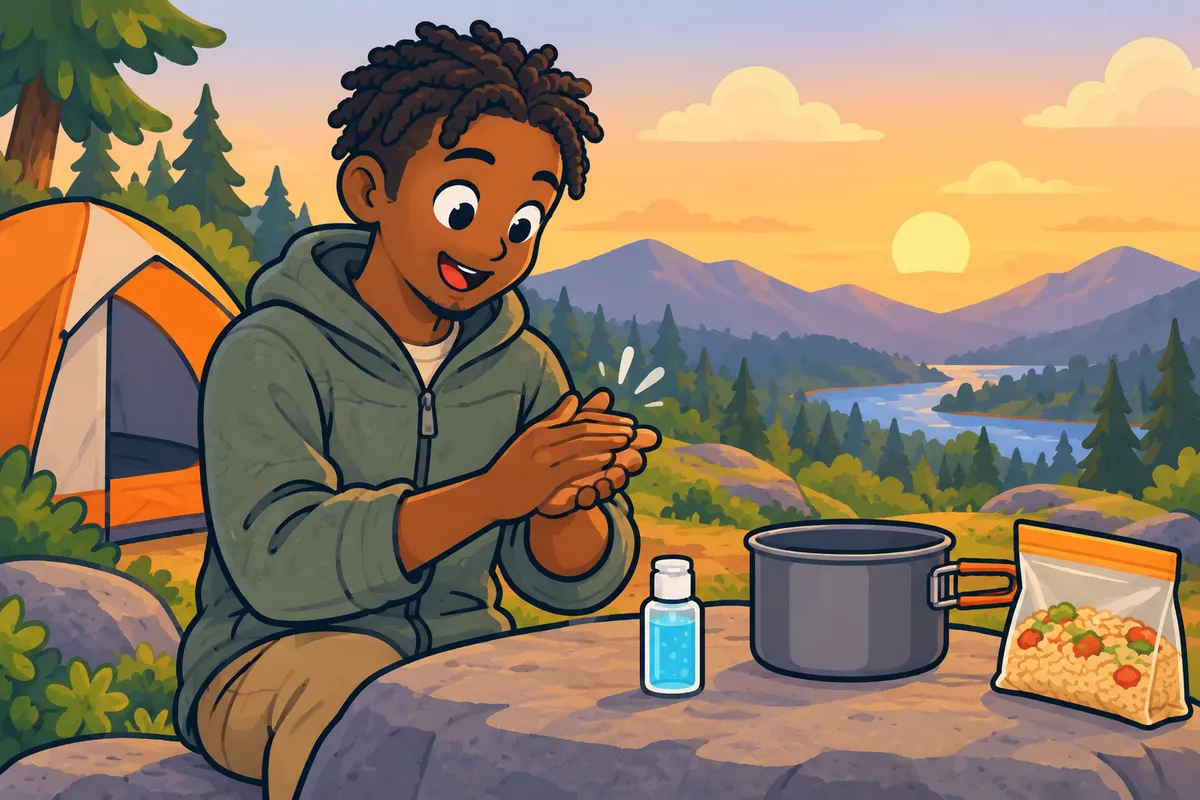
Wash your hands before you eat and after the toilet. With no soap and water, the CDC accepts a hand sanitizer with at least 60 % alcohol, because a lot of trail illness travels from hand to mouth.
Mark Your Fill-Up Points Before You Leave the Trailhead
Before the hike, circle every creek, spring and lake on the map and note what sits upstream of each: a trailhead, a pasture, a camp. That one look decides whether a stop means one treatment step or two, and which stops to skip.
On the map, write beside each stop:
- What sits upstream of it
- Whether it dries up late in the season
- How far it is to the next one
General information for healthy adults, not medical advice. If a doctor has set your fluid amount, follow that.

More in Outdoors and Travel
Sources
- US Centers for Disease Control and Prevention. About Water Treatment Options When Hiking, Camping, or Traveling, 2025.
- US Centers for Disease Control and Prevention. About Giardia Infection, 2024.
- US Centers for Disease Control and Prevention. About Crypto Infections, 2025.
- Wilderness & Environmental Medicine (Backer, Derlet and Hill). Wilderness Medical Society Clinical Practice Guidelines on Water Treatment for Wilderness, International Travel, and Austere Situations, 2023.
- CDC Yellow Book (Backer and Hill). Water Disinfection for Travelers, 2025.
- US Centers for Disease Control and Prevention. Harmful Algal Blooms and Your Health, 2024.
- US Environmental Protection Agency. Emergency Disinfection of Drinking Water, 2026.
- National Park Service, Death Valley. Hiking, 2026.
Sources checked by the Glubbo Editorial Team on Oct 19, 2026. General information, not medical advice. How we write and check our guides.

