Can Dogs Drink Pond Water? Pools, Lakes and the Sea Compared
Which outdoor water can make your dog sick, the signs to watch for, and what to pack instead.
 By the Glubbo Editorial Team · Updated Oct 19, 2026 · 10 min read
On This Page
Short answer
No: give your dog its own fresh water instead.
- Toxic algae in still water can make a dog very sick within hours, says the CDC.
- Cornell's vets: let a dog drink only from clear, cool, moving water, if at all.
- Rinse your dog with clean water after any swim in water that looks off.
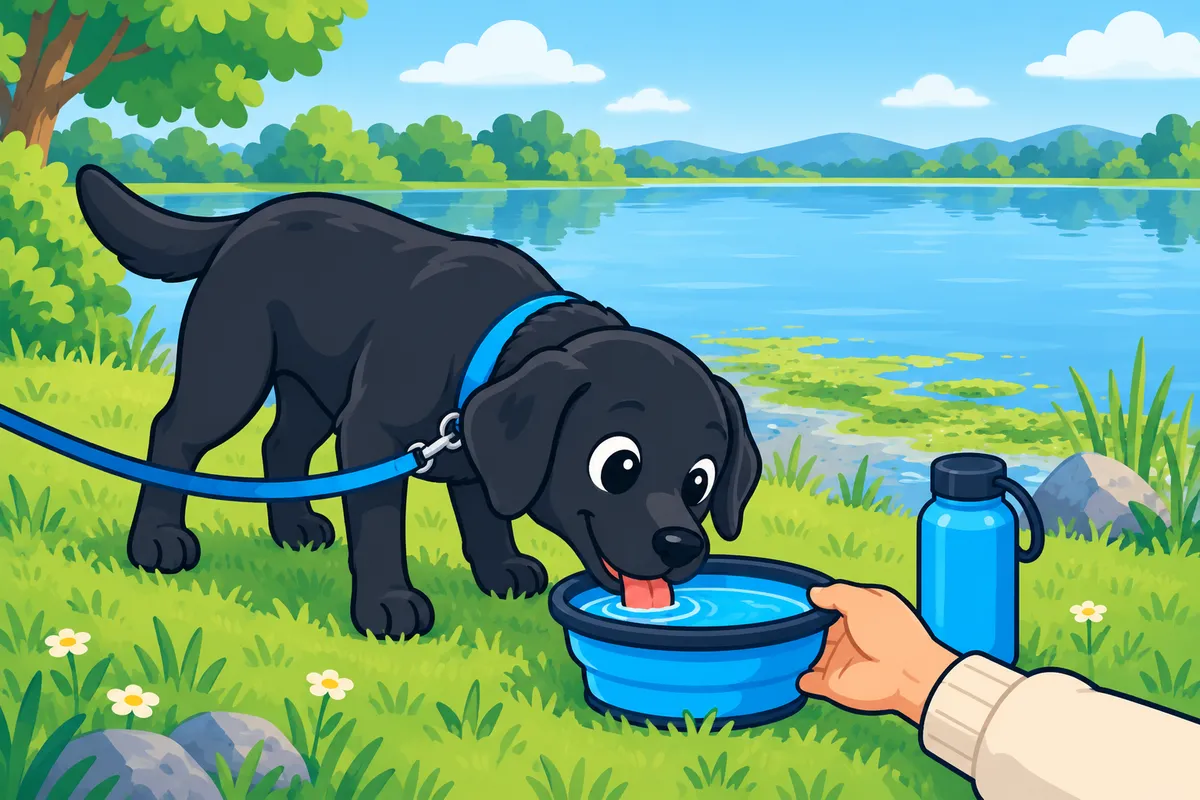
No: do not let your dog drink pond water. Still, warm water can grow toxic algae that make a dog very sick within hours, and ponds and creeks can also carry Giardia and Leptospira. A bottle and a folding bowl are worth the space in your bag.
A hot dog on a long walk will drink from anything: a pond, a puddle, the pool, the sea. Most of the time nothing happens, but the rare bad day is serious.
General information for healthy adult dogs, not veterinary advice. If your dog is unwell after drinking or swimming in outdoor water, call your vet.
Which Outdoor Water Is Risky for Dogs?
Still, warm water carries the most risk, and moving, clear water the least. Cornell's canine health center puts it in one line: never let your dog "drink from or swim in anything but clear, cool, moving water."
Outdoor water and your dog
Pond or still lake
Highest risk
- Warm, still water grows blue-green algae
- Some algae toxins kill within hours
- Can carry Giardia and Leptospira
Suits you if never; carry your dog's own water instead.
Sea water
Salt poisoning risk
- Too much salt shrinks brain cells
- Magnesium acts as a strong laxative
Suits you if never on purpose; give fresh water before and during the beach.
Swimming pool
Low risk in sips
- Diluted pool chemicals mostly not toxic
- Avoid a freshly shocked pool
Suits you if an accidental mouthful while swimming is all it gets.
Clear, cool, moving water
Least risky
- The only water Cornell allows
- A creek can still carry Giardia
Suits you if you are far from a tap and have run out of your own water.
The safest habit is simple. Carry enough fresh water for your dog that it never needs to drink from the ground.
Can Dogs Drink Pond Water?
No. Ponds are warm and still, which is what cyanobacteria (blue-green algae) like. Cornell warns that some kinds make toxins that destroy the liver and others make nerve toxins that cause fast, fatal damage, and since toxic and harmless kinds look the same, you have to avoid them all.
What a Toxic Bloom Looks Like
The CDC's guide to algal blooms and pets says a bloom can change the color of the water or form foam, scum, mats or a layer that looks like spilled paint on the surface. Water that looks or smells bad is the cue to turn back.
A bloom does not have to cover the whole pond. A green strip along one shore, where the wind pushes the scum, is enough for a dog that wades in at that spot.
Germs in Still Water
Algae are not the only problem. The CDC names "drinking from a contaminated creek, pond, or other water source" as one way dogs pick up Giardia, a gut parasite that causes diarrhea and vomiting, though some dogs show no signs at all.
Leptospirosis spreads through the urine of infected animals, and the CDC says animals can catch it from contaminated water or soil. Dogs are on its list of animals that carry it. People can catch it too, by touching an infected animal's body fluids.
| Risk in still water | Where it comes from | What it does (CDC, Cornell) | Can it pass to people? |
|---|---|---|---|
| Blue-green algae toxins | Warm, still water with a bloom | Liver or nerve damage; very sick or dead within hours to days | Rinse the toxins off the coat for your sake too |
| Giardia | Creeks, ponds and standing water | Diarrhea, gas, stomach pain, nausea, vomiting, or no signs | Unlikely, says the CDC |
| Leptospira | Water or soil with an infected animal's urine | Dogs are on the CDC's list of carriers | Yes, through the animal's body fluids |
Puddles and Standing Water at Home
Your own garden counts too. The CDC says standing water can hold Giardia, and asks you to empty outdoor containers of water and drain fountains you are not using. Cornell adds that cyanobacteria "love warm, stagnant water of any kind", including buckets and livestock troughs, so a bucket left in the sun for a week can grow what a pond does.
Can Dogs Drink Puddles, Streams and Rivers?
Puddles and creeks are lower risk than a scummy pond only when the water is moving and clear; neither is safe to count on. The CDC says dogs can pick up Giardia from creeks, and that Leptospira spreads through water or soil holding the urine of infected animals, which is especially likely after floods or heavy rain.
That makes a roadside puddle after a downpour a poor drink, and a clear mountain stream a better but not risk-free one. Cornell's rule is clear, cool, moving water only, and the CDC's advice to limit access to creeks, ponds and lakes applies most when your dog is already sick. Offer your own water first, every time.
Can You Catch Anything From Your Dog's Swim?
Giardia is unlikely, leptospirosis is possible. The CDC says "you are unlikely to get a Giardia infection from dogs or cats", because the type that usually infects people is usually not the type that infects them. Leptospirosis is different: people can catch it by directly touching an infected animal's body fluids, such as urine.
Algae toxins matter for you as well as the dog. The CDC's advice to rinse your dog with clean water straight after a swim keeps the toxins off its coat, which is also off your hands and your car seat.
Can Dogs Drink Lake Water?
Not on purpose. A big lake can have the same algae as a pond, especially in warm bays and still corners in late summer. A clear, cold, wind-stirred lake is lower risk, but you cannot see Giardia or Leptospira, so offer your own water first.
The CDC asks you to keep animals from drinking, swimming, playing or eating near water that might hold a bloom. It also says not to let them:
- eat dead fish on the shore
- lick their fur after a swim in discolored water
Signs of algae poisoning in animals
10 items- Loss of energy
- Loss of appetite
- Vomiting
- Stumbling or falling
- Foaming at the mouth
- Diarrhea
- Convulsions
- Excessive drooling
- Tremors and seizures
- Any unexplained sickness that occurs within a day or so after being in contact with water.
The CDC says animals can become very sick or die within hours to days of swallowing the toxins. A dog that seems fine at the lake can turn ill on the evening drive home.
Rinse Your Dog After a Swim
If your dog has been in water that might hold a bloom, the CDC says to "immediately wash them off with clean water", so it cannot lick the algae off its fur. Dogs groom themselves on the drive home, and that is when they swallow what clings to the coat.
After a swim in doubtful water
- Rinse the whole coat with clean water at once
- Dry the coat with a towel before your dog licks it
- Offer a full bowl of fresh water
- Watch for the signs for the next 24 hours
Can Dogs Drink Pool Water?
A few accidental mouthfuls are usually fine. Cornell says that once diluted, "most pool chemicals aren't toxic to your dog." The exception is a pool that has just been shocked with a very high dose of chlorine: some dogs collapse after swimming in one.

How to Stop a Dog Drinking Pool Water
Make the pool the second-best drink:
- Put a bowl of fresh water in the shade beside it, so the pool is never the nearest drink.
- Keep your dog out of the pool for the day after you shock it.
- Store chlorine tablets, crystals and liquids out of reach: Cornell says the concentrated products are caustic and can burn the mouth, esophagus and stomach, and need a vet right away.
Breaks help with both problems. Cornell suggests frequent half-hour breaks from the water, which gives a dog that gulps while it swims time to rest and drink from its bowl instead.
Can Dogs Drink Sea Water?
No. Salt water pulls water out of the brain cells and makes them shrink, Cornell explains, and the signs are muscle tremors, disorientation and seizures. Sea water also carries magnesium, which has a strong laxative effect, and diarrhea drains a dog's water: after a beach day, run the gum and skin checks for dehydration before bed.
Before the Beach
- Let your dog drink its fill of fresh water
- Pack a bottle and a folding bowl
- Offer water every time it comes out of the waves
Warning Signs at the Beach
- Muscle tremors
- Disorientation
- Seizures
Cornell's advice is to make sure your dog "has had plenty of fresh water and is well-hydrated" before you go. A dog that arrives thirsty and spends an hour chasing a ball through the surf swallows far more salt water than one that drank at home. If your dog will not drink before you leave, Cornell suggests a few watermelon chunks, seeds and rind removed.
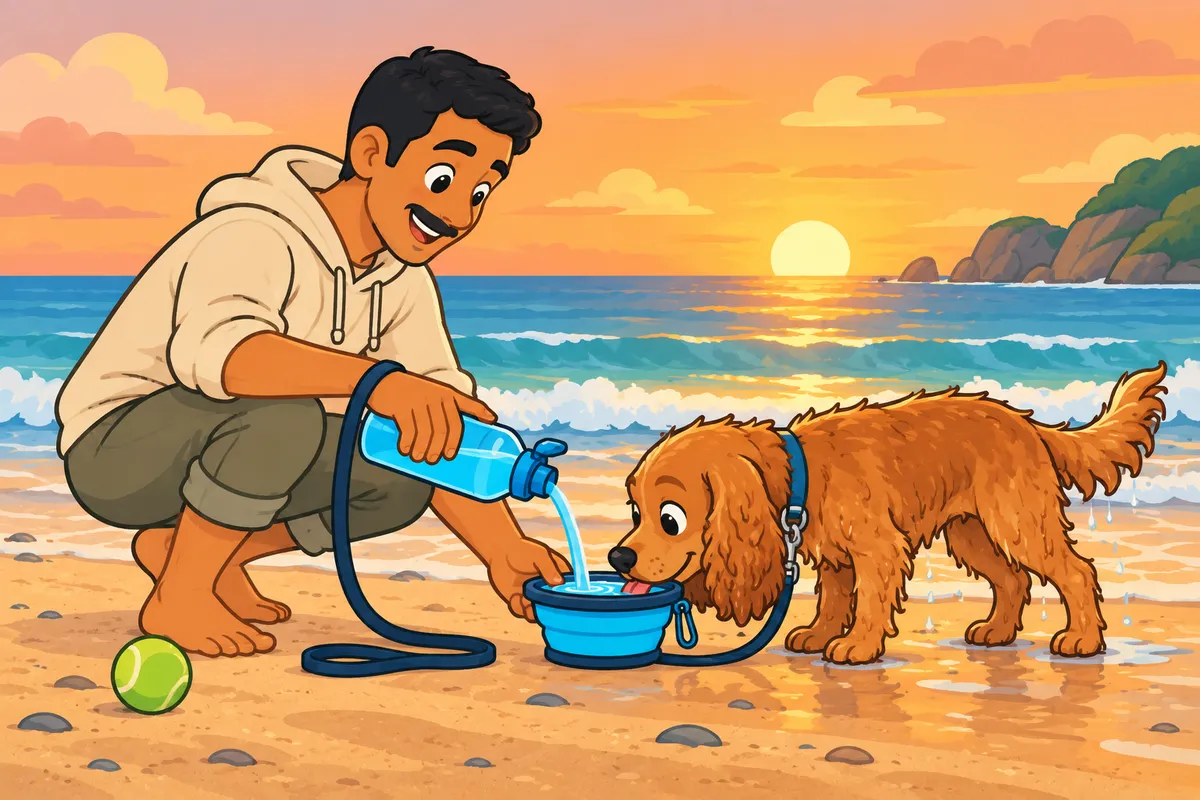
Water play also has the opposite risk. A dog that swallows a lot of fresh water while fetching can dilute the salts in its blood, so Cornell suggests half-hour breaks from the water through the day.
Call Your Vet Now When
Tell the vet which water your dog was in and when. If you can, take a photo of the water's surface; it helps the vet judge whether algae were involved.
If you cannot reach your vet, the CDC lists the ASPCA Animal Poison Control Center (1-888-426-4435) and the Pet Poison Helpline (1-855-764-7661) for questions about algae poisoning in pets. Both charge a fee.
Pack Fresh Water for Every Walk Near Water
Pack at least half your dog's daily water for a half-day out, and more in heat. Cornell's vets put a healthy dog's day at 40 to 60 ml per kg; the half-day column below is a packing rule, not a vet figure: half of a day's water, more in heat.
| Dog's weight | Water for a full day | Half-day pack, near water |
|---|---|---|
| 5 kg (11 lb) | 200 to 300 ml (7 to 10 oz) | 100 to 150 ml, plus extra in heat |
| 10 kg (22 lb) | 400 to 600 ml (13.5 to 20 oz) | 200 to 300 ml |
| 20 kg (44 lb) | 800 to 1,200 ml (27 to 41 oz) | 400 to 600 ml |
| 30 kg (66 lb) | 1,200 to 1,800 ml (41 to 61 oz) | 600 to 900 ml |
| 40 kg (88 lb) | 1,600 to 2,400 ml (54 to 81 oz) | 800 to 1,200 ml |
Rinse water is extra. It has to cover the whole coat, so a big dog needs a big jug.
How Much to Pack for Half a Day Out
To see the daily amount for your own dog's weight in ml, ounces and cups, use the dog water calculator before a long day out.
Mistakes Owners Make Near Water
- Trusting water that looks clean. You cannot see Giardia or Leptospira.
- Skipping the rinse after a swim in water that might hold a bloom.
- Arriving at the beach with a thirsty dog, which then drinks the sea.
- Letting your dog eat dead fish or algae on the shore, which the CDC warns against.
- Hours of fetch in the water with no half-hour breaks.
- Leaving buckets, paddling pools or an unused fountain full in the garden.
Your dog's water kit for a day near water
5 items- A bottle of fresh water: enough for the whole outing, more on hot days
- A folding bowl
- A jug of clean water to rinse the coat after a swim
- A lead for walking past ponds and scummy shallows
- Your vet's number, and a photo of the water if your dog swam
Your own drinking water on the trail is a separate job: lake and stream water for people needs boiling for a minute or filtering and treating before you drink it. For the rest of what your pets need each day, the pets guide compares dogs, cats, rabbits and more.
General information for healthy adults, not medical advice. If a doctor has set your fluid amount, follow that.

More in Pets

Sources
- US Centers for Disease Control and Prevention. Preventing Pet and Livestock Illnesses Caused by Harmful Algal Blooms, 2024.
- Cornell Richard P. Riney Canine Health Center. Summer safety tips, 2026.
- Cornell Richard P. Riney Canine Health Center. Canine Polyuria and Polydipsia (PU/PD), 2024.
- US Centers for Disease Control and Prevention. About Giardia and Pets, 2024.
- US Centers for Disease Control and Prevention. About Leptospirosis, 2026.
Sources checked by the Glubbo Editorial Team on Oct 19, 2026. General information, not medical advice. How we write and check our guides.

