Pets
How Much Water Do Pets Need? Dogs, Cats, Rabbits and More
Daily water for eight kinds of pets, side by side, and the amount that means a call to the vet.
 By the Glubbo Editorial Team · Updated Oct 19, 2026 · 10 min read
Short answer
Dogs and cats need about 40 to 60 ml per kg a day.
- A dog drinking over 100 ml per kg a day needs a vet check, say Cornell's vets.
- Rabbits drink about 120 ml per kg, twice a dog or cat of the same weight.
- Small pets drink more for their size: a golden hamster takes about 30 ml a day.
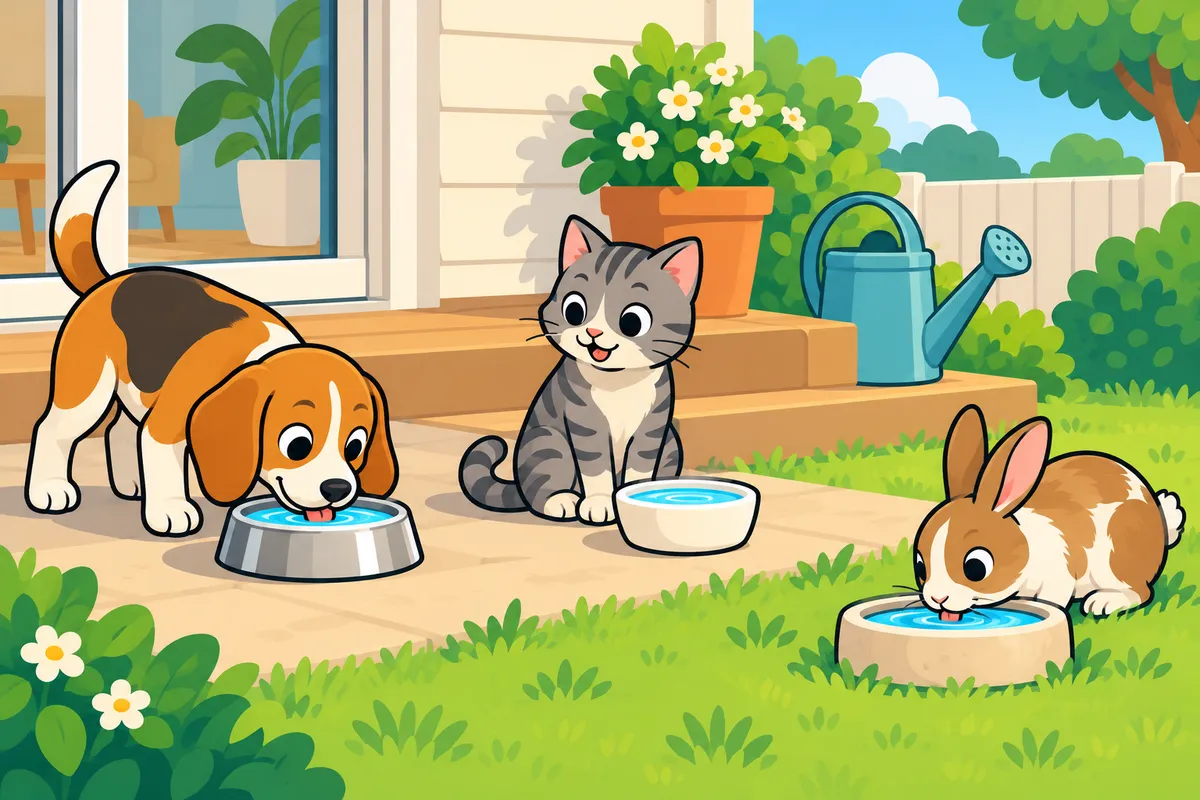
Most healthy adult dogs drink 40 to 60 ml of water per kg a day, cats about 52 ml per kg with part of it from food, and rabbits and small rodents drink more for their size. A Labrador and a hamster both need a full bowl or bottle every day, but per kilogram of body weight the hamster drinks about five times as much.
General information for healthy adult pets, not veterinary advice. If your vet has set a water amount for your pet, follow that.
How Much Water Do Pets Need a Day?
A healthy adult dog drinks about 40 to 60 ml per kg of body weight a day, according to Cornell's Riney Canine Health Center. Cats land in the same zone, rabbits drink about twice as much per kg, and the smallest pets drink the most for their size.
The bars below put eight pets on one scale. Each bar is the middle of the range its source gives, turned into milliliters per kilogram so a horse and a hamster can sit side by side.
The rodent figures come from the Merck Veterinary Manual's table of laboratory animal data, which gives typical intake for healthy adults on a dry diet in mild temperatures. Fresh greens and wet food lower what any pet takes from the bowl.
One Pet of Each Kind, in Milliliters
Per kg figures are hard to picture at the bowl. Here is a day of water for one ordinary adult of each kind.
| Pet | Example weight | Water a day | Source |
|---|---|---|---|
| Dog | 10 kg (22 lb) | 400 to 600 ml (13.5 to 20 oz) | Cornell Riney |
| Cat | 4.5 kg (10 lb) | about 240 ml (8 oz), food included | Cornell Feline |
| Rabbit | 2 kg (4.4 lb) | about 240 ml (8 oz) | Merck |
| Guinea pig | 0.5 kg (1.1 lb) | about 50 ml (1.7 oz) | Merck |
| Golden hamster | about 125 g (4.4 oz) | about 30 ml (1 oz) | Merck |
| Horse | 500 kg (1,100 lb) | 21 to 29 L (5.5 to 7.7 US gal) | Merck |
A 2 kg rabbit and a 4.5 kg cat need about the same cup of water, even though the cat weighs twice as much. That gap is the next question.
What About the 1 Ounce Per Pound Rule?
Many pet sites say a dog needs about 1 ounce of water per pound a day, and that is a fair upper estimate. One ounce per pound is about 65 ml per kg, just above Cornell's 40 to 60 ml per kg for dogs and at the top of the 44 to 66 ml per kg that Merck gives for most mammals living at a comfortable temperature.
| Dog's weight | Cornell's range | 1 oz per lb rule |
|---|---|---|
| 5 kg (11 lb) | 200 to 300 ml | about 325 ml |
| 10 kg (22 lb) | 400 to 600 ml | about 650 ml |
| 20 kg (44 lb) | 800 to 1,200 ml | about 1,300 ml |
| 40 kg (88 lb) | 1,600 to 2,400 ml | about 2,600 ml |
Use the rule as the most a healthy dog on dry food is likely to take on an ordinary day. A dog that goes well past it, or past Cornell's 100 ml per kg line, is the one to bring to a vet.
Why Do Small Pets Drink More Water for Their Size?
Small bodies burn energy faster for their weight, so they lose and replace water faster. The Merck Veterinary Manual's rabbit chapter puts a rabbit at about 120 ml per kg a day, "about twice the amount usually calculated for an equally sized dog or cat", and links it to the rabbit's gut and to metabolic scaling.
- 120 ml
- per kg a day for a rabbit
- 2 ×
- what a dog or cat of the same weight needs
- 300 to 700 ml
- a day for a rabbit in Merck's lab table
So never size a small pet's water from a dog figure. Cornell's 40 to 60 ml per kg would give a 2 kg rabbit 80 to 120 ml, about half of what it really drinks.
Dogs and Cats at the Bowl
Dogs and cats are the two pets where the bowl count misleads most often, because food changes it. A dog on kibble and a cat on wet food can both be well, with very different bowls at the end of the day.
Dogs
Cornell's vets give 40 to 60 ml per kg as normal and call a dog polydipsic once intake passes 100 ml per kg. They also warn against taking water away from a dog that drinks a lot before a vet has seen it, because "restricting access can lead to dehydration or dangerous electrolyte abnormalities."
To see your own dog's range and its vet line in ml, ounces and cups, type its weight into the dog and cat water calculator; it also turns one measured day at the bowl into ml per kg.
Cats
A cat needs 4 ounces of water for every 5 pounds of lean weight, says the Cornell Feline Health Center. That is about one cup a day for a 10 lb cat, and wet food that is up to 80 % water covers much of it.
Merck adds that cats "often do not drink a lot of water", so a quiet bowl is common. A cat that drinks little and then turns lethargic or stops eating is a different story, and the gum and skin checks for a dehydrated cat tell you when to call.
Wet Food Changes the Bowl Count
The Merck Veterinary Manual's small animal nutrition chapter gives the moisture of each food type, and the gap is large.
Canned Food
- 60 % to over 87 % water
- Pets drink less from the bowl
- A low bowl count can be normal
Dry Food
- 3 % to 11 % water
- Most water comes from the bowl
- Watch the bowl on hot days
Semi-moist foods sit in between at 25 % to 35 % water. If you switch your pet's food, expect the bowl count to change with it before you worry.
Rabbits, Guinea Pigs and Hamsters
Small pets need water every hour of the day, and the container matters as much as the amount. Merck's chapters disagree on bowl or bottle by species, so each pet below gets its own answer.
Small pets and their water
Drinks more from a bowl
- About 120 ml per kg a day
- More from an open bowl than a bottle
- Bottle backup: steel sipper tube
Suits you if you can set a heavy bowl on the floor and wash it every day.
Drinks more from a bottle
- About 10 ml per 100 g a day
- Dirties the sipper: check it often
- No vitamin C added to the water
Suits you if you will check the nozzle and change the water every day.
Steel tube near the floor
- About 30 ml a day
- Stainless sipper tube, set low
- No glass tubes: Syrians bite them
Suits you if your hamster lives in a cage with a bottle clipped to it.
Merck found that guinea pigs drink more from a bottle than from a bowl, the reverse of rabbits. It also advises against adding vitamin C to a guinea pig's water.
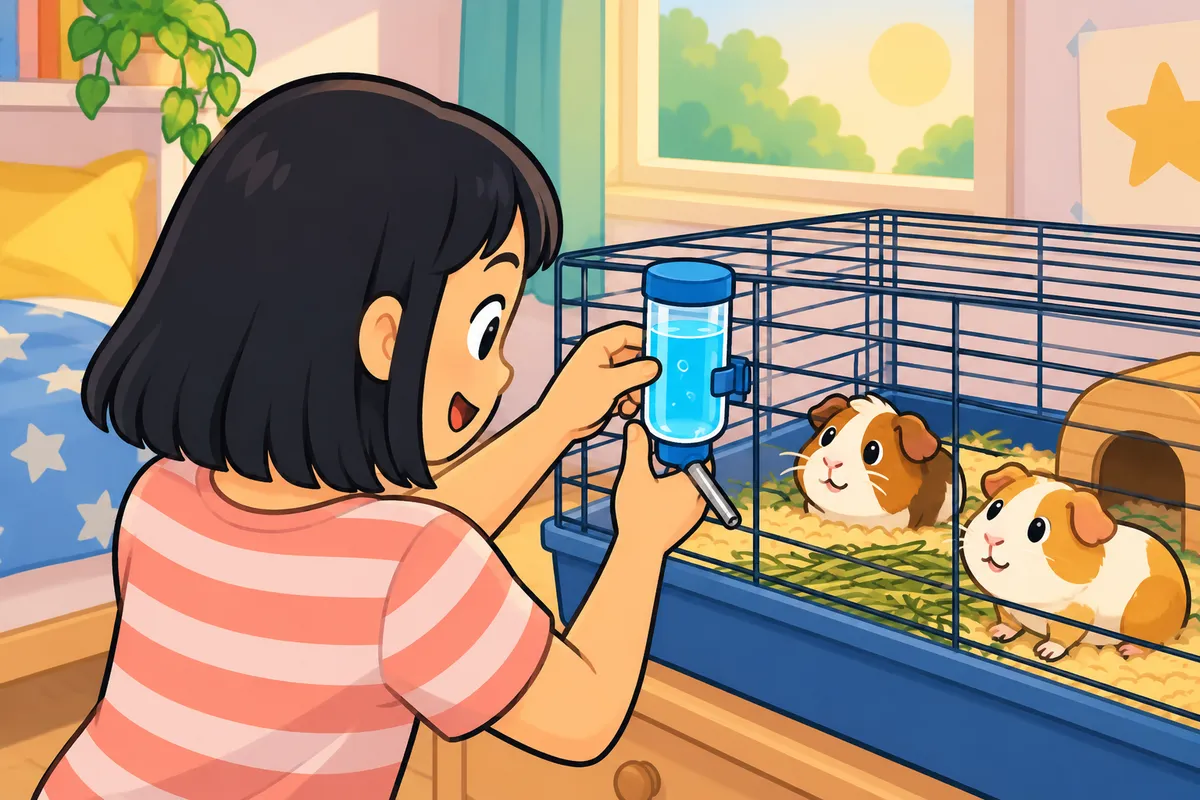
For hamsters, Merck recommends stainless steel sipper tubes close to the floor, and says glass tubes are a bad idea for Syrian hamsters, which "readily bite through glass."
Horses and Backyard Chickens
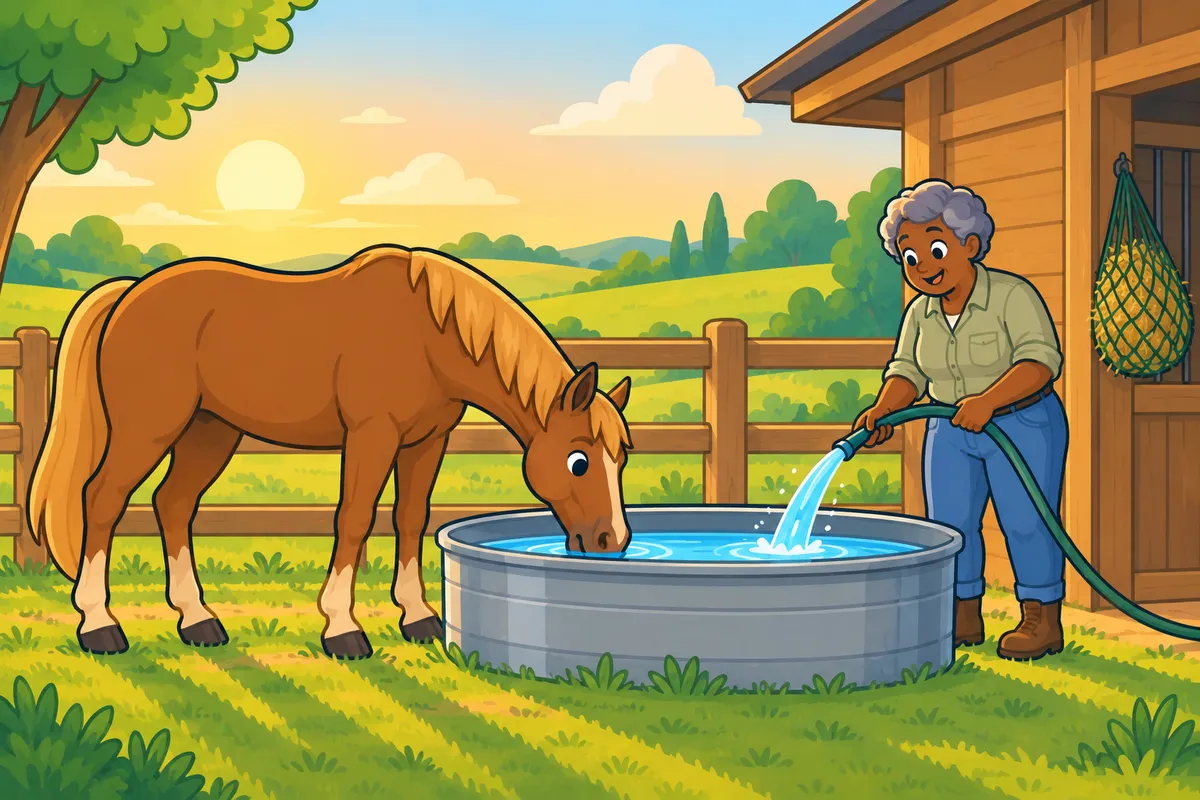
Larger animals follow the same rule of fresh water at all times, at a scale of buckets and troughs. A 500 kg horse in minimal work drinks 21 to 29 liters a day, per the Merck Veterinary Manual's equine nutrition chapter.
Horses
Diet and sweat move that number a lot. A horse on dry hay alone can drink almost double, and lactation or sweat adds 50 % to 200 %. After an hour of work in the heat, the same 500 kg horse might need more than 72 liters.
Chickens
Chickens drink about twice as much water as feed in mild weather, says the Merck chapter on poultry nutrition. It warns that more than 12 hours without water harms young birds' growth and hens' egg laying.
What Changes How Much a Pet Drinks?
Four things move every pet's number, according to Merck: what it eats, where it lives, how active it is and how healthy it is. Nursing mothers need more too, as the horse figures show.
What moves a pet's daily water
5 items- Diet: wet food and greens lower the bowl, dry food and hay raise it
- Environment: heat raises the need
- Activity: a long walk or a run raises it
- Health: illness can push it up or down
- Nursing: a mother feeding young needs much more
None of these is a reason to ration. A pet that drinks more on a hot afternoon is doing its job.
Heat asks the most of rabbits. Merck says they are sensitive to heat and prone to heat stroke, so a hot day changes a rabbit's whole setup, not only its bowl: frozen bottles, a cool room and a second bowl in the shade.
Should Pets Have Water Available All the Time?
Yes. Merck states that clean, fresh water "should be available at all times", and that healthy animals given plenty of water regulate their own intake, so water "should not be restricted." The only exception is a plan your vet sets, for example before surgery, and even then the cut is gradual: one full day without water can cost a dog about 5 % of its weight.
Put out more than one water source where you can. Merck notes that several sources encourage drinking, which matters most for cats, and ferrets tip bowls for fun, so a bottle beside a heavy steel bowl keeps them covered.
Count your pets in your emergency supply too. The CDC's 1 gallon (3.79 L) per person per day covers people only, and it asks you to store extra water for pets on top of that.
Water Outside the Bowl
Dogs drink from lakes, puddles and pools on walks, and that water carries its own risks:
- Green scum on a pond can poison a dog within hours, so whether a dog can drink from a pond, the sea or a pool is worth reading before summer.
- Long games of fetch in a lake carry the opposite risk. A dog that swallows water for hours can fall ill with water intoxication, so rest breaks on the bank matter as much as the bowl of fresh water.
How Do You Know a Pet Is Not Drinking Enough?
Watch the pet as much as the bowl. Cornell lists lethargy, weakness, a poor appetite and dry gums as signs of a dehydrated cat, and Merck notes that a rabbit brought in for not eating is most often dehydrated too.
A dog shows it in the mouth and the skin first: sticky gums and skin that settles slowly are two checks you can do by hand in under a minute.
Check Every Bowl in Your House This Week
One day of water, measured
- Fill each bowl or bottle with a measured amount in the morning
- Measure what is left 24 hours later
- Divide what went by your pet's weight in kg
- Write the date and the number on a card by the bowl
Compare the number with the table above, then repeat it on another ordinary day. Your own pet's normal day, written down, is the number your vet will ask for.
General information for healthy adults, not medical advice. If a doctor has set your fluid amount, follow that.
All Guides in Pets
Every guide, A to Z
Dogs 6 guides
Dogs drink in bursts and hide early signs of trouble. These guides give the amounts vets measure, the warning signs in the vet sources' own words and when to call the clinic.
Dogs page Can Dogs Drink Pond Water? Pools, Lakes and the Sea Compared
 Signs of Dehydration in Dogs and How to Check Your Dog at Home
 How Long Can a Dog Go Without Water? The Line Vets Draw
 Dog Not Drinking Water? Why It Happens and When to Worry
 Water Intoxication in Dogs: Signs After Swimming and Fetch
 Is Watermelon Good for Dogs? Seeds, Rind and How Much to Give
Cats 4 guides
Many cats drink little from a bowl and show trouble late. These guides give what vets and feeding studies measured, the warning signs in the vet sources' own words and when to call the clinic.
Cats page
Small Pets and Others 7 guides
Small pets drink more for their size than a dog or cat, and they hide being unwell. These guides give the daily amounts vets measure, a plan for hot weather and the signs that mean a call to the vet.
Small Pets and Others page How Much Water Does a Rabbit Drink a Day? Amounts by Weight
 How Much Water Does a Guinea Pig Drink? Bottle, Bowl and Daily Amount
 How to Keep Rabbits Cool in Summer, Indoors and in the Hutch
 Signs of Dehydration in Rabbits and Guinea Pigs, and When to Act
 How Much Water Should a Hamster Drink per Day? About 30 ml
 Rabbit Not Drinking Water? Check the Bottle, Then the Rabbit
 How Much Water Do Ferrets Drink? Bowl, Bottle and Hot Days

Sources
- Merck Veterinary Manual. Nutritional Requirements of Small Animals, 2024.
- Cornell Richard P. Riney Canine Health Center. Canine Polyuria and Polydipsia (PU/PD), 2024.
- Cornell Feline Health Center. Hydration, 2021.
- Merck Veterinary Manual. Nutrition of Rabbits, 2024.
- Merck Veterinary Manual. Select Physiological Data for Laboratory Animals, 2026.
- Merck Veterinary Manual. Housing and Nutrition of Guinea Pigs, 2026.
- Merck Veterinary Manual. Hamsters, 2026.
- Merck Veterinary Manual. Nutritional Requirements of Horses and Other Equids, 2026.
- Merck Veterinary Manual. Nutritional Requirements of Poultry, 2024.
- Merck Veterinary Manual. Signs of Illness in Rabbits, 2026.
Sources checked by the Glubbo Editorial Team on Oct 19, 2026. General information, not medical advice. How we write and check our guides.

