Outdoors and Travel
How to Purify Water While Camping: Boil, Filter, Treat or UV
Four ways to make lake and stream water safe, what each one kills, and which suits your trip.
 By the Glubbo Editorial Team · Updated Oct 19, 2026 · 10 min read
Short answer
Boil it for 1 minute, or filter it, then treat it.
- CDC: a rolling boil for 1 minute kills germs; 3 minutes above 6,500 ft.
- Next best: a filter of 1 micron or less, then a chemical or UV step for viruses.
- Clear cloudy water first: let it settle, then pour it through a cloth.
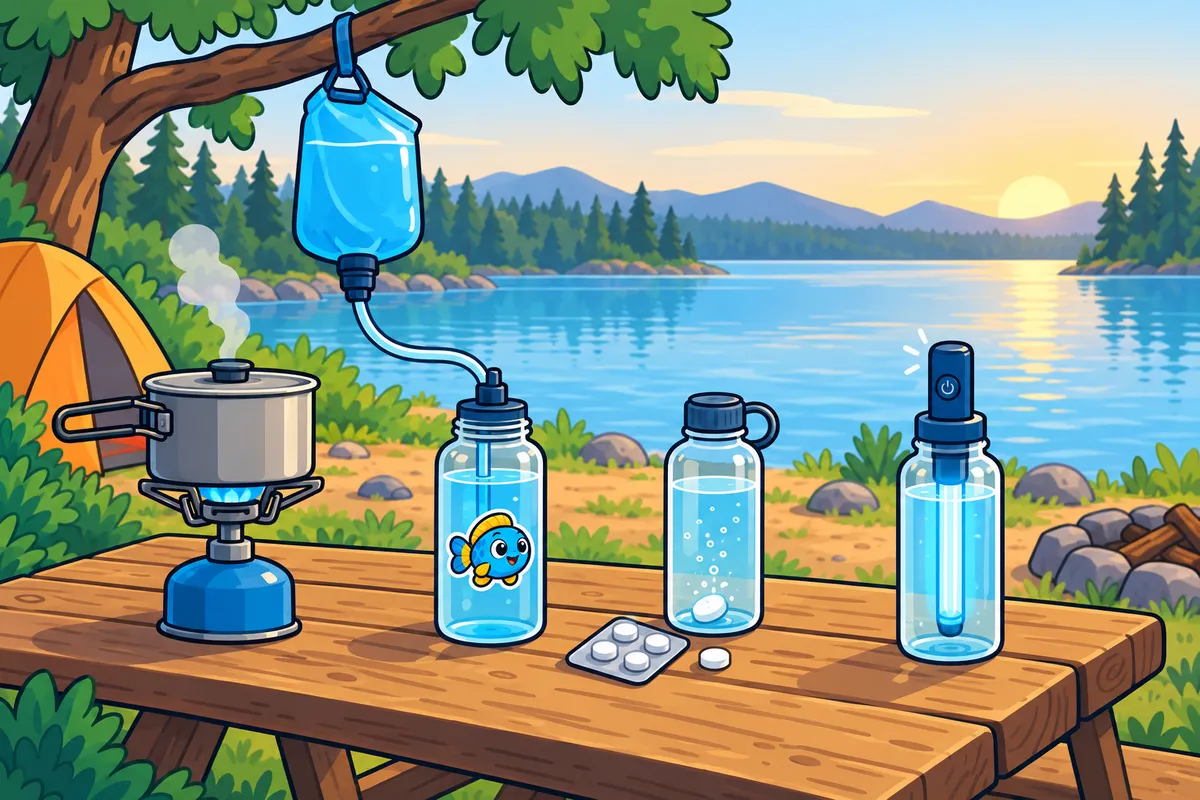
Boil it for 1 minute, or filter it and then disinfect it. That is the order the CDC gives for lake and stream water, and it works because each tool stops a different set of germs: heat, a filter, chemicals or UV light.
A clear lake at dawn looks like the safest drink on earth. It can still carry Giardia from a beaver upstream or a campsite you never saw, so every trip needs a plan for water.
How Do You Purify Water While Camping?
Boil it, or filter it and then disinfect it. The CDC ranks boiling as the best method and filtering followed by disinfecting as the next best. Whatever you use, start with the clearest water you can find, and clear murky water before you treat it.
From Lake to Bottle in Four Moves
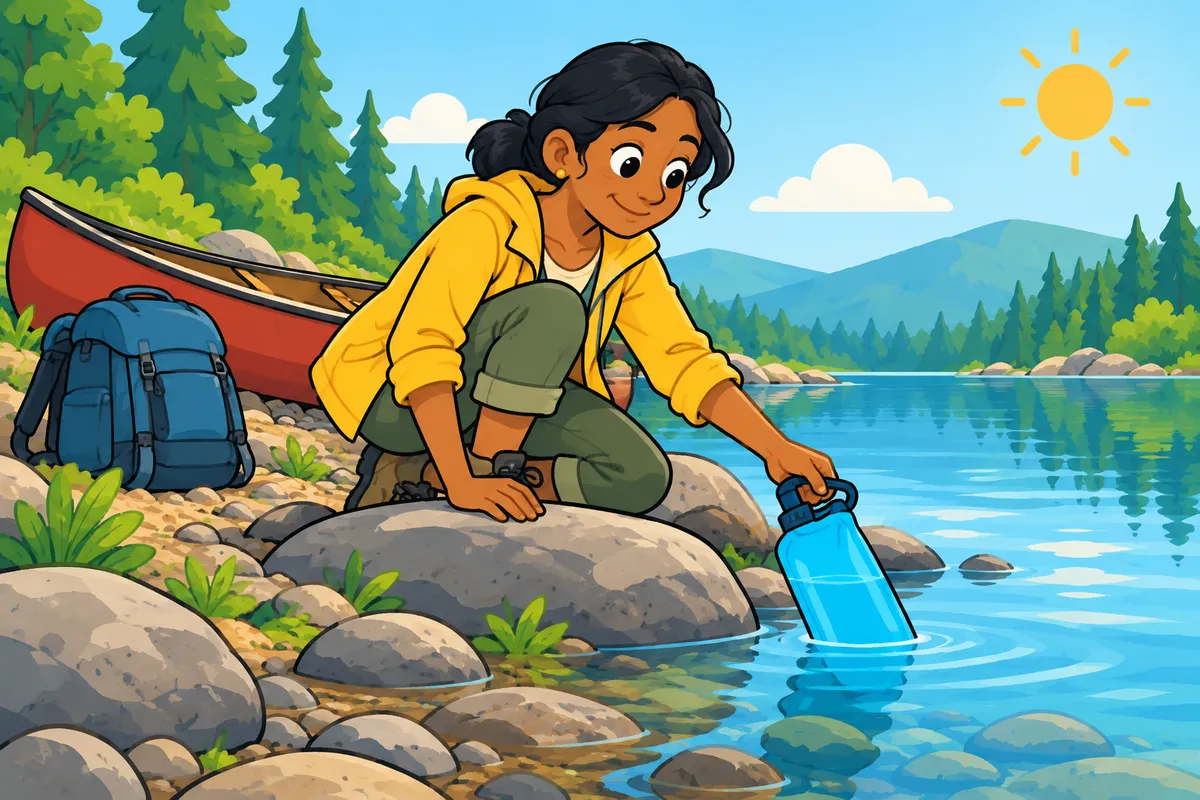
- Collect from moving or clear water, away from scum and mud
- Clear it: let it settle, then pour it through a cloth
- Treat it: boil, or filter and then disinfect
- Store it in a clean bottle with a tight lid
The order matters more than the gear. Mud and leaves shield germs from UV light and use up chlorine, so a quick settle and strain makes every later step work better.
Which Water Treatment Kills Viruses?
Boiling, UV light and chemical disinfection all kill viruses; most portable filters do not. A filter with pores of 0.3 micron or smaller still lets viruses through, the CDC says, and only reverse osmosis or an ultrafilter of about 0.01 micron removes them. That is why a filter-only kit suits the backcountry better than a village tap abroad.
This chart combines the CDC hiking page with the Wilderness Medical Society guideline of 2023.
| Method | Parasites (Giardia, Crypto) | Bacteria | Viruses | Wait or limit |
|---|---|---|---|---|
| Boiling | Yes | Yes | Yes | 1 min at a rolling boil, 3 min above 6,500 ft |
| Filter, 1 micron or less | Yes | Not all | No | Clogs; can crack |
| Filter, 0.3 micron or less | Yes | Yes | No | Clogs; can crack |
| Ultrafilter or reverse osmosis | Yes | Yes | Yes | Slow, heavier |
| Chlorine or iodine | Giardia slowly; Cryptosporidium no | Yes | Yes | 30 min or longer; hours in cold water |
| Chlorine dioxide | Yes, with a long wait | Yes | Yes | 2 to 4 hours for dependable results (WMS) |
| UV light | Yes | Yes | Yes | Small amounts of clear water only |
Boiling
Boiling kills viruses, bacteria and parasites, Cryptosporidium and Giardia included. The CDC asks for a rolling boil for 1 minute, or 3 minutes above 6,500 feet, while the EPA moves that line down to 5,000 feet and the WMS says germs die within seconds at a boil. If your camp sits between 5,000 and 6,500 feet, the three rules for boiling at altitude decide how long to wait.
Portable Filters
A filter strains germs out by size. Giardia cysts measure roughly 6 to 15 microns and Cryptosporidium 2 to 6, per the WMS, so a filter rated 1 micron or smaller stops both.
Bacteria are smaller, and viruses smaller still, which is where a filter ends and a purifier begins. The WMS warns that all filters eventually clog, and that a clogged one needs more pressure, which can force germs through or damage the element. Carry a backup method and learn to clean yours.
Chemical Tablets and Drops
Chlorine, iodine and chlorine dioxide kill bacteria and viruses. Chlorine and iodine are weak against parasites, and the CDC's emergency page says they do not kill Cryptosporidium. The CDC hiking page adds that chlorine dioxide tablets can kill Giardia and are somewhat effective against Cryptosporidium.
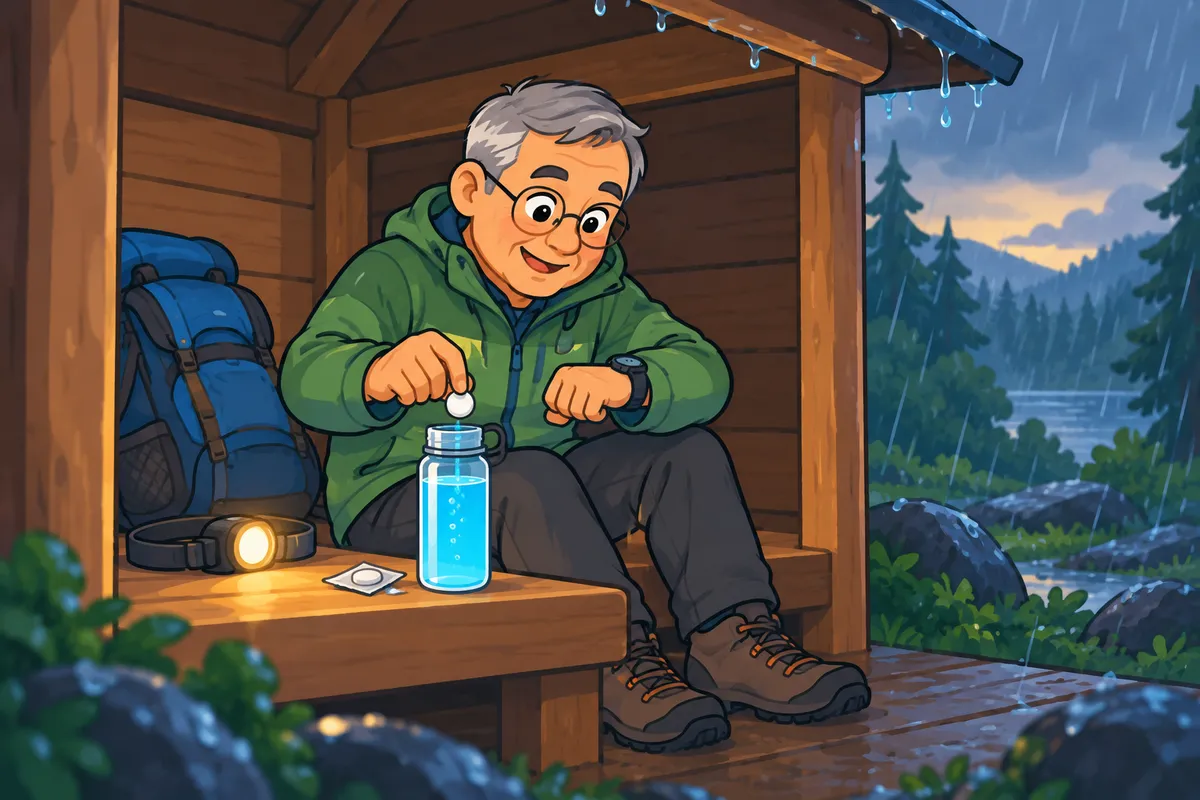
The catch is time. Follow the label's wait, because each product is made for a set volume, and expect chlorine dioxide to need several hours against Cryptosporidium. You dose iodine drops by the liter, but skip them if you are pregnant, have thyroid problems or react to iodine, and nobody should drink iodine-treated water for more than a few weeks.
UV Light Pens
A UV pen kills all three kinds of germs in small amounts of clear water. The CDC Yellow Book puts a portable unit at about 1 to 2 L per batch.
Silt shields germs from the light, so filter or settle cloudy water before you switch the pen on. UV also leaves nothing behind to protect water you store for later.
What Is the Best Way to Purify Water When Hiking?
The best way depends on the water in front of you. The Yellow Book matches methods to sources: in wild country with little human or animal activity, any single method works; near farms, camps or towns, use heat, UV, a filter plus a chemical, or an ultrafilter; and cloudy water needs clearing before a second step.
Match the Method to the Trip
- A weekend in the hills, few people or animals upstreamOne method you like: filter, boil, chemical or UV
- A lake below a busy campground or grazing landBoil, or UV, or a filter followed by a chemical
- Brown, silty river waterSettle and strain, then boil or filter and treat
- Hiking in a country with poor sanitationBoil, or a filter plus chlorine dioxide
- Freezing nightsBoil, or chemicals with a longer wait
For a typical weekend in the hills, a filter for speed plus a few chlorine dioxide tablets as backup covers both a clogged filter and a dirty source.
Do You Need to Treat Water While Backpacking?
Yes, treat every lake, stream and spring you drink from. The CDC recommends treating all surface water, and the WMS warns that looks, smell and taste cannot tell you whether water is safe. Even in remote country, the guideline still suggests treating, because one deer or one careless camper upstream is enough.
What decides the risk is what lives and camps upstream. The guideline gives its strongest call to treat where there is farming, grazing or human activity nearby, and a weaker one for empty wilderness.
The risks of a clear mountain stream, from beavers to cattle to algae, get their own page with what happens if you drink one untreated.
How Do You Clear Cloudy or Muddy Water First?
Let it settle, then pour the clear part through a clean cloth, paper towel or coffee filter. The CDC gives this as the first step for cloudy water, and the WMS suggests letting it sit about 1 hour before you pour it off.
Muddy Water to Clear Water
- Let the pot or bucket stand about 1 hour so silt sinks (WMS)
- Pour the clear top through a clean cloth, paper towel or coffee filter (CDC)
- Still thick? Stir in about 1.3 ml of alum per 0.95 L until clumps form (Yellow Book)
- Let the clumps sink, pour off the water, then filter or boil it
Clearing only lifts out dirt, so the last step, a filter or a boil, is the one that kills the germs. Alum is a powder that makes silt clump; the Yellow Book's 1.3 ml is one-fourth of a teaspoon per quart.
How Do You Purify Water Without a Filter or a Stove?
Use chemicals, or the sun, the same fallbacks a household uses when the power fails. Unscented household bleach works on clear water: the CDC gives 2 drops per quart or liter of 5 to 9 % bleach, then a 30-minute wait, and stronger or weaker bleach changes the drop count for every jug size.
- 6 h
- of sun for a clear bottle of water (SODIS, Yellow Book)
- 2 days
- when the sky stays cloudy
- 30 min
- covered after a first simmer, when fuel runs low
Solar disinfection, or SODIS, uses clear plastic bottles laid on their side in full sun and shaken now and then. The Yellow Book asks for at least 6 hours where the WMS allows 4 to 6; both say 2 days under cloud, and cloudy water needs clearing first.
How Do You Fix the Taste of Treated Water?
Boiled water tastes flat and chlorine tastes like a pool, and both have a fix that costs nothing.
| Taste problem | Fix | Source |
|---|---|---|
| Flat boiled water | Pour it back and forth between two clean containers, or add a pinch of salt per quart or liter | EPA |
| Strong chlorine or iodine | Use the minimum dose with a longer contact time of 30 to 60 minutes | WMS 2023 |
| Chlorine left after the wait | A small pinch of vitamin C (ascorbic acid) per liter, stirred in after the contact time | WMS 2023 |
Use vitamin C only at the moment you drink, never in water you store, because it removes the chlorine that protects the jug.
How Do You Keep Treated Water Safe Afterward?
Chlorine and iodine leave a residual that guards against new germs; boiling and UV do not. The WMS says boiled water may be contaminated again from storage containers or handling, and that UV gives no residual protection either.
So the habits matter after the treatment too:
- Keep treated water in a clean, tightly capped bottle.
- Pour it instead of dipping a cup.
- Keep the dirty bag and the clean bottle in separate pockets.
For prolonged storage, the WMS says to chlorinate the water and keep it in a tightly sealed container.
Does Cold Weather Change How You Treat Water?
For chemicals, yes: the WMS says cold water slows chemical disinfection, and the remedy is a higher dose or a longer contact time. Its chlorine contact times for Giardia stretch from 30 minutes in mild water to 240 minutes at 41 °F (5 °C) with a low dose.
| Free chlorine in the water | At 59 °F (15 °C) | At 41 °F (5 °C) |
|---|---|---|
| 2 mg/L | 180 minutes | 240 minutes |
| 4 mg/L | 60 minutes | 180 minutes |
| 8 mg/L | 30 minutes | 60 minutes |
Source: WMS 2023, Table 6. The WMS notes these times were extended from the usual recommendations in cold water.
That slowdown is a chemical problem, which makes a boil the simplest choice on a freezing morning. If you rely on tablets, allow the full stated time and treat a bottle at night to drink at breakfast.
What Purifying Cannot Fix
No camp method makes water with fuel, chemicals or toxins safe. The CDC says boiling and disinfecting cannot clean water that holds chemicals, toxins or radioactive material, so find another source.
How Much Water Should You Carry Between Sources?
Carry enough to reach the next safe source, plus a margin. Death Valley's rangers ask for at least 2 liters on a short winter day hike and 1 gallon or more for warm-season hikes and overnight trips.
For your own route, plan the liters per hour of hiking and mark each refill point on the map before you leave; at a campsite with no tap, plan 2 gallons per person per day on top.
Matching the Kit to the Water You Will Meet
The same rules give different kits for different water.
Pack This Weekend's Water Kit
Before You Leave the Car
6 items- A filter rated 1 micron or less, and its cleaning tool
- Chlorine dioxide tablets as a backup
- A stove, a pot with a lid and fuel for boiling
- A cloth or coffee filter for cloudy water
- Bottles for clean water, kept apart from the dirty bag
- Every refill point marked on your map
General information for healthy adults, not medical advice. If a doctor has set your fluid amount, follow that.
All Guides in Outdoors and Travel
Every guide, A to Z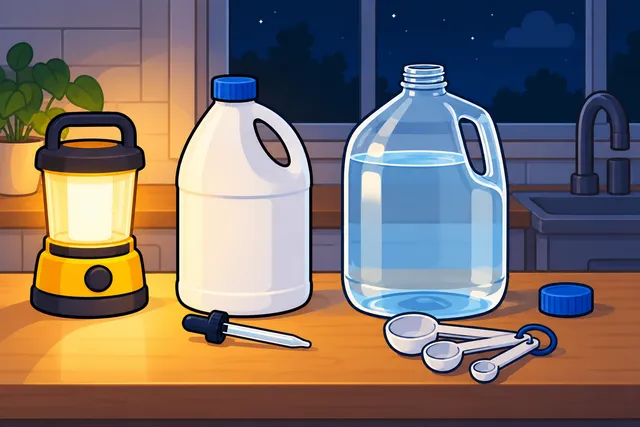
Water on the Trail 9 guides
Clear stream water can still carry germs you cannot see. These guides compare the ways to make it safe, with the times and doses the CDC and EPA give for each.
Water on the Trail page How Long to Boil Water to Purify It, at Sea Level and Up High
 Is It Safe to Drink Water From a Stream? What to Do Before a Sip
 How Do Water Purification Tablets Work? Kinds, Wait Times and Limits
 Water Filter vs Water Purifier for Backpacking: Which Do You Need?
 How Much Iodine to Purify Water, in Drops per Liter and Gallon
 How Much Water for Camping? Gallons per Person for Each Trip
 How to Filter Muddy Water to Drink, From Silt to a Safe Bottle
 Can You Drink Melted Snow? When It Is Safe and How to Boil It
 How to Find Water While Hiking: Plan Your Sources Before the Trail
Emergency Water 2 guides
Sources
- US Centers for Disease Control and Prevention. About Water Treatment Options When Hiking, Camping, or Traveling, 2025.
- Wilderness & Environmental Medicine (Backer, Derlet and Hill). Wilderness Medical Society Clinical Practice Guidelines on Water Treatment for Wilderness, International Travel, and Austere Situations, 2023.
- CDC Yellow Book (Backer and Hill). Water Disinfection for Travelers, 2025.
- US Centers for Disease Control and Prevention. How to Make Water Safe in an Emergency, 2024.
- US Centers for Disease Control and Prevention. Harmful Algal Blooms and Your Health, 2024.
- National Park Service, Death Valley. Hiking, 2026.
- US Environmental Protection Agency. Emergency Disinfection of Drinking Water, 2026.
Sources checked by the Glubbo Editorial Team on Oct 19, 2026. General information, not medical advice. How we write and check our guides.

