Exercise and Heat · Running, Cycling and Other Sports
How Much Water to Bring on a Hike, by the Hour and by the Day
Work out what to carry for a day hike or a backpacking trip, and where to refill on the way.
 By the Glubbo Editorial Team · Updated Oct 19, 2026 · 9 min read
On This Page
- How Much Water Do You Need per Hour of Hiking?
- How Much Water Should You Bring on a Day Hike?
- How Much Water Do You Need per Day Backpacking?
- Can You Drink Too Much Water on a Hike?
- How Much Water Does a Child Need on a Hike?
- What to Pack Besides Water
- Do You Need Electrolytes on a Hike?
- Signs You Need to Stop on the Trail
- After the Hike, Drink Back What You Lost
- Sources
Short answer
About 0.7 to 1 L for every hour on a warm day.
- A 4-hour summer hike calls for about 2.8 to 3.8 L (96 to 128 oz).
- Backpacking in warm weather: start from about 1 gallon (3.8 L) a day.
- Find every refill point before you go and check it is open this season.
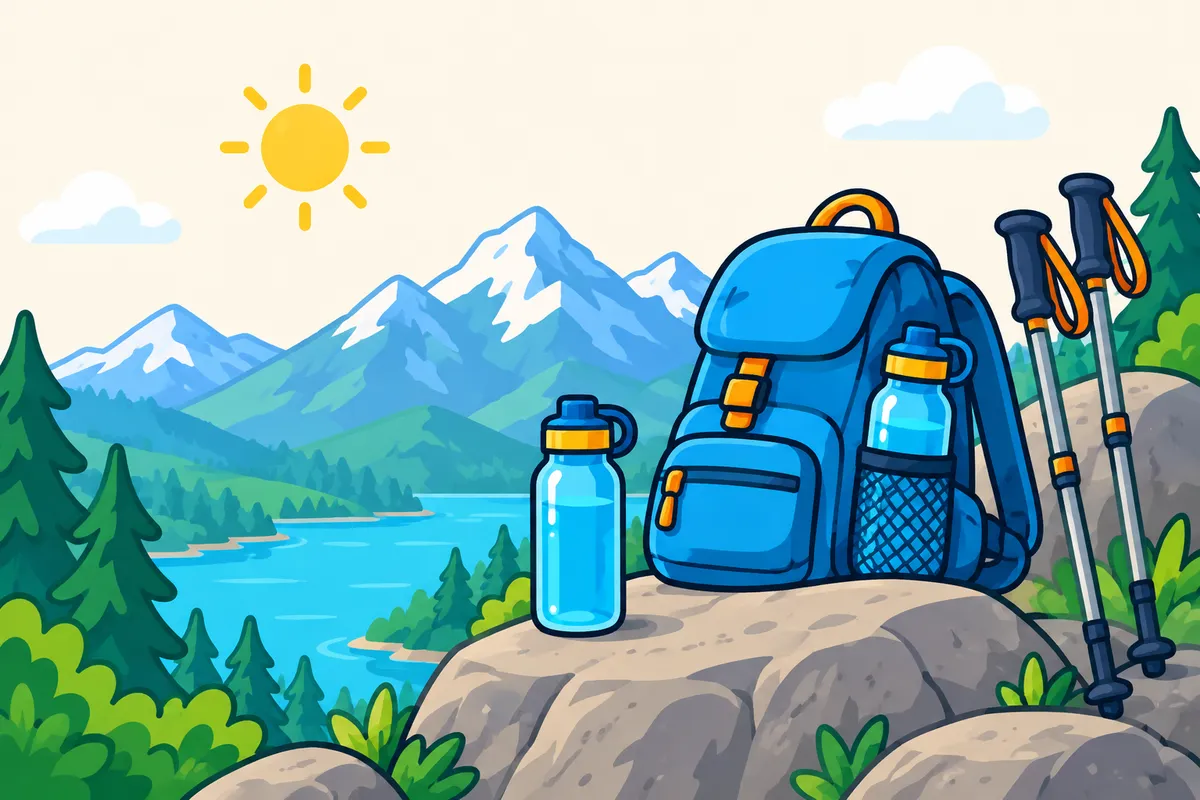
Plan on about 0.7 to 1 L (24 to 32 oz) of water for every hour you hike on a warm day, and less when it is cool. Count your hours, multiply, then find out where you can refill before you leave the car.
The trail adds two problems the gym never has: you carry every liter on your back, and the next tap can be hours away.
How Much Water Do You Need per Hour of Hiking?
About 0.7 to 0.95 L (24 to 32 oz) an hour on a warm day at a steady pace. That is the pace NIOSH sets for moderate activity in the heat lasting under 2 hours: 1 cup (8 oz) of water every 15 to 20 minutes, generally no more than 6 cups an hour, and sports drinks once sweating lasts several hours. On a cool, easy trail you drink less, on a flat walk with no pack less again, and on a steep desert climb you can sweat far more.
- 0.7–0.95 L
- an hour at the NIOSH pace of 1 cup every 15 to 20 minutes
- 1–2 L
- of water an hour that Grand Canyon hikers can lose
- 2 L+
- to carry on a short winter day hike in Death Valley
- 1 gallon+
- (3.8 L) for long warm-season hikes and overnight trips there
Why One Rate Does Not Fit Every Hiker
Your sweat decides it. The National Athletic Trainers' Association (NATA) reports adult sweat rates during exercise from 0.5 to 4.0 L an hour, so two people on the same trail can need very different amounts. On a mild day, when you do not know your own rate, NATA says drinking to thirst most likely represents a safe strategy to prevent overdrinking.
Two official sources put numbers on trail sweat:
- The CDC's health guide for travelers notes that sweat rates "may reach 1 liter per hour".
- Grand Canyon rangers go further for their summer trails: hikers there "can lose one or two quarts (liters) of water per hour".
Find Your Own Rate on One Hike
- Weigh yourself before a two-hour hike and again after, in the same dry clothes.
- Add what you drank to the weight you lost: 1 kg lost plus 1 L drunk means you sweated about 2 L, or 1 L an hour.
- Subtract any pee you passed on the way when you work out your sweat from two weigh-ins.
Heat, Height and Cold Change the Rate
Three trails that change your hourly rate
Summer heat
You sweat more
- 1 to 2 L an hour lost at Grand Canyon
- Off the trail 10 am to 4 pm
Suits you if you hike desert or canyon trails in summer.
Above about 2,500 m
- Your kidneys make extra urine
- It lasts several days
Suits you if your hike climbs to 8,200 ft or higher.
Thirst goes quiet
- Cold air dulls thirst
- You drink too little without noticing
Suits you if you hike in cold weather and rarely feel thirsty.
Grand Canyon keeps summer hikers off the trail from 10 am to 4 pm because most of the people who need emergency help for heat illness there hike in those hours.
How Much Water Should You Bring on a Day Hike?
Multiply your hours on the trail by your hourly rate, then add a reserve for delays. At the NIOSH pace, a 4-hour summer hike calls for about 2.8 to 3.8 L (96 to 128 oz). Death Valley National Park asks for at least 2 L even on a short winter day hike, because its dry air makes you drink more in every season.
| Hours on the trail | 3 cups/hour (1 per 20 min) | 4 cups/hour (1 per 15 min) |
|---|---|---|
| 2 hours | 1.4 L (48 oz) | 1.9 L (64 oz) |
| 4 hours | 2.8 L (96 oz) | 3.8 L (128 oz) |
| 6 hours | 4.3 L (144 oz) | 5.7 L (192 oz) |
| 8 hours | 5.7 L (192 oz) | 7.6 L (256 oz) |
Water weighs about 1 kg per liter, so 3.8 L puts close to 4 kg (8.4 lb) in your pack. That is why long hikes depend on refills more than on a bigger bag.
Water per Mile
Trail guides often count in miles, and your speed turns the hourly pace into a distance. At the same 0.7 to 0.95 L an hour:
| Your pace | Time per mile | Water per mile |
|---|---|---|
| 1.5 mph, steep or loaded | 40 min | 0.47–0.63 L (16–21 oz) |
| 2 mph, a steady hike | 30 min | 0.36–0.47 L (12–16 oz) |
| 3 mph, a brisk flat trail | 20 min | 0.24–0.32 L (8–11 oz) |
A 6-mile loop at 2 mph is three hours, so plan 2.1 to 2.9 L (72 to 96 oz) for it, and add the reserve.
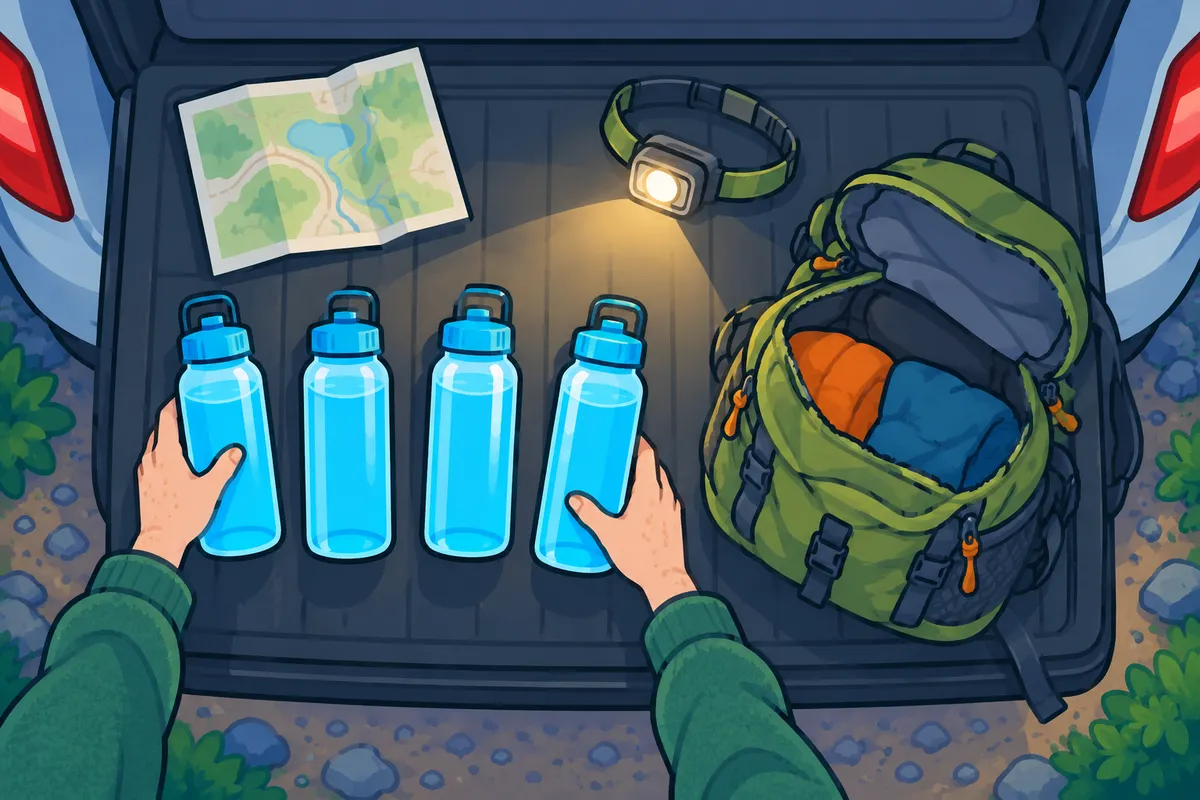
Check every refill before you count on it. Taps and springs get shut off or dry up, so finding the water on your route comes before the packing list.
Dana's Five-Hour Summer Loop
Plan Your Water Before You Leave
Five Minutes at Home
- Count the hours, including breaks and the walk back
- Multiply by 3 to 4 cups an hour on a warm day
- Find your refills and confirm they are running
- Pack salty snacks with the water
- Weigh yourself before and after, and write both numbers down
How Much Water Do You Need per Day Backpacking?
Start from about 1 gallon (3.8 L) of drinking water a day in warm weather, and expect more on hard, hot days. Death Valley National Park asks hikers to carry "1 gallon or more" for longer warm-season hikes and overnight trips. The US National Academies note that very active people in hot weather "often have daily total water needs of six liters or more".
Where a Backpacking Day's Water Goes
Split the day into three parts and the gallon makes sense:
- You drink in camp before you set off.
- You drink on the trail at your hourly rate.
- You drink again with dinner and before bed.
Cooking and washing at camp need water too, and the per-use numbers for a camping trip show how fast that adds up.
The trail hours take the biggest share: five hours at 3 cups an hour is already 3.5 L. Cooking water comes on top of what you drink, so count it separately when you plan the stove.
Refills Decide the Plan
On a multi-day trip you cannot carry every liter, so the map decides where you camp. Clear, fast water gets no pass: a sparkling mountain creek can still carry Giardia.
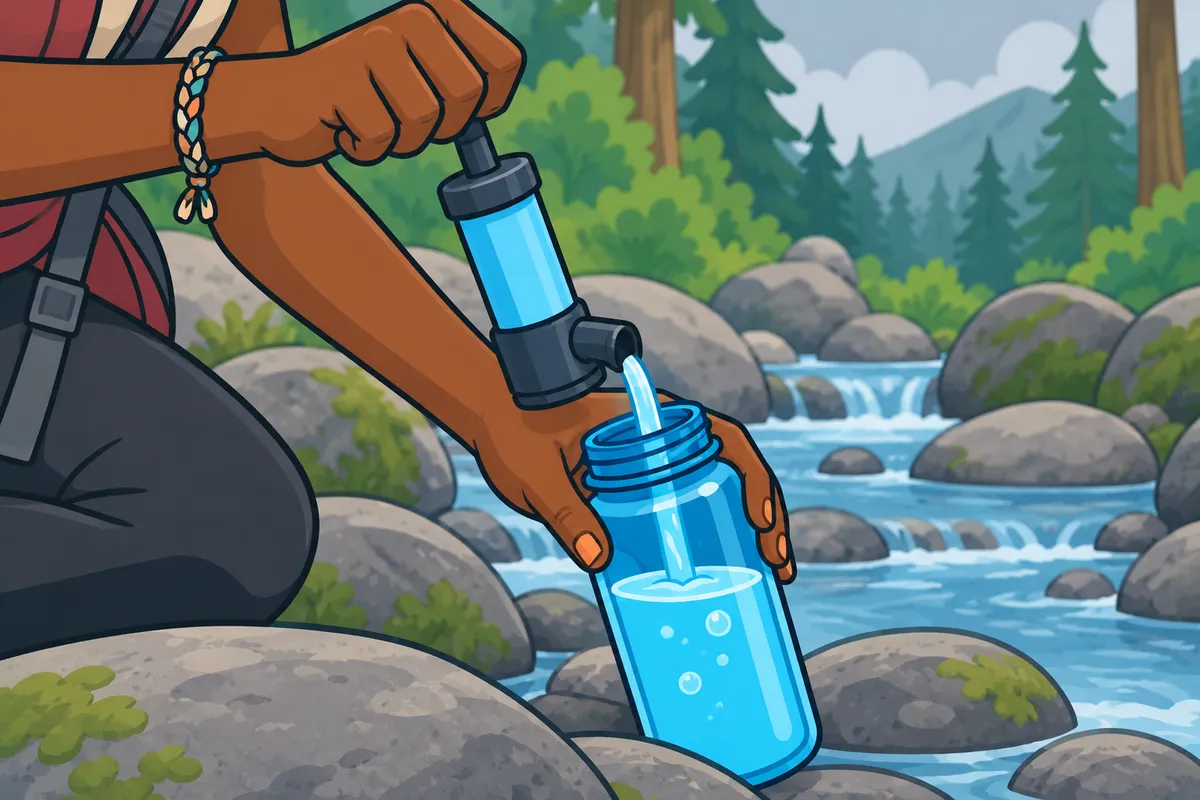
A dry stretch between two sources sets the most water you will ever carry at once. Work it out from the table above: a 6-hour dry stretch at 3 cups an hour needs about 4.3 L in the pack.
Can You Drink Too Much Water on a Hike?
Yes. If you drink large amounts of plain water while you sweat out salt, the sodium in your blood can fall, a condition called hyponatremia. Grand Canyon rangers say it "mimics the early symptoms of heat exhaustion", and the CDC's travel guide reports it in "both endurance athletes and recreational hikers".
The CDC guide says to drink only enough to relieve thirst and never to force fluid, calling the old idea that you cannot drink too much "outdated and dangerous". Grand Canyon asks hikers to sip regularly and eat often, which fits the same idea: steady small drinks with food, never a liter gulped at a viewpoint.
If someone on your trip feels sick, acts confused and has been drinking a lot, Grand Canyon's advice is to:
- Stop the water.
- Give salty food.
- Rest in the shade.
- Get help at once if they become less alert.
How Much Water Does a Child Need on a Hike?
Less than an adult, but on a schedule. The American Academy of Pediatrics tells parents to encourage a small amount of fluid (3 to 4 oz) every 15 minutes during exercise, and says water is enough for anything under an hour.
On a 4-hour hike that comes to 12 to 16 oz an hour, or 48 to 64 oz (1.4 to 1.9 L) in all, so pack the child's share as well. Young athletes drink on the same rhythm in sport.
What to Pack Besides Water
Salt and shade matter almost as much as the water itself. Grand Canyon's list of summer essentials includes these:
Summer Hiking Essentials
6 items- Water: plain water and some form of electrolyte replacement
- Salty snacks and high energy food
- Cooling mechanisms: spray bottles, bandanas and towels
- Sun protection layers, a hat and sunscreen
- A flashlight and spare batteries, to hike out in the cool hours
- A map
Do You Need Electrolytes on a Hike?
Not on most day hikes. The CDC's travel guide says that during mild to moderate exertion, electrolyte replacement offers no advantage over plain water, and that for recreational hikers food is the most efficient way to replace salt: trail mix, crackers and pretzels as well as sweets.
Salt tablets often cause nausea and vomiting, and most sports-electrolyte drinks do not hold enough sodium to prevent hyponatremia. Past about 6 hours of effort or heat, the guide advises supplemental sodium, which is where a sports drink earns its place.
Signs You Need to Stop on the Trail
Stop, find shade and rest at the first signs of heat exhaustion. Grand Canyon asks hikers to rest in the shade for 30 to 45 minutes, drink water with electrolytes, eat and get wet to cool down.
At the First Signs of Heat Exhaustion
- Stop hiking and rest in the shade for 30 to 45 minutes
- Drink water with electrolytes
- Eat high-energy food with some fat and sugar
- Get wet to cool the body
Grand Canyon lists fatigue, nausea, vomiting, cool and moist skin, headache and cramps as the signs. Confusion is the line between that and an emergency. Grand Canyon says heat stroke is "distinguished from heat exhaustion by altered mental status", and dry skin is no safe test, because heat stroke during exercise often comes with heavy sweat.
After the Hike, Drink Back What You Lost
Weigh yourself in the same dry clothes. NATA's rule is to drink back 100 to 150 % of the weight you lost, and to eat and drink within 2 hours of finishing so fluid, electrolytes, carbohydrates and protein come back together. A salty dinner helps, because the salt in food keeps more of the water in your body.
General information for healthy adults, not medical advice. If a doctor has set your fluid amount, follow that.
More in Exercise and Heat
Sources
- CDC, National Institute for Occupational Safety and Health. Workplace Recommendations, 2026.
- CDC, National Institute for Occupational Safety and Health. Heat-related Illnesses, 2026.
- National Park Service, Grand Canyon National Park. Summer Hiking: Hike Smart, 2026.
- National Park Service, Death Valley National Park. Hiking, 2026.
- CDC Yellow Book. Heat and Cold Illness in Travelers, 2025.
- Journal of Athletic Training (National Athletic Trainers' Association). National Athletic Trainers' Association Position Statement: Fluid Replacement for the Physically Active, 2017.
- National Academies of Sciences. Report sets dietary intake levels for water, salt, and potassium (press release), 2004.
Sources checked by the Glubbo Editorial Team on Oct 19, 2026. General information, not medical advice. How we write and check our guides.

