Exercise and Heat · Heat, Cold and Altitude
How Much Water to Drink at High Altitude, and What It Cannot Fix
See the four ways the mountains take water from you, a day's sum for two trekkers, and when to go down.
 By the Glubbo Editorial Team · Updated Oct 19, 2026 · 10 min read
On This Page
- Does Altitude Dehydrate You?
- So How Much Should You Drink Up High?
- Does Drinking More Water Prevent Altitude Sickness?
- At What Altitude Does Altitude Sickness Start?
- How Much Water Should You Drink in a Ski Town or at Colorado Altitude?
- Why Do You Pee More at High Altitude?
- How Can You Tell Altitude Sickness From Dehydration?
- Should You Drink Alcohol at High Altitude?
- When Altitude Sickness Needs Help Now
- Plan the Ascent, Then the Water
- Sources
Short answer
No official extra: drink your usual goal plus your sweat.
- Above 4,300 m (14,100 ft), your breath carries off about 200 ml more a day.
- Above about 2,500 m you pee more for several days; keep your pee pale yellow.
- Extra water will not prevent altitude sickness; a slow ascent comes first.
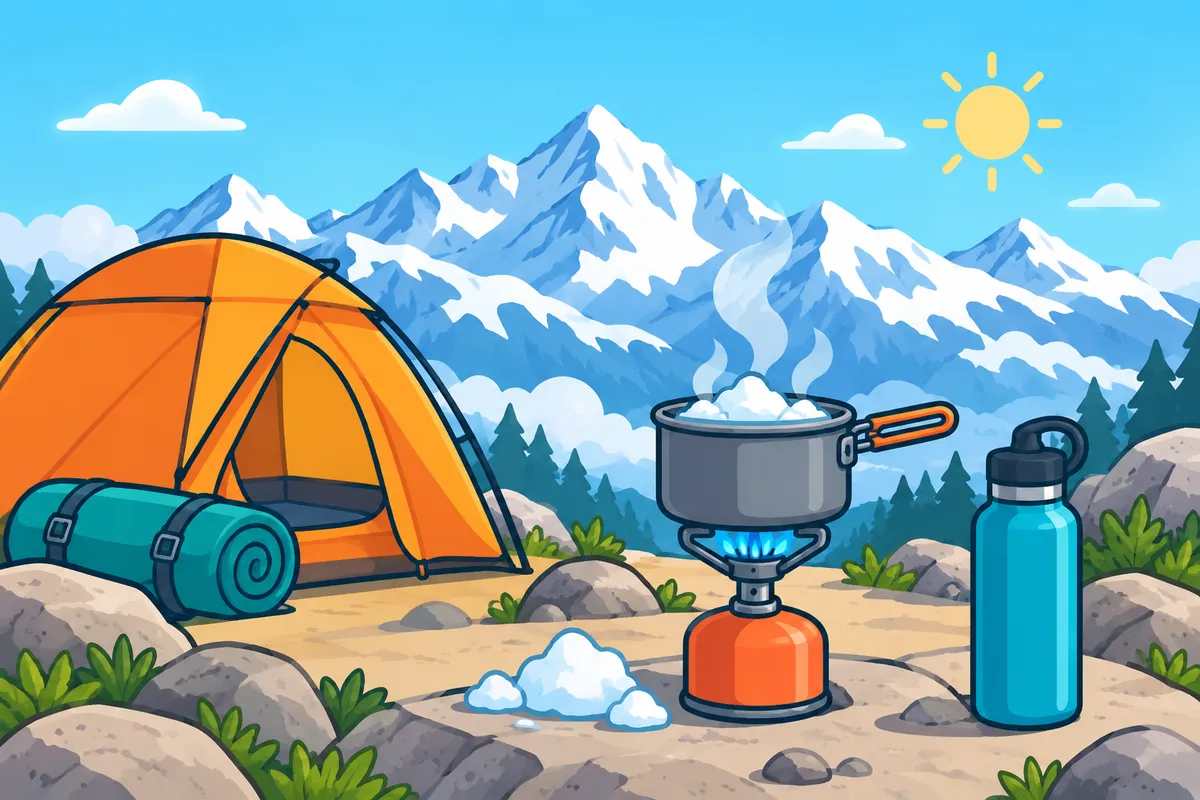
Drink your usual daily amount, add back what you sweat on the climb, and keep your pee pale. No health body publishes an extra number of liters for altitude, but the mountains do take water from you in four ways, and the plan below covers each one. The one thing water cannot do is protect you from altitude sickness on its own, and that matters most above about 2,500 m (8,200 ft).
Does Altitude Dehydrate You?
Yes. The US National Academies write that altitude exposure "will result in dehydration", for four reasons:
- You lose more water in your breath.
- Your kidneys make extra urine.
- You drink less.
- A hard climb makes you sweat.
Together they leave you with less body water than at home.
- 250 ml
- of water lost in your breath on a usual day
- +200 ml
- a day more in your breath above 4,300 m (14,100 ft)
- 2,500 m
- (8,200 ft): above this, you pee more for several days
- 2–3 L
- drunk less over several days, in the studies they cite
Your Breath
Every breath you let out carries water. The National Academies give a usual baseline of about 250 ml (8 oz) a day, and say that above 4,300 m (14,100 ft) that loss rises by "approximately 200 mL/day".
That is less than a glass a day, so breath alone rarely leaves you short. It matters because it adds to the three losses below.
Your Kidneys
When you arrive at altitude, your kidneys start making extra urine. In lowlanders going above 2,500 m, the National Academies write, low oxygen "will rapidly initiate diuresis that continues for several days". The pee section below explains why.
Drinking Less Than You Think
People drink less up high. The studies the National Academies cite measured a drop in drinking of about 2 to 3 L spread over several days.
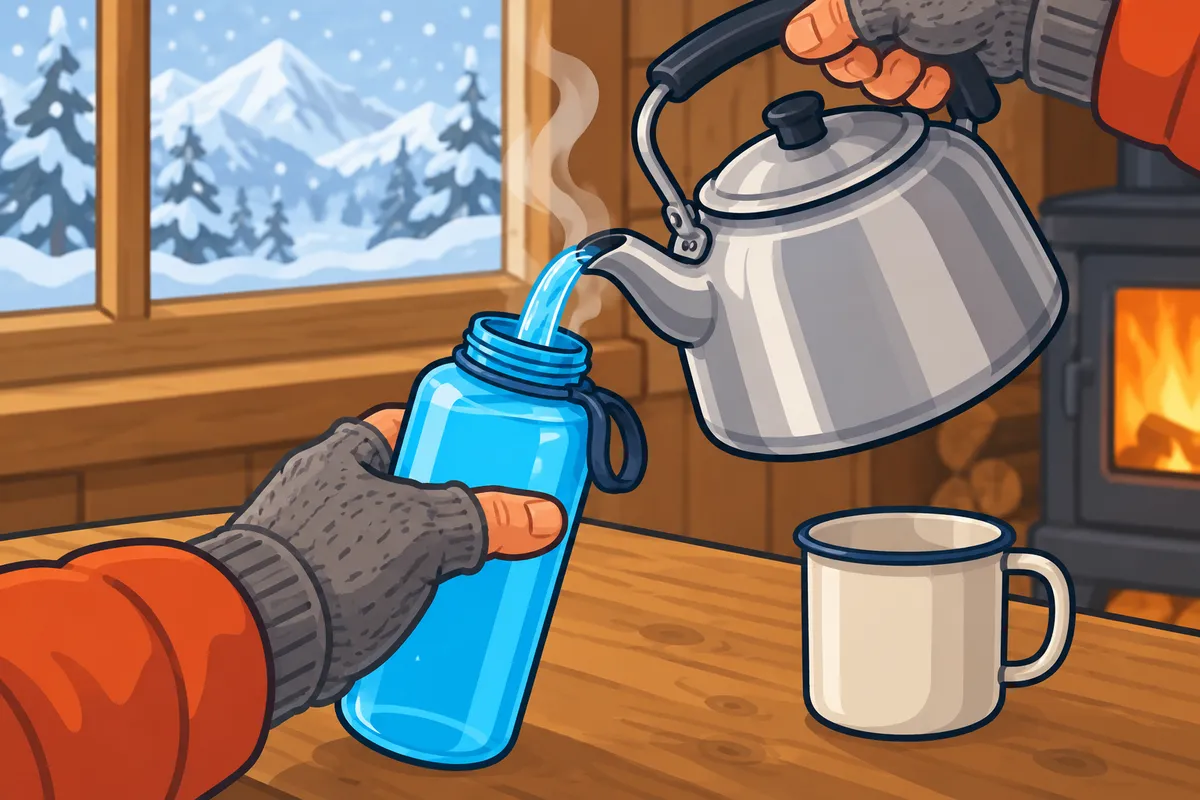
Cold may explain part of it. The National Athletic Trainers' Association says that when you are active in cold weather "the drive for thirst is blunted", and most high places are cold, where thirst fades and you pee a little more.
Sweat on the Climb
A day on steep ground is hard work, and hard work makes you sweat even when the air is cold. The National Academies list "possibly elevated sweating" from climbing rugged terrain as the fourth loss.
Your clothes hide it: sweat soaks into layers instead of dripping. A weigh-in before and after one training hike shows your own number before you travel.
So How Much Should You Drink Up High?
Your normal daily amount, plus the sweat from each day's climb, plus a little for your breath once you sleep high. Pale yellow pee and steady thirst tell you it is enough. A fixed "extra liters at altitude" figure that you may see online has no health-body source behind it, so it is left out here.
The sum for two adults on a trek uses Glubbo's habit formula as the daily base. The daily base is the Glubbo goal for a cool climate.
| Person | Daily base (Glubbo goal) | Climbing sweat (weigh-in) | Breath above 4,300 m | Day's total |
|---|---|---|---|---|
| Vanessa: 60 kg (132 lb), female, High activity | 1,850 ml (63 oz) | 1.0 kg lost on a 6-hour climb | +200 ml | about 3.05 L (103 oz) |
| Arturo: 78 kg (172 lb), male, High activity | 2,700 ml (91 oz) | 1.5 kg lost on the same climb | +200 ml | about 4.4 L (149 oz) |
The weigh-in numbers are examples; yours come from your own scale. These examples are for healthy adults, and the formula is never for children or pregnancy. To run Arturo's sum for yourself, start from your sea-level goal and add your weigh-in loss on top.
Spread It Out
A big drink at camp does not replace a day of small ones. A large drink all at once sets off extra urine, which NATA gives as the reason you have to drink back more than you lost after exercise.
Spread your drinks across the day:
- Drink with breakfast.
- Sip on every rest stop.
- Drink again with dinner.
In camp, melting snow takes stove time, so plan the melt before you are thirsty.
Why You Cannot Drink the Deficit Away
Forcing extra liters does not fix the altitude loss. NATA describes the water lost to altitude diuresis as self-limiting at roughly 2 % of body mass, and says this deficit "is not corrected by increased fluid consumption". It is part of how the body adapts, because thickening the blood carries more oxygen.
So the aim is to stay out of the extra dehydration you can prevent, from sweat and from drinking too little, and not to chase a number that the mountain resets.
Does Drinking More Water Prevent Altitude Sickness?
No study has shown that it does. The National Academies write that "the effects of dehydration on mountain sickness and performance decrements at altitude have not been studied". The CDC's travel health guide says a slow ascent gives the body crucial time to adjust, and its own checklist for travelers does not include extra water.
The NHS does list "drink enough water so you do not get dehydrated" among its tips. Both fit together: drink enough to stay out of dehydration, and do not expect a full bottle to make up for a fast ascent.
What Comes Before Any Bottle
The ascent rules are the real prevention:
Ascent rules that come before any bottle
5 items- Do not go from low ground (under 1,200 m, about 4,000 ft) to a sleeping height above 2,750 m (9,000 ft) in one day, the CDC guide says; the NHS sets its line at 3,500 m
- Once above 3,000 m (9,800 ft), sleep no more than 500 m (1,650 ft) higher than the night before
- Add a rest day every 3 to 4 days (NHS), or an extra night for every 1,000 m (3,300 ft) you gain (CDC)
- Keep to mild exercise for the first 48 hours (CDC)
- Ask a doctor or travel clinic about medicine to prevent it if you have had altitude sickness before or must go up fast
At What Altitude Does Altitude Sickness Start?
It becomes common from about 2,500 m (8,000 ft). The CDC travel guide reports altitude sickness in 25 % of visitors sleeping above 2,450 m (8,000 ft) in Colorado, and rates near 50 % where people fly or drive straight up high. It grades the risk of your first night by how high you sleep.
| Place named by the CDC | Height | First-night risk (CDC tiers) |
|---|---|---|
| Vail, Colorado (lodging) | 2,480 m (8,150 ft) | Low: under 2,750 m (9,000 ft) |
| Breckenridge, Colorado (lodging) | 2,925 m (9,600 ft) | Medium: 2,750 to 3,400 m |
| Cusco, Peru | about 3,350 m (11,000 ft) | Medium |
| La Paz, Bolivia | about 3,650 m (12,000 ft) | High: above 3,400 m (11,150 ft) |
| Lhasa, Tibet | about 3,700 m (12,100 ft) | High |
| Everest base camp, Nepal | about 5,400 m (17,700 ft) | Reached on foot over days; illness can approach 30 % of trekkers higher up |
A city you fly into, such as La Paz or Lhasa, puts you in the high tier on night one, with no slow climb to help. There, the rules above about rest days and mild exercise matter more than any bottle.
Who Gets It
The CDC guide says:
- How you did at altitude before "is the most reliable guide for future trips", at a similar height and pace.
- Fitness does not protect you: "Training and physical fitness do not affect risk."
- Sex plays "a minimal role, if any", and people over 50 have slightly less risk.
- Children are "as susceptible as adults". A child too young to talk may show it only as loss of appetite, irritability and pallor, so watch how a toddler eats and behaves after arrival, alongside their drinks.
How Much Water Should You Drink in a Ski Town or at Colorado Altitude?
Treat the first days like a trek: drink your usual amount, add the sweat from skiing or hiking, and keep your pee pale. The National Academies place the extra urine at altitudes above 2,500 m (8,200 ft), which is higher than Vail's lodging at 2,480 m but below Breckenridge's 2,925 m, so a stay in a high resort town may bring it on.
The CDC counts 25 % of visitors sleeping above 2,450 m in Colorado with altitude illness. A headache in the first hours after you arrive may be altitude sickness rather than thirst, since the CDC says it starts 2 to 12 hours after arrival. Rest at the same height, drink to pale pee and skip alcohol for the first 48 hours.
Why Do You Pee More at High Altitude?
Low oxygen makes your kidneys release more water and salt, so you pee more for the first several days above about 2,500 m. The National Academies describe it as diuresis that starts quickly and lasts several days, and they note that the resulting loss of body water may even help your body carry oxygen.
How Can You Tell Altitude Sickness From Dehydration?
You often cannot tell from the symptoms alone, and the CDC guide lists dehydration among the conditions that look like altitude sickness. Altitude sickness usually starts within hours of arriving or climbing higher, its main sign is a headache, and it gets better quickly when you go down at least 300 m (1,000 ft).
| Altitude sickness | |
|---|---|
| Main sign | A headache, usually with loss of appetite, dizziness, tiredness or nausea |
| When it starts | 2 to 12 hours after arriving or going higher (CDC); 6 to 10 hours (NHS) |
| How long it lasts | Usually 1 to 3 days if you do not go higher |
| What helps | Rest at the same height; go down if it gets worse |
The slower signs of running short are a dry mouth, dizziness when you stand and dark yellow pee. If your pee is dark and you have drunk little, drink and see whether the headache eases with water, but do not climb higher until it has gone.
Should You Drink Alcohol at High Altitude?
Better not, at least at first. The CDC travel guide asks travelers to "avoid alcohol for the first 48 hours at high altitude", and the NHS goes further and says not to drink alcohol while traveling or climbing at altitude. Your daily coffee is a different case.
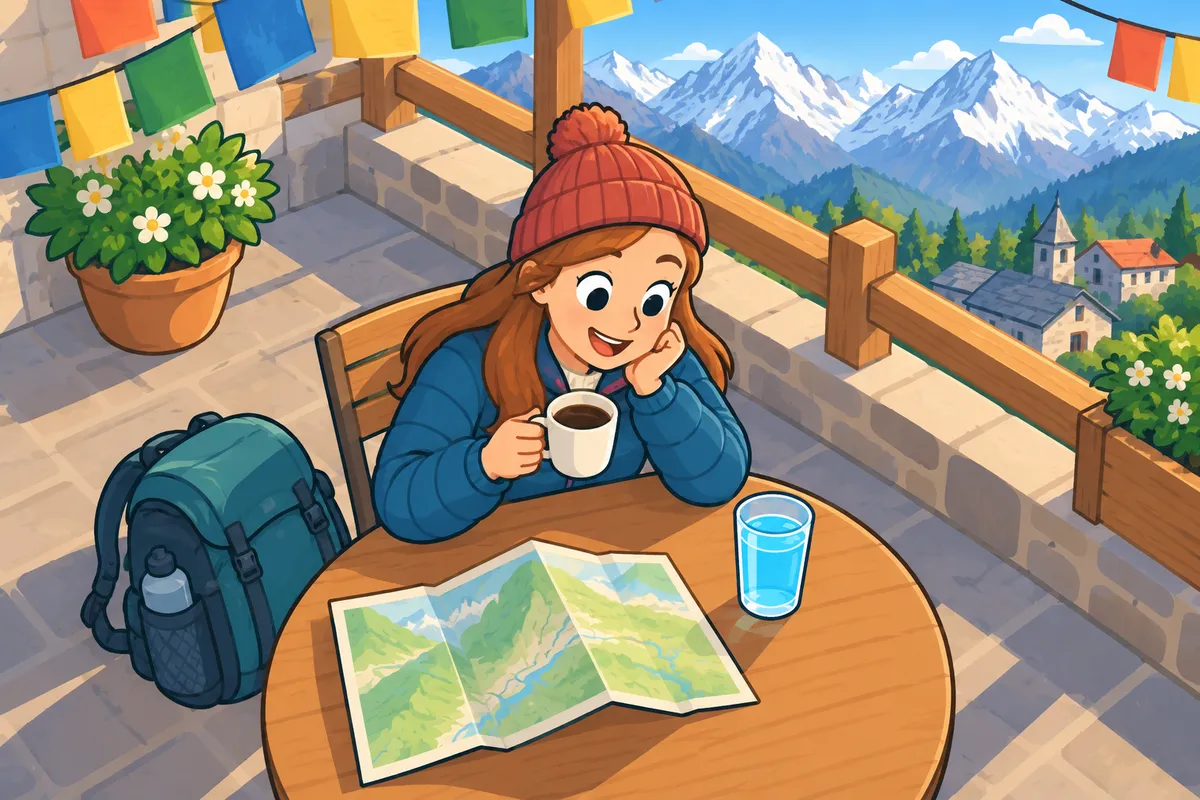
Your Usual Coffee
- Keep it if you drink it every day
- A missed cup can bring a withdrawal headache
- That headache looks like altitude sickness
Alcohol
- Skip it for the first 48 hours (CDC)
- Skip it on the whole climb
- Never as a sleep aid up high
When Altitude Sickness Needs Help Now
Go down and get help at once if any of these signs appear:
Get Medical Help Immediately If You or Someone Else
8 items- have symptoms of altitude sickness and feel very unwell
- are confused
- have problems with balance or coordination
- are seeing or hearing things that are not real (hallucinations)
- feel short of breath, even when resting
- have a cough or are coughing up frothy or bloody spit
- have blue or grey skin, lips, tongue or nails
- are very sleepy or difficult to wake
Plan the Ascent, Then the Water
Before you go up
- Plan the ascent first: sleeping height, rest days and a way down
- Weigh yourself before and after one long training hike to learn your sweat per hour
- Work out your daily base and add your climbing sweat on top
- Check your pee each morning; pale yellow means you are on track
For days on the trail at lower heights, count your water by the hours you will walk.
General information for healthy adults, not medical advice. If a doctor has set your fluid amount, follow that.

More in Exercise and Heat
Sources
- National Academies of Sciences. Dietary Reference Intakes, Chapter 4: Water, 2005.
- CDC Yellow Book. High-Altitude Travel and Altitude Illness, 2025.
- NHS. Altitude sickness, 2023.
- Journal of Athletic Training (National Athletic Trainers' Association). National Athletic Trainers' Association Position Statement: Fluid Replacement for the Physically Active, 2017.
Sources checked by the Glubbo Editorial Team on Oct 19, 2026. General information, not medical advice. How we write and check our guides.

