Exercise and Heat · Heat, Cold and Altitude
How Much Water to Drink After a Sauna, and Does It Dehydrate You?
What a sauna visit costs in sweat, measured in 674 people, how much to drink after, and the one drink to leave outside.
 By the Glubbo Editorial Team · Updated Oct 19, 2026 · 8 min read
On This Page
- Does a Sauna Dehydrate You?
- How Much Water Do You Lose in a Sauna?
- How Much Water Should You Drink After a Sauna?
- Should You Drink Water in the Sauna?
- Why Do You Get a Headache After a Sauna?
- Is a Steam Room More Dehydrating Than a Sauna?
- Is It Safe to Drink Alcohol in a Sauna?
- Who Needs to Be More Careful in the Heat?
- A Bottle in the Cool Area Between Rounds
- Sources
Short answer
Drink about what you sweated: often half a liter.
- In 674 students, two 10-minute rounds at 90 °C cost women 0.37 kg and men 0.50 kg.
- Replace 100 to 150 % of that over the next hour or two: about 0.4 to 0.75 L.
- Skip alcohol: half the people who died in Finnish saunas had been drinking.
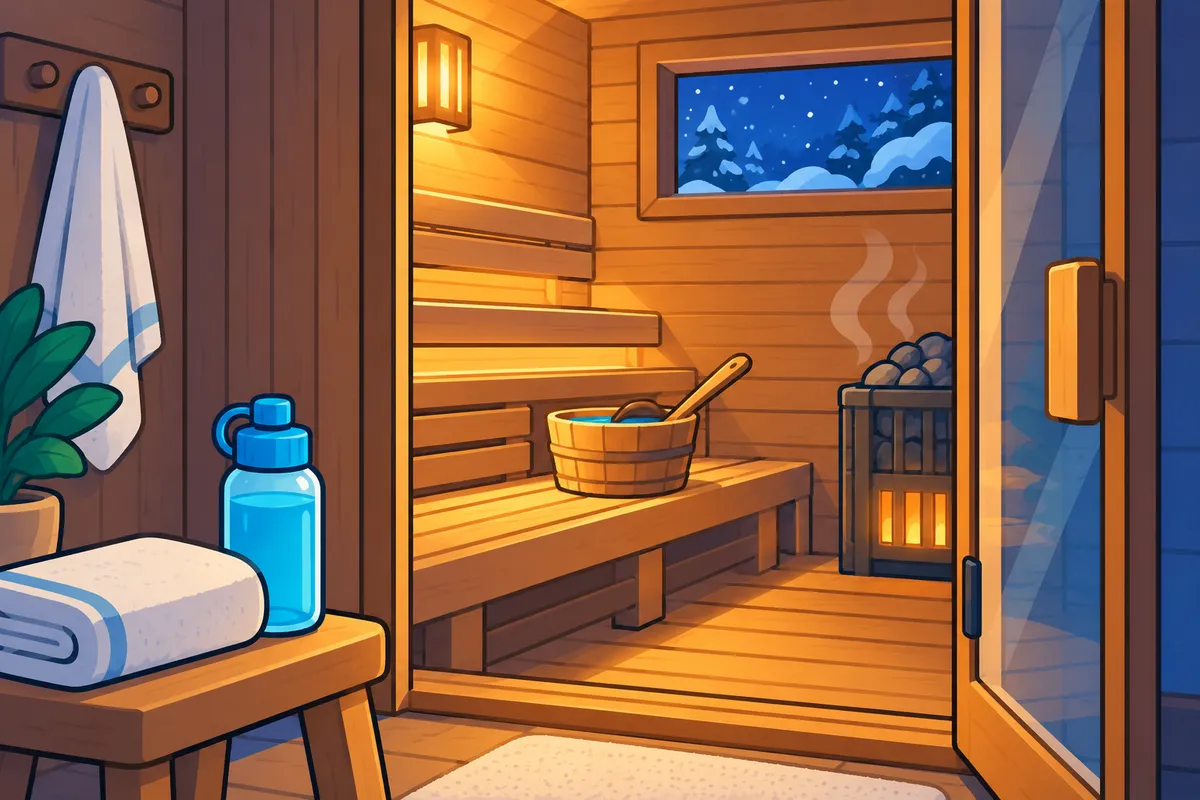
Drink back about what you sweated: two 10-minute sauna rounds cost most adults 0.4 to 0.5 kg, so a bottle over the next hour or two covers it. Weigh yourself dry before and after once, and that half kilo is almost all water, which tells you how much to drink.
Alcohol is the real risk in a sauna, not water: half of the people who died in Finnish saunas had been drinking.
Does a Sauna Dehydrate You?
A little, every time, and a lot if you stay long or go back in many times. Sweating is how your body copes with air at 80 to 100 °C, and the fluid you sweat out comes from your blood and tissues until you drink it back.
For a normal visit, the loss is small next to the 2 % of body weight at which NATA sees performance fall in active people: 0.5 kg is about 0.6 % of an 80 kg (176 lb) person. Six 15-minute rounds with no drink are a different matter, and cost one group of men about 2 kg.
How Much Water Do You Lose in a Sauna?
About 0.4 to 0.5 kg in two 10-minute rounds, more for larger bodies and longer sessions. The largest study, of 674 students lying in a 90 °C dry sauna at 35 % humidity for two 10-minute rounds with a 5-minute cool break, found an average loss of 0.37 kg in women and 0.50 kg in men, in the Podstawski study.
The spread inside each group is wide. Women lost anywhere from 0.10 to 1.20 kg, men from 0.1 to 1.3 kg, and the students with a higher body mass index lost the most; the authors say heavier sauna users should pay most attention to drinking.
What Longer Sessions Cost
Long sessions add up fast, and the weight they cost can be won back with drinks. The Coles men had a BMI over 27 and sat through six 15-minute rounds at 48.9 °C: without a drink they lost 1.99 kg, 2.3 % of body weight, but when they drank the weight they had lost at each break, the loss fell to 0.33 kg, or 0.4 %.
Other studies the paper cites show how a single visit scales. Twelve adults who spent 30 minutes in a sauna lost 0.91 % of their body weight on average, and 30 people who did three 20-minute rounds at 80 °C lost 1.82 kg, or 3.0 %.
Infrared saunas run cooler and still dry you out given time. In a 2025 lab study, 15 young adults alternated up to 20 minutes in a portable infrared sauna at about 66 °C with 5-minute rests and reached a 2.4 to 2.8 % weight loss in under 3 hours, the range researchers use when they want to study dehydration. That was a lab protocol built to dry people out, not a normal visit.
| Session | Loss | Drink after (100 to 150 %) |
|---|---|---|
| 30 minutes in one sauna visit | 0.91 % of body weight on average (range 0.33 to 1.4 %), about 0.7 kg for a 75 kg person | 0.7 to 1.0 L, over an hour or two |
| 3 × 20 min at 80 °C | 1.82 kg on average, 3.0 % of body weight | 1.8 to 2.7 L, spread over hours |
| Infrared, up to 3 hours, about 66 °C | 2.4 to 2.8 % of body weight, about 1.8 to 2.1 kg for a 75 kg person | 1.8 to 3.2 L, spread over hours |
The 100 to 150 % refill comes from NATA 2017, and the amounts for a 75 kg person are our arithmetic.
How Much Water Should You Drink After a Sauna?
Drink back what the scale says you lost, and a little more. NATA advises replacing 100 to 150 % of the fluid lost when you have less than 4 hours to recover, because a big drink makes you pee part of it straight out; with 12 hours or more, ordinary meals and drinks close the gap.
The scale is the honest way to know. The Korey Stringer Institute puts it as every 2.2 pounds lost equals 1 liter of fluid, and the same weigh-in method gives you your own sweat rate per hour for any hot session.

What If There Is No Scale at the Spa?
Drink a glass at every cool break. The Podstawski paper cites expert advice of 400 to 800 ml an hour of fluid during every bathing session, which is a 250 ml (8 oz) glass after each round for most visits. At home, pale yellow pee and no thirst are the two checks that the refill worked.
When Salt Matters After a Sauna
For one or two rounds, water and your next meal are enough. NATA says activity under an hour needs nothing but water, and a sauna visit sits well inside that; after several long rounds, a salted meal or soup helps you keep the water you drink, and the ordinary foods that carry sodium and potassium do the job without a special drink.
Should You Drink Water in the Sauna?
Between rounds, yes; in the hot room, a few sips at most. The Coles men who drank at each break ended the session down only 0.33 kg instead of 1.99 kg, which shows how much a drink between rounds saves you.
Glass gets hot in a sauna and plastic bottles soften, so leave your bottle outside by the cooling area. A glass of water at every cool break is the simplest rule for a long sauna evening.
Why Do You Get a Headache After a Sauna?
Most often because you lost more water than you drank, or got too hot. Headache is a listed sign of dehydration in both the NHS and NATA lists, and the CDC's workplace guidance lists headache, nausea, dizziness and weakness for heat exhaustion. Cool down, sit, and drink water over the next hour.
Which cause fits depends on the other signs:
A Headache After the Sauna
- Thirsty, dark yellow pee and a mild headacheYou lost more than you drank: cool down and drink over the next hour
- Nausea, dizziness, weakness and heavy sweating with itYou overheated: leave, cool the skin and drink; see heat exhaustion
- A headache that keeps worsening, puffy hands or feet, after lots of plain waterPossible low blood sodium: get medical help
Is a Steam Room More Dehydrating Than a Sauna?
The sauna studies on this page measured dry and infrared rooms, so a steam room has no measured fluid-loss figure to quote. The air is cooler than a dry sauna but close to fully humid, so your sweat drips instead of drying, and you may feel wetter without losing more.
Use the same rule: weigh yourself once before and after, and drink back the difference. A heated yoga class is different again, because you work while you sweat, and a 90-minute Bikram class costs 1 to 1.5 liters. NATA lists excessive exercise in a hot environment such as a steam room or sauna among the practices it strongly discourages for making weight, which tells you both remove water fast when you stay long.
Is the Weight You Lose in a Sauna Fat?
No. The half kilo you lose in a sauna is sweat, and it comes back as soon as you drink. That is why the weight-class athletes in the NATA statement are told not to use saunas to make weight: the loss is water, and the next meal and drink reverse it.
Is It Safe to Drink Alcohol in a Sauna?
No. Alcohol is the real danger in a sauna, not water. A review in the American Journal of Medicine found the sauna well tolerated by most healthy adults, but warns that alcohol during sauna bathing raises the risk of low blood pressure, an irregular heartbeat and sudden death.
- 2 million
- saunas in Finland, for 5.2 million people
- < 2
- deaths in a sauna per 100,000 people a year
- 50 %
- of those who died were under the influence of alcohol
Finnish forensic doctors looked at every death in a sauna in Finland from 1990 to 2002. Death in a sauna is rare, they concluded, but half of the people who died had been drinking, and their advice was blunt: drink less alcohol and never leave a drunk bather alone in the sauna.
Keep the beer for later in the evening, after the water. NATA says drinks above 2 % alcohol reduce how much of a rehydration drink your body keeps, so the refill comes first.
Who Needs to Be More Careful in the Heat?
Larger bodies, people new to the heat and anyone who stacks long rounds. The Podstawski students with the highest BMI lost the most water, and the authors single them out. If you have a heart condition, the contraindications in the box above apply.
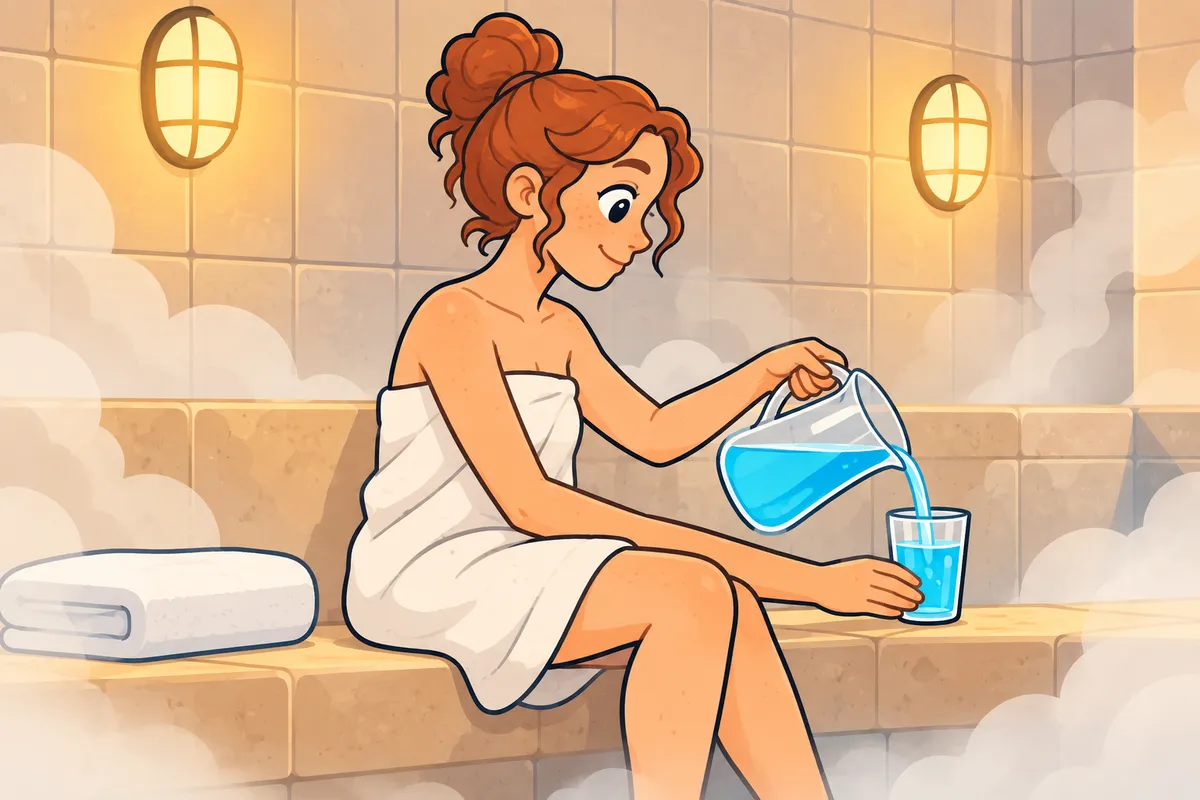
A sauna day does not change what you drink on an ordinary day; it adds a refill on top. The sweat you lose in the cabin is the only extra.
Watch the signs after you leave. Thirst, a dry mouth and dark yellow pee later that day mean you have not caught up, and dizziness that stays when you stand is where a sauna loss turns serious.
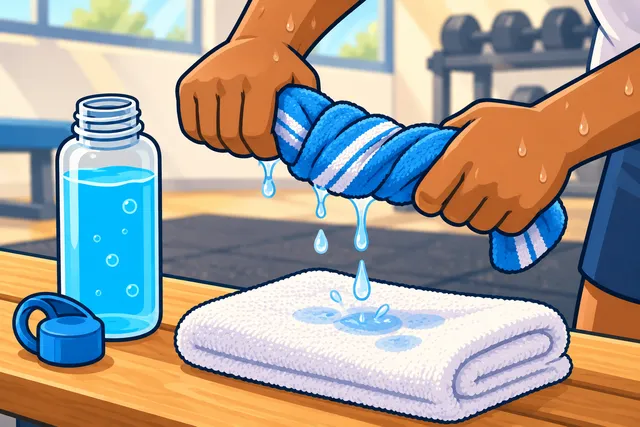
A Bottle in the Cool Area Between Rounds
One Sauna Visit, Start to Finish
- Arrive with pale pee and a bottle of water for the cool area
- Weigh yourself dry once, before the first round
- Keep rounds to 10 to 15 minutes; drink a glass at each break
- Weigh again; drink 100 to 150 % of the loss over an hour or two
General information for healthy adults, not medical advice. If a doctor has set your fluid amount, follow that.
More in Exercise and Heat

Sources
- The Scientific World Journal (Podstawski and colleagues). Sauna-induced body mass loss in young sedentary women and men, 2014.
- Journal of the International Society of Sports Nutrition (Lebron and colleagues). Reliability of achieving target dehydration levels using a portable infrared sauna protocol in healthy young adults, 2025.
- American Journal of Medicine (Hannuksela and Ellahham). Benefits and risks of sauna bathing, 2001.
- Journal of Forensic Sciences (Kenttämies and Karkola). Death in sauna, 2008.
- National Athletic Trainers' Association (Journal of Athletic Training). Position Statement: Fluid Replacement for the Physically Active, 2017.
- Korey Stringer Institute, University of Connecticut. Hydration, checked 2026.
- NHS. Dehydration, 2026.
Sources checked by the Glubbo Editorial Team on Oct 19, 2026. General information, not medical advice. How we write and check our guides.

