Exercise and Heat · Running, Cycling and Other Sports
How Much Water to Drink When Walking, per Hour and per Mile
When a walk needs a bottle, how much to sip each hour and each mile, and the heat that changes the answer.
 By the Glubbo Editorial Team · Updated Oct 19, 2026 · 8 min read
On This Page
- How Much Water Should You Drink per Hour When Walking?
- Do You Need to Bring Water on a 1-Hour Walk?
- How Much Water per Mile Walking?
- Should You Drink Water Before Walking?
- How Much Water Should You Drink After Walking?
- When Walkers Drink Too Much
- Do You Need Electrolytes on a Long Walk?
- Mistakes Walkers Make With Water
- Learn Your Own Rate on One Hot Walk
- Sources
Short answer
In heat, about 16 to 24 oz an hour; cool and short, none.
- US Army tables: ½ quart (16 oz) an hour for easy work, ¾ quart once the heat climbs.
- NIOSH: 1 cup (8 oz) every 15 to 20 minutes for moderate heat activity under 2 hours.
- Never more than 1 quart an hour on a normal walk; drink to thirst when it is cool.
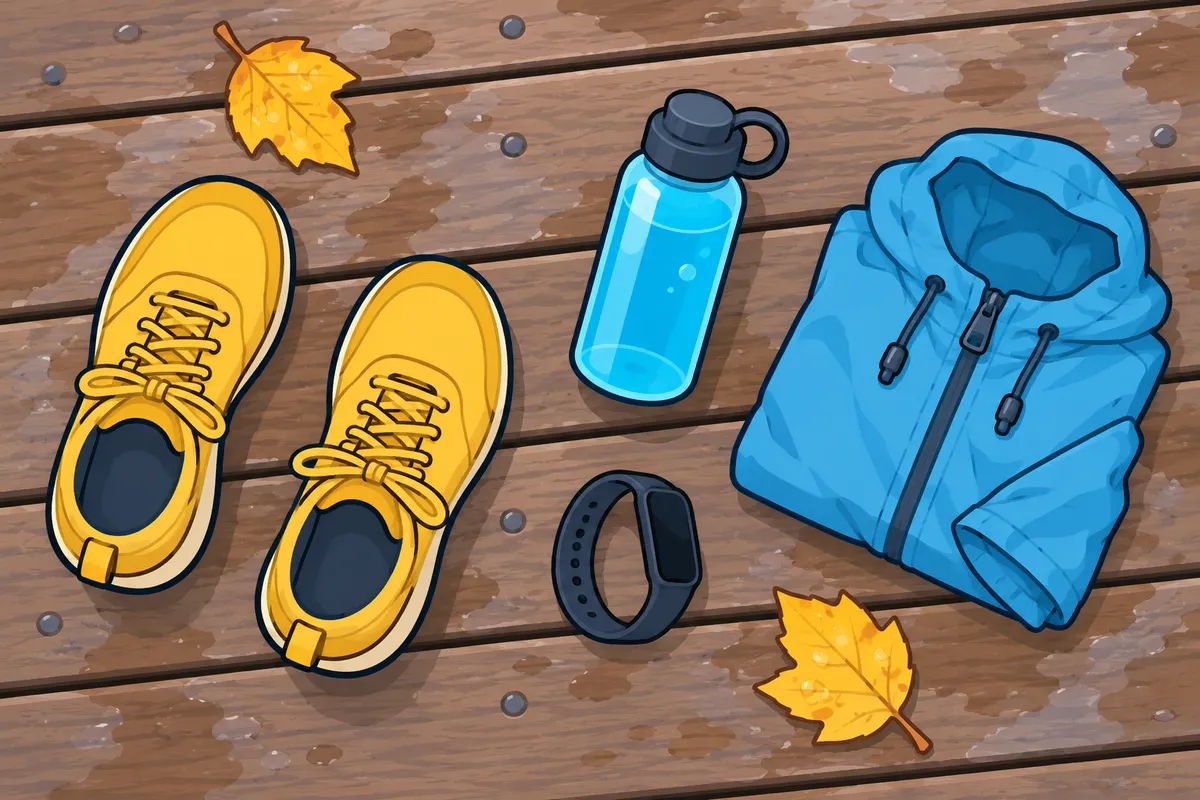
On a cool walk under an hour you need no water on the way: drink to thirst before and after. In warm weather plan on 16 to 24 oz (470 to 710 ml) an hour, and sip it.
A brisk walk is the exercise most people actually do. The CDC names it as its example of moderate activity, the kind adults need 150 minutes of a week.
So the water question comes up every day for millions of walkers, and the answer depends far more on the weather than on your step count.
- 16 oz
- an hour for easy work in mild heat (½ quart)
- 8 oz
- every 15 to 20 minutes for moderate activity in the heat
- 48 oz
- an hour, which NIOSH says intake should generally not exceed
How Much Water Should You Drink per Hour When Walking?
On a cool day, drink to thirst and you will rarely need anything on the way. In warm weather, plan on 16 to 24 oz (470 to 710 ml) an hour, the range the US Army sets for easy work in the heat, and sip it rather than gulp it.
The Army's numbers come from its heat manual, TB MED 507, and are made for soldiers working up to 4 hours at a time. Its heat illness guide sorts the work in two:
- Easy work is marching drill and weapons maintenance. A brisk walk sits near it.
- Moderate work is patrolling with a 30-pound load. A walk with a loaded pack or a stroller up a hill sits near it.
| WBGT, the Army's heat index | Easy work: water per hour | Moderate work: water/hour |
|---|---|---|
| 78 to 81.9 °F | ½ qt (16 oz, 470 ml) | ¾ qt (24 oz, 710 ml) |
| 82 to 84.9 °F | ½ qt (16 oz, 470 ml) | ¾ qt (24 oz, 710 ml) |
| 85 to 87.9 °F | ¾ qt (24 oz, 710 ml) | ¾ qt (24 oz, 710 ml) |
| 88 to 89.9 °F | ¾ qt (24 oz, 710 ml) | ¾ qt, with 10 minutes' rest each hour |
| Over 90 °F | 1 qt (32 oz, 950 ml) | 1 qt, with 40 minutes' rest each hour |
Source: Defense Centers for Public Health, Table 1, from TB MED 507. Milliliters and ounces are our conversions.
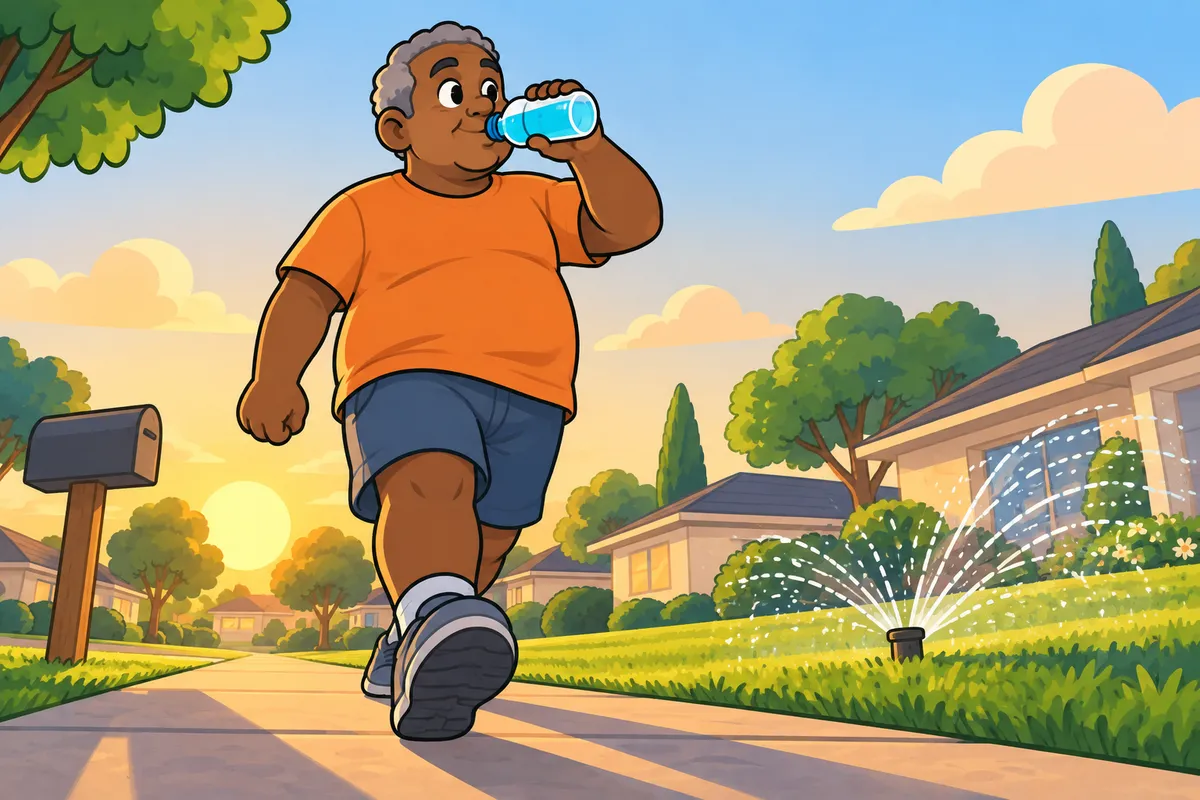
How Much to Carry for a Longer Walk
Multiply the Army's easy-work range by your hours and round up to the bottles you own:
- A 2-hour walk comes to 32 to 48 oz (0.95 to 1.4 L), two or three 500 ml bottles.
- A 4-hour walk comes to 64 to 96 oz (1.9 to 2.8 L), four to six.
On a walk with a refill stop, carry the first half and fill up at the café.
What the WBGT Number Means
WBGT is not the temperature on your phone. The Army guide explains that it combines four things into one value:
- Heat.
- Humidity.
- Sunlight.
- Wind.
That is why a humid, sunny 85 °F afternoon counts as hotter than a breezy one at the same temperature.
If you only know the air temperature, use the NATA position statement as your trigger instead: people start to drink much more on their own once the air passes 25 °C (77 °F). Above that, carry water.
Why Walkers Need Less Than Runners
You make less heat at walking pace, so you sweat less. NATA's worked examples put a 10-km race at 1.6 L an hour, while the US National Academies report 0.3 to 1.2 L an hour for occupational work in very hot climates, the kind of steady effort a long walk resembles.
Use running or hiking numbers for a walk and you will carry, and drink, more than you sweat. Trail days with climbs and a heavy pack follow their own per-hour rates.
Do You Need to Bring Water on a 1-Hour Walk?
Not on a cool day if you start well hydrated and can drink when you get home. Bring a bottle when the air is over 77 °F (25 °C), when the walk runs past an hour, or when you carry a load, climb, or walk where there is no fountain or shop.
Your Walk, Your Bottle
- A 30-minute loop on a cool morningNo bottle; a glass of water when you get home
- An hour in summer sunA 500 ml (17 oz) bottle, sipped every 15 to 20 minutes
- Two hours with hills or a loaded backpackAbout ¾ quart (24 oz) for each hour
- A long, slow charity walkDrink to thirst; skip the cup at every table
- Mall or city walking with fountainsNo bottle; stop at a fountain when thirsty
Thirst works well on a normal walk. NATA calls drinking to thirst "most likely" a safe way to avoid overdrinking for people who do not know their sweat rate, and most walkers do not.
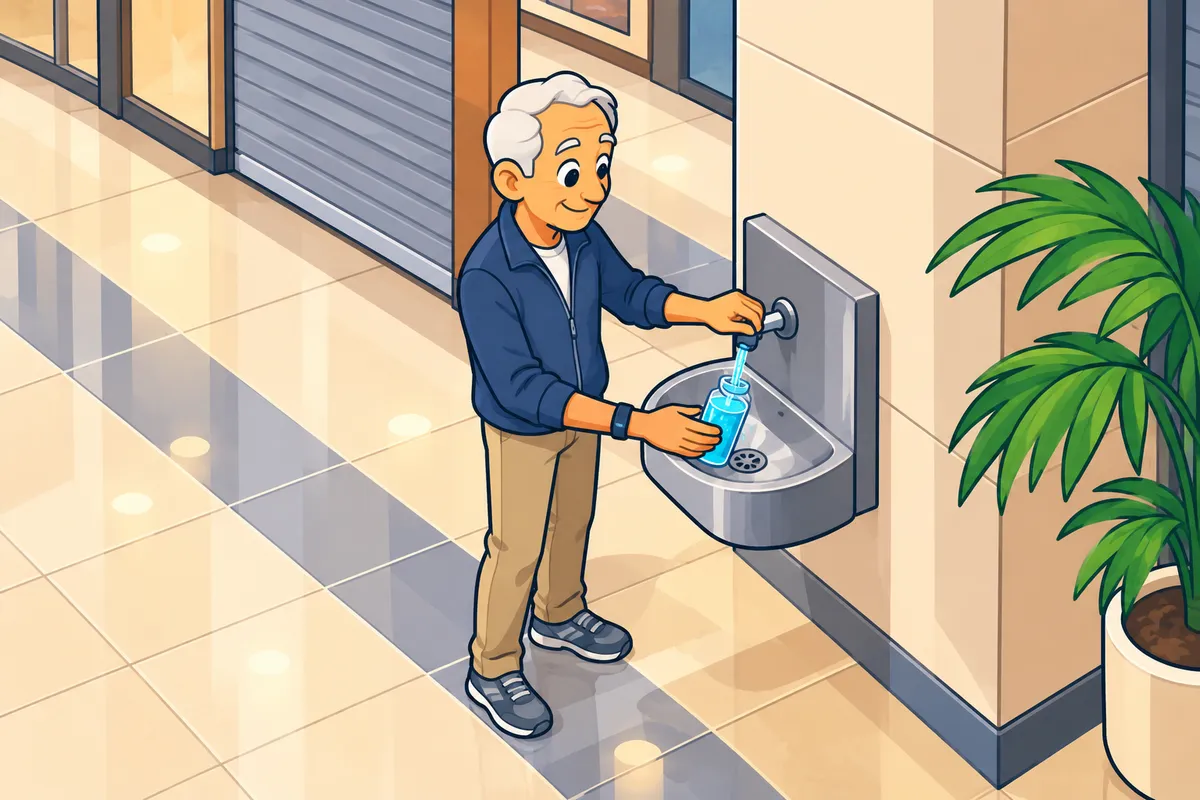
Two groups should not wait for thirst, though:
- Older walkers.
- Anyone walking in the cold, where NATA says the drive to drink is blunted.
If either is you, take a few sips every 20 minutes on a walk longer than an hour, even when you do not feel like it. A winter walk still costs sweat under your coat, and a 70-year-old's thirst may arrive late.
How Much Water per Mile Walking?
In the heat, about one cup (8 oz, 240 ml) per mile. At a brisk 3 mph each mile takes 20 minutes, and NIOSH's pace for moderate activity in the heat is 1 cup every 15 to 20 minutes.
On a mild day, much less: you may finish 3 miles having needed nothing. Miles are a handy way to plan refills, but the hour and the heat set the amount.
Should You Drink Water Before Walking?
Only your usual drinks. NATA says recreational exercisers "should not need to consume extra fluids before activity" as long as they start with normal body water.
The easy check is your pee. The Army guide's self-check is urine that is "pale yellow to clear"; if yours is dark in the morning, a glass of water with breakfast fixes it. A shade-by-shade color chart helps you read it.
Ready to Walk
- Pee pale yellow to clear
- Your usual drinks with breakfast
- No thirst at the door
Drink a Glass First
- Dark yellow pee in the morning
- Nothing to drink since you woke
- A hot afternoon walk after a dry morning
How Much Water Should You Drink After Walking?
After most walks, a glass or two over the next hour, or simply your next meal's drinks. You have only to replace what you sweated, and on a cool walk that is little.
After a long or hot walk, weigh yourself. The Korey Stringer Institute advises replacing 150 % of the weight you lost within 2 hours, so a walker 0.5 kg lighter drinks about 750 ml.
When Walkers Drink Too Much
It happens on long, slow walks with water at every table. Your kidneys can clear only about 0.7 to 1.0 L of water an hour, the National Academies report, and NIOSH says fluid intake should generally not exceed 6 cups (48 oz) an hour.
The Army sets the same ceiling at 1 quart an hour under most conditions. NATA adds that you should never weigh more at the end of exercise than at the start: gaining weight on a walk means you drank more than you sweated, which can lower the sodium in your blood, as on long event days when too much water turns dangerous.
Heat Exhaustion Signs NIOSH Lists
9 items- Headache
- Nausea
- Dizziness
- Weakness
- Irritability
- Thirst
- Heavy sweating
- Elevated body temperature
- Decreased urine output
Do You Need Electrolytes on a Long Walk?
Not on most walks. The CDC's travel guide says that during mild to moderate exertion, electrolyte replacement offers no advantage over plain water, and that someone exercising for many hours in the heat should replace salt by eating salty snacks or lightly salting meals. A sandwich at the halfway café does that job.
Salt tablets swallowed whole can irritate the stomach, the same guide warns, so skip them.
Mistakes Walkers Make With Water
Fix the mistake
- You carry a liter on a cool half-hour loop and finish itDrink to thirst, then a glass at home: that loop did not cost a liter
- You wait for a fountain on a hot walkCarry 500 ml for each hot hour, because the NIOSH pace is a cup every 15 to 20 minutes
- You save the whole bottle for the endSip on a timer in the heat; a big gulp at the end sloshes
- You use hiking or running amountsUse the Army easy-work row: walking makes less heat, so less sweat
- You watch steps, not the weatherCheck the temperature before you leave: heat and humidity drive sweat more than distance
Your everyday total still matters more than any one walk, and walking days add a little to the amount you need on an ordinary day.
Learn Your Own Rate on One Hot Walk
NATA's advice is to quantify your own sweat rate, and a walk is the easiest place to do it: weigh yourself before and after one hot 60-minute walk in the same dry clothes, and note what you drink. The sweat-rate calculator does the sum.
Walks that turn into runs need a different plan, because pace changes sweat; the runner's version starts where this one stops.
General information for healthy adults, not medical advice. If a doctor has set your fluid amount, follow that.
More in Exercise and Heat
Sources
- Defense Centers for Public Health, US Army (tables from TB MED 507, 2022). Exertional Heat Illness Prevention for Service Members, 2023.
- US Centers for Disease Control and Prevention (NIOSH). Workplace Recommendations, 2026.
- Journal of Athletic Training (National Athletic Trainers' Association). National Athletic Trainers' Association Position Statement: Fluid Replacement for the Physically Active, 2017.
- National Academies of Sciences. Dietary Reference Intakes for Water, Potassium, Sodium, Chloride, and Sulfate, Chapter 4: Water, 2005.
- US Centers for Disease Control and Prevention (NIOSH). Heat-related Illnesses, 2026.
- US Centers for Disease Control and Prevention. Adult Activity: An Overview, 2023.
- Korey Stringer Institute, University of Connecticut. Hydration, checked 2026.
- CDC Yellow Book. Heat and Cold Illness in Travelers, 2025.
Sources checked by the Glubbo Editorial Team on Oct 19, 2026. General information, not medical advice. How we write and check our guides.

