Exercise and Heat · Running, Cycling and Other Sports
Signs of Dehydration While Running, and What to Do Mid-Run
What your body tells you mid-run when you are short of water, what looks the same but is not, and the scale check after.
 By the Glubbo Editorial Team · Updated Oct 19, 2026 · 9 min read
On This Page
- What Are the Signs of Dehydration While Running?
- Is It Dehydration, Heat Exhaustion or Too Much Water?
- Can Dehydration Cause Stomach Cramps When Running?
- Does Dehydration Raise Your Heart Rate When Running?
- Why Do I Get a Headache After a Run?
- How Do You Know If You Are Dehydrated After a Run?
- How Long Does It Take to Rehydrate After a Run?
- What Should You Do If You Feel Dehydrated Mid-Run?
- Runs That Dry You Out Faster
- Weigh In Before Your Next Long Run
- Sources
Short answer
Thirst, a harder pace, dizziness, headache, cramping.
- Thirst shows up at about 1 to 2 % of body weight lost, the Korey Stringer Institute says.
- At 2 % lost, NATA finds performance falls; weigh before and after to see your number.
- Weighing more after a run means too much water, not too little: stop drinking.
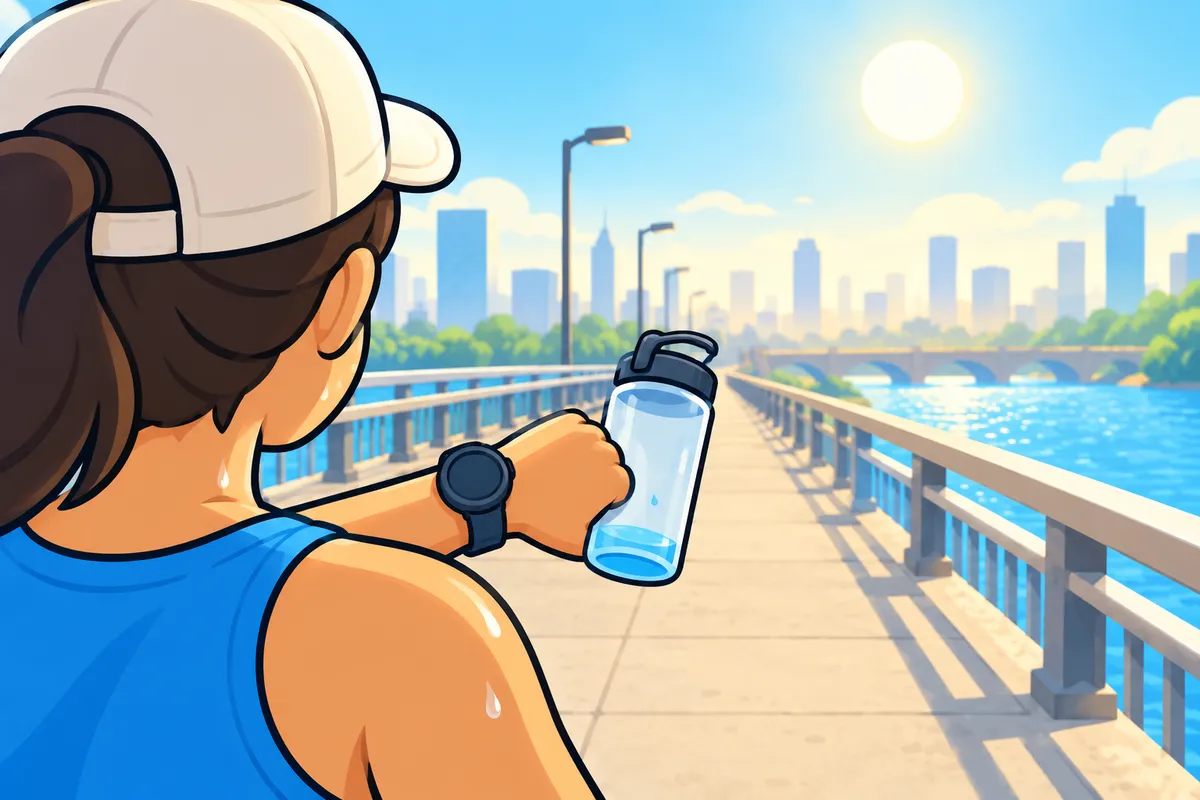
The signs of dehydration while running are thirst, a pace that suddenly feels harder, flushed skin, dizziness, a headache and stomach cramps. Thirst arrives at about 1 to 2 % of your body weight lost, and by 2 % your pace and your heart both pay for it.
Mile eight of a summer long run is where most runners meet this: the pace you held easily at mile three now takes everything you have, your mouth is dry, and the bottle in your hand has been empty since mile six. A few of the same signals also show up when a runner drinks too much, so reading them right matters.
Signs of Low Body Water in Runners
7 items- Thirst
- Flushed skin
- Dizziness or lightheadedness
- Headache
- Gastrointestinal cramping
- Heat sensations or chills
- Acute body weight loss
What Are the Signs of Dehydration While Running?
The NATA position statement orders them by how much weight you have lost as sweat:
- Thirst and general discomfort come first.
- Then come flushed skin, weariness, cramps and apathy.
- Past a 2 % loss come dizziness, headache, nausea, vomiting, heat sensations on the head or neck, and chills.
- Shortness of breath appears in severe cases only.
The earlier you notice one, the less it costs you on the rest of the run.
- 1–2 %
- of body weight lost when thirst appears
- 2 %
- lost, where performance consistently falls
- 0.15–0.2 °C
- core temperature rise per 1 % lost
The Signs You Notice First
Thirst is the early one, but it is a late-ish alarm: the Korey Stringer Institute at the University of Connecticut says it develops once dehydration has already set in, and works best at rest or at easy effort in cool conditions. By the time you feel it on a hot tempo run you are already a little short.
Next comes effort. The pace slows because your body is hotter and your heart works harder to move less blood, so a pace that felt easy now feels hard before any other sign shows.
The Signs That Mean Stop
Dizziness that does not pass when you slow down, confusion, or a headache that keeps building is your cue to stop, not to push on. Those signs overlap with heat illness and with low blood sodium, which the next section sorts out.
Is It Dehydration, Heat Exhaustion or Too Much Water?
You cannot always tell on the road, and that is the point NATA makes. Dizziness, headache, nausea and apathy appear in both low body water and low blood sodium; the clearest differences are swelling of hands or feet, weight gained during the run, and how much you drank.
| What you notice | Low body water | Overdrinking (low sodium) | Heat exhaustion |
|---|---|---|---|
| Thirst | Yes | Rarely | "Thirst" is on the list |
| Weight after the run | Lighter | Same or heavier | Usually lighter |
| Swollen hands or feet | No | "Swelling of hands, feet, or both" | No |
| Headache | Yes | "Progressive and severe" | Yes |
| Nausea | Yes | Yes | Yes |
| Sweating | Normal to heavy | Normal | "Heavy sweating" |
| Mind | Apathy | Confusion, "acting out of sorts" | Irritability |
The columns come from NATA Table 1 and CDC NIOSH; the weight rows are arithmetic from NATA's advice to weigh before and after.
NATA's footnote matters most: a runner can be dehydrated and low in sodium at the same time, and only a blood test settles it. A medic at a race asks how much you drank for exactly this reason. If you start to feel confused or slur your words, overheating has become the emergency, whatever you drank.
Can Dehydration Cause Stomach Cramps When Running?
Yes. NATA lists gastrointestinal cramping as a sign of low body water, and it notes that a fluid deficit above 4 % slows how fast your stomach empties, which can make drinking harder and stomach symptoms worse.
The opposite mistake causes cramps too. The Korey Stringer Institute says the stomach absorbs only about 1.2 L (40 oz) an hour, so gulping half a bottle at once can leave it sloshing. Small, regular sips fix both.
Calf and hamstring cramps are a different question, and the evidence that dehydration causes muscle cramps is weaker than most runners think.
Does Dehydration Raise Your Heart Rate When Running?
Yes, it pushes it up for the same pace. The US National Academies link a loss of about 1.6 % of body weight with fainting when you stand up, and say that 3 to 4 % lost in the heat reduces the blood the heart pumps.
Less blood per beat means more beats to hold the pace, so your watch shows heart rate drifting up while your speed stays flat or falls. Outside a run, the same racing pulse at rest has its own normal ranges and red flags.
Why Do I Get a Headache After a Run?
A headache after a run can come from low body water or from too much of it, and NATA lists it under both. In the low-water column it appears once the loss passes 2 %. In the low-sodium column it is the one to watch when it is "progressive and severe", especially with swollen hands or feet or a weight gain.
So check the scale before you reach for another bottle.
- If you are lighter by 2 % or more, drink back what you lost.
- If you are heavier or the same, stop drinking and rest, and get help if the headache keeps worsening.
How Do You Know If You Are Dehydrated After a Run?
Weigh yourself, nude and dry, before and after. Each kilogram (2.2 lb) lost is about a liter (34 oz) of sweat you did not replace, the Korey Stringer Institute says, and a loss of 2 % of your body weight or more means you ran short.
The other checks back it up. The NHS lists "dark yellow, strong-smelling pee", "peeing less often than usual" and "feeling tired" among its signs, and KSI notes that any two simple markers together (weight, urine, thirst) make dehydration likely.
| Your weight before | 2 % of it (stay under) |
|---|---|
| 50 kg (110 lb) | 1.0 kg (2.2 lb) |
| 60 kg (132 lb) | 1.2 kg (2.6 lb) |
| 70 kg (154 lb) | 1.4 kg (3.1 lb) |
| 80 kg (176 lb) | 1.6 kg (3.5 lb) |
| 90 kg (198 lb) | 1.8 kg (4.0 lb) |
| 100 kg (220 lb) | 2.0 kg (4.4 lb) |
The 2 % line is from NATA; the kilograms and pounds are our arithmetic.
From the Scale to a Glass
Color helps less than you would think. NATA warns that judging urine color in the toilet bowl "is not reliable"; look at it in a clear cup if you want to use it, and remember that a pee color chart reads hydration, not race-day sodium.
How Long Does It Take to Rehydrate After a Run?
It depends on when your next hard session is. NATA says:
- When you have less than 4 hours before the next effort, you need to drink 100 to 150 % of the weight you lost, because a big drink triggers extra peeing and some of it leaves again.
- Given more than 12 hours, normal meals and drinks bring you back to balance on their own.
Spread the drinks over the evening with a salty snack or a meal: NATA says the water and electrolytes in food help your body hold on to the fluid you drink.
What Should You Do If You Feel Dehydrated Mid-Run?
Slow down, find shade, and start sipping: a few mouthfuls every few minutes, not a whole bottle at once. If dizziness, confusion or a pounding headache does not ease within minutes of stopping, end the run and get help.
When the Signs Start Mid-Run
- Ease to a jog or a walk; the heat you make drops at once
- Get into shade and loosen anything tight
- Sip about 200 to 300 ml (7 to 10 oz) over the next 15 minutes
- Shorten the route home or head for a fountain
- Confused, fainting or vomiting: stop and call for help
The 200 to 300 ml every 15 minutes is the Korey Stringer Institute's pace for drinking during exercise. More than that only sits in your stomach.
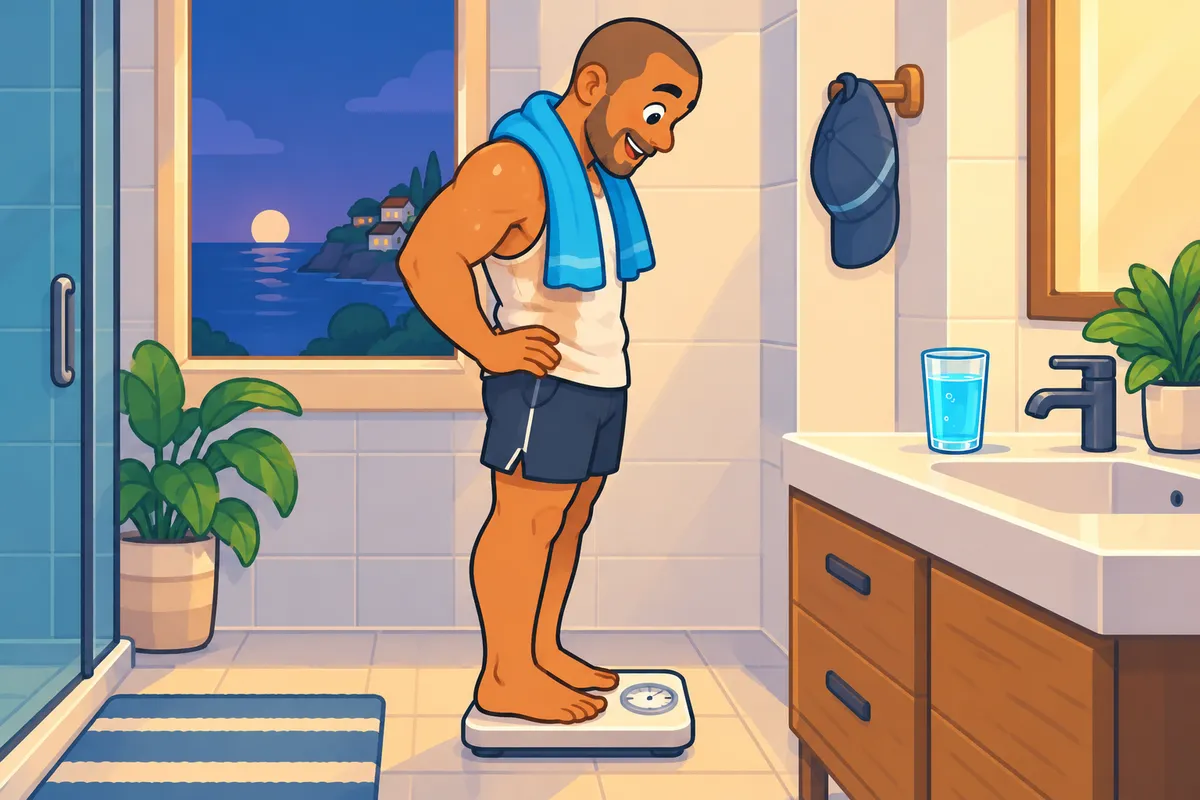
Back home, drink to replace what the scale says you lost, with something salty if the run was long. The NHS advises small sips first if you feel sick.
If the scale shows you lighter by more than 2 % after most runs, your plan, not your effort, needs work. How much a runner should drink on the move depends on pace and distance, and one sweat test sets it.
Runs That Dry You Out Faster
Four kinds of run catch most people out, each for its own reason. Knowing which one you are on tells you when to expect the signs.
Runs With a Higher Risk of Running Short
Hot or humid run
More sweat
- Core temp climbs 0.15–0.2 °C per 1 % lost
- Adult sweat runs 0.5 to 4.0 L an hour
Suits you if it is over 77 °F (25 °C) or muggy, even on a short run.
Long run past 90 minutes
Losses add up
- 2 % lost is where pace suffers
- Plan sips every 15 minutes
Suits you if you run long enough for small hourly losses to cross 2 %.
Winter run
Thirst fades
- NATA: the drive to drink is blunted in cold
- You still sweat under layers
Suits you if you feel fine but the scale says otherwise after a cold run.
Heavy sweater
Hard to keep up
- Over 2 L an hour is hard to replace
- Know your rate from one weigh-in
Suits you if you soak your shirt early and finish caked in salt.
Day to day, the everyday signs adults miss matter as much as race-day ones: a runner who starts short reaches the 2 % line sooner.
Weigh In Before Your Next Long Run
Weigh yourself nude and dry before you leave and again when you get home, then act on the difference.
- Under 2 % lighter: your drinking kept up, so drink to thirst now.
- 2 % lighter or more: drink back 150 % of the loss over 2 hours, and carry more next time.
- Same weight or heavier: you drank more than you sweated, so drink to thirst next time.
- Dizzy, confused or vomiting: stop and get help, whatever the scale says.
General information for healthy adults, not medical advice. If a doctor has set your fluid amount, follow that.
More in Exercise and Heat


Sources
- Journal of Athletic Training (National Athletic Trainers' Association). National Athletic Trainers' Association Position Statement: Fluid Replacement for the Physically Active, 2017.
- Korey Stringer Institute, University of Connecticut. Hydration, checked 2026.
- National Academies of Sciences. Dietary Reference Intakes for Water, Potassium, Sodium, Chloride, and Sulfate, Chapter 4: Water, 2005.
- US Centers for Disease Control and Prevention (NIOSH). Heat-related Illnesses, 2026.
- NHS. Dehydration, 2026.
Sources checked by the Glubbo Editorial Team on Oct 19, 2026. General information, not medical advice. How we write and check our guides.

