Exercise and Heat · Running, Cycling and Other Sports
How Much Water to Drink Before a Marathon, From 48 Hours to the Gun
The day before, race morning and the last hour, with the amount for your weight and the mistake that fills toilet lines.
 By the Glubbo Editorial Team · Updated Oct 19, 2026 · 10 min read
On This Page
- How Much Water Should You Drink Before a Marathon?
- What Should You Drink the Day Before a Marathon?
- Should You Do Water Loading Before a Marathon?
- What Should You Drink on the Morning of a Marathon?
- How Much Water Should You Drink Before a Half Marathon?
- Should You Take Salt Before a Marathon?
- A Pre-Race Drink Plan That Fits on a Bib
- Sources
Short answer
Your usual drinks, plus about 300 to 500 ml four hours out.
- 2 to 3 ml per lb (4.4 to 6.6 ml per kg) 4 h before: ACSM protocol, per a 2024 review.
- NATA: recreational runners need no extra fluid, only to start with normal body water.
- Skip loading: your kidneys clear at most 0.7 to 1.0 L an hour, the rest you pee out.

Drink your usual amounts the day before a marathon, then add one measured top-up of about 300 to 500 ml (10 to 17 oz) at least 4 hours before the start, and take only small sips after that. Water loading, the bottle after bottle some runners drink the night before, does not bank anything for mile 20.
Your body stores almost none of the extra, and the plan that does work is short enough to write on the back of your bib.
Race Morning for a 9 AM Start
- 5 AM
- 6:30 AM
- 8:15 AM
- 8:45 AM
How Much Water Should You Drink Before a Marathon?
About your normal amount, plus one measured top-up at least 4 hours before the start. A 2024 review of firefighter hydration gives 2 to 3 ml of fluid per pound of body weight as part of the protocol it credits to the American College of Sports Medicine, which is about 4.4 to 6.6 ml per kg, or 300 to 500 ml for most runners.
The 4 hours matter as much as the amount. The ACSM position stand says to start any extra drinking at least several hours before the activity, which leaves time for your gut to absorb the fluid and for urine output to settle back to normal, so your bladder is empty again before you line up. The ACSM's aim is to start euhydrated with normal blood electrolyte levels, so the top-up corrects a small gap and gives you no head start.
| Your weight | 4 h before (2 to 3 ml/lb) |
|---|---|
| 50 kg (110 lb) | 220 to 330 ml (7 to 11 oz) |
| 60 kg (132 lb) | 265 to 395 ml (9 to 13 oz) |
| 70 kg (154 lb) | 310 to 465 ml (10 to 16 oz) |
| 80 kg (176 lb) | 355 to 530 ml (12 to 18 oz) |
| 90 kg (198 lb) | 395 to 595 ml (13 to 20 oz) |
| 100 kg (220 lb) | 440 to 660 ml (15 to 22 oz) |
The rate comes from the 2024 review, which credits the protocol to the ACSM; the amounts per weight are our arithmetic.
Why Recreational Runners Can Skip Even That
If you start the day well hydrated, you need nothing extra. The NATA position statement says it is important to begin an exercise bout euhydrated, meaning with your normal body water, and that hyperhydration "confers no physiological or performance advantages".
The top-up is insurance for a runner who wakes thirsty, slept in a hot hotel room or flew in the day before. If your pee is pale yellow when you get up, your usual breakfast drinks are enough.
Why Some Plans Say 16 to 20 Ounces
Some race-morning plans online ask for 16 to 20 oz (475 to 590 ml) or even 1 L in the 2 hours before the start. The ACSM-based amount for a 70 kg runner is 310 to 465 ml, a bit less, and it comes 4 hours out so the surplus can leave before the gun.
What Should You Drink the Day Before a Marathon?
Your usual drinks, spread across the day, with nothing to prove. The goal is to wake on race morning with normal body water, not with a surplus, and the checks are simple: pale pee, no thirst, a normal number of toilet trips.
Three things on the day before make a difference:
- Weigh yourself on race week mornings. NATA says a reliable baseline weight takes 3 mornings in a row of normal hydration, and that number lets you check yourself after the race.
- Go easy on alcohol. The NHS lists having "drunk too much alcohol" among the things that make dehydration more likely.
- Keep salty food in your normal meals. It helps you hold the water you drink, which is what the salt section below is about.
Travel day changes the picture. A long drive or flight the day before is the most common reason a runner wakes short, and the morning top-up exists for exactly that runner.
Should You Do Water Loading Before a Marathon?
No. Healthy kidneys clear about 0.7 to 1.0 L of water an hour, the National Academies report, and when you drink well above your needs the urine comes out fast. The extra leaves you; it does not wait for mile 20.
Loading has a second cost. The Boston Marathon study found low blood sodium in 13 % of the runners it tested at the finish, and weight gain during the race raised the odds about fourfold (odds ratio 4.2). A finish time over 4 hours, against under 3:30, weighed even more at 7.4, so starting overfull and then drinking at every station pushes a slow runner's weight up on top of that risk.
One Measured Top-Up
- 2 to 3 ml per lb, 4 hours before
- Then sips to thirst
- Pale yellow pee at the start
- Bladder empty by the gun
Water Loading
- Liters the night before and the morning of
- Clear pee and repeated toilet trips
- A full bladder in the corral
- Diluted blood sodium before mile 1
NATA allows one exception: competitive athletes may benefit from a small surplus, under 2 % of body weight, but only under medical supervision. For anyone else, normal body water is the target.
What Should You Drink on the Morning of a Marathon?
Your usual breakfast drinks plus the top-up, all finished about 4 hours before the start, then sips to thirst. Water, juice or a sports drink with breakfast all count; NATA notes that a drink with carbohydrate and electrolytes before activity may help competitive athletes, as long as your stomach already knows it.
Check your pee once, in a cup or by eye in good light rather than in the bowl. The Korey Stringer Institute asks for light colored urine before exercise and says a color of 4 or greater on its chart indicates dehydration. NATA adds that judging the color in the toilet bowl is not reliable.
The four questions people ask on race morning, in one place:
| On race morning | What to do |
|---|---|
| Coffee | Your usual amount; mild to moderate caffeine is fine, nothing new on race day |
| The last hour before the gun | Small sips only; anything big reaches your bladder in the first miles |
| Waking up thirsty | Drink the full top-up at breakfast, check your pee an hour later, add one 200 ml (7 oz) glass if it is still dark |
| A bottle at the start line | Usually allowed into the corral, not across the start mat; a 200 ml flask with a few sips left is enough |
Is Coffee Fine on Marathon Morning?
Yes, in your usual amount. NATA says athletic trainers should not discourage mild or moderate caffeine, about 3 mg per kg, which is more than a cup of coffee for a 70 kg person, on the basis of diuretic effects. Caffeine may add some urine at rest, but it does not cause extra urine during exercise.
Keep it to what you drink on training days; race morning is no time to start a new habit.
The Last Hour Before the Gun
Small sips only. Anything big you drink now reaches your bladder in the first miles, because your kidneys keep working while you stand in the corral.
What if You Wake Up Thirsty on Race Morning?
That is exactly what the 4-hour top-up is for. Drink the full 2 to 3 ml per pound with breakfast and check your pee an hour later; if it is still dark, add one more 200 ml (7 oz) glass and check again. Do not drink beyond pale yellow: the goal is to correct the gap, not to build a reserve.
Common causes of race-morning thirst include:
- A hotel room with dry air conditioning.
- A flight the day before.
- Nerves that kept you from eating and drinking normally.
A room humidifier or a wet towel over the vent the night before can prevent part of the problem.
Can You Carry a Bottle to the Start Line?
Most races allow a small bottle into the corral but not across the start mat, so you hand it off or drop it. A 200 ml (7 oz) flask with a few sips left is enough; anything bigger sits in your stomach or your bladder for the first miles. NATA says the aim is to start exercising when euhydrated, not loaded, so the last sip before the gun is a comfort measure, not part of the plan.
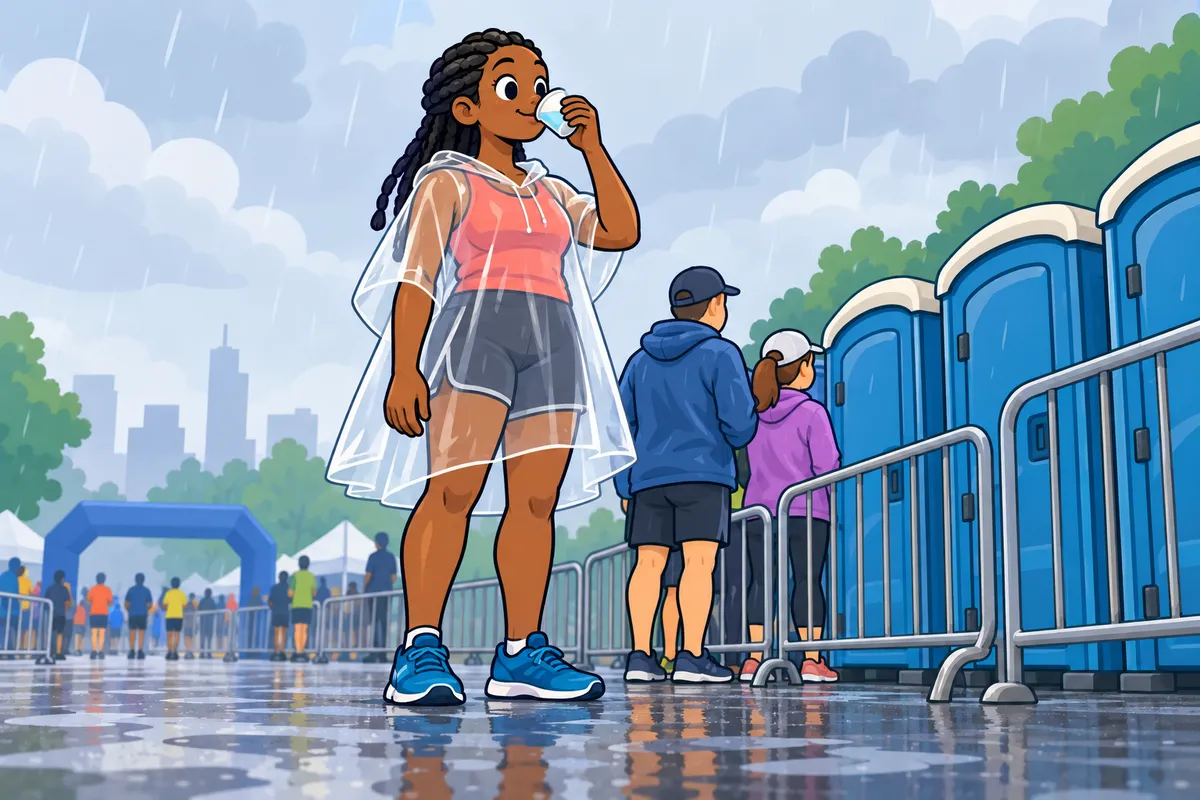
A cold, wet start does not change the morning plan. You still drank 4 hours ago, and the poncho keeps you warm enough that thirst stays honest.
How Much Water Should You Drink Before a Half Marathon?
The same as before a full: your usual drinks and the same 2 to 3 ml per pound top-up 4 hours out if you need it. A half is shorter, so there is even less reason to drink extra, and most runners finish one with only a cup or two on the way. Test the plan on one long run first, exactly as you would for the full distance.
| Race | Top-up needed? | Why |
|---|---|---|
| Half marathon, under 2 hours | Only if you woke thirsty | Most runners finish with a cup or two on the course |
| Half marathon, 3+ hours | Same 2–3 ml per lb, 4 h out | Longer effort, but still less sweat than a full |
| Full marathon, under 4 hours | Same 2–3 ml per lb, 4 h out | Heavy sweaters need the full pace from hour one |
| Full marathon, 5+ hours | Skip extra; drink to plan on course | Boston study: finish over 4 h raised low-sodium risk 7.4× |
A slow finisher is in the group where the Boston study found more low sodium, so a runner heading for a 5 hour 30 half or a full marathon is better off skipping any extra before the start: the long race leaves plenty of time to drink on the course. For a 58 kg (128 lb) runner on an 8 AM half, the range is 256 to 384 ml, which a tea and a glass of water at breakfast already cover.
Should You Take Salt Before a Marathon?
Salty food in your normal meals, yes; tablets or salt water, only if you have tried them in training. NATA notes that sodium before exercise "can expand vascular fluid volumes", which is why a salty breakfast such as toast with a little salt helps you keep the water you drink.
No health body sets a pre-race salt dose, and none recommends drinking salt water. Salt tablets during the race are a separate decision that belongs to your race plan, not your breakfast.
A Pre-Race Drink Plan That Fits on a Bib
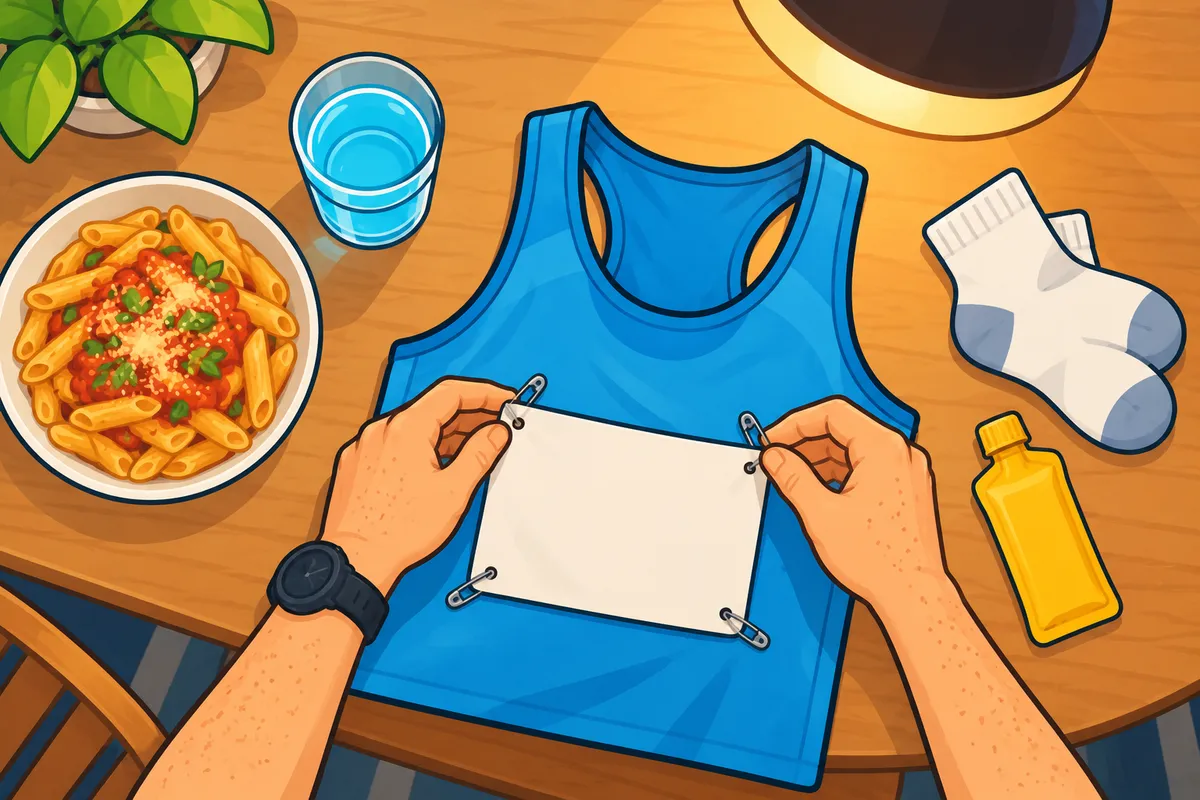
What to Write on the Back of Your Bib
- Your weight from three race-week mornings
- Your top-up: 2 to 3 ml for each pound you weigh
- Breakfast and top-up finished 4 hours before the start
- Pale yellow pee means stop drinking extra
- Sips only in the last hour, then your race plan
Race week starts from your everyday intake, so settle what you drink on a normal training day well before the taper.
General information for healthy adults, not medical advice. If a doctor has set your fluid amount, follow that.
More in Exercise and Heat



Sources
- Journal of Functional Morphology and Kinesiology (Holland-Winkler and Hamil). Hydration Considerations to Improve the Physical Performance and Health of Firefighters, 2024.
- Journal of Athletic Training (National Athletic Trainers' Association). National Athletic Trainers' Association Position Statement: Fluid Replacement for the Physically Active, 2017.
- Medicine and Science in Sports and Exercise (American College of Sports Medicine). American College of Sports Medicine position stand. Exercise and fluid replacement (abstract), 2007.
- National Academies of Sciences. Dietary Reference Intakes for Water, Potassium, Sodium, Chloride, and Sulfate, Chapter 4: Water, 2005.
- Korey Stringer Institute, University of Connecticut. Hydration, checked 2026.
- New England Journal of Medicine (Almond and colleagues). Hyponatremia among runners in the Boston Marathon, 2005.
- NHS. Dehydration, 2026.
Sources checked by the Glubbo Editorial Team on Oct 19, 2026. General information, not medical advice. How we write and check our guides.

