Does Dehydration Cause Muscle Cramps? What the Studies Show
See what the studies found on water and salt, and what to do when a cramp grabs your calf mid-session.
 By the Glubbo Editorial Team · Updated Oct 19, 2026 · 11 min read
On This Page
- What Causes Muscle Cramps During Exercise?
- What the Studies Found
- How Do You Stop a Cramp During Exercise?
- Can Drinking More Water Prevent Cramps?
- Do Electrolytes Stop Cramps?
- Do Magnesium, Potassium or Bananas Help?
- Does Pickle Juice Stop Cramps?
- Why Do My Legs Cramp at Night After a Workout?
- Who Is Most Likely to Cramp
- Cramps in the Heat
- Log the Cramp, Weigh In, Then Adjust
- Sources
Short answer
Sometimes, but tired muscles and pace matter more.
- In 210 Ironman triathletes, those who cramped lost no more weight than the rest.
- To stop a cramp, stretch the muscle gently and hold it until it lets go.
- Finish under 2 % lighter and never heavier; extra water will not protect you.
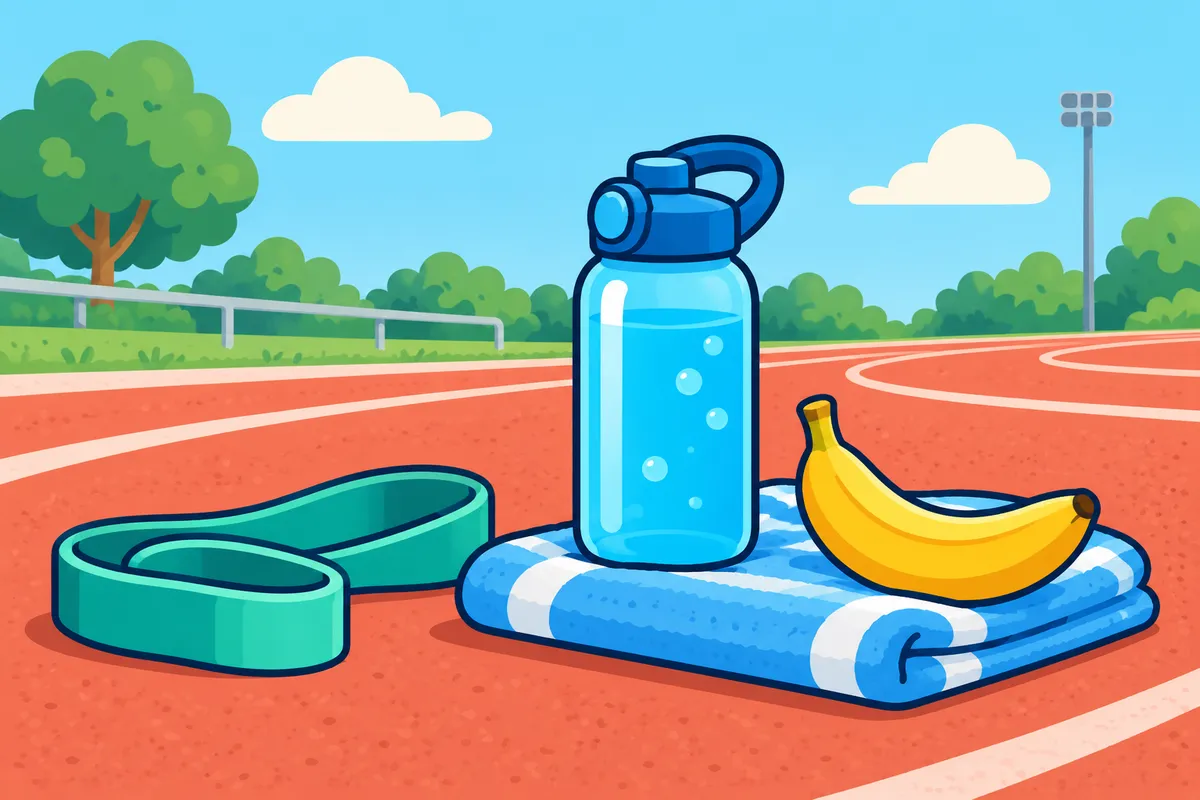
Dehydration can play a part in some exercise cramps, but it is rarely the whole story. When researchers weigh athletes and test their blood, the ones who cramp usually look no drier and no saltier than the ones who stay cramp-free. Working a muscle hard and fast, and having cramped before, predict cramps better.
Cramps are the most common heat illness athletes get, and many feel a twinge in the muscle minutes before the full cramp. That warning is your best chance to ease off.
What Causes Muscle Cramps During Exercise?
No single cause has been proven. The National Athletic Trainers' Association (NATA) names dehydration, electrolyte imbalance, altered nerve control of the muscle, fatigue, or a mix of these as proposed causes. It adds that a growing body of lab and field studies suggests most exercise cramps do not come from dehydration or electrolyte losses.
NATA describes an exercise-associated muscle cramp as a sudden, involuntary, painful contraction of a skeletal muscle during or after exercise. Most of the cramps it links to overload or fatigue last under 5 minutes and stay mild.
Water and Salt Theory
- Sweat shrinks the fluid around the muscle cells
- Lost salt upsets the muscle's signals
- Fits heavy, salty sweaters in the heat
- Field studies find crampers no drier than others
Nerve and Fatigue Theory
- Altered nerve control of a tired muscle
- Cramps hit muscles working hard while short
- A fast pace and past cramps predict them
- Stretching is the first treatment
The Water and Salt Theory
The older idea says sweat drains the fluid outside your muscle cells and the salt in it, and the muscle misfires. NATA's 2017 fluid statement calls cramps "long considered a hydration-related concern" and then notes they now have other suspects too.
Some cramp-prone athletes do lose a lot. NATA's heat illness statement reports sweat losses of 2 to 3.4 L (about 68 to 115 oz) an hour and up to 5 g of sodium, or far more, in one session. Yet in the studies it reviews, those athletes often drank about as much, sweated about as much and finished about as light as teammates who never cramped.
The Nerve and Fatigue Theory
The newer idea starts in the nerves that run the muscle. NATA notes that cramps usually strike a muscle contracting hard while it is short, probably because the spinal cord's brake on that muscle is weakest in that position. Calves and hamstrings, which cross two joints, are the usual targets.
Stretching fits this picture. It pulls the muscle long, and NATA says it may ease the cramp partly through the tendon's own brake on the muscle.
Where Does Dehydration Fit?
- NATA calls the cause "controversial" and leans toward tired muscles and nerves.
- A 2022 evidence review in the same journal adds that sweat loss contributes little to cramps for most athletes, though football players with a cramp history may gain from tracking fluid and salt.
- The NHS still counts dehydration among the causes of leg cramps in general.
So water stays a suspect. It has lost its place as the main one.
What the Studies Found
Three studies measured athletes who cramped and athletes who did not. None of them found the crampers clearly drier, and the one trial that gave a salty drink saw cramps come later but still come.
- 43 of 210
- Ironman triathletes who cramped, with the same weight change as the rest
- 69 %
- of cramp-prone men who cramped while drinking a salted sports drink
- 14.6 → 36.8 min
- time to a cramp, no drink vs salted drink
Ironman Triathletes
The largest study followed 210 Ironman triathletes and weighed them and took blood before and after the race. The 43 who reported cramps matched the 166 who did not on blood salts and on body weight change. Only two things stood out:
- A faster race and cycling time.
- Cramps in any of their last 10 races.
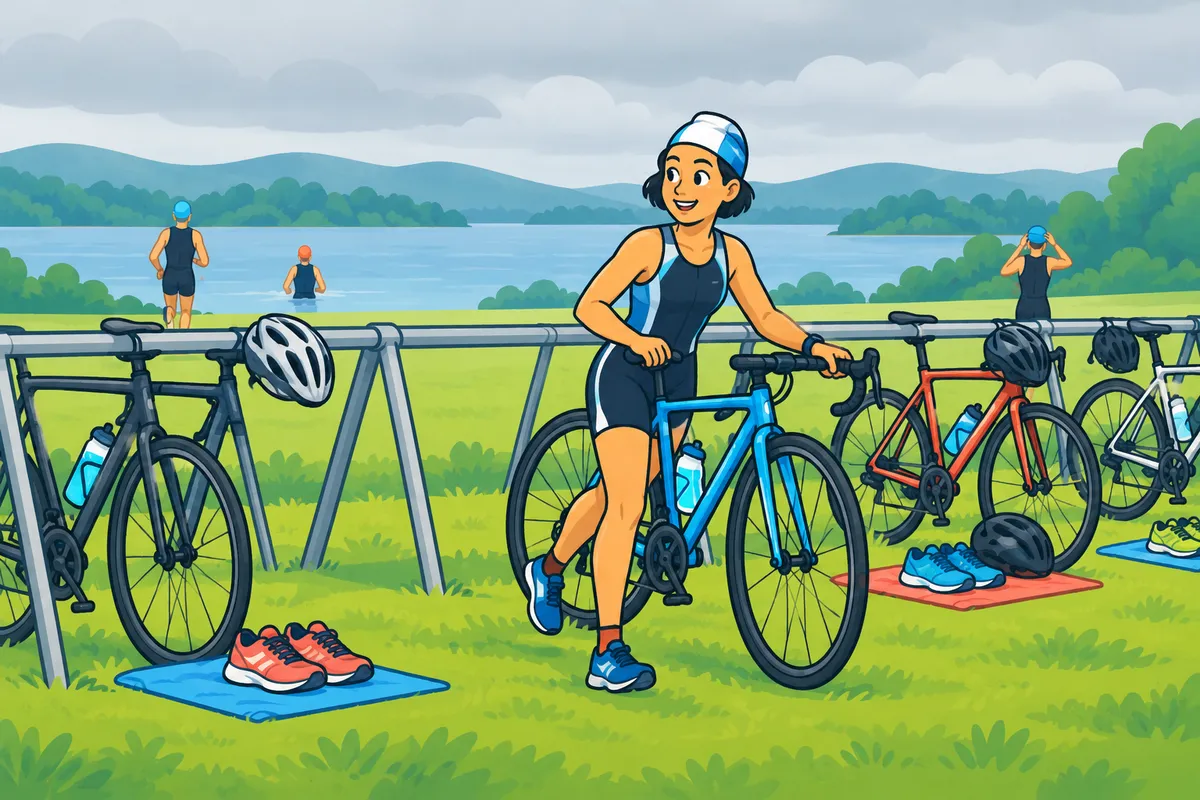
The authors read this as more evidence that dehydration and blood salt changes do not cause these cramps, and that racing hard does.
Ultra-Distance Runners
An earlier study led by the same first author followed 72 runners in an ultra-distance road race and compared 21 who cramped with 22 who did not. Weight change, blood volume and plasma volume showed no difference.
Blood sodium came out slightly lower in the crampers, 139.8 against 142.3 mmol/l, which the authors judged not clinically significant.
A Lab Test in the Heat
The only trial here gave 13 college-aged men with a history of cramps a calf-fatiguing workout in 37 °C (99 °F) heat, twice:
- Once they drank nothing.
- Once they drank a sports drink with added salt, as fast as they sweated.
Nine cramped with the drink and seven without it. In the seven who cramped both times, the drink pushed the cramp back from 14.6 to 36.8 minutes, so the authors say drinking may delay cramps without being their sole cause. The University of Alabama Graduate Student Association paid for part of the study.
What These Studies Cannot Tell You
All three are small, and the first two followed a single race each. They cannot rule out a group of heavy, salty sweaters for whom salt matters more. NATA keeps that door open in its advice on treatment.
How Do You Stop a Cramp During Exercise?
Stop, then stretch the cramped muscle gently and hold it until the cramp lets go. NATA rates rest and passive static stretching as the first treatment for cramps from overload or fatigue, with ice or massage for the discomfort afterwards. Most of these cramps pass in under 5 minutes.
When a Cramp Hits
- Stop and take the load off the muscle
- Stretch it gently and hold until the cramp eases
- Use ice or massage for the soreness afterwards
- After heavy sweating, have a salty drink or snack
- Get help if it lasts, returns or comes with other signs
The 2022 review calls gentle stretching "the fastest, safest, and most effective treatment" for a cramp in progress. Oral fluids need 13 minutes or more to reach your blood, so a drink cannot beat a stretch. No study has compared stretch types, so any gentle hold that lengthens the muscle will do.
For a calf cramp, the NHS adds that standing up and putting your weight on the leg may help. Acetaminophen (paracetamol in the UK) or ibuprofen can ease the soreness afterwards, but they work too slowly to help during the cramp, and the muscle can stay sore for up to 24 hours. Soreness that builds over the next two days is a separate thing: it peaks 48 to 72 hours after a new or harder session and has nothing to do with a cramp.
Can Drinking More Water Prevent Cramps?
Not reliably, and drinking far past your sweat loss brings its own danger. In the lab trial, 9 of 13 cramp-prone men still cramped while they drank enough to match their sweat. Aim to finish a session less than 2 % lighter than you started, and never heavier.
Too much water dilutes the sodium in your blood, and your kidneys can clear only so much in an hour. For a 70 kg (154 lb) person the 2 % line is 1.4 kg (3 lb), and your weight before and after a session shows how close you came.
Do Electrolytes Stop Cramps?
Salt helps some cramps, and not quickly. NATA advises sodium-containing drinks or foods for cramps tied to heavy sweating and a suspected whole-body salt deficit, and stretching for the rest. It warns that your body needs time to absorb the salt, so it will not end a cramp that is already happening.
Your sweat may hold much more salt than your training partner's: NATA puts sweat sodium anywhere from 10 to 100 mEq/L, and says people above 60 mEq/L who also sweat more than 2.5 L (85 oz) an hour may benefit from sodium in their drinks.
For anyone who has needed medical care for dehydration or low blood sodium, it says a formal sweat test may be needed to set a safe plan. Outside long, sweaty sessions, plain water covers most people.
Do Magnesium, Potassium or Bananas Help?
None of them has good evidence for exercise cramps.
| Remedy | What the evidence shows | Source |
|---|---|---|
| Sodium in drinks | May help heavy, salty sweaters; takes 13+ min to absorb | NATA 2017 |
| Magnesium supplements | No clinically meaningful cramp prevention in 11 trials (735 people) | Cochrane 2020 |
| Potassium or bananas | Blood potassium did not rise for 60 min after eating | Miller 2022 |
| Pickle juice (under 100 ml) | Cramp ended 45 % faster than no fluid in one lab study | Miller 2022 |
| Gentle stretching | Fastest, safest and most effective treatment in progress | Miller 2022 |
Magnesium
A Cochrane review of 11 trials with 735 people found no clinically meaningful cramp prevention from magnesium, in trials of pregnant women (408 people) and of older adults and others with unexplained cramps (271 people), and no trial tested exercise cramps.
Potassium and Bananas
Bananas fare no better. The 2022 review found no evidence for them either. In dehydrated men who ate one or two servings, blood potassium did not rise until 60 minutes later, far too late for a cramp that is happening now.
The review calls potassium "generally not considered an electrolyte of interest" in exercise cramps.
Does Pickle Juice Stop Cramps?
Pickle juice may shorten a cramp, though the evidence is one small lab study and the effect is not instant. In it, less than 100 ml (3.4 oz) of pickle juice ended an electrically triggered cramp 45 % faster than drinking nothing and 37 % faster than water, according to a 2022 evidence review of exercise cramps.
- 68.6 s
- faster than no fluid (45 %), with under 100 ml of pickle juice
- 49.1 s
- faster than water (37 %), same small dose
- ~90 s
- before the effect started, so it is not instant
The relief did not come from salt reaching the blood. The small volume changed no blood electrolytes, and the effect took about 90 seconds to start, so the review points to receptors in the mouth and throat that may change how the nerves fire.
The review says more work is needed. NATA's own advice is about 1 ml per kg of body weight (70 ml for a 70 kg person) if you tolerate the taste, without cutting into how much you drink.
Why Do My Legs Cramp at Night After a Workout?
Night cramps are common in general, and the NHS says most people get leg cramps at night or at rest. No exercise study ties a hard session to cramps hours later, so treat it as a leg cramp in general: stretch the calf, and check the list of causes below for your own.
The NHS says calf stretches may reduce night cramps, though they "may not completely stop them". Its routine:
- Stretch your calves against a wall for about 5 minutes.
- Repeat it three times a day.
- Do the last one just before bed.
See a doctor if night cramps keep waking you.
Who Is Most Likely to Cramp
Your own history says the most. Across several studies NATA reviewed, earlier cramps, faster race times and past muscle, tendon or ligament injuries predicted exercise cramps, while stretching habits, flexibility, training volume, age, height, weight and sex did not.
The NHS lists these causes of leg cramps in general:
Causes of leg cramps, as the NHS lists them
6 items- aging
- putting too much strain on muscles during exercise, which can be worse in hot or humid weather
- pregnancy (usually in the later stage)
- certain medicines, such as statins for cholesterol or diuretics for high blood pressure
- not drinking enough fluids (dehydration)
- liver disease because of drinking too much alcohol
If you take creatine, cramps are a common worry, yet the main review finds no rise in them.
Cramps in the Heat
In hot weather a cramp can be the first sign of something bigger. The CDC's advice for athletes says "Muscle cramping may be an early sign of heat-related illness", and tells you to stop all activity and get to a cool place if you feel faint or weak.
For heat cramps at work, NIOSH advises drinking water with a snack or a drink that replaces carbohydrates and electrolytes every 15 to 20 minutes, and to "Avoid salt tablets." If the cramps come with dizziness, nausea or heavy sweating, they may be heat exhaustion rather than a tired muscle.
Log the Cramp, Weigh In, Then Adjust
- Write down your last cramps: which muscle, how far into the session and how hard you were going.
- Weigh yourself before and after the session with the sweat rate calculator, to see whether you finished more than 2 % lighter.
- If you finished heavier, drink less next time; extra water will not protect you.
- If you sweat heavily and cramp in the heat, ask a sports medicine clinic about a sweat-sodium test before you add salt.
- Stretch at the first twinge instead of pushing through it.
General information for healthy adults, not medical advice. If a doctor has set your fluid amount, follow that.
More in Exercise and Heat
Sources
- Journal of Athletic Training (National Athletic Trainers' Association). National Athletic Trainers' Association Position Statement: Exertional Heat Illnesses, 2015.
- Journal of Athletic Training (National Athletic Trainers' Association). National Athletic Trainers' Association Position Statement: Fluid Replacement for the Physically Active, 2017.
- British Journal of Sports Medicine (Schwellnus and colleagues). Increased running speed and previous cramps rather than dehydration or serum sodium changes predict exercise-associated muscle cramping: a prospective cohort study in 210 Ironman triathletes, 2011.
- British Journal of Sports Medicine (Schwellnus and colleagues). Serum electrolyte concentrations and hydration status are not associated with exercise associated muscle cramping (EAMC) in distance runners, 2004.
- Journal of Athletic Training (Jung and colleagues). Influence of Hydration and Electrolyte Supplementation on Incidence and Time to Onset of Exercise-Associated Muscle Cramps, 2005.
- Journal of Athletic Training (Miller and colleagues). An Evidence-Based Review of the Pathophysiology, Treatment, and Prevention of Exercise-Associated Muscle Cramps, 2022.
- Cochrane Database of Systematic Reviews (Garrison and colleagues). Magnesium for skeletal muscle cramps, 2020.
- NHS. Leg cramps, 2023.
- CDC NIOSH. Heat-related Illnesses, 2026.
- CDC. Heat and Athletes, 2024.
Sources checked by the Glubbo Editorial Team on Oct 19, 2026. General information, not medical advice. How we write and check our guides.

