Exercise and Heat · Running, Cycling and Other Sports
How Much Water per Hour Cycling? Bottles for Every Ride Length
Count your bottles and refill stops for rides of 2 to 6 hours, set from your own sweat.
 By the Glubbo Editorial Team · Updated Oct 19, 2026 · 10 min read
On This Page
- How Much Should You Drink per Hour on the Bike?
- How Many Bottles Do I Need for a 3-Hour Ride?
- Do You Need to Drink on a 1-Hour Bike Ride?
- How Much Should You Drink Before a Long Ride?
- Water or Sports Drink on Long Rides?
- Do You Need to Drink on a Cold Ride?
- Riding in the Heat
- Can You Drink Too Much Water on a Long Ride?
- How Much Water Should You Drink After Cycling?
- Test the Plan on a Shorter Ride
- Sources
Short answer
About 600 to 800 ml an hour, matched to your sweat.
- A 3-hour ride needs 1.8 to 2.4 L: three or four 750 ml bottles.
- Two cages carry at most 1.5 L, so plan a refill stop on longer rides.
- Finish no more than 2 % lighter than you started, and never heavier.
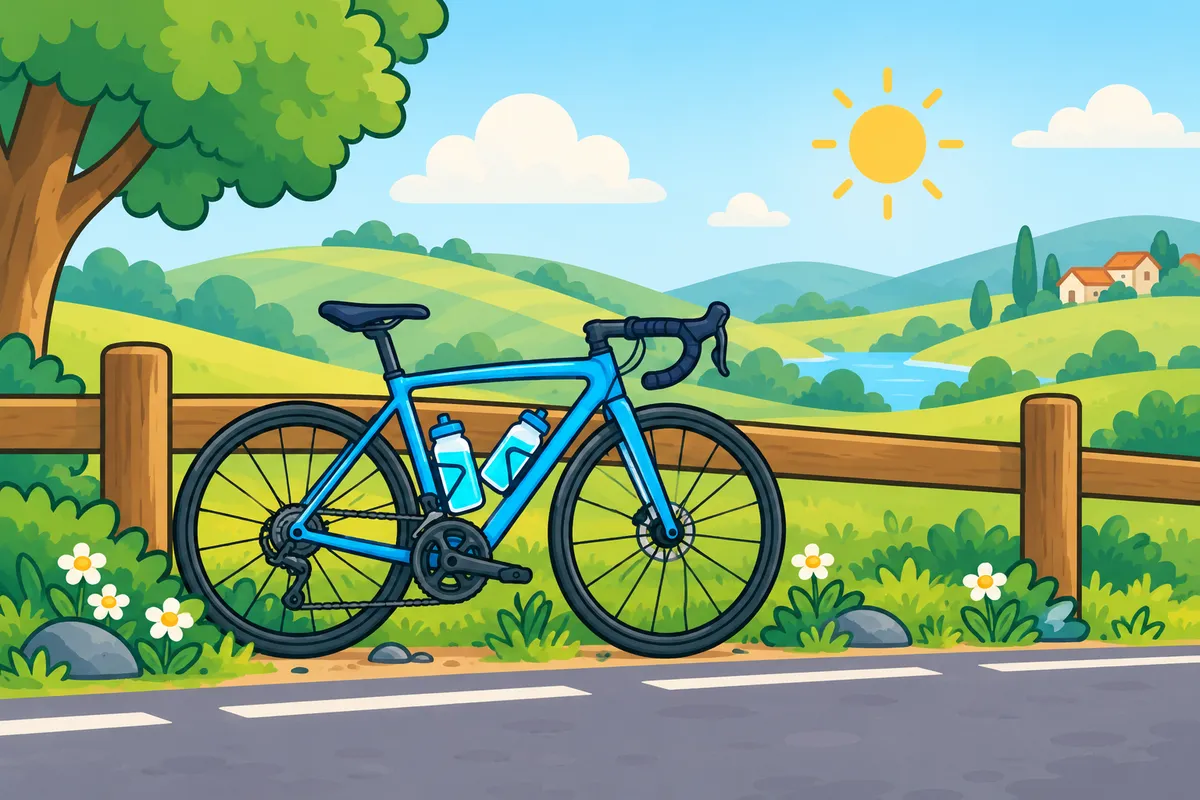
On rides longer than an hour, most riders do well on about 600 to 800 ml (20 to 27 oz) an hour, close to one 750 ml bottle. Your own sweat sets the exact number. Finish no more than 2 % lighter than you started, and never heavier.
How Much Should You Drink per Hour on the Bike?
Start from 600 to 800 ml (20 to 27 oz) an hour and adjust it to your sweat. The National Athletic Trainers' Association (NATA) calls about 200 ml every 15 to 20 minutes a possibly ideal pace. It sets two limits around it: lose no more than 2 % of your body weight, and do not gain any.
- 200 ml
- every 15 to 20 minutes, a possible ideal pace
- 2 %
- of body weight, the most to lose on a ride
- 0.5–4.0 L
- adult sweat per hour during exercise
- 1.0–1.5 L
- most an average man's stomach empties in an hour
That sweat range is the reason a fixed rule fails. The American College of Sports Medicine draws the same 2 % line in its 2007 position stand and, because sweat varies so much between people, recommends "customized fluid replacement programs" built from weighing yourself before and after exercise. One ride between two weigh-ins gives you that number.
The stomach sets a ceiling too. The US National Academies put the fastest rate at which an average man's stomach empties at about 1.0 to 1.5 L an hour, slower in hard efforts, heat and dehydration.
How Much Water per 10 Miles?
Per distance, the answer depends on how fast you ride, because the same hour covers more road. Take the same 600 to 800 ml an hour and divide it by your speed:
| Your speed | Time for 10 miles | Water for 10 miles |
|---|---|---|
| 10 mph | 1 h | 600–800 ml (20–27 oz) |
| 12 mph | 50 min | 500–667 ml (17–23 oz) |
| 15 mph | 40 min | 400–533 ml (14–18 oz) |
| 18 mph | 33 min | 333–444 ml (11–15 oz) |
| 20 mph | 30 min | 300–400 ml (10–14 oz) |
The riders in the Texas ride below averaged about 25 km/h (15.5 mph), which puts the 0.84 L an hour they drank near 540 ml per 10 miles.
What Riders Drank on a Hot 164 km Ride
A University of Connecticut team watched 24 trained cyclists, mostly men in their mid-40s, ride 164 km (102 miles) in Texas at about 36 °C. Half drank only when thirsty and half drank whenever they liked.
A later study by the same lead author pooled three years of riders at a 164 km event in 35 °C heat: 15 women and 88 men.
| Group | Riders | Time on course | Drank | Per hour | Weight lost |
|---|---|---|---|---|---|
| Drank only when thirsty (2014) | 12 | 6.7 h | 5.6 L | about 0.84 L | 2.2 % |
| Drank whenever they liked (2014) | 12 | 6.7 h | 6.0 L | about 0.90 L | 2.3 % |
| Women (2016) | 15 | 7.8 h | 4.8 L | about 0.62 L | 1.1 % |
| Men (2016) | 88 | 7.2 h | 5.6 L | about 0.77 L | 1.9 % |
The women, who were smaller, drank less in total and lost a smaller share of their weight, yet per kilogram they drank about as much as the men. A bottle routine copied from a bigger, faster rider can be too much for you.
Thirst or a Timer?
On the hot 164 km ride, the riders who drank only when thirsty ended the day in the same state as those who drank whenever they liked. NATA says that if you do not know your sweat rate, drinking to thirst "most likely represents a safe strategy to prevent overdrinking".
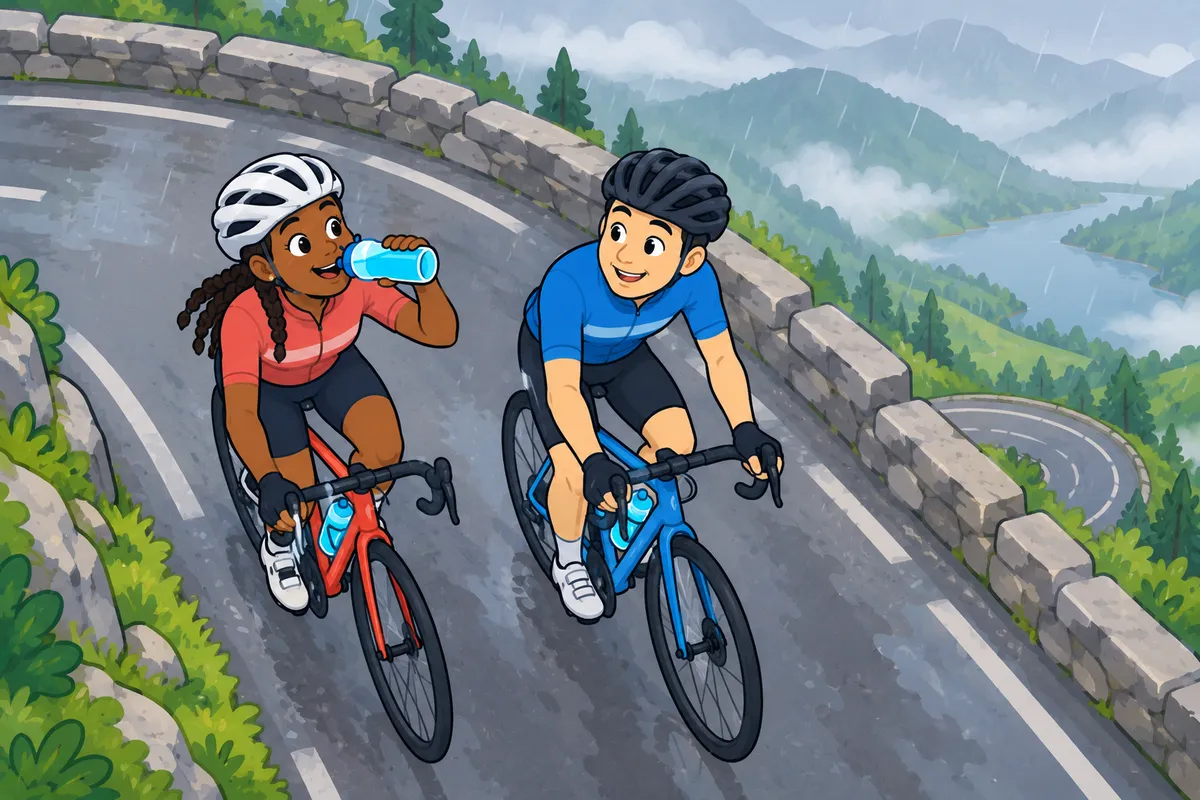
Club Ride
- Drink when you want
- Thirst is a safe guide against overdrinking
- Your sweat rate can stay unknown
Race or Long Hot Day
- Set a sip every 15 to 20 minutes
- Let thirst choose the size of each sip
- Thirst can come late and cost some performance
How Many Bottles Do I Need for a 3-Hour Ride?
At 600 to 800 ml an hour, a 3-hour ride needs 1.8 to 2.4 L (61 to 81 oz) of fluid. That is four or five 500 ml bottles, or three or four 750 ml bottles. Two cages carry at most 1.5 L, so plan one refill stop unless your sweat test says you lose much less.
Bottles are rounded up for every common ride length, so you may carry a little more than you need.
| Ride | Fluid at 600–800 ml an hour | 500 ml bottles | 750 ml bottles | Refills, two 750 ml bottles |
|---|---|---|---|---|
| 2 hours | 1.2–1.6 L (41–54 oz) | 3–4 | 2–3 | 0–1 |
| 3 hours | 1.8–2.4 L (61–81 oz) | 4–5 | 3–4 | 1 |
| 4 hours | 2.4–3.2 L (81–108 oz) | 5–7 | 4–5 | 1–2 |
| 5 hours | 3.0–4.0 L (101–135 oz) | 6–8 | 4–6 | 1–2 |
| 6 hours | 3.6–4.8 L (122–162 oz) | 8–10 | 5–7 | 2–3 |
Carrying a spare is fine. Drinking it only because it is there is not: the upper limit is your sweat, not the bottle.
Bianca's 3-Hour Ride
Bianca weighs 60 kg (132 lb), and her weigh-in on a 90-minute ride showed about 0.6 L of sweat an hour. Her sums run like this:
- Over 3 hours she loses about 1.8 L, and her 2 % line is 1.2 kg.
- So she must drink at least 0.6 L and no more than 1.8 L.
- She takes 150 ml every 20 minutes, 450 ml an hour and 1.35 L (46 oz) in all. Two 750 ml bottles cover it with no stop.
- The plan leaves her 0.45 kg (1 lb) down, 0.75 % of her weight. That deficit is what she drinks back afterwards.
Elias's 5-Hour Ride in the Heat
Elias weighs 78 kg (172 lb) and sweats about 1.2 L an hour on hot days. His sums run like this:
- Over 5 hours that is 6.0 L, and his 2 % line is 1.56 kg, so he needs at least 4.44 L.
- Even the top of the NATA pace, 800 ml an hour, would give him only 4.0 L.
- He plans 250 ml every 15 minutes, 1.0 L (34 oz) an hour and 5.0 L in all, which leaves him 1.0 kg (1.3 %) down.
That hour's worth sits inside the stomach's 1.0 to 1.5 L and under the 6 cups an hour, about 1.4 L, that NIOSH sets as a general ceiling for work in the heat.
Elias's Refill Plan for 5 Hours
- Start with two full 750 ml bottles (1.5 L)
- Drink 250 ml every 15 minutes, 1 L an hour
- Refill both bottles at 1 h 30 and again at 3 h
- Top up 500 ml at 4 h 30 for the last half hour
Do You Need to Drink on a 1-Hour Bike Ride?
Usually only to thirst. NATA says activity under an hour should need nothing but water, and a 70 kg (154 lb) rider who sweats 1.0 L an hour loses about 1.4 % of body weight in an hour without a sip, inside the 2 % line. Take one bottle, drink when you want, and finish it at home.
Hot days change that. The CDC's advice for athletes is to "Drink more water than usual, and don't wait until you're thirsty to drink more", and to ride earlier or later when it is cooler.
How Much Should You Drink Before a Long Ride?
No set extra amount for a recreational rider. NATA says to start with your normal body water, judged by:
- Thirst.
- Body weight.
- Urine color.
- How often you pee.
NATA adds that recreational athletes "should not need to consume extra fluids before activity". If you do drink extra, ACSM says to start at least several hours before the ride.
That gives your body time to absorb it and your pee time to settle before the start.
A bottle downed in the car park mostly sends you looking for a toilet at the first café.
Water or Sports Drink on Long Rides?
Water covers an hour; past that, a drink with carbohydrate and electrolytes may help. NATA says sessions longer than an hour "may benefit" from them and that your gut absorbs a drink of 3 % to 8 % carbohydrate best. Riders whose sweat is very salty, above 60 mEq/L of sodium, and who sweat more than 2.5 L an hour may benefit from added sodium.
On the bottle, 15 to 40 g of carbohydrate per 500 ml sits inside that range.
What goes in your bottles
- A ride of an hour or lessWater, to thirst
- A ride longer than an hourA 3 % to 8 % carbohydrate drink
- Salty sweat above 60 mEq/L and more than 2.5 L an hourAdded sodium, set from a sweat test
If your legs cramp late in long rides, more salt may not be the fix: fatigue and racing hard predict cramps better than salt loss.
Do You Need to Drink on a Cold Ride?
Yes, on the same schedule. NATA notes that in cold weather the drive to drink is blunted and people drink less when they pick their own pace, and that cold air also causes a slight diuretic effect. A winter ride can leave you short even though you never felt thirsty.
Keep the cold ride on the clock too, one sip every 15 to 20 minutes, and see how cold weather changes the sums for the rest of the day.
Riding in the Heat
Heat raises your sweat rate, so a number from a cool morning undercounts a July afternoon. Weigh in on a warm ride before a hot event, carry the extra bottle, and plan stops where you can refill with cold water.
The CDC warns that "Muscle cramping may be an early sign of heat-related illness", and says to stop all activity and get to a cool place if you feel faint or weak.
Can You Drink Too Much Water on a Long Ride?
Yes. Drinking more than you sweat for hours dilutes the sodium in your blood, a condition called exercise-associated hyponatremia. NATA says it comes from water or sports drinks taken beyond sweat losses, and that it shows up more often in women and after activity longer than 4 hours.
Your kidneys cannot rescue a big overdrink quickly. The National Academies put a healthy kidney's top rate at about 0.7 to 1.0 L of water an hour, so three 750 ml bottles an hour on a mild day, for a rider who sweats 0.5 L, outruns them.
The scale is your check: if you weigh more after the ride than before, you drank more than you sweated.
How Much Water Should You Drink After Cycling?
NATA says to drink back:
- 100 to 150 % of the weight you lost, toward 150 % if you ride again within 4 hours.
- Nothing special if you have more than 12 hours before your next ride: normal meals and drinks bring you back.
Bianca, 0.45 kg down, drinks 0.45 to 0.7 L (15 to 23 oz) across the afternoon, spread out and partly with lunch, rather than downing it at the door.
NATA also says to eat and drink within 2 hours of finishing, which replaces fluid, electrolytes, carbohydrates and protein together.
Test the Plan on a Shorter Ride
Two weeks before the big day, ride 90 minutes in similar weather with your planned bottles, weighed on the way out and on the way back. ACSM recommends exactly this kind of customized plan, and a short test shows whether your gut copes with the carbohydrate drink before you carry it for six hours.
General information for healthy adults, not medical advice. If a doctor has set your fluid amount, follow that.
More in Exercise and Heat

Sources
- Journal of Athletic Training (National Athletic Trainers' Association). National Athletic Trainers' Association Position Statement: Fluid Replacement for the Physically Active, 2017.
- Medicine and Science in Sports and Exercise (American College of Sports Medicine). American College of Sports Medicine position stand. Exercise and fluid replacement (abstract), 2007.
- Journal of Athletic Training (Armstrong and colleagues). Drinking to thirst versus drinking ad libitum during road cycling, 2014.
- International Journal of Sport Nutrition and Exercise Metabolism (Armstrong and colleagues). Endurance Cyclist Fluid Intake, Hydration Status, Thirst, and Thermal Sensations: Gender Differences, 2016.
- National Academies of Sciences. Dietary Reference Intakes, Chapter 4: Water, 2005.
- CDC. Heat and Athletes, 2024.
- CDC NIOSH. Workplace Recommendations, 2026.
- CDC NIOSH. Heat-related Illnesses, 2026.
Sources checked by the Glubbo Editorial Team on Oct 19, 2026. General information, not medical advice. How we write and check our guides.

