Exercise and Heat · Running, Cycling and Other Sports
Can You Get Dehydrated While Swimming? What You Lose in the Pool
See how much you lose per kilometer, why the water hides it, and how to drink around a session.
 By the Glubbo Editorial Team · Updated Oct 19, 2026 · 7 min read
On This Page
Short answer
Yes: you sweat in the pool and feel less thirsty.
- Elite swimmers lost about 107 to 138 ml of sweat per km of training.
- Cool water makes you pee more, so a long session still needs a bottle.
- Keep a bottle at the end of your lane and drink at the wall between sets.
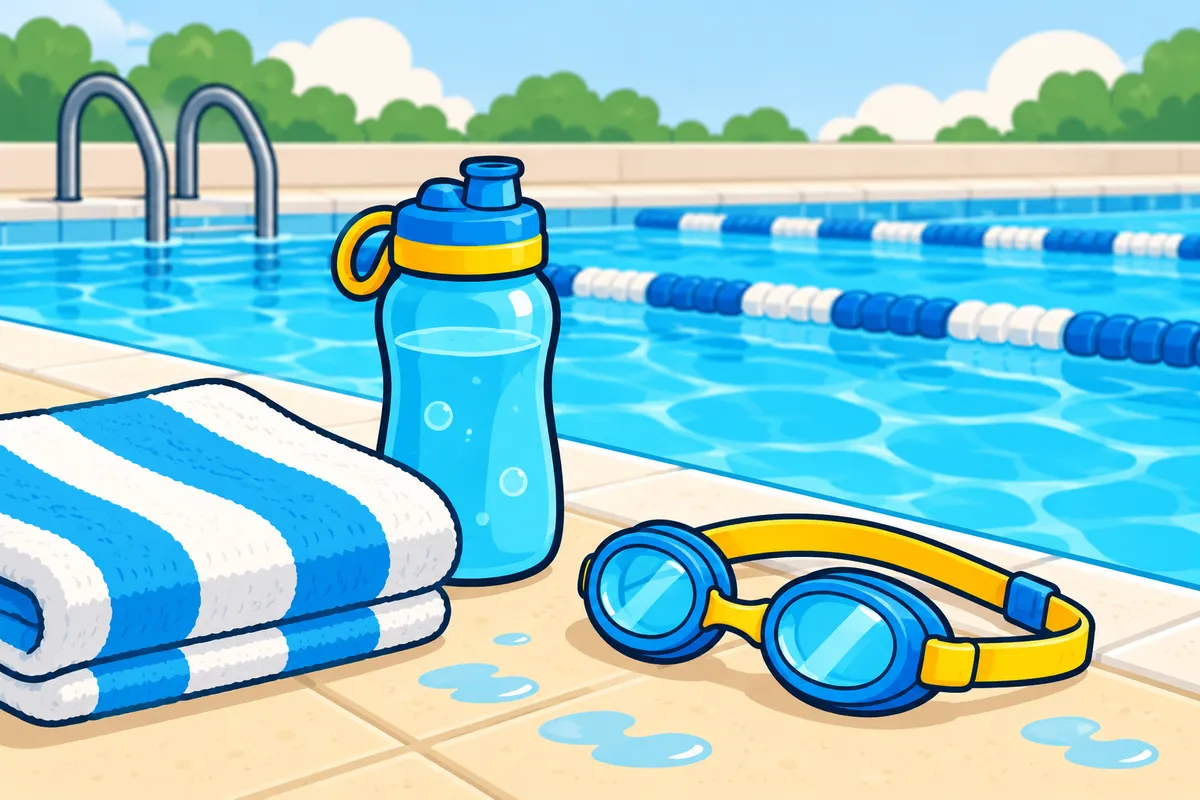
Yes, you can. You sweat while you swim, cool water makes your kidneys produce more urine, and being in the water dulls your thirst, so the loss is easy to miss. In one study, swimmers in training ended up less dry than athletes on land usually do, but a long session still calls for a bottle on the deck.
Do You Sweat When You Swim?
Yes. In elite swimmers at the Australian Institute of Sport, training cost men about 138 ml of sweat per kilometer and women about 107 ml, worked out from body weight before and after each session. Water polo players were measured by the hour: about 287 ml an hour in training and 786 ml an hour in matches.
The study followed 41 swimmers and 23 water polo players through normal sessions. The authors warn that weighing wet athletes carries errors that "may be significant", and they saw wide differences from one swimmer to the next.
What a Session Costs
At the study's average rates, a pool session costs a few hundred milliliters of sweat. Your own rate can sit well above or below these figures.
| Session | At 107 ml per km | At 138 ml per km |
|---|---|---|
| 2 km | about 210 ml (7 oz) | about 280 ml (9 oz) |
| 4 km | about 430 ml (15 oz) | about 550 ml (19 oz) |
| 6 km | about 640 ml (22 oz) | about 830 ml (28 oz) |
For a 65 kg (143 lb) swimmer, even the 6 km figure is about 1.3 % of body weight, under the 2 % line sports medicine uses. The trouble starts when a long session, a dry day before it and no bottle add up.
A warm hall does not change the picture much. In 17 nationally ranked swimmers training 105 minutes in a 27.4 °C pool under 36 °C air, sweat came to 548 ml, a rate of 0.31 L an hour. A casual 45-minute swim at that rate costs about 230 ml (8 oz), roughly a mug, which is easy to replace with one drink at the wall.
How Much the Swimmers Drank
The swimmers drank roughly what they sweated, while the water polo players drank only about half their losses:
- 155 ml
- per km, male swimmers (sweat about 138 ml)
- 95 ml
- per km, female swimmers (sweat about 107 ml)
- 142 ml
- per hour, water polo training (sweat about 287 ml)
- 380 ml
- per hour, water polo matches (sweat about 786 ml)
The authors concluded that these athletes ended less dehydrated than the land-based athletes usually reported in other studies. Maughan's swimmers drank 489 ml across their session and finished only 0.1 % lighter.
Teenage Swimmers in One Study
A small Polish study weighed 17 swimmers aged 15 to 17 through a 2-hour, 4,500 m session in a 27 °C pool. On average they drank about 531 ml and still finished about 513 ml (0.5 kg) lighter: the boys ended 674 ml down after drinking 574 ml, the girls 284 ml down after drinking 469 ml.
Add the drinks back to the net loss and their total water loss comes to about 1 L, near 230 ml per km by our arithmetic. These are measurements, not amounts to copy, and children follow the pediatricians' plan of small drinks every 15 minutes.
Why Do You Need to Pee When You Swim?
Cool water narrows the blood vessels in your skin to save heat, which moves fluid around inside your body and sends more of it to your kidneys. The National Athletic Trainers' Association (NATA) names this as a cause of water loss in swimming and water polo. It also warns that hydration checks made right after exercise in cool water read wrong.
So wait a while before you judge your pee after a swim. The color straight out of the pool tells you little.
Why Do You Feel Less Thirsty When Swimming?
Being in water dulls thirst, even when you are short of water. In a small lab study, eight young men who had lost 3.6 % of their body weight drank about 108 ml in their first 7 minutes sitting neck-deep in 34.5 °C water, half the 216 ml they drank in air.

That study, by Sagawa and colleagues, traced the effect to the blood rather than to salt. A second study by the same group found that thirst fell within 10 minutes of going into the water while the blood stayed salty.
Both point to more blood volume reaching the heart and lungs, which eases the urge to drink. Cold weather blunts thirst on land in a similar way, per NATA, so a plan beats waiting to feel thirsty in the pool.
Do Swimmers Need to Drink Water?
Yes, though usually less than athletes on land. NATA's rules still apply:
- Water is enough for sessions under an hour.
- The loss across a session should stay under 2 % of your body weight.
- You should not finish heavier than you started, a sign you drank more than you lost.
Keep a bottle at the end of your lane and drink at the wall between sets.
Sessions longer than an hour may benefit from a drink with carbohydrate and electrolytes, NATA says. Maughan's swimmers show why salt can matter: their sweat averaged 43 mmol/L of sodium, so a long session costs a little salt as well as water.
Finding Your Own Pool Number
The weigh-in that works on land works at the pool, with one twist from the Polish study: get wet and towel off before the first weigh-in, so your suit and hair hold the same water both times.
A weigh-in at the pool
- Soak your suit and hair, towel off, then weigh yourself
- Weigh your bottle, or note how much you drink
- Swim, skip the toilet if you can, towel off and weigh yourself again
- Add the weight you lost to what you drank: that is your sweat for the session
Divide that by the hours in the water for your sweat rate in liters an hour, or let the calculator do it.
If you swim before you ride, the bike leg needs its own plan, counted in bottles per hour. If calf cramps stop you mid-set, lost water is rarely the whole cause.
Is It Bad to Swallow Pool Water?
Yes, try not to. Even water that looks clean can carry germs that make you sick. Chlorine kills most germs within minutes, but Crypto, a germ that causes diarrhea, can survive more than 7 days in properly chlorinated water, the CDC says.
Pool water is not your drink for the session; your bottle is. The CDC lists these steps among its healthy swimming advice:
Healthy Swimming Steps
5 items- Stay out if you are sick with diarrhea.
- Shower before getting in the water.
- Don't pee or poop in the water.
- Don't swallow the water.
- Take bathroom breaks.
After an illness with Crypto, the CDC says not to go back in the water until two weeks after the diarrhea has completely stopped. Diarrhea is also one of the common causes of dehydration on the NHS list, one more reason to rest and drink first.
Long Swims and Open Water
Long swims need the same planning as a long run or ride, with fewer chances to drink. Plan your drinks at set points. NATA flags two traps on the way: more urine in cool water, and weaker thirst in cold weather.
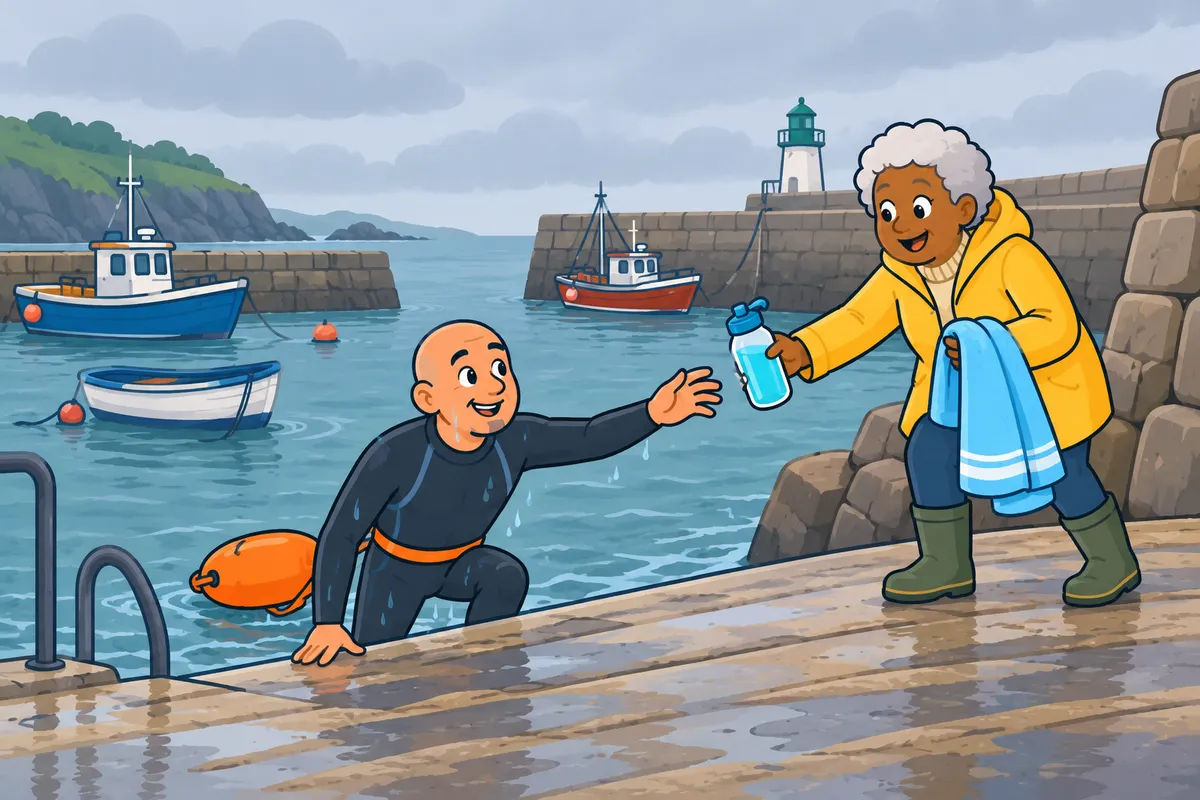
At lakes, rivers and the sea, check local government websites or signs near the water for swim warnings and closures. Bring all your drinking water with you.
Your Pool-Day Drink Plan
Keep the bottle where you can reach it from the water. For a 90-minute session, five drinks of about 100 ml (3.4 oz) at the wall add up to roughly the 489 ml Maughan's swimmers took across their 105 minutes.
A 5:30 PM to 7 PM lane session
- 5:30 PM
- 5:50 PM
- 6:10 PM
- 6:30 PM
- 6:50 PM
General information for healthy adults, not medical advice. If a doctor has set your fluid amount, follow that.
More in Exercise and Heat



Sources
- Journal of Science and Medicine in Sport (Cox and colleagues). Body mass changes and voluntary fluid intakes of elite level water polo players and swimmers, 2002.
- International Journal of Sport Nutrition and Exercise Metabolism (Maughan and colleagues). Water and salt balance of well-trained swimmers in training, 2009.
- Journal of Athletic Training (National Athletic Trainers' Association). National Athletic Trainers' Association Position Statement: Fluid Replacement for the Physically Active, 2017.
- Journal of Applied Physiology (Sagawa and colleagues). Effect of dehydration on thirst and drinking during immersion in men, 1992.
- American Journal of Physiology (Wada and colleagues). Mechanism of thirst attenuation during head-out water immersion in men, 1995.
- International Journal of Environmental Research and Public Health (Wiśniewski and colleagues). Evaluation of Fluid Loss and Customary Fluid Intake among a Selected Group of Young Swimmers: A Preliminary Field Study, 2021.
- CDC. Preventing Swimming-related Illnesses, 2024.
- NHS. Dehydration, 2026.
Sources checked by the Glubbo Editorial Team on Oct 19, 2026. General information, not medical advice. How we write and check our guides.

