Outdoors and Travel · Water on the Trail
Can You Drink Melted Snow? When It Is Safe and How to Boil It
Snow is an emergency source: what the CDC and EPA say, what boiling misses and how to melt it.
 By the Glubbo Editorial Team · Updated Nov 2, 2026 · 6 min read
On This Page
- Can You Drink Melted Snow?
- What Should You Drink Before You Melt Snow?
- Is Melted Snow Safe to Drink If You Boil It?
- Is It Safe to Eat Snow?
- Does Freezing Kill the Germs in Snow and Ice?
- How Do You Melt Snow for Drinking Water?
- Can You Drink Water From Ice?
- A Ski Hut Plan That Uses Snow
- What to Pack for Melting Snow
- Sources
Short answer
Only as a last resort, and only after you boil it.
- CDC: melt snow only if no other water is available.
- Boil 1 minute; 3 minutes above 6,500 ft (CDC) or 5,000 ft (EPA).
- Boiling kills most germs but not chemicals sometimes found in snow.
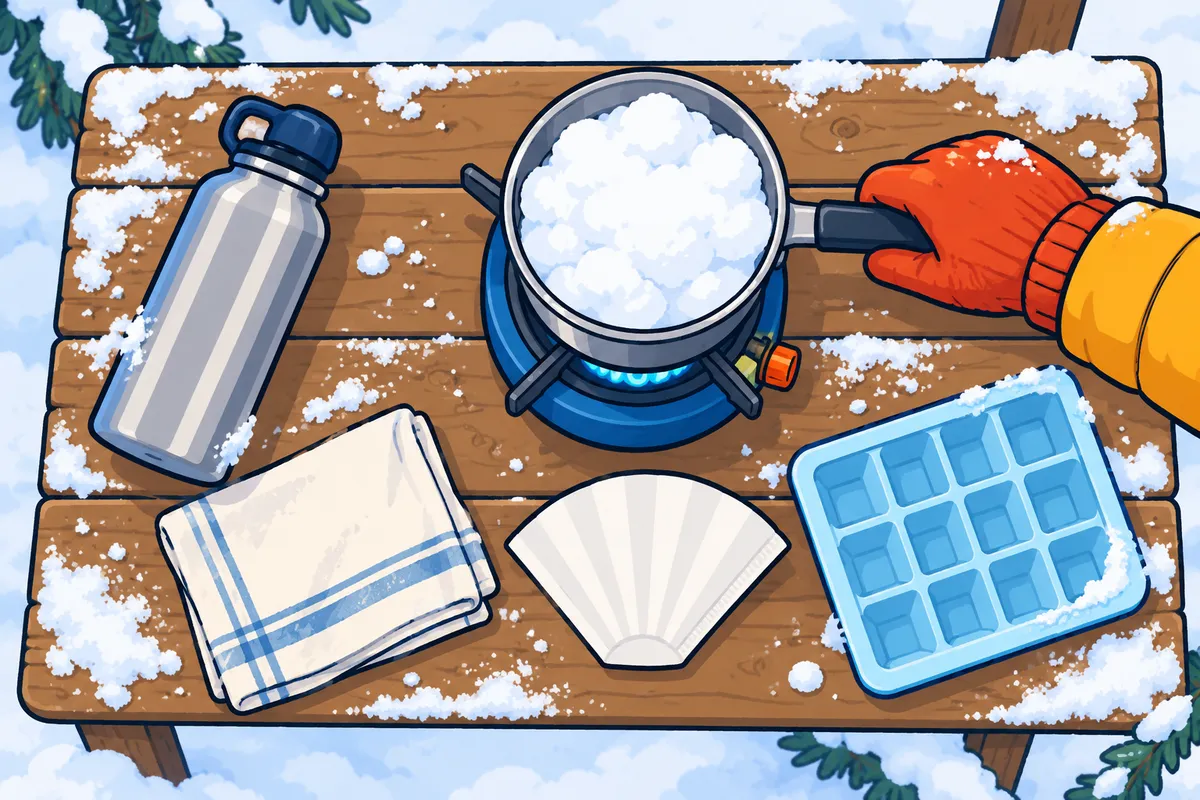
Melted snow is an emergency source, to boil first. The CDC says that when no other water is available, snow can be melted for water, and that a rolling boil for one minute kills most germs but not the chemicals sometimes found in snow.
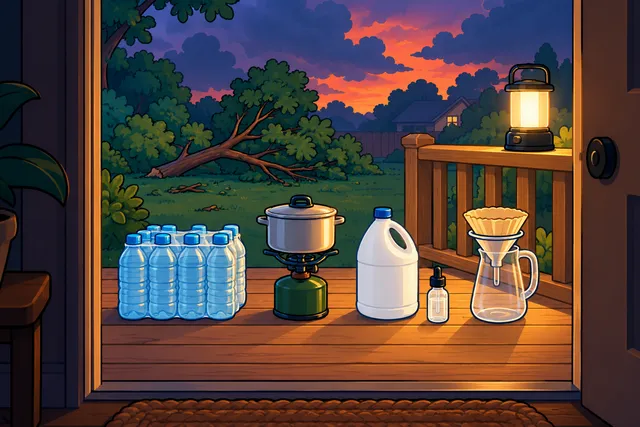
Picture an ice storm: the power is out, the pipes have frozen, and the yard is full of clean white drifts. Before you melt any of it, check what else you can reach first, what the snow has touched and how long the pot will stay at a boil.
Can You Drink Melted Snow?
Yes, but only when you have nothing better, and only after you boil it. The CDC puts melted snow in its winter storm advice as an emergency measure for when no other water is available. Bottled water, a neighbor's tap and the water in your hot water tank come before it.
That advice sits in the CDC's guidance for people riding out a storm at home. Its list of emergency water sources names melted ice cubes made from clean water but does not name snow. So snow is the last item on the list, never the first.
What Should You Drink Before You Melt Snow?
Work down the list and stop at the first safe option. The CDC says that if your pipes cannot be thawed or have burst, you should use bottled water or get water from a neighbor's home, and the EPA lists melting ice cubes and draining your hot water tank or pipes as other sources.
| Reach for this first | Where an agency lists it |
|---|---|
| Bottled water, or a neighbor's tap | CDC winter storm guidance, for frozen or broken pipes |
| Water in the hot water tank or pipes | EPA, when the supply is cut off |
| Melted ice cubes made from clean water | CDC clean water in an emergency and the EPA |
| Melted snow | CDC winter storm guidance: "if no other water is available" |
The order is ours; each agency lists its options without ranking them, except the CDC's "if no other water is available" for snow.
Is Melted Snow Safe to Drink If You Boil It?
Mostly. A rolling boil for one minute kills most germs, the CDC says, but it does not remove chemicals sometimes found in snow. Boil longer at height:
- Above 6,500 feet the CDC asks for three minutes.
- Above 5,000 feet the EPA asks for three.
Once it has melted, snow gets the same boil as any other clear water, for the same minutes at your elevation.
Do You Need to Boil Snow That Looks Clean?
Yes. The CDC says water that carries bacteria, viruses and parasites sometimes looks clean, so a bright white drift proves nothing.
Is It Safe to Eat Snow?
Not when you are cold.
A separate point holds anywhere: a mouthful of snow skips the boil, the one step that kills most germs in melted snow. If you are thirsty and cold, melt the snow in a pot and boil it instead, then drink the water once it has cooled enough to sip.
Does Freezing Kill the Germs in Snow and Ice?
No. The Wilderness Medical Society says most enteric organisms, including Shigella, the typhoid bacterium Salmonella Typhi, hepatitis A and Cryptosporidium, can stay viable for long periods in water, including when frozen in water.
A 1985 study in JAMA froze four bacterial enteropathogens in ice and then melted the ice into popular drinks. Freezing alone lowered the counts, but none of the organisms was completely eliminated after 24 hours of freezing and melting, even in 86-proof tequila.
So cold cuts the numbers and still leaves germs behind. Freezing is not a treatment; boiling is. The study tested four bacteria in the lab, not viruses or parasites, and not snow lying outdoors.
How Do You Melt Snow for Drinking Water?
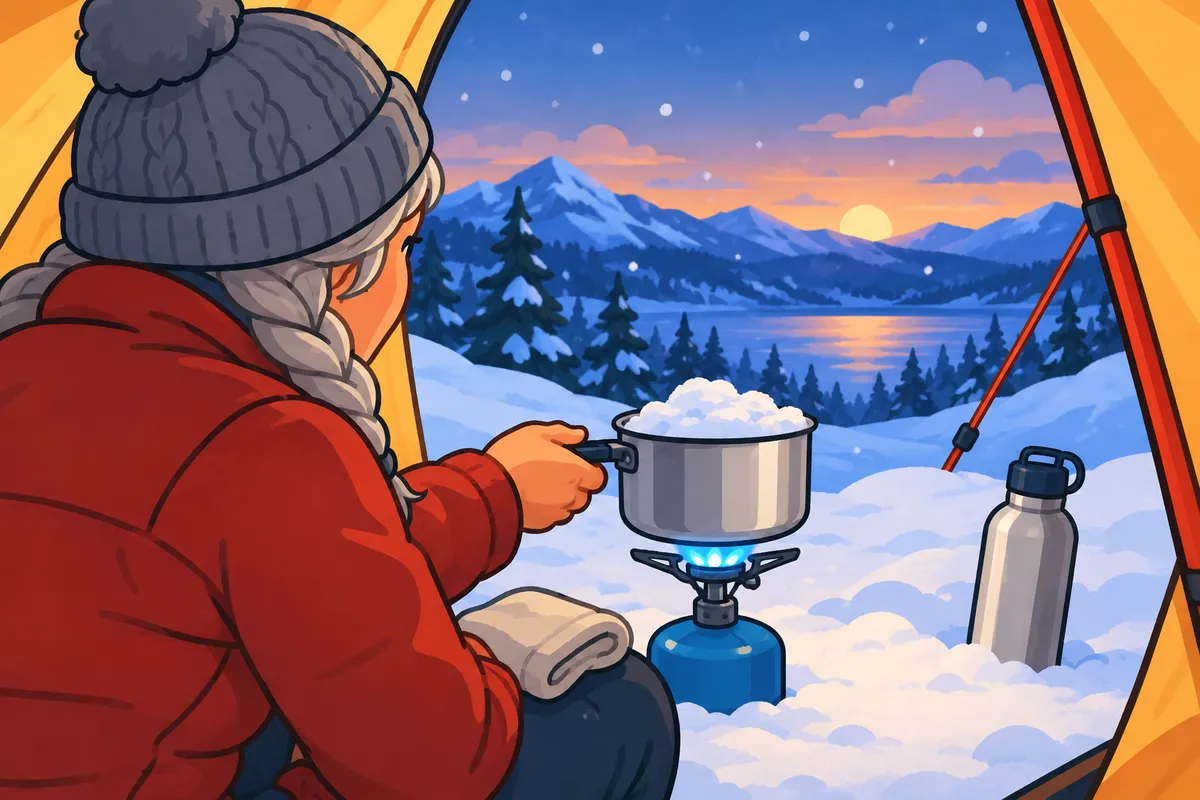
Melt it in a clean pot, strain out anything floating in it, then boil it. The EPA and CDC both say to filter cloudy water through a clean cloth, paper towel or coffee filter before you boil, and both give a boil of one minute at sea level.
From a Pot of Snow to a Safe Cup
- Scoop snow that no fuel or chemicals have touched into a clean pot
- Melt it over the stove until it is all water
- Strain through a clean cloth, paper towel or coffee filter if it holds bits
- Bring to a rolling boil: 1 minute, or 3 minutes up high
- Let it cool, then pour it into a clean bottle
Short on fuel? Boiling with little fuel is covered in the boiling guide. If the burner will not light at all, a filter or purifier is the backup for the melted water.
Can You Drink Water From Ice?
Yes, if the water behind the ice was clean. The CDC lists melted ice cubes from water that was not contaminated among the emergency sources inside a home, and the EPA suggests melting ice cubes when your supply is cut off.
Ice from a lake, a pond or a glacier is the same water as the lake, pond or glacier, only frozen. Treat it the way you would treat stream water, since frozen water keeps germs alive (see the Wilderness Medical Society line above).
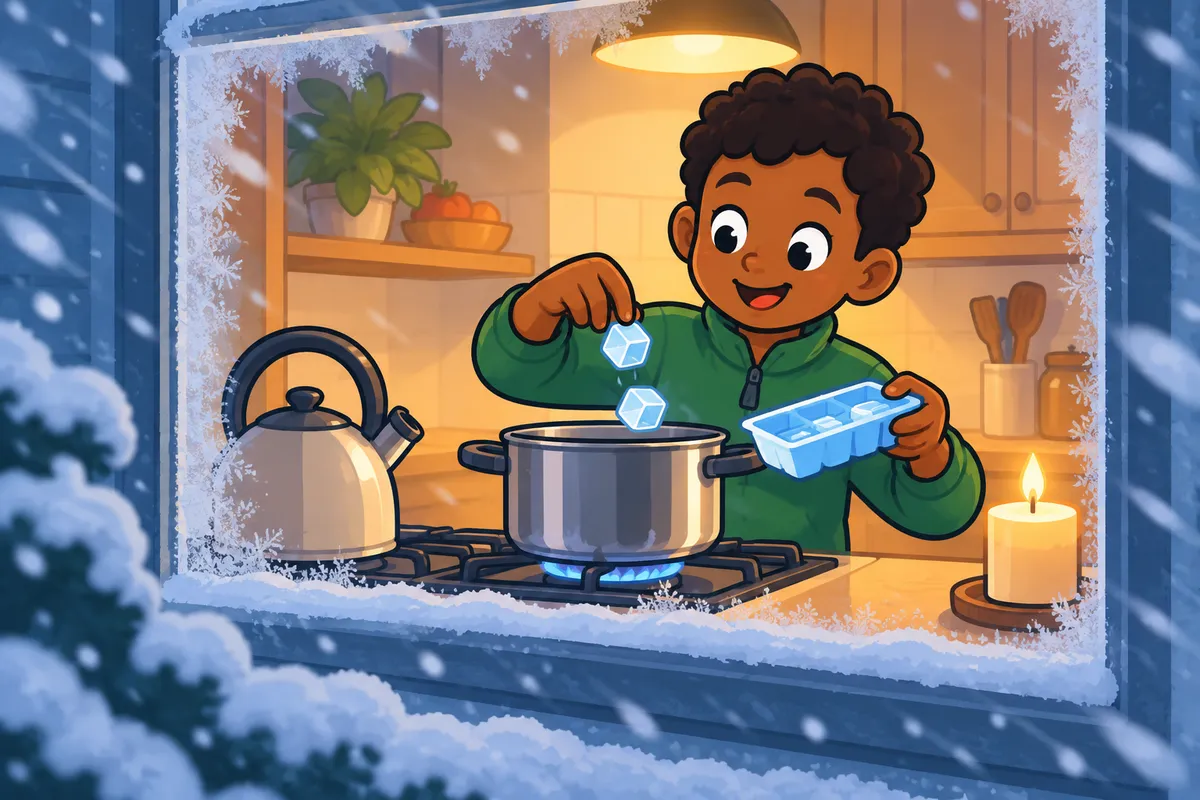
Ice in a restaurant drink is a different question. The CDC page on making water safe in an emergency says that if you know or suspect your water is unsafe, do not use it to drink or to make ice.
Away from home, ask where the ice came from, because the cubes are only as clean as the water that made them.
A Ski Hut Plan That Uses Snow
What to Pack for Melting Snow
Carry water you have already treated. Then pack what turns snow into a safe last resort:
- A pot with a lid
- A stove with enough fuel for the boil
- A cloth or coffee filter for straining
- A watch for the boil time of your highest camp
The CDC and EPA give no snow-to-water ratio or fuel amount, so bring more fuel than you think the pot needs.
Cold also dulls thirst, so on a winter day drinking on a schedule keeps you from needing the pot at all.
General information for healthy adults, not medical advice. If a doctor has set your fluid amount, follow that.

More in Outdoors and Travel
Sources
- US Centers for Disease Control and Prevention. Safety Guidelines: During & After a Winter Storm, 2026.
- US Centers for Disease Control and Prevention. How to Find Clean Water in an Emergency, 2025.
- US Centers for Disease Control and Prevention. How to Make Water Safe in an Emergency, 2024.
- US Centers for Disease Control and Prevention. About Water Treatment Options When Hiking, Camping, or Traveling, 2025.
- US Environmental Protection Agency. Emergency Disinfection of Drinking Water, 2026.
- Wilderness & Environmental Medicine (Backer, Derlet and Hill). Wilderness Medical Society Clinical Practice Guidelines on Water Treatment for Wilderness, International Travel, and Austere Situations: 2024 Update, 2024.
- JAMA (Dickens, DuPont and Johnson). Survival of Bacterial Enteropathogens in the Ice of Popular Drinks, 1985.
Sources checked by the Glubbo Editorial Team on Nov 2, 2026. General information, not medical advice. How we write and check our guides.

