Outdoors and Travel · Water on the Trail
Water Filter vs Water Purifier for Backpacking: Which Do You Need?
Germ sizes against pore sizes, what the word purifier has to prove, and when a filter is enough.
 By the Glubbo Editorial Team · Updated Oct 19, 2026 · 8 min read
On This Page
- What Is the Difference Between a Water Filter and a Water Purifier?
- What Does the Word Purifier Have to Prove?
- Do Backpacking Water Filters Remove Viruses?
- Do You Need a Water Purifier in the North American Backcountry?
- Do I Need a Purifier for International Travel?
- Can a Filter Plus Tablets Replace a Purifier?
- Do Filters and Purifiers Remove Chemicals, Salt or Metals?
- What Happens to a Filter in Freezing Weather?
- Mistakes With Filters and Purifiers
- Choose Your Kit in Two Questions
- Sources
Short answer
A purifier also stops viruses; a filter does not.
- A filter of 0.3 micron or less stops parasites and bacteria, not viruses (CDC).
- Viruses average about 0.03 micron; only an ultrafilter near 0.01 catches them.
- Wild country: a filter is one step. Villages and camps: add a chemical or use a purifier.
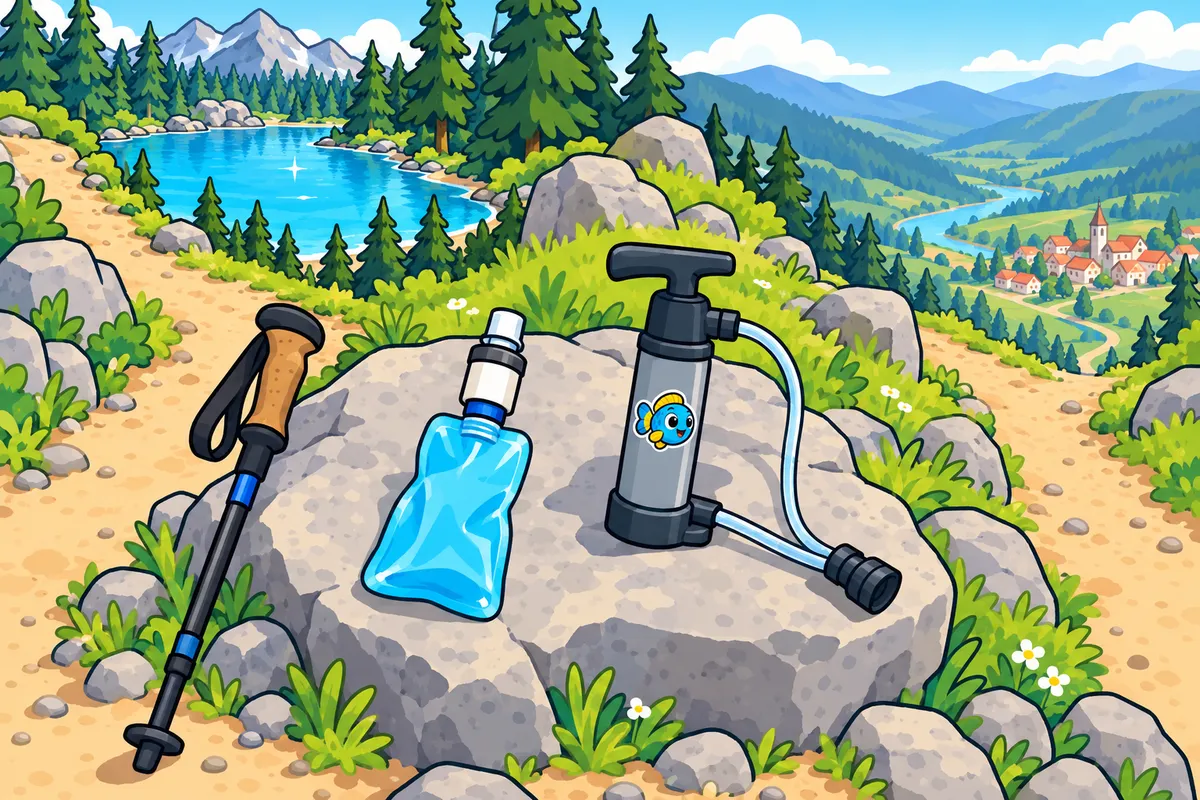
A filter strains out parasites and bacteria; a purifier also deals with viruses. The CDC says a filter with an absolute pore size of 0.3 micron or smaller removes bacteria and parasites but not viruses, while reverse osmosis removes all three.
Gear shops sell two boxes that look almost the same, and one costs more. The pricier one says "purifier", and the difference comes down to a germ about a thirtieth of a micron across. Whether you need to pay for it depends on who lives upstream of your water: a beaver in the Rockies and a village without sewers in the Andes call for different gear.
What Is the Difference Between a Water Filter and a Water Purifier?
A filter strains germs out by size, and a purifier also handles the smallest ones. The CDC puts the line at 0.3 micron: below that pore size a filter removes bacteria and parasites but not viruses.
The bar for viruses barely shows, and that is the whole story. A virus is about 200 times narrower than Giardia at its smallest, by the WMS sizes, so a pore that traps every cyst and bacterium still lets it through.
A purifier gets around that in one of two ways:
- It has far smaller pores, an ultrafilter of about 0.01 micron.
- It adds a step that kills what slips through: chlorine, chlorine dioxide, iodine or UV light.

What Does the Word Purifier Have to Prove?
A lab result the maker paid for. To claim the US Environmental Protection Agency's "purifier" designation, a maker must show its device removes at least 99.9999 % of bacteria, 99.99 % of viruses and 99.9 % of Cryptosporidium or Giardia, the Yellow Book says.
- 99.9999 %
- of bacteria a purifier must remove
- 99.99 %
- of viruses
- 99.9 %
- of Cryptosporidium or Giardia
Two catches sit behind those numbers. The makers run the tests themselves, and the Yellow Book notes the EPA does not independently test the claims. The word also appears on boxes that work in very different ways: a pump with an ultrafilter, a bottle with a chemical cartridge, a UV pen.
Reading a Filter Box in the Shop
Look for a pore size and the word "absolute", or a certification. The CDC names two labels that mean a device stops parasites:
- An absolute pore size of 1 micron or smaller.
- Certification to NSF Standard 53 or 58 for cyst reduction or removal.
An absolute pore of 0.3 micron or less adds bacteria, and only an ultrafilter of about 0.01 micron or reverse osmosis adds viruses.
Charcoal deserves its warning. The Yellow Book says granular activated charcoal filters trap but do not kill microorganisms and are generally not rated for microbe removal; a charcoal-only bottle is a taste filter.
Do Backpacking Water Filters Remove Viruses?
Most do not. The CDC's emergency page states that portable filters do not remove viruses, and the Yellow Book adds that microfilters "do not reliably remove enteric viruses (e.g., norovirus)", which average 0.03 micron.
Even a fine ceramic element falls short. The WMS guideline says a 0.2-micron ceramic filter may cut virus numbers by 2 to 3 logs, 99 to 99.9 %, which it calls "not adequate for complete removal of viruses". Its fix is ultrafiltration or a filter followed by a disinfectant.
Which Germs Each Setup Stops
| Setup | Parasites | Bacteria | Viruses | What you trade |
|---|---|---|---|---|
| Microfilter, 1 micron | Yes | Not all | No | Clogs; can crack unseen |
| Microfilter, 0.2–0.3 micron | Yes | Yes | No | Clogs; can crack unseen |
| Microfilter, then chlorine dioxide | Yes | Yes | Yes | Hours of waiting for the chemical |
| Ultrafilter, about 0.01 micron | Yes | Yes | Yes | Costs more, slower flow, harder pumping |
| Reverse osmosis | Yes | Yes | Yes | The only one that also removes salt |
| UV pen after a filter | Yes | Yes | Yes | Batteries; clear water only |
Sources: CDC, CDC Yellow Book, WMS 2023.
The Yellow Book explains the ultrafilter's cost: hollow-fiber ultrafilters are pricier and need more pressure, which often slows the flow. The WMS adds that a clogged filter needs ever more pressure to push water through, and that pressure can force germs through or damage the element.
Do You Need a Water Purifier in the North American Backcountry?
Usually not, if the water is wild. The Yellow Book says any single step, a microfilter included, suits wilderness water with little human or animal activity. Water below camps, cabins, grazing or trailheads needs heat, UV, a filter plus a chemical, or an ultrafilter.
The reason is who shares the watershed. The WMS says upstream use by people, farm animals and wildlife poses a major risk, and it notes that hepatitis A and norovirus have a low infectious dose and can cause illness even from inadvertent drinking during water-based recreation.
So the question to ask at a stream is how many people use the land above it, not how remote the trailhead felt. A popular lake ringed with campsites is closer to a village than to wilderness, and the signs to read upstream of a creek decide which kit you carry.
Do I Need a Purifier for International Travel?
Often, yes, or a filter plus a chemical. For tap water in countries without well-developed water and sanitation, the Yellow Book still accepts a single step but says to choose ultrafiltration instead of microfiltration, because viruses become the main worry.
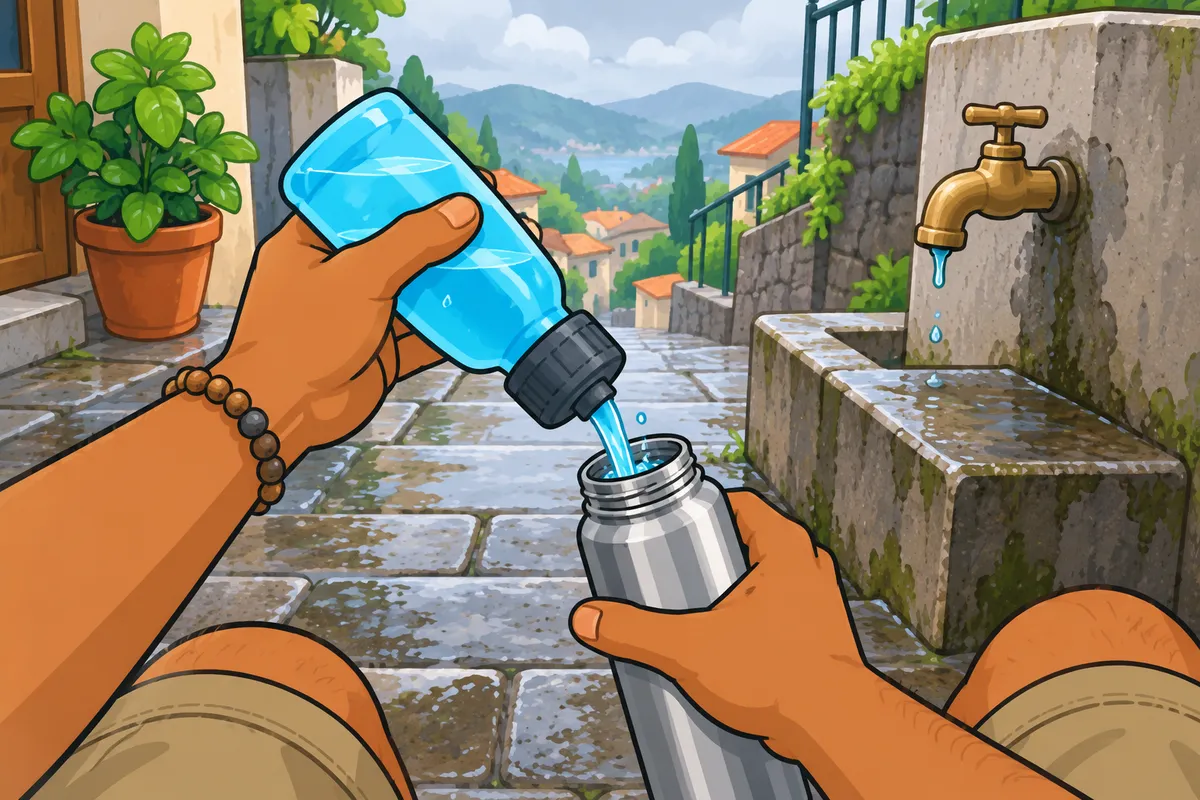
The same chapter points to different kits for different trips:
- Trekkers and campers abroad might prefer filters rated to remove viruses, or chlorine dioxide.
- For a hotel tap it names a UV device or liquid bleach at 1 to 2 drops per liter.
- In Mexico, where the CDC makes no exception for any city, a kettle and sealed bottles cover most hotel stays.
Bottled water is the simpler answer in towns, and the CDC's travel page calls factory-sealed bottles the safest option for most travelers. Whether the tap in your hotel counts as safe depends on the country and on local notices.
Can a Filter Plus Tablets Replace a Purifier?
Yes. The CDC tells hikers to filter first, then add a chemical disinfectant to kill viruses and bacteria, and the Yellow Book lists a microfilter plus a halogen, in either order, as equal to heat or UV for water near people and animals.
The pairing covers each part's weak spot:
- The filter removes Cryptosporidium, which chlorine and iodine barely touch.
- The chemical kills the viruses the filter lets through.
The wait is the price of the cheaper route. Chlorine dioxide needs upwards of 2 to 4 hours for dependable disinfection, by the WMS, and the contact times for each kind of tablet grow longer as the water gets colder. An ultrafilter purifier gives water the moment it is pumped, at the cost of price, a slower flow and a crack that lets dirty water through.
Do Filters and Purifiers Remove Chemicals, Salt or Metals?
Mostly no, and the exceptions are narrow. The WMS says unless a disinfectant is built into the media, filtration does not kill or inactivate microbes, and activated carbon is for taste, odor and some chemicals, not for microbes.
- Activated carbon: improves taste and removes chlorine, iodine and most heavy metals, per the Yellow Book; the WMS adds that it removes most microcystin toxins.
- Reverse osmosis: the only treatment the Yellow Book says can desalinate water for ocean travel.
- Microfilters and ultrafilters: strain microbes; they are not chemical treatments.
So a filter is the wrong tool for a creek below a mine or a puddle with a fuel sheen. The CDC's rule for those is to find another source.
What Happens to a Filter in Freezing Weather?
A wet hollow-fiber filter that freezes can break when it thaws, and you cannot tell by looking. A SectionHiker guide hosted on Sawyer's site says hollow-fiber filters break when they thaw after being frozen, even if only partly frozen, and that there is no way to test whether they still work.
| Treatment | In freezing weather |
|---|---|
| Hollow-fiber filter | Breaks if frozen when wet; no way to test it |
| Pump filters | Some are ruined if they freeze; one tolerates limited freezing |
| UV pen | Batteries lose power in the cold |
| Liquid drops and bleach | Can freeze and stop working |
| Tablets | React slower in cold water but have no freeze problem |
Source: the Sawyer-hosted SectionHiker guide above. In cold weather the safer plan is a boil or tablets, and a filter that has been frozen wet goes in the trash.
Mistakes With Filters and Purifiers
| Mistake | What happens | Fix |
|---|---|---|
| A trail filter at a village tap | Viruses pass through (CDC) | Add chlorine dioxide, or use a purifier |
| Pumping harder through a clogged filter | Pressure can push germs through or crack it (WMS) | Backflush or clean it as the manual says |
| Trusting a charcoal bottle as a filter | Charcoal traps but does not kill microbes (Yellow Book) | Treat with a rated filter or chemical too |
| UV pen on silty water | Particles shield germs from the light (CDC) | Filter or settle first |
| No backup on a long trip | A cracked filter leaves you with raw water | Carry tablets; the WMS asks for a backup |
Choose Your Kit in Two Questions
Filter or Purifier? Start at the top
1Is the water from villages, farms or a tap abroad where water and sanitation are weak?
YesA purifier or an ultrafilter. Viruses become the main worry, so the Yellow Book says choose ultrafiltration over microfiltration.
No2Is there a camp, cabin, cattle or a trailhead upstream?
YesA filter plus a chemical, or a purifier. Heat and UV work too.
NoOtherwiseA filter of 0.3 micron or less. Only wildlife or nobody upstream: the Yellow Book says any single step, a microfilter included, suits wilderness water.
Before the trip, look at the box or manual of the filter you own and write down its pore size and whether it carries an NSF 53 or 58 mark. That one line tells you which of the answers above you already have, and whether a strip of chlorine dioxide tablets needs to go in the pack.
General information for healthy adults, not medical advice. If a doctor has set your fluid amount, follow that.

More in Outdoors and Travel


Sources
- US Centers for Disease Control and Prevention. About Water Treatment Options When Hiking, Camping, or Traveling, 2025.
- CDC Yellow Book (Backer and Hill). Water Disinfection for Travelers, 2025.
- Wilderness & Environmental Medicine (Backer, Derlet and Hill). Wilderness Medical Society Clinical Practice Guidelines on Water Treatment for Wilderness, International Travel, and Austere Situations, 2023.
- US Centers for Disease Control and Prevention. How to Make Water Safe in an Emergency, 2024.
- CDC Travelers' Health. Avoid Contaminated Water During Travel, 2025.
- Sawyer Products. SectionHiker: How to Filter or Purify Water in Freezing Temperatures, 2025.
Sources checked by the Glubbo Editorial Team on Oct 19, 2026. General information, not medical advice. How we write and check our guides.

