Outdoors and Travel · Emergency Water
How to Make Water Safe to Drink in an Emergency: What to Try First
The order to try, what works with no power or no stove, and the water no home method can rescue.
 By the Glubbo Editorial Team · Updated Oct 19, 2026 · 11 min read
On This Page
- How Do You Make Water Safe to Drink in an Emergency?
- How Do You Purify Water Without Electricity?
- How Do You Purify Water Without Boiling?
- How Do You Purify Water With Household Items?
- What Water Is Already in Your House?
- How Much Water Does a Household Need?
- Which Water Can You Not Make Safe at Home?
- How Do You Store Water After You Treat It?
- What Changes the Plan in a Real Outage
- Test Your Stove and Check the Bleach Date Before the Next Storm
- Sources
Short answer
Sealed water first, then boil, then unscented bleach.
- EPA: use bottled or stored water before anything else.
- CDC: a rolling boil for 1 minute, 3 minutes above 6,500 ft.
- No stove: 8 drops of 5 to 9 % bleach per gallon, wait 30 minutes.
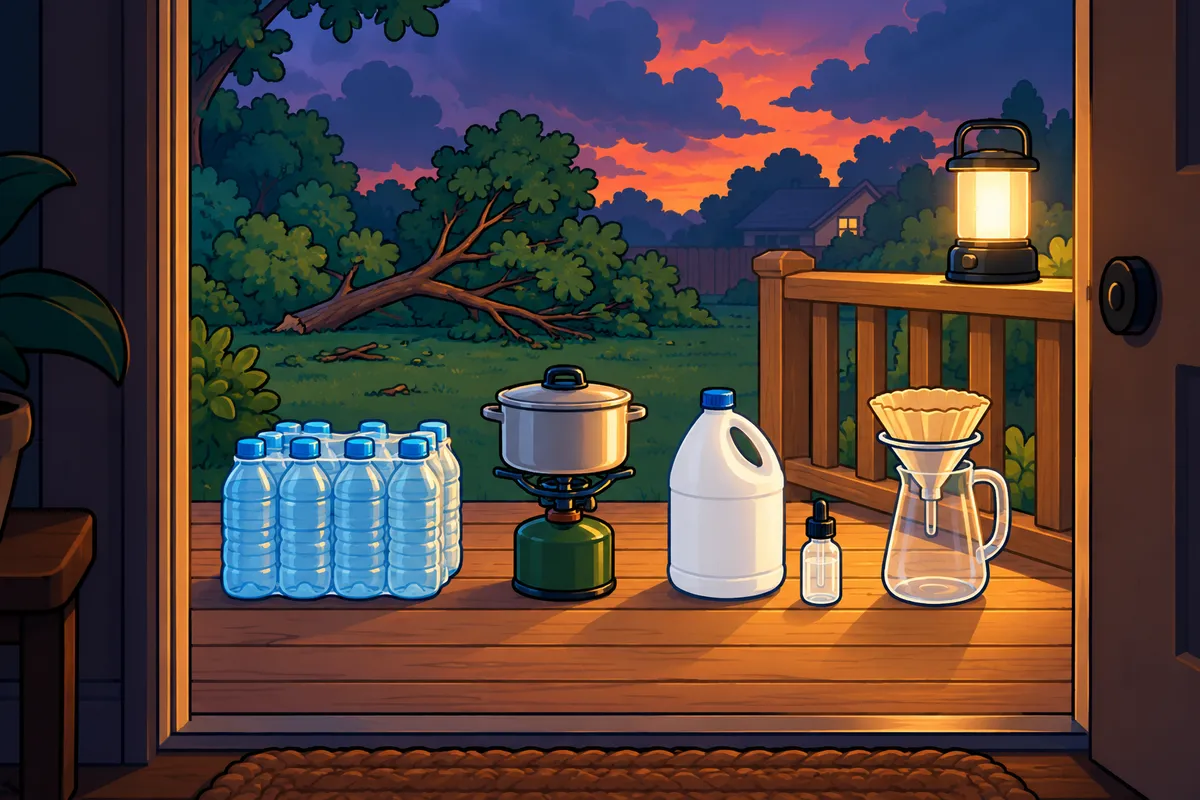
Drink sealed or stored water first, boil when you can, and use plain unscented bleach when you cannot. The EPA puts bottled water first, and the CDC calls boiling "the best way to kill germs in water".
The storm has passed, the lights are out and the tap either coughs brown water or nothing at all. Somewhere in the house there is a case of bottled water, a pot, a jug of bleach and a stove that may or may not work, and the order you use them in saves fuel, time and a sick week.
How Do You Make Water Safe to Drink in an Emergency?
Work down the list by what you have in the house. Every option works better on clear water, so let cloudy water settle and pour the top through a clean cloth, paper towel or coffee filter first, the step both agencies ask for before any treatment.
What You Have, What You Do
- Sealed bottles or water you storedDrink that first and save the rest of your options
- A working gas stove, or a camp stove used outdoorsA rolling boil for 1 minute, 3 above 6,500 ft
- No heat, but plain unscented bleach8 drops of 5 to 9 % bleach per gallon, 30 minutes
- Tablets from a camping or first-aid kitFollow the label for your volume and wait the full time
- Clear water, clear bottles and a sunny daySolar disinfection: 6 hours in full sun
- Water that smells of fuel or chemicalsNone of these: find another source
The order matters for a second reason. Boiling kills every kind of germ, while the CDC says chlorine and iodine will not kill Cryptosporidium, so bleach is the backup of a pot on a flame, not its equal.
The boil has one wrinkle at altitude: the EPA says 3 minutes above 5,000 feet while the CDC says 3 minutes only above 6,500 feet, so a home between those heights meets both with a 3-minute boil.
How Do You Purify Water Without Electricity?
Boil on gas, or skip heat and use bleach, tablets or the sun. A gas range often still lights in a power cut, and a camp stove or grill works outdoors. The CDC says never to use a charcoal grill, hibachi, lantern or portable camping stove inside a home, tent or camper.
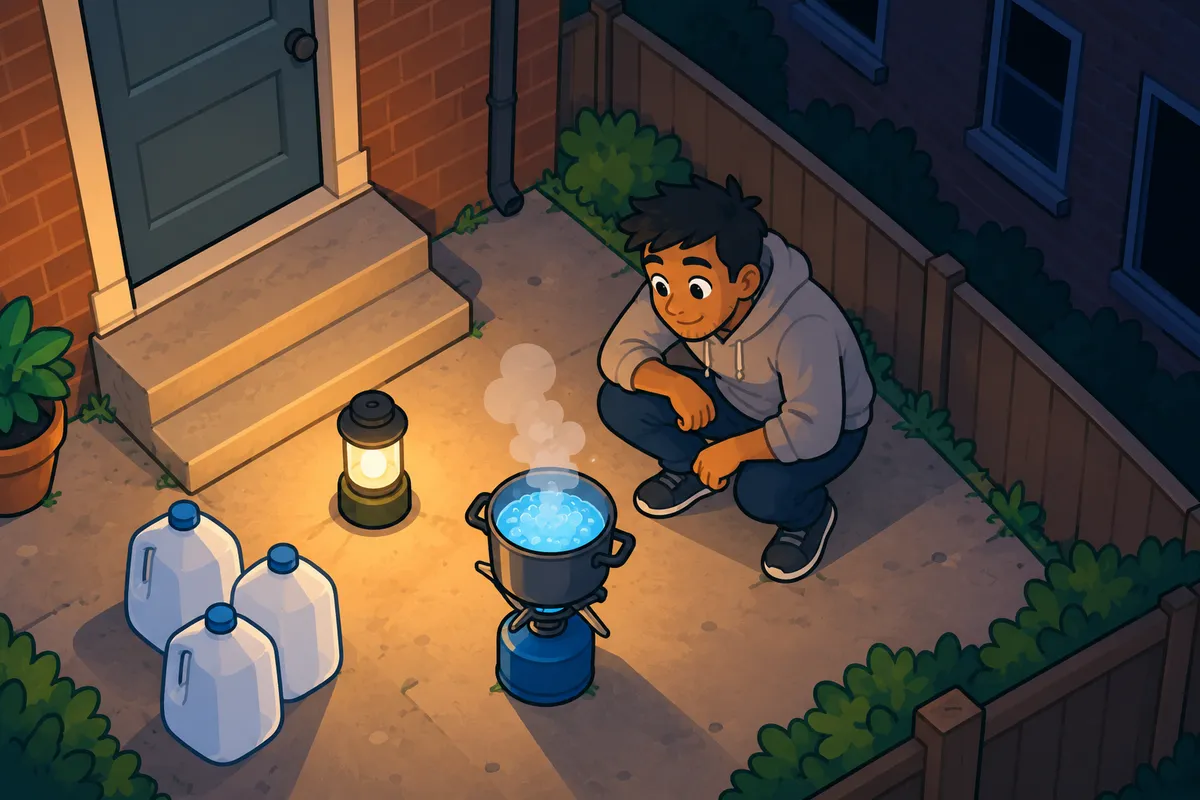
An outage is also why tap water turns doubtful: the CDC's power-outage page warns that water purification systems may not be working fully without power, and names bottled, boiled or treated water for drinking, cooking and hygiene.
Without any flame, chemicals and sunlight still work. None of them needs a plug, and a UV pen needs only batteries, though the CDC says UV works on clear water alone.
How Do You Purify Water Without Boiling?
Disinfect it with chemicals or sunlight. Unscented bleach is the CDC's first choice after boiling, tincture of iodine and tablets come next, and solar disinfection works on clear water if you have six hours of sun. All of them kill bacteria and viruses; only chlorine dioxide tablets also act on Cryptosporidium.
Each chemical has its own page for the details:
- Bleach is in most homes: 8 drops of 5 to 9 % bleach per gallon, double for cloudy or cold water, then 30 minutes.
- Tincture of iodine from the first-aid kit takes 5 drops per quart and the same wait, but iodine has limits for pregnancy and thyroid disease.
- Purification tablets from a camping kit are made for a set volume, so follow the label.
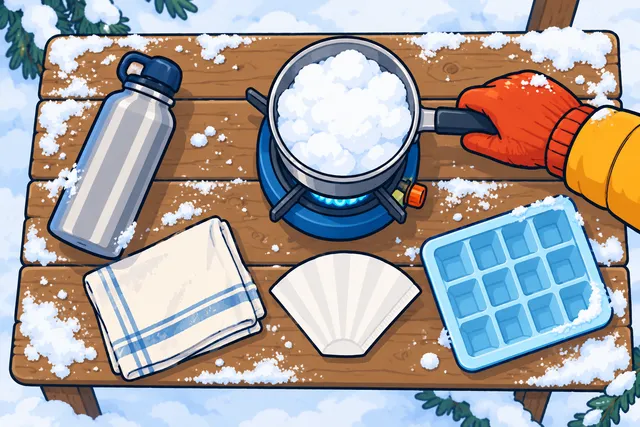
Solar disinfection needs no chemicals. Lay clear plastic bottles of clear water on their side in full sun for 6 hours, or 2 days if it is cloudy, the CDC and Yellow Book say; cloudy water needs clearing first.
Treat Clear Water With Unscented Bleach
- Let cloudy water settle, then pour the clear top through a cloth or coffee filter
- Add 8 drops of 5 to 9 % unscented bleach per gallon of water (CDC)
- Stir, cover the container and wait 30 minutes
- Sniff: a faint chlorine smell means it worked; no smell means repeat the dose and wait 15 more minutes (EPA)
- Drink, or store in a clean container with a tight lid
The Bleach Dose for a Household
Count gallons, then drops. Ready.gov plans 1 gallon per person per day for drinking and sanitation, so a family of four needs about 4 gallons a day; the CDC's 8 drops per gallon makes that 32 drops of 5 to 9 % bleach. The EPA's teaspoon amounts for bigger batches, such as 1/3 teaspoon of 6 % bleach per 4 gallons, are in the bleach drops-per-gallon table.
For a big supply, the EPA also describes a stock solution made from high-test granular calcium hypochlorite (HTH): one heaping teaspoon in two gallons of water gives about 500 mg/L, and you add one part of that solution to each 100 parts of water you treat. Do it in a ventilated area with eye protection, because HTH is a very powerful oxidant.
How Do You Purify Water With Household Items?
With four things most homes hold:
- unscented bleach
- a pot and a working flame
- clear plastic bottles
- a cloth or coffee filter to clear the water first
A bottle of 2 % iodine from the first-aid kit works too, while scented bleach and kitchen acids do not.
| Item | What it does | How, from the source | Watch out |
|---|---|---|---|
| Plain unscented bleach | Kills bacteria and viruses | 8 drops per gallon, 30 min (CDC) | No scented, color-safe or added-cleaner bleach (EPA) |
| Pot and gas flame | Kills all germs, Crypto included | Rolling boil 1 min (CDC) | Outdoors only for camp stoves and grills |
| Coffee filter, paper towel or clean cloth | Clears silt; kills nothing | Settle, then pour through (CDC) | Always follow with a boil or a disinfectant |
| Clear plastic bottles | Sunlight kills germs | On their side in sun for 6 h, 2 days if cloudy (CDC) | Clear water only |
| 2 % tincture of iodine | Kills bacteria and viruses | 5 drops per quart, 30 min (EPA) | Not in pregnancy or thyroid disease (CDC) |
| Granular calcium hypochlorite (HTH) | Makes a chlorine stock solution | 1 heaping tsp in 2 gal, then 1 part per 100 parts water (EPA) | Ventilated room, eye protection |
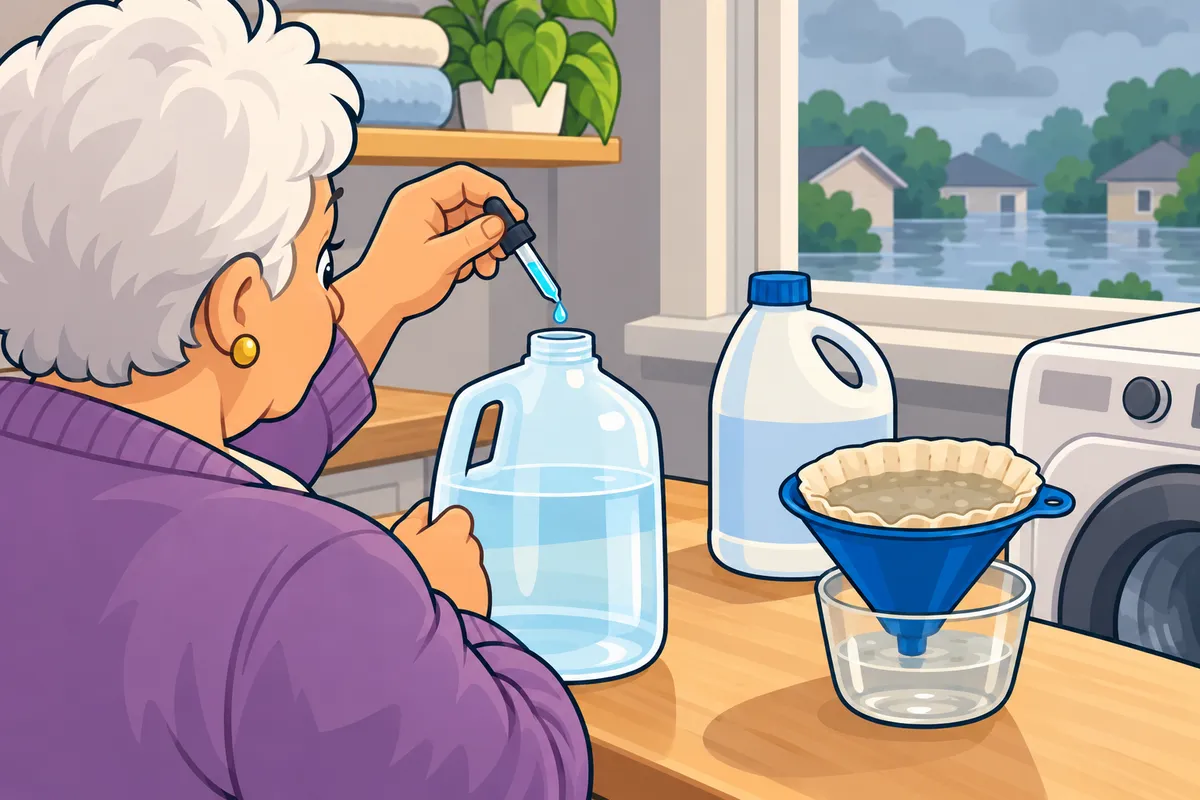
Some household cures fall short. The Yellow Book says hydrogen peroxide, citrus juice and potassium permanganate lack enough data to disinfect water at low doses, and a charcoal filter jug traps germs without killing them.
Old bleach is a quieter failure. The EPA asks for fresh bleach, or bleach kept at room temperature for less than a year, so check the date on the jug before a storm.
What Water Is Already in Your House?
More than most people expect. The CDC lists these sources inside the home:
Water already in the house
4 items- The hot-water heater tank that feeds your taps and showers, not a heating-system tank
- Clear water in a toilet tank (not the bowl), if no toilet cleaner sits in it
- Melted ice cubes made from water that was not contaminated
- Liquid from canned fruit and vegetables
Pool and spa water is for washing and cleaning only, not drinking. Rainwater, streams, rivers, ponds, lakes and springs work once you treat them.
A 40-gallon home water heater holds enough water for one person for more than a week at the 1-gallon-per-day rate. To drain it, the CDC says:
- Turn off the gas or electricity to the unit.
- Open a sink faucet to let air in.
- Drain from the valve at the bottom into clean containers.
Let any sediment settle before you drink.
Use what you need and no less: Ready.gov says never to ration drinking water unless officials tell you to, and to drink the amount you need today and find more for tomorrow.
How Much Water Does a Household Need?
Plan at least 1 gallon per person per day for several days, for drinking and sanitation, the amount Ready.gov gives. In very hot weather needs can double, and children, nursing mothers, sick people and anyone in a medical emergency may need more.
A household of three on a four-day outage therefore starts from 12 gallons before any heat allowance, and every gallon you treat comes off that number. The part of the plan that decides the rest is how much of it you stored before the storm.
Which Water Can You Not Make Safe at Home?
Water with fuel, toxic chemicals or radioactive material in it. The CDC says boiling and disinfecting cannot make that water safe, so you use bottled water or another source and call your health department.
If your town issues a boil notice instead of a do-not-drink notice, your tap water is one of the safe-to-treat kinds. The difference between those two notices decides whether a boil is enough, and a supply stored ahead of time spares you the whole question.
Distillation When Boiling Is Not Enough
Ready.gov describes distillation as boiling water and collecting only the vapor that condenses. It removes microbes that resist boiling and chlorination, plus heavy metals, salts and most other chemicals, which is why it is the one home method that handles a salty or metal-tainted supply. Ready.gov does not list fuel or solvents among what distillation removes, and the CDC's rule for water with fuel or toxic chemicals in it stays the same: use another source.
How Do You Store Water After You Treat It?
In clean, sanitized containers with tight lids. The CDC asks you to let boiled water cool and store it that way, and Ready.gov sanitizes a container with 1 teaspoon of unscented bleach per quart of water before filling it.
Water you bottle yourself has a shelf life: Ready.gov says water that was not commercially bottled should be replaced every six months, while commercially bottled water stays sealed in its original container.
Boiled water tastes flat. Both the CDC and the EPA suggest three fixes:
- Pour it back and forth between two clean containers.
- Let it stand a few hours.
- Add a pinch of salt per quart or liter.
Mistakes That Undo Your Treatment
| Mistake | Why it fails | Do this instead |
|---|---|---|
| Lemon-scented or color-safe bleach | The EPA rules out scented, color-safe and added-cleaner bleach | Plain unscented bleach only |
| Bleach into muddy water | Disinfection works less well on cloudy water (EPA) | Settle and filter, then dose, doubled if still cloudy |
| A camp stove in the kitchen | Carbon monoxide builds up indoors (CDC) | Boil outdoors, away from doors |
| Treated water into an unwashed jug | Germs in the jug reach the clean water | Sanitize the jug first (Ready.gov) |
| Boiling floodwater that smells of fuel | Boiling cannot remove chemicals (CDC) | Find bottled water or another source |
What Changes the Plan in a Real Outage
Three things move you down the list:
- The fuel runs out.
- The source itself is suspect.
- Your home sits high enough to need a longer boil.
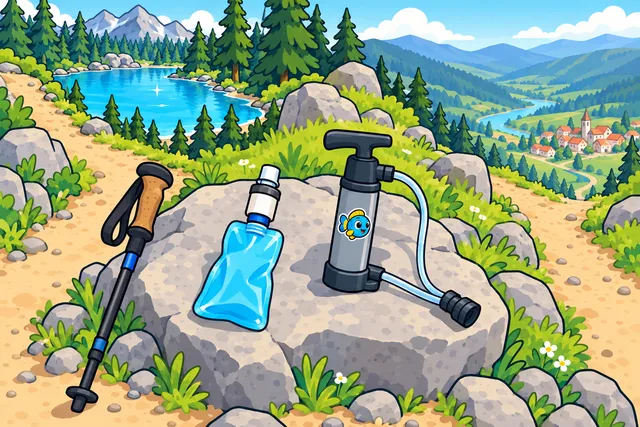
The same steps work on a camping trip when the creek is the only tap, where a backpacker's kit adds filters and UV pens to the pot and the bleach. Whichever you use, boiling for the right number of minutes depends on your altitude.
Test Your Stove and Check the Bleach Date Before the Next Storm
Light the stove you plan to use outside once, with a pot of water, and time how long it takes to reach a rolling boil. Read the date on your bleach jug and replace it if it is older than a year.
Keep the dropper, a funnel and a stack of coffee filters in the same box as the bleach, and write the drops per gallon for your bottle's percentage on the lid. Four things in one box beat a search for them in the dark.
General information for healthy adults, not medical advice. If a doctor has set your fluid amount, follow that.

More in Outdoors and Travel
Sources
- US Centers for Disease Control and Prevention. How to Make Water Safe in an Emergency, 2024.
- US Environmental Protection Agency. Emergency Disinfection of Drinking Water, 2026.
- US Centers for Disease Control and Prevention. How to Find Clean Water in an Emergency, 2024.
- US Centers for Disease Control and Prevention. What to Do to Protect Yourself During a Power Outage, 2025.
- Ready.gov (FEMA). Water, 2026.
- CDC Yellow Book (Backer and Hill). Water Disinfection for Travelers, 2025.
Sources checked by the Glubbo Editorial Team on Oct 19, 2026. General information, not medical advice. How we write and check our guides.

