How to Keep Rabbits Cool in Summer, Indoors and in the Hutch
Where heat turns dangerous for a rabbit, a plan for a hot day, cooling tricks that work and heatstroke first aid.
 By the Glubbo Editorial Team · Updated Oct 19, 2026 · 9 min read
On This Page
- How Do You Keep a Rabbit Cool in Summer?
- How Hot Is Too Hot for a Rabbit?
- How Do You Keep a Rabbit Cool Without Air Conditioning?
- Can a Rabbit Stay Outside in Summer?
- Do Rabbits Drink More Water in Hot Weather?
- What Are the Signs of Heatstroke in Rabbits?
- What Should You Do if Your Rabbit Has Heatstroke?
- A Hot-Day Setup for the Place Your Rabbit Lives
- Sources
Short answer
Shade, cold surfaces, extra water, and indoors above 80°F.
- The House Rabbit Society calls temperatures above 77°F (25°C) dangerous.
- Give frozen bottles, chilled tiles and more water bowls on hot days.
- Stretching out and fast breathing are heatstroke signs: call a vet at once.
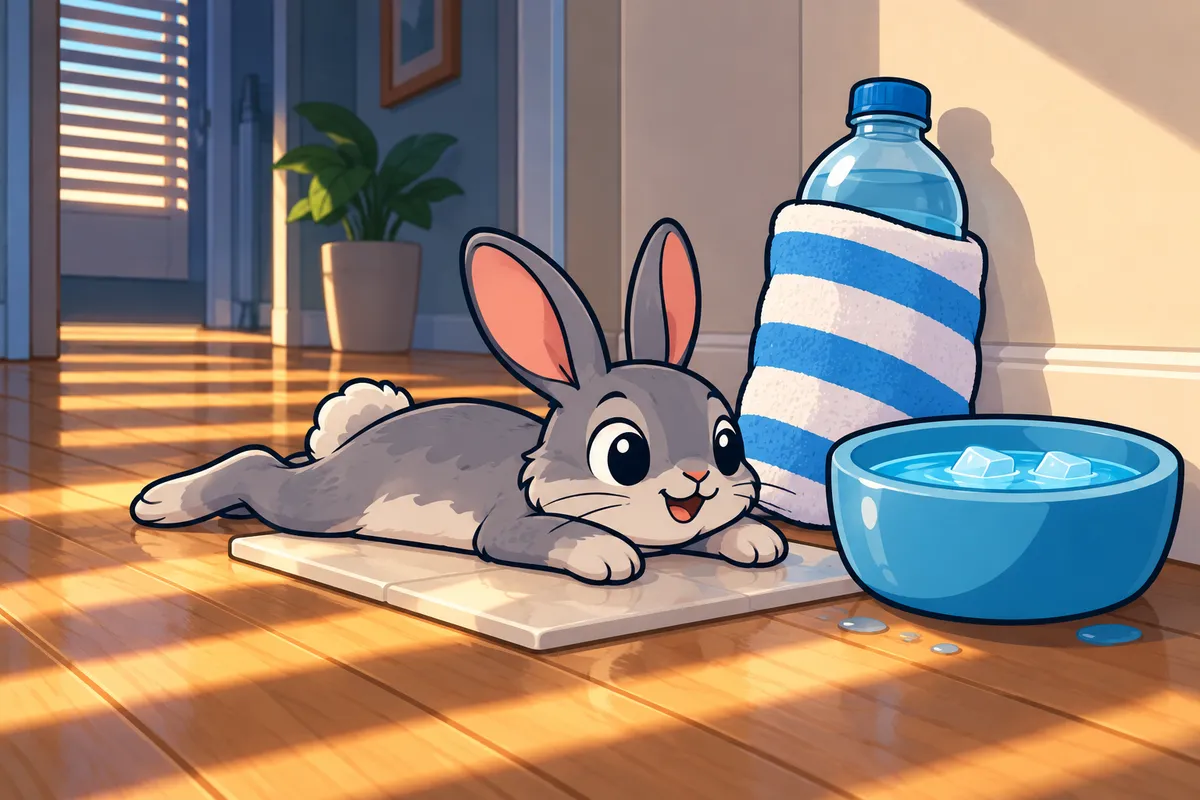
Keep a rabbit below 77°F (25°C): out of the sun, with frozen bottles and chilled tiles to lie against, more bowls of fresh water, and indoors once it passes 80°F (27°C). The Merck Veterinary Manual says rabbits are prone to heat stroke, and a rabbit in a sunny hutch on a July afternoon cannot move itself to a cooler room, so the cooling has to come from you.
General information for healthy pet rabbits, not veterinary advice. A rabbit that seems unwell in the heat needs a vet straight away.
How Do You Keep a Rabbit Cool in Summer?
Shade, moving air, cold things to lie against, and more fresh water than usual. The House Rabbit Society and PDSA both start with getting the rabbit out of direct sun, then add frozen bottles, chilled tiles and extra bowls.
Plan the day before the heat arrives. A frozen bottle takes a night in the freezer, and a rabbit that is already flat and breathing fast is past the point where a tile helps.
A heatwave day for an indoor or hutch rabbit
- 6:30 AM
- 9 AM
- 12 PM
- 3 PM
- 6 PM
- 8:30 PM
Afternoons are the hottest part of most summer days, so the noon and 3 PM checks matter most: swap the melted bottle for a frozen one and refresh the water so it stays cool.
How Hot Is Too Hot for a Rabbit?
Above 77°F (25°C), which the House Rabbit Society calls dangerous. The Merck Veterinary Manual's owner chapter says rabbits are especially at risk above 80°F (27°C) and should ideally move indoors.
- 50 to 70°F
- ideal for a rabbit, with good airflow (Merck)
- 77°F
- (25°C) dangerous, says the House Rabbit Society
- 80°F
- (27°C) especially at risk: move indoors (Merck)
Read your thermometer against what each source says, and you know which step you are on before the rabbit shows any sign.
| Your rabbit's temperature | What the sources say | What to do |
|---|---|---|
| 50 to 70°F (10 to 21°C) | Merck: ideal, with moderate humidity and good airflow | Fresh water in the usual bowl, checked morning and evening |
| 71 to 77°F (22 to 25°C) | Above Merck's ideal, up to the dangerous line | Shade, a second bowl, frozen bottles ready |
| Above 77°F (25°C) | Dangerous; air conditioning if you have it | Frozen bottles and tiles out, ice in the water, noon checks |
| Above 80°F (27°C) | Merck: especially at risk, ideally indoors | Bring an outdoor rabbit into the coolest room of the house |
Humidity makes a warm day worse. Merck adds that hot, humid weather and poor ventilation "can quickly become deadly", most of all for pregnant does. Its rule of thumb for outdoor rabbits is that the temperature in °F plus the humidity in percent should stay at or under 150.
| Temperature | Max humidity (Merck's 150) |
|---|---|
| 70°F (21°C) | 80 % |
| 75°F (24°C) | 75 % |
| 80°F (27°C) | 70 % |
| 85°F (29°C) | 65 % |
| 90°F (32°C) | 60 % |
Read the humidity on your weather app beside the temperature. A muggy 80°F morning at 75 % humidity is already past the line, though it feels milder than a dry 90°F afternoon.
Rabbits Most at Risk
According to both the society and PDSA, these rabbits are at elevated risk:
- Long-haired rabbits
- Overweight rabbits
- Old rabbits
- Very young rabbits
Merck adds pregnant does. If your rabbit is in one of these groups, start the hot-day plan a few degrees earlier.
How Do You Keep a Rabbit Cool Without Air Conditioning?
With cold surfaces, shade and moving air. Where you have no air conditioning, frozen bottles, chilled ceramic tiles, misted ears and a fan blowing over ice do the job.
Cooling tricks and the rabbit each suits
Frozen water bottle
Something to lean on
- Freeze it overnight, swap at noon
- Wrap a 2 L bottle in a towel
Suits you if your rabbit likes to lie pressed against something.
Chilled ceramic tile
Something to lie on
- Keep two and rotate them
- A plain tile from a DIY shop
Suits you if your rabbit stretches out flat when it is warm.
Misted ears
Fast relief
- Cool water on the ears
- Evaporation carries the heat off
Suits you if your rabbit lets you handle its ears calmly.
Fan over ice
Moving air
- Blow over ice or a wet sheet
- Never aim it straight at the rabbit
Suits you if your rabbit lives indoors near a socket.
Aim a fan past the pen or over a bowl of ice, so the rabbit can move in and out of the cool air. Keep the fan's wire out of reach of teeth.
Safe Cooling Details People Miss
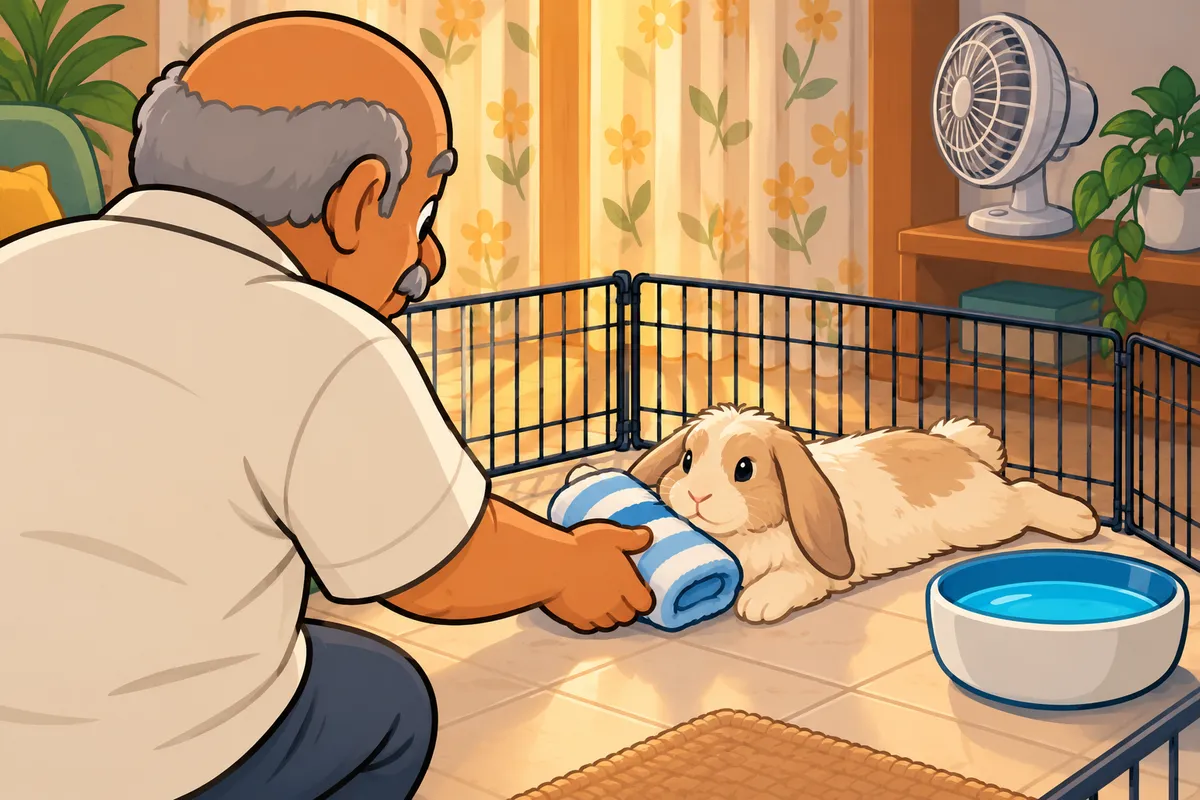
Heavy tiles suit rabbits that throw things around, but make sure a tile cannot fall on the rabbit or trap its toes. Cooling mats, tunnels and cardboard boxes give shade and a cool spot at the same time, and the society also lists rabbit beds with cooling inserts.
Wrap anything frozen, so your rabbit cannot burn its skin on it. Chilled leafy greens and fruit and vegetables soaked for extra moisture help, but add new foods slowly to avoid gut stasis.
If your rabbit roams the garden, check that it cannot get shut into a greenhouse or shed.
Shade for a Hutch or Run
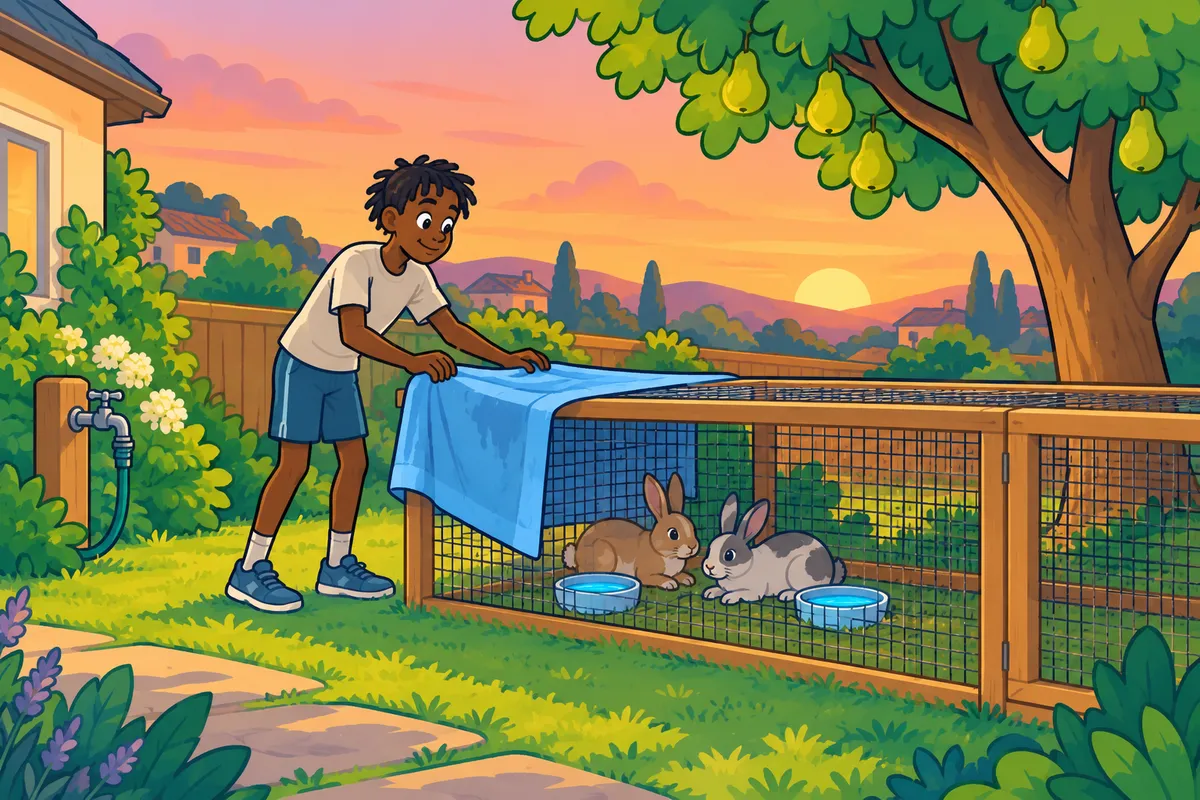
Keep the hutch and run out of direct sun all day, not only at noon. Drape a tarp or towel over part of the run with a through-draft of cool air, and add shrubs to hide under, plus tunnels or cardboard boxes.
Merck's housing chapter asks for shade over as much of the rabbitry as possible and good ventilation at all times. Conservatories and summerhouses are the trap here, since they get dangerously hot, and a glass tank is no cool alternative: Merck rules out aquariums for rabbits because air does not circulate in them.
Brushing and Trimming
Extra fur traps heat. Rabbits molt in summer, so brush daily, ideally on the floor in short, low-stress sessions, and give a long-haired rabbit a short trim.
Check your rabbit's bottom every day in summer, because a dirty bottom can lead to flystrike.
Can a Rabbit Stay Outside in Summer?
Yes, on days that stay under the danger line, in a hutch built for it. Merck's owner page on rabbit housing asks for good airflow, shade and protection from dogs and other predators, and says to bring outdoor rabbits inside during temperature extremes.
Its veterinary chapter adds that outdoor enclosures need shelter from severe heat, even temporary ones, because overheating can happen quickly. A run set up at 9 AM in cool shade can be in full sun by 2 PM, so check where the shade falls at noon and again mid-afternoon on the first hot day.
The rule for the day is simple: if the forecast passes 80°F (27°C), the hutch comes into the house.
Do Rabbits Drink More Water in Hot Weather?
Yes. Merck's laboratory animal table notes that a rabbit's water intake varies with temperature, and a rabbit already drinks 300 to 700 ml a day in mild weather, so put out extra bowls in summer and refresh them through the day.
Wet greens bring water too: chill leafy greens in the fridge and drench the vegetables before you serve them. On a hot day, two bowls in the shade beat one in the sun.
What Are the Signs of Heatstroke in Rabbits?
Merck names stretching out and rapid breathing. The House Rabbit Society and PDSA each list more, and both treat the signs as an emergency that needs you to act at once.
Signs of heat trouble in a rabbit
8 items- Fast, shallow breathing, or short quick breaths
- Wetness around the nose
- Listlessness, or acting very sleepy
- Hot ears
- Head tossed back, breathing rapidly with the mouth open
- Drooling
- Stretching out flat (Merck)
- Unconsciousness or fits
The society files its list under heat exhaustion, the stage before heatstroke. A rabbit lying stretched out on a cool floor on a warm day may be cooling itself normally; the same pose with fast, open-mouth breathing or drooling is the warning.
What Should You Do if Your Rabbit Has Heatstroke?
Cool it gently and call a vet immediately. Merck's advice is to wet your rabbit's ears with cool water, place it near a fan and call a veterinarian or emergency clinic at once. The society adds moving it out of the sun and offering cold water to drink.
Heatstroke first aid, then the vet
- Move your rabbit to a cool, shaded place
- Wet its ears with cool water
- Set it near a fan, not in the blast
- Offer cold water to drink
- Call a vet or emergency clinic now
The society asks for a call to an experienced exotics vet for further instructions, so phone while someone else does the cooling.
A Hot-Day Setup for the Place Your Rabbit Lives
Pick the setup that matches where your rabbit lives, and set it up the evening before the forecast heat.
The first thing to do on a hot day, by where your rabbit lives
- My rabbit lives indoors with air conditioningKeep the room under 77°F and a second bowl out
- Indoors, no air conditioningCurtains shut, fan over ice, frozen bottles and tiles
- Outdoor hutch, forecast above 80°FBring the rabbit indoors to the coolest room
- Outdoor run on a warm, not hot, dayShade over the run and two bowls in the shade
- Long-haired, old, young or overweight rabbitStart cooling a few degrees earlier and brush daily
Freeze three bottles and two tiles tonight. A rabbit that never gets hot never needs the first aid.
General information for healthy adults, not medical advice. If a doctor has set your fluid amount, follow that.

More in Pets


Sources
- Merck Veterinary Manual. Disorders Affecting Multiple Body Systems of Rabbits, 2026.
- House Rabbit Society. How to Keep Your Rabbit Cool In Summer, 2026.
- PDSA. How to keep rabbits cool in the summer, 2021.
- Merck Veterinary Manual. Housing of Rabbits, 2024.
- Merck Veterinary Manual. Select Physiological Data for Laboratory Animals, 2026.
Sources checked by the Glubbo Editorial Team on Oct 19, 2026. General information, not medical advice. How we write and check our guides.

