Signs of Dehydration in Rabbits and Guinea Pigs, and When to Act
Why a small pet that stops eating is often already short of water, what to check each morning and when to call.
 By the Glubbo Editorial Team · Updated Oct 19, 2026 · 7 min read
On This Page
- How Can You Tell if a Rabbit Is Dehydrated?
- Why Is a Rabbit That Stops Eating an Emergency?
- How Can You Tell if a Guinea Pig Is Dehydrated?
- Does the Skin Pinch Test Work on Small Pets?
- What Causes Dehydration in Rabbits and Guinea Pigs?
- What Does a Vet Do for a Dehydrated Rabbit or Guinea Pig?
- A Morning Check at the Pen Before Breakfast
- Sources
Short answer
Not eating, few droppings, dry gums and low energy.
- A rabbit brought in for not eating is most often also dehydrated, says Merck.
- Guinea pigs hide illness until very sick: act on the first change you see.
- No droppings for more than 12 hours in a rabbit means a vet, right away.
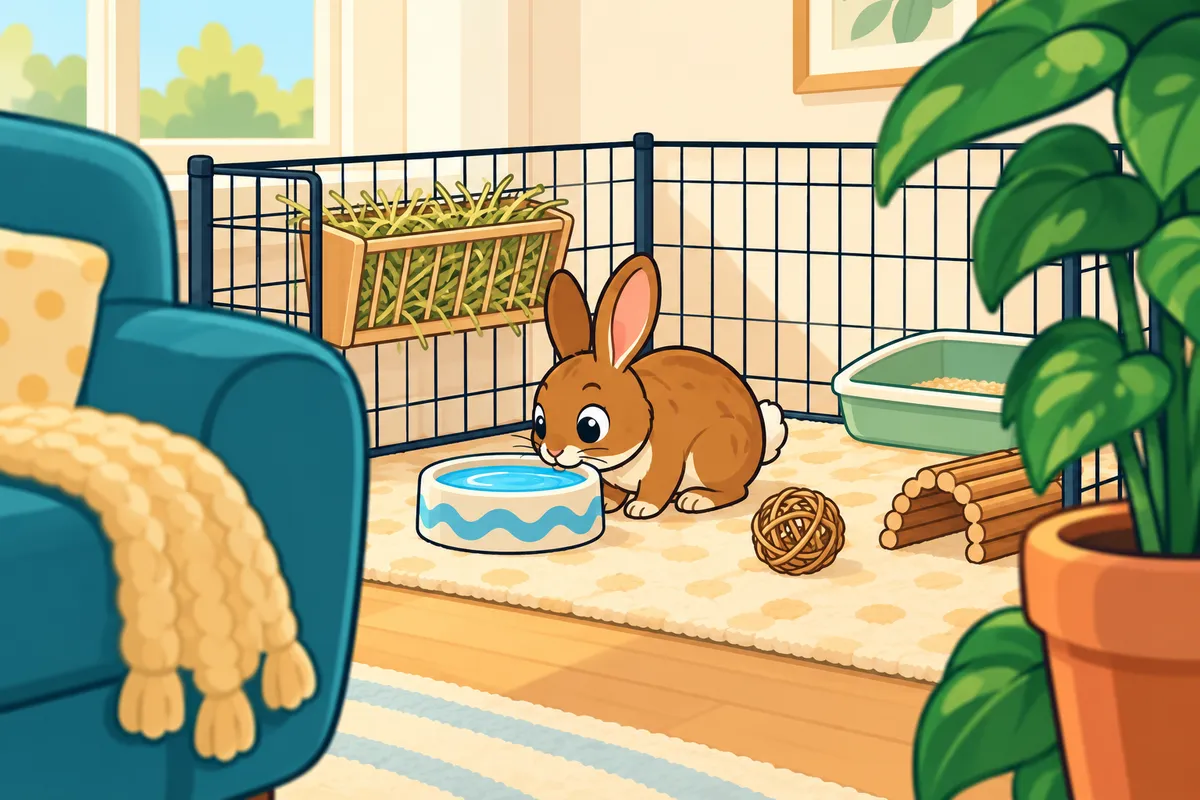
In a rabbit or guinea pig, dehydration shows as a pet that eats less, passes fewer or smaller droppings, has dry gums and moves less. The earliest sign you will see is hay left in the rack at breakfast. In these animals not eating and not drinking travel together.
A rabbit or guinea pig rarely looks thirsty. You notice a litter tray with half the usual droppings, or a pet that stays in its hide when you open the pen.
General information for pet rabbits and guinea pigs, not veterinary advice. A small pet that has stopped eating needs a vet the same day, not a home test.
How Can You Tell if a Rabbit Is Dehydrated?
Watch its eating and its droppings first, then check the gums and skin. The Merck Veterinary Manual's rabbit nutrition chapter says that a rabbit brought to the vet for not eating "is most often also dehydrated", so an untouched hay rack is the earliest sign you will see.
Vets judge the degree of dehydration from the gums, the skin and the eyes. Merck's fluid chapter grades it as a share of body weight lost as water, and the same findings apply to a rabbit as to a dog.
Early: 4 to 7 %
- Gums semidry to dry
- Skin normal to slightly slow
- Eyes still moist
Serious: 8 % or more
- Dry gums
- Clearly slow skin
- Sunken eyes and fast weight loss
The grades come from the Merck Veterinary Manual's fluid chapter, which calls every estimate "to some extent, subjective". In a pet that weighs 1 or 2 kg, the early column is hard to see at home, which is why the eating and the droppings come first.
Small Bodies, Small Margins
Merck works out the missing water as body weight in kg times the percentage. For a small pet, a mild-sounding percentage is a large share of the day's water.
The guinea pig figure is from Merck's guinea pig data table, and the rabbit's from its nutrition chapter. The arithmetic is for understanding only; your vet decides how a dehydrated pet gets its fluid back.
Why Is a Rabbit That Stops Eating an Emergency?
Because the gut slows down when the food stops, and a slow gut makes the rabbit eat even less. The Merck owner chapter on rabbit digestion calls this GI stasis and says it "can become life-threatening if not treated".
Merck describes the spiral in three steps:
- Bad bacteria grow in the slowed gut and make gas and toxins.
- The rabbit "feels bloated and painful, which makes it even less likely to eat".
- With less food comes less water.
Fewer droppings are the sign you can count.
Merck says two things start it:
- Too little fiber.
- Dental disease.
Diet changes, stress, antibiotics and a dirty cage upset the gut bacteria and raise the risk of intestinal disease, and a dry, quiet rabbit is never something to sit out at home. That is why the fluid comes first when a rabbit reaches the vet.
Merck's table of signs of illness in rabbits draws the line in hours: diarrhea or no droppings for more than 12 hours is on it, with loss of appetite and loss of energy. Merck says to contact your vet right away if any of its ten signs appears. The rabbit water page has the full list and the daily amount a healthy rabbit drinks.
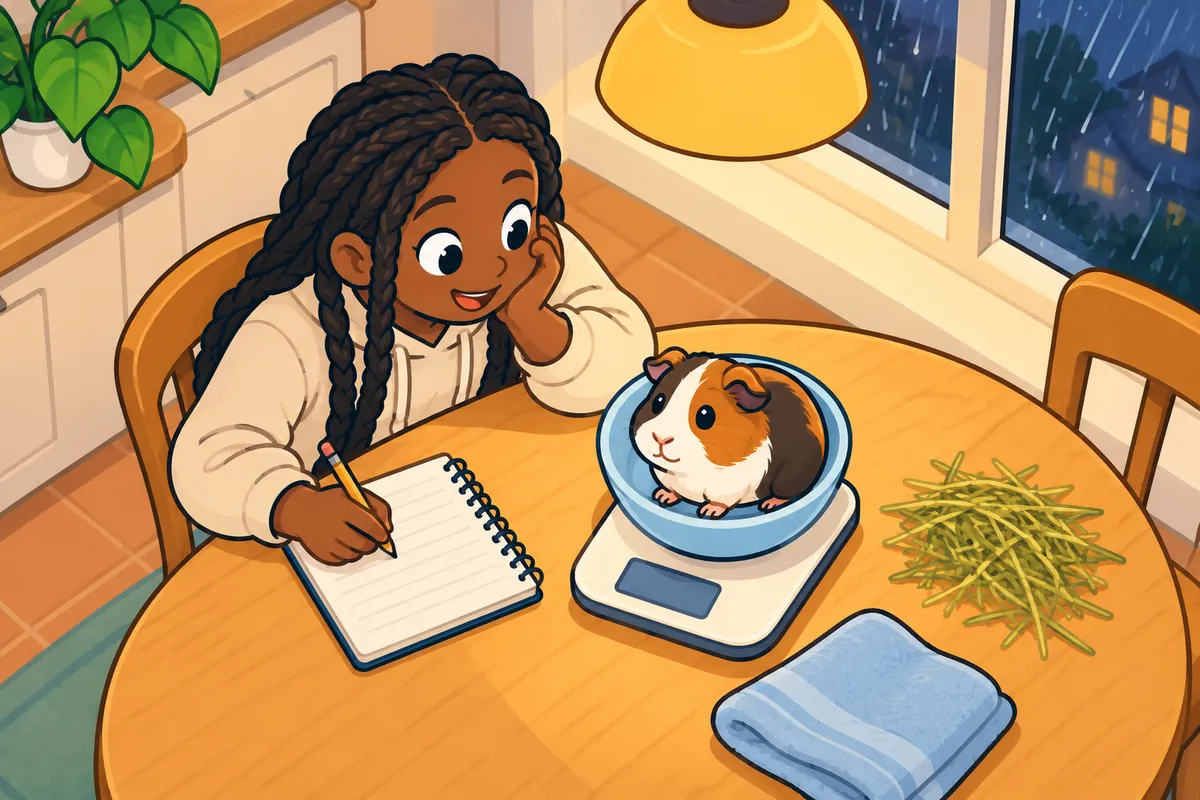
How Can You Tell if a Guinea Pig Is Dehydrated?
Look for a pig that eats less, passes small stools and moves less. Merck's guinea pig health chapter lists dehydration among the signs of digestive upset, next to the changes you can see at the cage.
Signs of digestive upset in guinea pigs
6 items- diarrhea
- small stools
- weight loss
- low energy
- lack of appetite
- dehydration
Guinea pigs give little warning. Merck's routine care chapter says they "hide signs of illness until they are very sick", and the health chapter adds that some "decline rapidly and die suddenly".
With a guinea pig, the first change you notice is the time to call. Merck says a vet may give fluids by injection to a guinea pig that is not eating and has become dehydrated, and that a pig that drools or stops eating needs a vet quickly.
Teeth Come First With Drooling
Drooling in a guinea pig points to the mouth. Merck says dental disease can lead to drooling, which it calls "slobbers", weight loss and mouth bleeding, so a pig that dribbles at the bowl needs its teeth checked as well as its water.
Does the Skin Pinch Test Work on Small Pets?
Only roughly. A fold of skin over the shoulders that settles slowly can point to dehydration, but Merck's fluid chapter warns that very young animals have extra skin elasticity and that old or very thin animals can show poor skin and sunken eyes while well hydrated.
Try the fold on a calm day so you know your own pet's normal. On a worrying day, trust the food, the droppings and the gums over the pinch.
What Causes Dehydration in Rabbits and Guinea Pigs?
Mostly water that does not reach the pet, food it stops eating, and heat. The table pairs each cause with what Merck says about it for each animal.
| Cause | Rabbit | Guinea pig |
|---|---|---|
| The water source fails | Chews the watering valve and can destroy it unless it is stainless steel; drinks more from a bowl | Dirties the sipper tube; drinks more from a bottle |
| Stops eating | Most often also dehydrated when brought in for it | Dehydration listed with lack of appetite |
| Diarrhea | A serious warning sign at any age | Listed among the signs of digestive upset |
| Dental disease | Can start GI stasis | Drooling and weight loss |
| Heat | Especially at risk above 80°F (27°C) | Heatstroke possible above about 85°F (29°C) |
Sources: Merck's chapters on rabbit housing, rabbit heatstroke, guinea pig housing and nutrition and guinea pig needs, plus the pages linked above.
The water setup is the cause you control, and a frozen or stuck bottle can stop a rabbit drinking altogether. A rabbit drinks more from a heavy bowl, and a guinea pig drinks more from a bottle with a clean sipper tube, so the right container for each is the first fix.
Heat is the cause that arrives fast. Merck warns that hot, humid weather "can quickly become deadly" for rabbits, so the heatwave plan for rabbits starts the evening before.
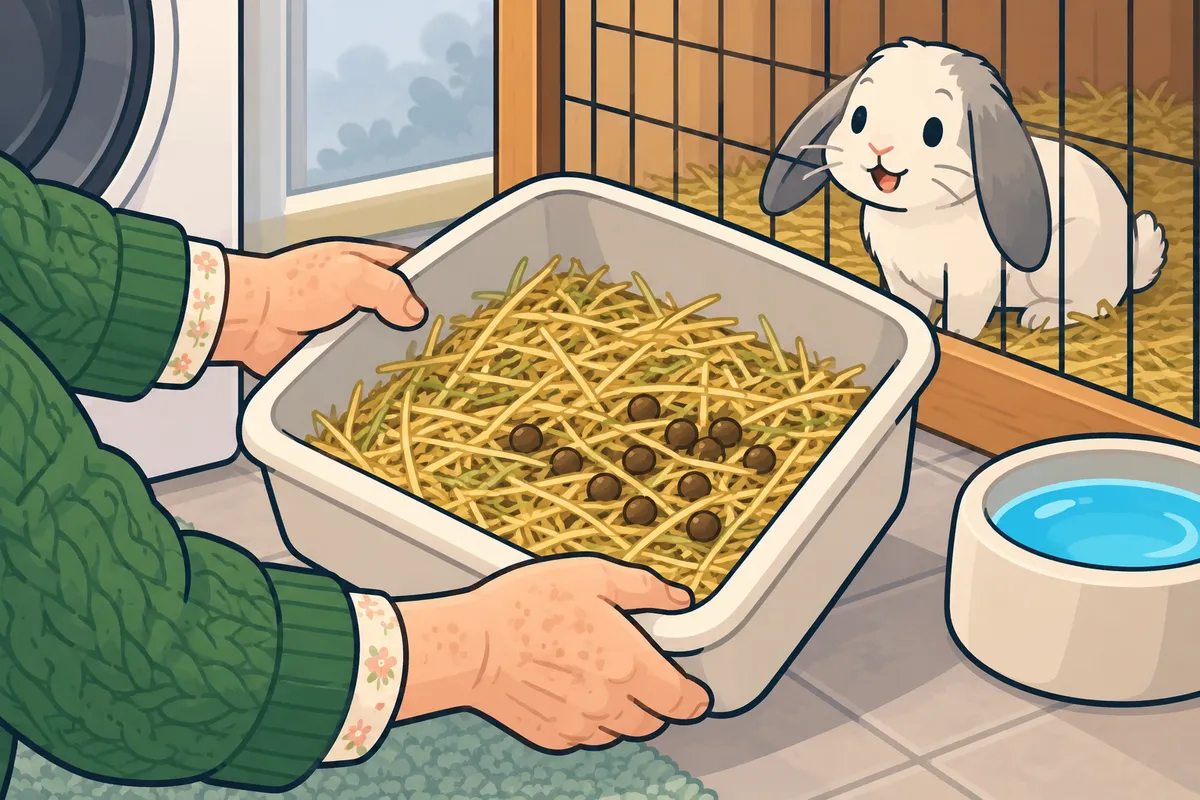
What Does a Vet Do for a Dehydrated Rabbit or Guinea Pig?
The vet gives fluid and looks for the reason the pet stopped eating. For a rabbit, Merck's nutrition chapter recommends double the maintenance fluids and at least 24 hours in the hospital when it arrives dehydrated. For a rabbit with GI stasis, treatment is usually:
- Fluid injections under the skin.
- Pain medicine.
- Supportive feeding.
Those come after x-rays, ultrasound or CT scans to tell stasis from a blockage.
A guinea pig that is not eating and is dehydrated may get fluids by injection and syringe feeding with a liquid formula. Merck adds that you should never give a guinea pig medicine without a vet's guidance, and that antibiotics that cause diarrhea mean stopping them and calling the vet immediately.
Hay Is the Prevention Merck Names
For rabbit gut trouble, Merck's prevention advice has five parts:
- Give unlimited hay.
- Brush regularly.
- Keep a healthy weight.
- Offer safe chew toys.
- Allow time out of the cage.
Nothing in Merck's chapters offers a home treatment once a rabbit has stopped eating, so the hay has to come first.
A Morning Check at the Pen Before Breakfast
Most dehydration in these pets starts as a missed meal, so a short morning look catches it while it is still early. Do it at the same time each day so the changes stand out.
The morning check for a rabbit or guinea pig
- Look at the hay rack and last night's greens: eaten?
- Count the droppings: as many and as big as usual?
- Check the bowl or bottle level and that the sipper flows
- Weigh once a week and write the number down
If the hay is untouched and the tray is near empty, call your vet that morning instead of waiting for the evening. For a small pet, a day of watching is a long time.
General information for healthy adults, not medical advice. If a doctor has set your fluid amount, follow that.

More in Pets
Sources
- Merck Veterinary Manual. Nutrition of Rabbits, 2024.
- Merck Veterinary Manual. Digestive Disorders of Rabbits, 2026.
- Merck Veterinary Manual. Common Health Problems of Guinea Pigs, 2025.
- Merck Veterinary Manual. Routine Care of Guinea Pigs, 2025.
- Merck Veterinary Manual. The Fluid Resuscitation Plan in Animals, 2025.
- Merck Veterinary Manual. Signs of Illness in Rabbits, 2026.
- Merck Veterinary Manual. Housing of Rabbits, 2024.
- Merck Veterinary Manual. Disorders Affecting Multiple Body Systems of Rabbits, 2026.
- Merck Veterinary Manual. Housing and Nutrition of Guinea Pigs, 2026.
- Merck Veterinary Manual. Unique Needs of Guinea Pigs, 2025.
- Merck Veterinary Manual. Physiological Data for Guinea Pigs, 2026.
Sources checked by the Glubbo Editorial Team on Oct 19, 2026. General information, not medical advice. How we write and check our guides.

