How Much Water Does a Guinea Pig Drink? Bottle, Bowl and Daily Amount
About 10 ml per 100 g a day, a chart for sows and boars, and why the bottle beats the bowl for this pet.
 By the Glubbo Editorial Team · Updated Oct 19, 2026 · 9 min read
On This Page
- How Much Water Should a Guinea Pig Drink a Day?
- Do Guinea Pigs Drink More From a Bottle or a Bowl?
- Should You Add Vitamin C to Guinea Pig Water?
- Why Is My Guinea Pig Drinking So Much Water?
- What if My Guinea Pig Never Seems to Drink From the Bottle?
- Do Guinea Pigs Drink More in Hot Weather?
- A Daily Bottle Routine for a Pair
- Sources
Short answer
About 10 ml per 100 g of body weight a day.
- A 1 kg (2.2 lb) guinea pig drinks about 100 ml (3.4 oz) a day.
- Guinea pigs drink more from a bottle than a bowl, says Merck.
- Change the water at least daily, even when some is left, says VCA.
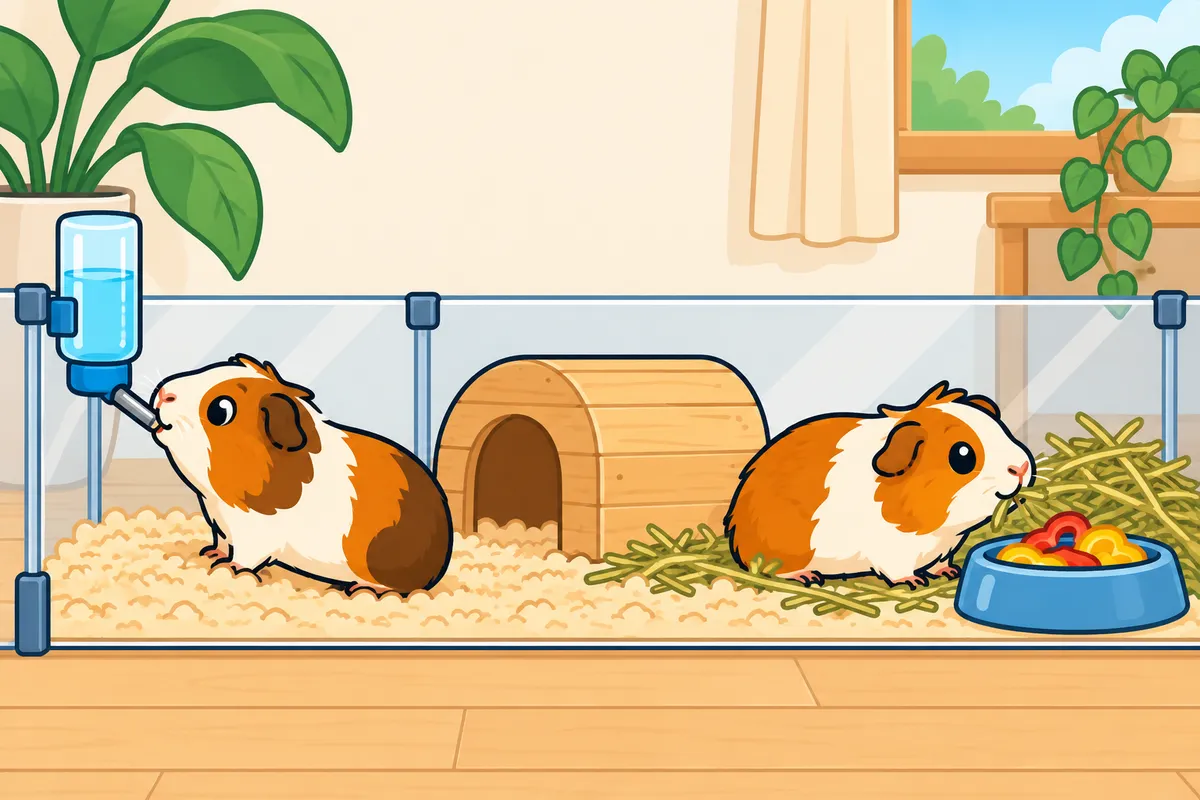
A healthy adult guinea pig drinks about 100 ml (3.4 oz) of water per kilogram of body weight a day, and a bottle works better than a bowl. Guinea pigs drink in short bursts between meals of hay, so a bottle can look untouched for hours and then drop by a third overnight.
General information for healthy adult guinea pigs, not veterinary advice. If your vet has set a water plan for your guinea pig, follow that.
How Much Water Should a Guinea Pig Drink a Day?
About 10 ml per 100 g of body weight a day, which is 100 ml per kg. The Merck Veterinary Manual's laboratory animal table gives that figure for healthy adults on a dry diet, so a 1 kg (2.2 lb) guinea pig drinks about 100 ml, or 3.4 oz. The same table puts a golden hamster at 30 ml a day, so a hamster of about 110 g drinks nearly three times as much for its weight.
Merck's guinea pig data table says the same thing another way: a daily fluid need of 100 ml per kg. It also gives the usual adult weights, 700 to 900 g for sows and 900 to 1,200 g for boars.
Which row fits your guinea pig
- An adult sow of 700 to 900 gAbout 70 to 90 ml a day
- An adult boar of 900 to 1,200 gAbout 90 to 120 ml a day
- Eats plenty of cucumber and leafy greensLess from the bottle than its row
- A warm room, or a sow that is pregnant or nursingMore than its row: keep two bottles full
Water a Day by Weight
Weigh your guinea pig on a kitchen scale and find the nearest row. The amounts are Merck's 10 ml per 100 g, with US fluid ounces beside them.
| Guinea pig's weight | Water a day | About |
|---|---|---|
| 500 g (1.1 lb), a young pig | 50 ml | 1.7 oz |
| 700 g (1.5 lb), a small sow | 70 ml | 2.4 oz |
| 900 g (2 lb) | 90 ml | 3 oz |
| 1 kg (2.2 lb) | 100 ml | 3.4 oz |
| 1.2 kg (2.6 lb), a large boar | 120 ml | 4 oz |
Treat each row as a middle. Merck notes that intake varies with the moisture in the feed, the temperature and how many animals share a cage, so two healthy pigs of the same weight can sit well apart.
Why the Bottle Can Read Low on Watery Greens
Do Guinea Pigs Drink More From a Bottle or a Bowl?
From a bottle. The Merck Veterinary Manual's guinea pig chapter states that "water intake is higher with water provided in a bottle versus a bowl." That is the reverse of the rabbit, which drinks more from an open dish.
The catch is hygiene. Merck warns that guinea pigs "often will dirty the sipper tube" when they drink, so you need to change the water and check the nozzle often. A blocked or slimy tube can leave a pig thirsty beside a full bottle.
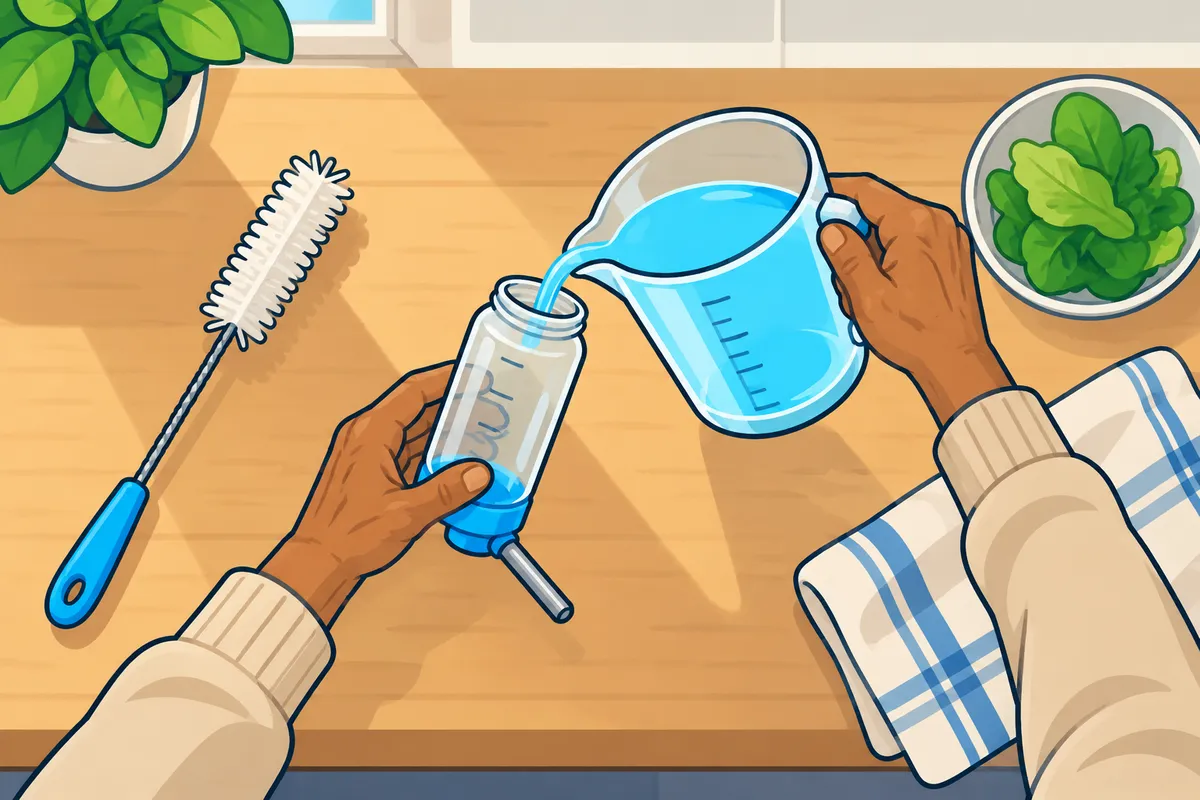
VCA Animal Hospitals accepts either a sipper bottle or a heavy crockery bowl that will not tip. A bowl is a fair second source in a large pen, but one on the floor collects bedding, so look into it every time you pass.
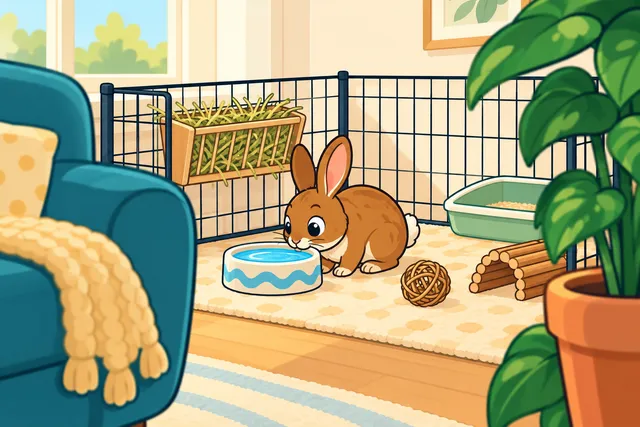
Use a bottle as the main source and treat a bowl as the backup. Rabbits are the opposite case: they drink more from a wide bowl than from a sipper bottle, so a rabbit and a guinea pig in the same home need different setups.
Bottle Checks That Take Ten Seconds
- Tap the ball at the tip of the sipper: a drop should come out.
- Look for green film or bedding stuck in the tube.
- Check the bottle is low enough for the smallest pig to reach without stretching.
- Compare the level with yesterday's: no change means nobody drank, or bedding is plugging the tube.
Should You Add Vitamin C to Guinea Pig Water?
No. Merck says supplementing vitamin C in the water "is not recommended". The Vet Desk, a vet-reviewed pet site, adds that vitamins and supplements in the water can change the taste, and a guinea pig that dislikes it may drink less.
Guinea pigs do need vitamin C every day, because they cannot make their own, VCA explains. It should come from the pellets and vegetables instead.
- 10 to 25 mg
- vitamin C per kg a day for an adult (Merck)
- 30 mg
- per kg or more when growing, pregnant, nursing or ill (Merck)
- 90 days
- use pellets within this time of the made-on date (VCA)
Merck's daily menu for a guinea pig is grass hay about its own body size, 1 to 2 teaspoons of pellets and 1 to 2 cups of fresh produce, such as bell peppers, cucumbers and tomatoes. VCA adds one warning: skip iceberg lettuce, which is mostly water with little nutrition.
Why Is My Guinea Pig Drinking So Much Water?
Often the food or the weather. Merck says intake rises and falls with feed moisture, temperature and cage mates, and its figure is for adults that are not pregnant, so a pig on mostly hay, in a warm room or expecting young drinks more. A rise you cannot explain, especially with weight loss or a change in how your pig acts, is a reason to see a vet.
Measure one ordinary day before you worry:
- Fill the bottle to a marked line in the morning.
- Measure what went 24 hours later.
- Divide by your pig's weight in kg.
Several days near 100 ml per kg is normal; a number far above your own pig's usual is worth bringing to the vet.
Watch for a leak first. A bottle that drips onto the bedding looks like a thirsty pig, and a wet patch under the sipper is the giveaway.
When the Bottle Count Means a Vet Visit
Merck's owner pages warn that guinea pigs hide illness until they are very sick, and list the signs to watch for.
Signs of illness in guinea pigs
13 items- Loss of appetite or weight
- Hunched posture
- Abnormal walking or obvious limp
- Belly sticking out
- Changes in coat texture or hair loss
- Sores or flaky skin
- Difficulty breathing
- Low energy or lack of response
- Diarrhea
- Discharge from eyes or nose
- Drooling, overgrown teeth, or swellings around the jaw (dental problems)
- Bloody urine
- Head tilt (possible ear infection)
What if My Guinea Pig Never Seems to Drink From the Bottle?
Check the bottle first, then give it time. Air bubbles, clogs or a contaminated bottle can block drinking, according to The Vet Desk (reviewed by Dr. Karyn Kanowski, BVSc MRCVS), and a new guinea pig may need a few hours to find its water. Some guinea pigs also drink only when nobody is watching, so the missing water may be going down unseen.
If the bottle is fine and the level does not change, try these:
- Offer a heavy, shallow ceramic bowl beside it, since the same page says offering both can get a pig to drink, and never a deep bowl, because of the drowning risk.
- Rub a little apple on the spout, another tip from the same vet-reviewed page.
- Hang two to three bottles at different heights to give a shy pig more chances.
A level that stays flat for a day still needs a look at the guinea pig itself: a pig that is eating and moving as usual points to the bottle, while one that is hunched or off its food needs a vet.
Do Guinea Pigs Drink More in Hot Weather?
Yes, and heat is a real danger for them. Merck's owner page puts their comfort zone at 65 to 75°F (18 to 24°C) with humidity below 50 %, and warns that temperatures above about 85°F (29°C) can cause heatstroke.
| Room or hutch | What Merck says | What to do with the water |
|---|---|---|
| 65 to 75°F (18 to 24°C) | The comfortable range | One bottle per pig or pair, changed daily |
| 76 to 85°F (24 to 29°C) | Above comfort; Merck's lab chapter allows up to 79°F (26°C) | A second bottle, checked at noon |
| Above 85°F (29°C) | Can cause heatstroke | Move the cage somewhere cooler and call your vet if your pig seems unwell |
The Merck owner page adds two cautions:
- Keep the cage out of constant direct sunlight.
- Take care when you carry guinea pigs anywhere in very hot weather.
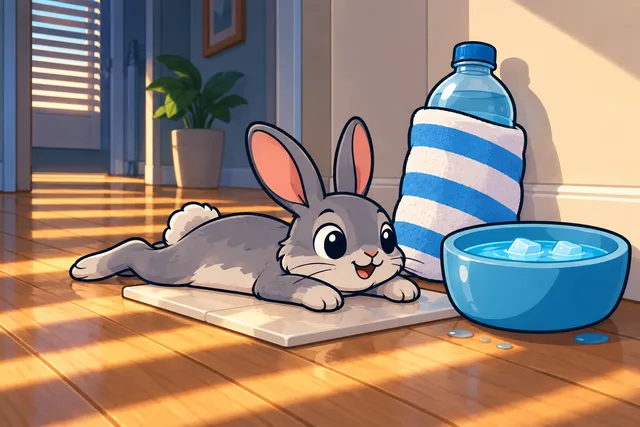
The Vet Desk suggests an insulated cover on the bottle, shade over the enclosure and ice cubes in the water on hot days.

Sun through a window warms the cage long before it warms the room. Put the thermometer where the guinea pigs live, not where you sit.
A Daily Bottle Routine for a Pair
Merck's daily care list for a guinea pig is short: unlimited grass hay, fresh leafy greens, fresh water and a spot-clean of the cage. The water part of that day is built around the bottle.
A water day for a pair of guinea pigs
- 7 AM
- 12:30 PM
- 6 PM
- 9:30 PM
Each morning, pour out what is left, rinse, and refill with fresh water, as VCA advises, even if the bottle looks half full. Once a week, scrub the bottle and sipper with a bottle brush during the full cage clean that Merck lists.
Weigh your guinea pig once a week on the kitchen scale, read its row in the table, and make sure the bottle holds at least twice that amount, so a hot afternoon never leaves it empty.
General information for healthy adults, not medical advice. If a doctor has set your fluid amount, follow that.

More in Pets
Sources
- Merck Veterinary Manual. Select Physiological Data for Laboratory Animals, 2026.
- Merck Veterinary Manual. Physiological Data for Guinea Pigs, 2026.
- Merck Veterinary Manual. Housing and Nutrition of Guinea Pigs, 2026.
- VCA Animal Hospitals. Guinea Pigs: Feeding, 2026.
- Merck Veterinary Manual. Unique Needs of Guinea Pigs, 2025.
- The Vet Desk (reviewed by Karyn Kanowski, BVSc MRCVS). How to Get a Guinea Pig to Drink Water, 2026.
- Merck Veterinary Manual. Routine Care of Guinea Pigs, 2025.
Sources checked by the Glubbo Editorial Team on Oct 19, 2026. General information, not medical advice. How we write and check our guides.

