Rabbit Not Drinking Water? Check the Bottle, Then the Rabbit
The water problems you can fix in a minute, the rabbit problems you cannot, and the signs that mean a vet today.
 By the Glubbo Editorial Team · Updated Oct 19, 2026 · 7 min read
On This Page
- Why Is My Rabbit Not Drinking Water?
- Is It the Water or the Rabbit?
- My Rabbit Is Not Eating or Drinking, What Should I Do?
- Is It Normal if My Rabbit Eats but Does Not Drink?
- Can a Frozen or New Water Bottle Stop a Rabbit Drinking?
- Why Is My Rabbit Drinking a Lot of Water?
- A Daily Water Check That Catches Problems Early
- Sources
Short answer
Check the water first; off food too means a vet.
- Rabbits drink significantly more from an open bowl than a sipper bottle (Merck).
- A rabbit brought in for not eating is most often dehydrated too, Merck says.
- Off food, no droppings for 12 hours, or hunched: contact your vet right away.
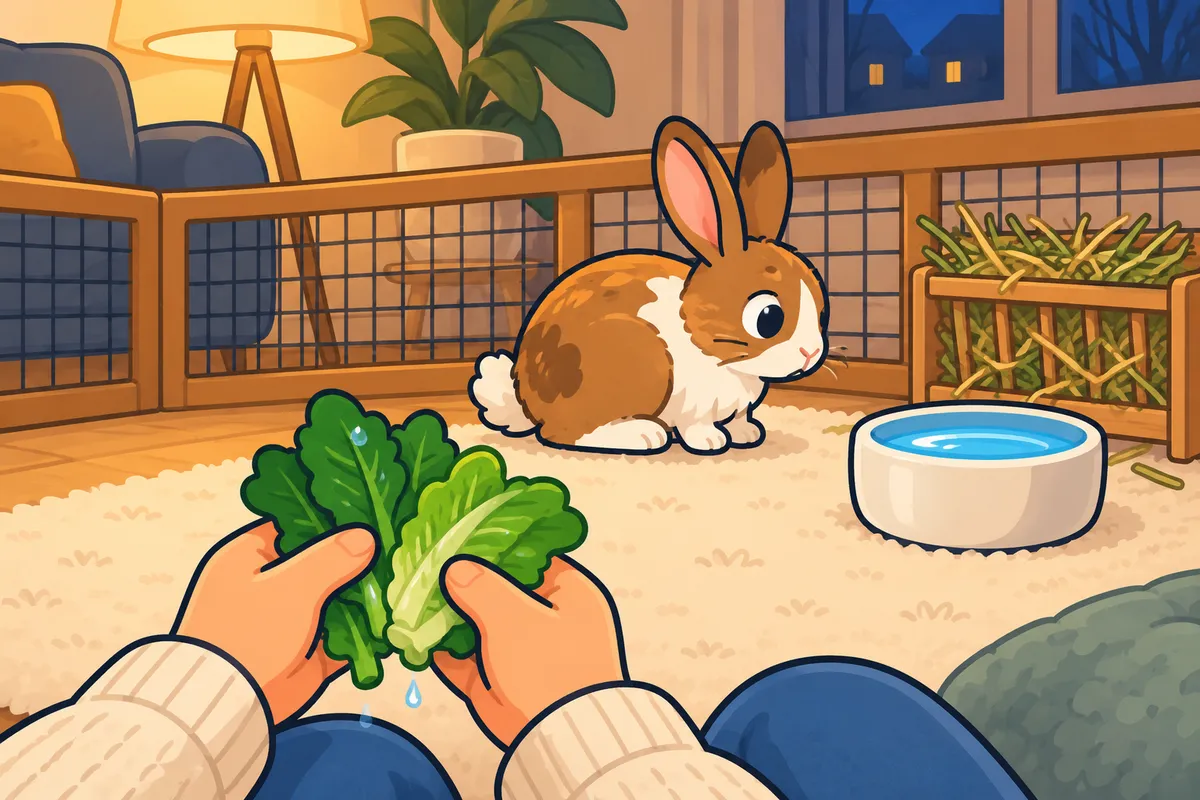
Check the water first, in two minutes, then look hard at the rabbit. A rabbit that is not drinking has either a water problem, such as a sipper that stopped flowing or a bottle frozen overnight, or a rabbit problem, and with rabbits the second kind is urgent. Rabbits drink a lot for their size, so a bowl that stays full all morning stands out.
General information for pet rabbits, not veterinary advice. A rabbit that is not eating needs a vet today, not a home fix.
Why Is My Rabbit Not Drinking Water?
Either it cannot get water easily, or it feels unwell. The Merck Veterinary Manual puts a healthy rabbit at about 120 ml per kg a day, twice what a dog or cat of the same weight drinks, so a rabbit that stops is missing a lot of water fast.
| What you find | Likely reason | Next step |
|---|---|---|
| Sipper gives no drop when tapped | Blocked or stuck tube | Clean or swap the bottle now |
| Bottle or bowl frozen | Cold night outdoors | Fresh water, and move the rabbit inside in extremes (Merck) |
| Rabbit was just moved from a bowl to a bottle | Rabbits drink more from bowls (Merck) | Put a heavy bowl back |
| Lots of wet greens, rabbit eating and pooping well | Water coming from food | Measure a full day before you worry |
| Rabbit off its food, few or no droppings | Gut slowdown or dental pain (Merck) | Contact your vet right away |
The last row is the one that matters most. Merck's owner page on rabbit gut problems says rabbits with too little fiber, or with a problem such as dental disease, stop eating and develop GI stasis.
Is It the Water or the Rabbit?
Check the water in under a minute, then watch the rabbit. If the water is easy to reach and the rabbit still ignores it while it also skips hay, the problem is the rabbit.
Two minutes at the pen
- Tap the sipper tip: a drop should appear. Check bowls for ice, dirt or a tip-over
- Set a fresh, heavy bowl of water down beside the bottle
- Offer hay and a few greens: does the rabbit eat?
- Look at the litter tray for fresh droppings since the last clean
A rabbit that drinks from the new bowl straight away and eats its hay had a water problem. A rabbit that turns away from both, or sits hunched, is showing signs from Merck's list further down, and one of them beside a full bowl is enough to call.
What a Full Bottle at Noon Can Mean
My Rabbit Is Not Eating or Drinking, What Should I Do?
Call your vet today. Merck's rabbit nutrition chapter notes that a rabbit brought in for not eating is most often also dehydrated, and its owner page says to seek veterinary care promptly if your rabbit stops eating or has fewer droppings.
The reason is the gut. Merck explains that in GI stasis the movement of food through the gut slows, and "the rabbit feels bloated and painful, which makes it even less likely to eat." Water and food go down together, and each makes the other worse.
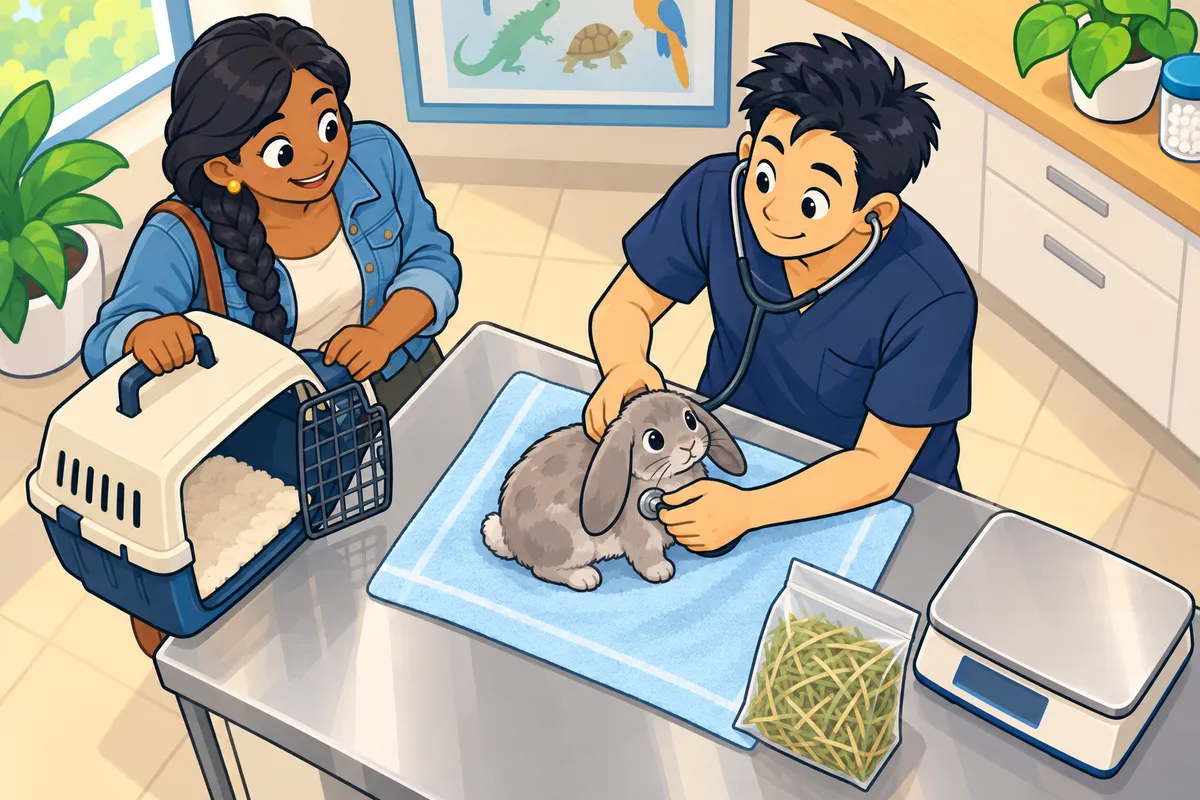
A rabbit that has stopped eating is usually short of water as well, with its own signs in the gums and droppings. Do not force water or food into a rabbit while you wait; let the vet decide.
At the Vet
The vet first rules out a true blockage. Merck's owner page says vets use x-rays, ultrasound and CT scans to tell a blockage from GI stasis, because the treatments differ:
- A true hairball blockage usually needs surgery.
- GI stasis is usually treated with fluid injections under the skin, pain medicine and supportive feeding, including liquid food by syringe.
Merck adds that true hairballs are uncommon but serious, and that both problems can become life-threatening if not treated. That is why a rabbit off its food and water is a same-day visit, not a wait-and-see weekend.
The list is from the Merck Veterinary Manual's table of signs of illness in rabbits. The Merck owner page on rabbit diseases adds grinding teeth and a hunched posture as signs of pain, and warns that rabbits often hide illness.
Is It Normal if My Rabbit Eats but Does Not Drink?
Sometimes. Merck's lab table says intake varies with the moisture in the feed, so a rabbit that eats a big bowl of wet greens may leave the water bowl alone for a few hours. It should still be producing a normal pile of droppings and moving about.
The test is the same two minutes: set down a fresh, heavy bowl and see whether the rabbit drinks, then count droppings.
- A rabbit that eats well, drinks from the bowl when it is offered and passes fresh droppings is likely just short of a working bottle.
- A rabbit that eats well but ignores a fresh bowl for most of a day, or whose droppings shrink, still gets a call: Merck says to seek veterinary care promptly if droppings drop.
Can a Frozen or New Water Bottle Stop a Rabbit Drinking?
Yes, both. A frozen bottle gives no water at all, and a rabbit moved from a bowl to a bottle may drink less: Merck states that a rabbit drinks significantly more from an open bowl than from a sipper bottle.
Cold Nights for Outdoor Rabbits
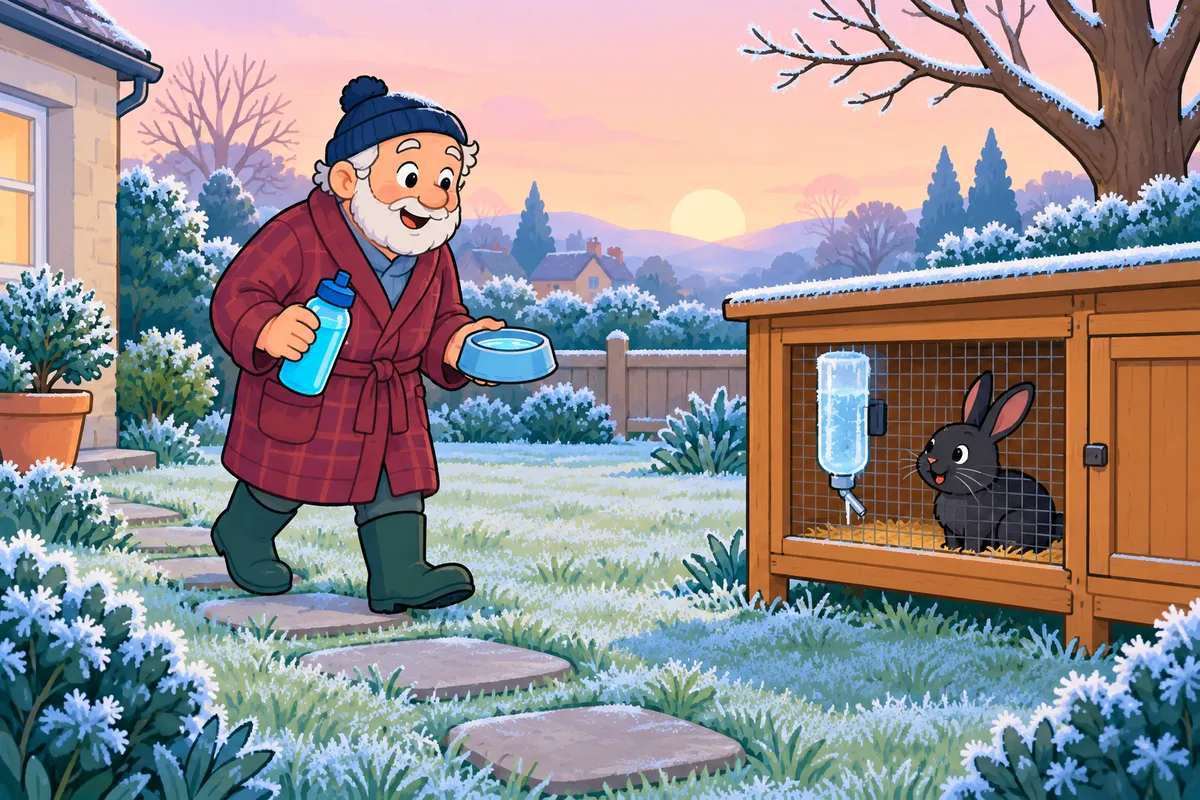
Water in a bottle on an outdoor hutch can freeze solid overnight. The Merck owner page on rabbit housing says domestic rabbits do poorly below 10 °C (50 °F), and that outdoor rabbits should come inside during temperature extremes.
Switching Containers
Merck's housing page says durable bottles with stainless steel sipper tubes are best, and that heavy bowls work well indoors if they are cleaned daily. Offering both means a stuck sipper never leaves your rabbit dry, and the bowl is where a rabbit drinks the most in a day.
When you move a rabbit from a bottle to a bowl:
- Put the bowl beside the bottle for a few days and keep both full.
- Measure each morning how much is gone from each, so you can see which one the rabbit uses.
- Take the bottle away only once the bowl is clearly doing the work, and wash the bowl every day.
Why Is My Rabbit Drinking a Lot of Water?
Often it is normal, because rabbits drink a lot for their size. Merck's housing page says exactly that, and its nutrition chapter gives about 120 ml per kg a day, so a 3 kg rabbit draining 360 ml is right on target.
| Rabbit's weight | Normal day, 120 ml/kg |
|---|---|
| 1.5 kg (3.3 lb) | about 180 ml |
| 2 kg (4.4 lb) | about 240 ml |
| 3 kg (6.6 lb) | about 360 ml |
| 4 kg (8.8 lb) | about 480 ml |
| 5 kg (11 lb) | about 600 ml |
Read your rabbit against its own row, not against a dog's bowl. A rabbit that drinks far past its row for days, or far below it, has changed, and the change is what you report to the vet.
Heat raises it further. Merck warns that long exposure above 27 °C (80 °F) can make rabbits sick, so a hot day calls for a second bowl in the shade and a cooler room. A real rise over your rabbit's own normal, with weight loss, dark red urine or any other sign on the list above, needs a vet.
Diet matters too. Merck notes that long-term diets based on alfalfa meal may lead to kidney damage and calcium deposits in the urinary tract, and recommends timothy-hay-based pellets for adult rabbits that are not nursing.
Measure your rabbit's normal on an ordinary day, so a change in either direction shows up early.
A Daily Water Check That Catches Problems Early
Rabbits hide illness, Merck says, so the water and the droppings are your early signals. Build the check into feeding times.
When to check water, hay and droppings
- 7 AM
- 12:30 PM
- 6 PM
- 9:30 PM
Keep unlimited hay in the rack as well. Merck's nutrition chapter says rabbits frequently need to nibble on hay to keep the gut moving, so an untouched hay rack is as much a warning as an untouched bowl.
General information for healthy adults, not medical advice. If a doctor has set your fluid amount, follow that.
More in Pets
Sources
- Merck Veterinary Manual. Nutrition of Rabbits, 2024.
- Merck Veterinary Manual. Signs of Illness in Rabbits, 2026.
- Merck Veterinary Manual (pet owner version). Digestive Disorders of Rabbits, 2026.
- Merck Veterinary Manual (pet owner version). Providing a Home for a Rabbit, 2026.
- Merck Veterinary Manual (pet owner version). Disorders and Diseases of Rabbits, 2026.
Sources checked by the Glubbo Editorial Team on Oct 19, 2026. General information, not medical advice. How we write and check our guides.

