Dog Not Drinking Water? Why It Happens and When to Worry
The harmless reasons a dog drinks less, the ones that need a vet, and how to tell them apart in one day.
 By the Glubbo Editorial Team · Updated Oct 19, 2026 · 8 min read
On This Page
- A Quiet Bowl or a Sick Dog?
- Why Is My Dog Not Drinking Water?
- Is It Normal for a Dog to Drink Less on Wet Food?
- When Is a Dog Not Drinking Water an Emergency?
- Could Stress, Sore Joints or a Dirty Bowl Be the Reason?
- How Can I Get My Dog to Drink When It Refuses Water?
- Measure One Day Before You Decide
- Sources
Short answer
Often food or weather; with other signs, see a vet.
- Canned food is 60 % to over 87 % water, so a dog on it drinks less from the bowl.
- Dry gums, skin that doesn't snap back or pale gums beside the bowl: see a vet now.
- A healthy dog takes in about 40 to 60 ml per kg a day; measure one full day.
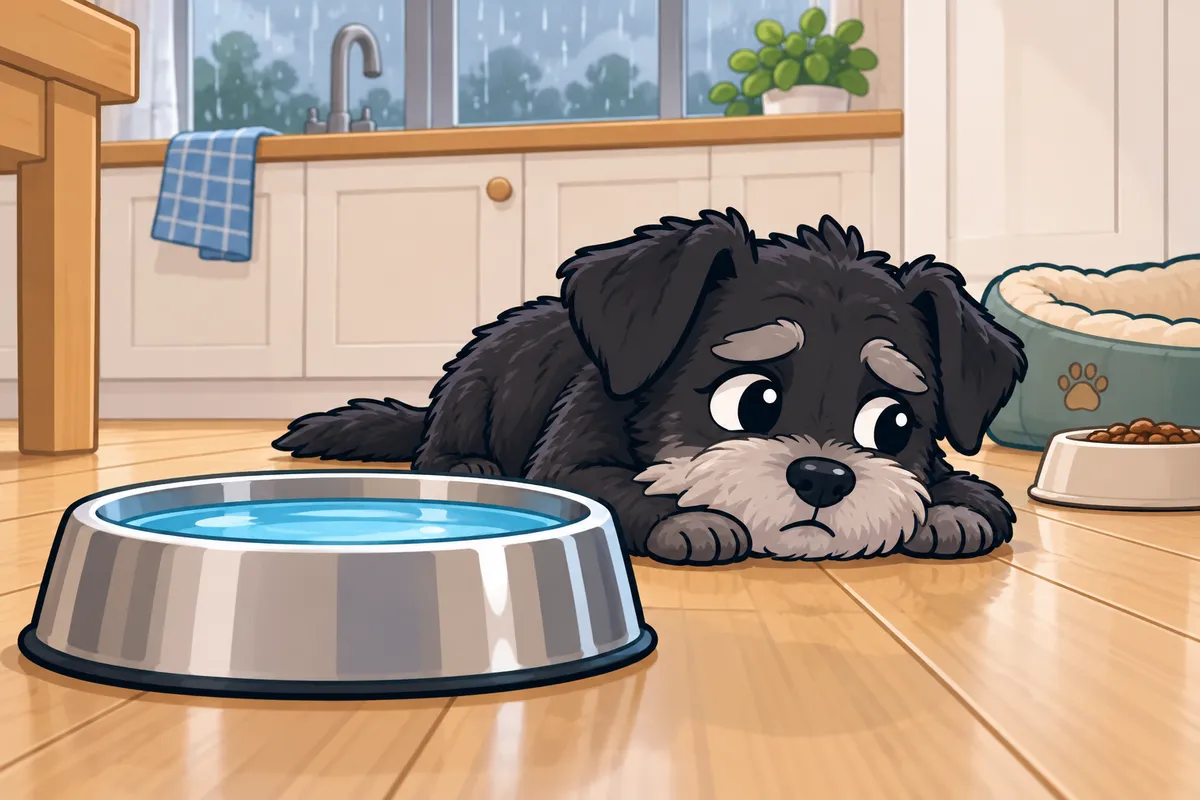
A dog that skips its bowl is often just eating canned food or having a cool, quiet day. Sometimes it is the first sign of a sore tooth or an upset stomach, and one day with a measuring jug usually tells you which. Look at the whole dog first, then at the bowl.
General information for adult dogs, not veterinary advice. A dog that refuses water and seems unwell needs a vet, not a home test.
A Quiet Bowl or a Sick Dog?
Look at the whole dog before the bowl. The Merck Veterinary Manual's emergency chapter gives these signs of dehydration:
- Skin that doesn't snap back when pinched.
- Dry gums.
- Sunken eyes.
Any of them beside an untouched bowl changes the picture.
Probably Fine
- Eats as usual and acts as usual
- Recently moved to wet food
- A cool day with little exercise
- Gums feel wet and slippery
See a Vet Today
- Gums dry, or pale
- Skin slow to snap back
- Off its food as well
- Vomiting, flat or hiding
Why Is My Dog Not Drinking Water?
Often the dog is getting water some other way, or needs less of it that day. Less often something makes drinking unpleasant or makes the dog feel too ill to bother.
The Merck Veterinary Manual names four things that set how much a dog needs: diet, environment, activity and health. Every cause below changes one of them.
| Cause | What you notice | What to do |
|---|---|---|
| Wet or canned food | Bowl drops after a diet change, dog well | Measure a day; usually normal (Merck) |
| Cool weather, little exercise | Drinks less on quiet days, more after walks | Normal; watch it on the next hot day (Merck) |
| No easy access to water | Bowl empty, tipped, dirty or blocked by another pet | Fix the bowl; Merck wants clean water out at all times |
| Mouth pain | Eats less, resists having teeth touched | Vet check; Merck says most dogs mask dental pain |
| Something swallowed | Vomiting, loss of appetite, low energy | See a vet today; Cornell calls a blocked gut an emergency |
| Other illness | Dry gums, slow skin, sunken eyes | See a vet; these are Merck's signs of dehydration |
Mouth Pain Hides Well
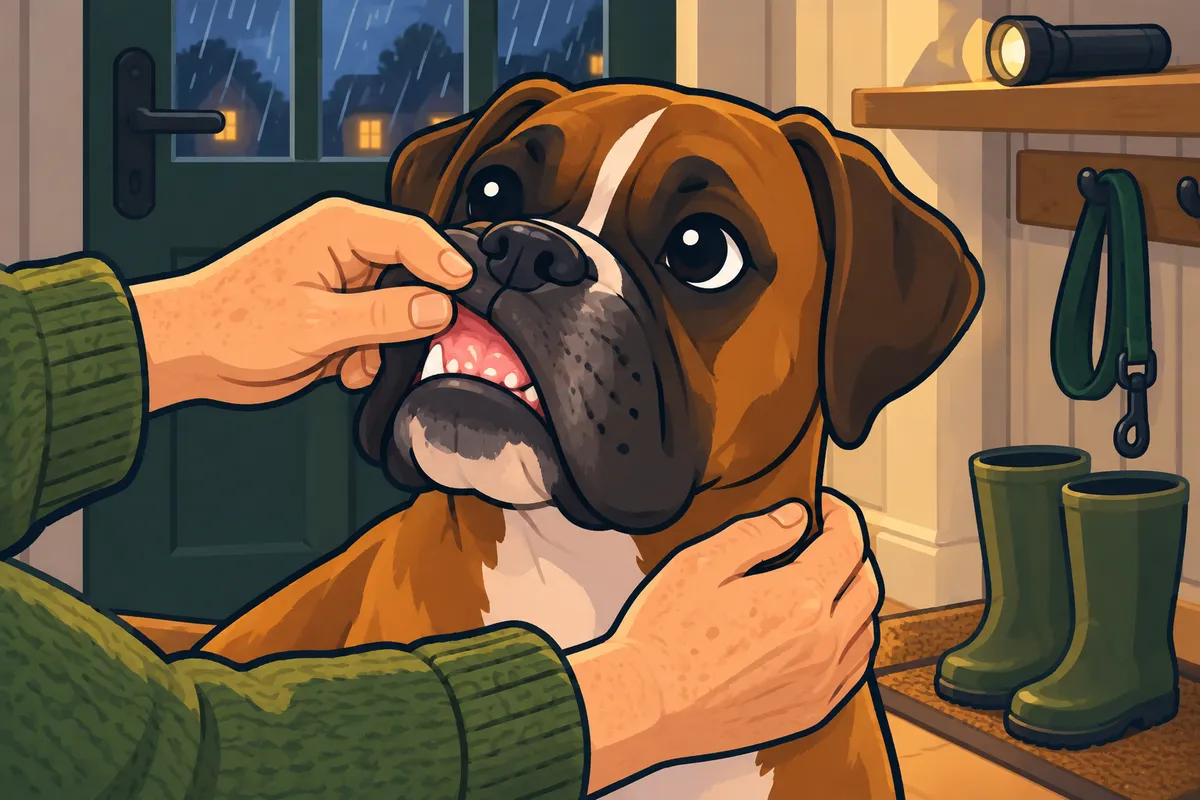
Dental pain is easy to miss. The Merck Veterinary Manual's dental chapter lists painful teeth your pet resists having touched, a swelling on the face or a decrease in appetite as signs, and warns that most dogs mask their pain.
So a dog that has gone off both food and water, with no other signs, still deserves a look in its mouth by a vet.
When the Bowl Is the Problem
Merck's rule is short: clean, fresh water should be available at all times. Check the plain things first:
- A bowl tipped over.
- A bowl gone slimy.
- A bowl in a room the dog avoids.
- A bowl that another pet guards.
Is It Normal for a Dog to Drink Less on Wet Food?
Yes. Merck gives canned pet food a moisture content of 60 % to over 87 %, against 3 % to 11 % for dry food, and states that dogs eating mainly canned food generally drink less water than dogs on dry diets.
That gap is large enough to take over half the bowl's job. In milliliters, using Merck's moisture range and Cornell's healthy intake, it looks like this.
Swap the cans for 300 g of kibble and the sum turns around. Dry food at 3 % to 11 % water brings only 9 to 33 ml, so almost all of the same 800 to 1,200 ml has to come out of the bowl.
Count the food before you worry about the bowl. A dog that switched to wet food last week and drinks half as much is often doing exactly what Merck describes; a dog on kibble that stops drinking is not.
When Is a Dog Not Drinking Water an Emergency?
When something else is wrong at the same time. Merck's emergency chapter lists the signs of dehydration and of shock, and puts shock and heat stroke among the problems that need treatment straight away.
Your dog is not drinking and…
- has pale gums, a racing heart or weak pulsesGo to a vet now
- vomits and has skipped foodSee a vet today
- has dry gums or skin slow to snap backSee a vet today
- eats, plays and acts as usualMeasure one full day at the bowl
Not Drinking and Not Eating
Merck's dental chapter links a drop in appetite to mouth pain, and a sore mouth puts a dog off the bowl too. A dog that stops both food and water for a day needs a vet.
Not Drinking and Vomiting
Water goes out and none comes in. Vomiting with a lost appetite can also mean a swallowed object: the Cornell Riney Canine Health Center lists vomiting, loss of appetite, abdominal pain, diarrhea, dehydration and lethargy as its signs, and says prompt veterinary care is critical.
Puppies, Old Dogs and Small Dogs
Puppies and old dogs are harder to read. The Merck Veterinary Manual's fluid chapter warns that very young animals may have extra skin elasticity, and that geriatric animals can have sunken eyes and poor skin with normal hydration, so the skin test misleads at both ends of life.
Small dogs simply have less water to lose. Their whole day fits in a mug, and a quiet morning takes a big share of it.
Not Drinking and Flat or Pale
Merck lists skin that doesn't snap back, dry gums and sunken eyes as signs of dehydration. It lists pale gums, a rapid heart rate and weak pulses as signs of shock, which needs treatment straight away.
The last two lines come from Merck's list of emergencies that need treatment at once. If the clinic asks, have three facts ready:
- When your dog last drank.
- Whether it has eaten.
- Whether it has vomited.
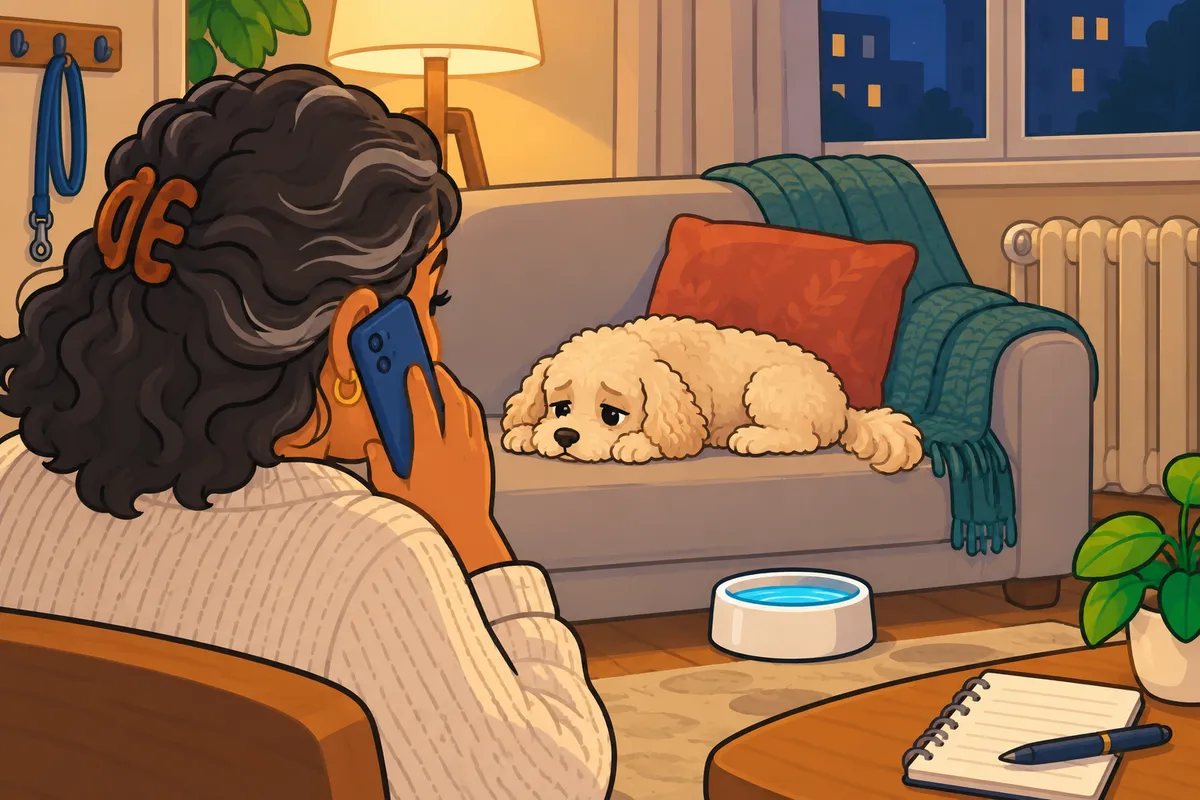
A full day with no water at all is its own question, and the vets' own water tests show how little room a dog has before harm starts.
Could Stress, Sore Joints or a Dirty Bowl Be the Reason?
Yes, and these are the causes owners miss. PetMD's vet reviewer lists them beside illness: stress, anxiety or low mood can leave a dog uninterested in water, arthritis can make the walk to the bowl or the bend down to it painful, and a bowl with a film of bacteria smells and tastes bad.
Tooth or gum pain, and sensitivity to very cold water, can also put a dog off. Wash the bowl daily, run it through the dishwasher weekly and keep a spare, as PetMD advises. A dirty bowl is the easiest of these causes to fix.
An older dog that used to drink well and now stands at the bowl, or lies down near it without drinking, may be telling you about its joints, since PetMD says a dog in pain may refuse to drink. Raise the bowl a little or put one on each level where it sleeps, and mention it at the next vet visit.
How Can I Get My Dog to Drink When It Refuses Water?
Only for a dog that is otherwise well and has seen a vet if the change lasts: wash and refill the bowl, set a second bowl in another room and stir water into kibble, because Merck notes that multiple water sources encourage drinking.
PetMD adds a tablespoon of unsalted chicken broth in the water, a pet fountain, or canned food in place of kibble.
Never force water into a dog's mouth; PetMD warns against it.
Gentle ways to get a well dog drinking
5 items- Wash the bowl and give fresh water
- Put a second bowl in another room
- Offer canned food, or stir water into kibble
- Add a tablespoon of unsalted chicken broth to the water
- Try a pet fountain
If the dog is hot-weather thirsty but refuses the bowl, Cornell's vets suggest seedless watermelon chunks as a way to help it hydrate.
Measure One Day Before You Decide
Numbers settle the question faster than worry does. Measure what goes out of the bowl in 24 hours, then compare it with your dog's weight.
One day at the bowl
- Fill the bowl with a measured amount in the morning
- Top it up with measured amounts and note each one
- Next morning, subtract what is left from the total
- Divide by your dog's weight in kg and add the water in its food
The dog water calculator compares your measured day with a healthy range once you have the number. Write it down with the date and what your dog ate: if it sits under Cornell's 40 to 60 ml per kg and your dog also shows a sign from the box above, that note is the first thing your vet will ask for.
General information for healthy adults, not medical advice. If a doctor has set your fluid amount, follow that.
More in Pets
Sources
- Merck Veterinary Manual. Nutritional Requirements of Small Animals, 2024.
- Merck Veterinary Manual. Dental Disorders of Dogs, 2025.
- Merck Veterinary Manual. Evaluation and Initial Treatment of Dog and Cat Emergencies, 2025.
- Merck Veterinary Manual. The Fluid Resuscitation Plan in Animals, 2025.
- Cornell Richard P. Riney Canine Health Center. Canine Polyuria and Polydipsia (PU/PD), 2024.
- Cornell Richard P. Riney Canine Health Center. Gastrointestinal Foreign Body Obstruction in Dogs, 2024.
- Cornell University College of Veterinary Medicine. Summer safety tips, 2026.
- PetMD (reviewed by Brittany Kleszynski, DVM). Dog Not Drinking Water? Possible Causes and When To Call Your Vet, 2024.
Sources checked by the Glubbo Editorial Team on Oct 19, 2026. General information, not medical advice. How we write and check our guides.

