Cat Not Drinking Water? What's Normal and When to Call a Vet
Why many healthy cats rarely touch the bowl, the reasons that are not normal, and a 24-hour check to tell them apart.
 By the Glubbo Editorial Team · Updated Oct 19, 2026 · 7 min read
On This Page
Short answer
Often normal on wet food; not with other signs.
- A cat needs about 4 oz of water per 5 lb a day, and wet food can supply most of it.
- Measure the bowls over 24 hours; a cat on wet food may rarely be seen drinking.
- Lethargy, weakness, poor appetite or dry gums: contact a vet promptly (Cornell).
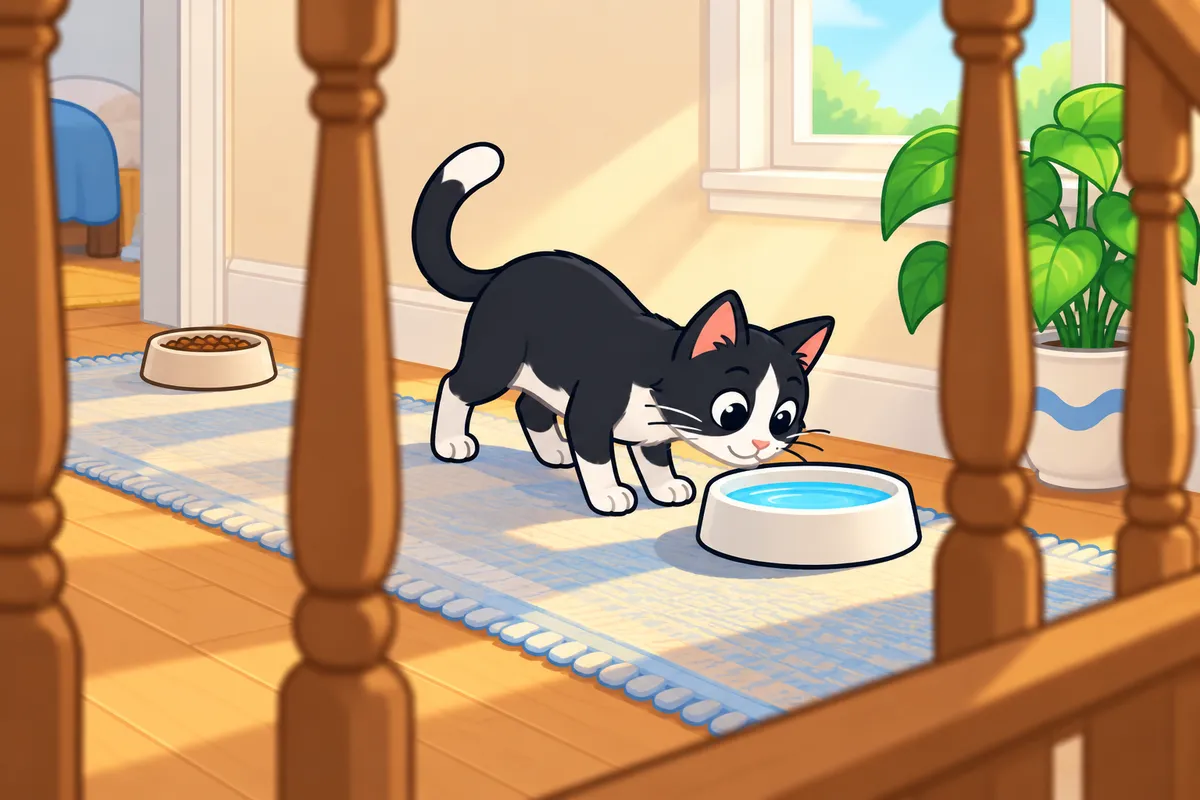
A cat that rarely drinks is often fine, especially on wet food, which can be up to 80 % water. The worry is real when its drinking drops while something else changes too, such as energy, appetite or its gums, and a day of measuring tells the two apart.
Not seeing your cat drink for a year sounds alarming to a dog owner, but on wet food it is often just how cats work.
General information for adult cats, not veterinary advice. A cat that drinks little and seems unwell needs a vet.
Is It Normal for a Cat to Barely Drink Water?
Often, yes. The Merck Veterinary Manual notes that cats "often do not drink a lot of water", and International Cat Care says a cat fed wet food gets a large share of its water from food, so "you may rarely, if ever, see your cat drinking."
What matters is the cat's total water, food included. The Cornell Feline Health Center puts that at about 4 ounces per 5 pounds of lean body weight a day.
Cornell's rule works out to about 52 ml per kg: 157 ml for a 3 kg cat, 209 ml at 4 kg, 261 ml at 5 kg and 313 ml at 6 kg. Food supplies part of each number before the bowl does anything, and the cat water calculator gives the figure for any other weight.
What Two Pouches a Day Leave for the Bowl
Merck gives canned pet food a moisture content of 60 % to over 87 %, and dry food 3 % to 11 %. For one ordinary cat, that works out like this.
Put the same cat on 60 g of dry food and the picture flips. Kibble at 3 % to 11 % water brings only 2 to 7 ml, so nearly all of the 209 ml has to come from a bowl she may ignore.
The same arithmetic for other portions, at the low and high ends of Merck's range:
| Wet food a day | Water at 60 % | Water at 87 % |
|---|---|---|
| 85 g, one pouch | 51 ml | 74 ml |
| 156 g, one 5.5 oz can | 94 ml | 136 ml |
| 170 g, two pouches | 102 ml | 148 ml |
| 255 g, three pouches | 153 ml | 222 ml |
The label on the can or pouch usually states its moisture, so you can swap in your own figure. A 4 kg cat on three pouches may need almost nothing from the bowl on a cool day.
A cat on wet food that rarely drinks can be perfectly well; a cat on dry food that stops drinking cannot.
Why Is My Cat Not Drinking Water?
Food is the first reason, the bowl the second, and illness the one to rule out. Cornell's hydration page lists the reasons a cat takes in less water: weakness or lethargy, a poor appetite, dental pain that makes drinking hard, and no access to water.
| Reason | Clue | What to do |
|---|---|---|
| Wet food covers most of its water | Cat is well; bowl barely moves | Normal; measure a day to be sure |
| No access to water | Bowl empty, forgotten, or the cat lives outdoors | Fresh water in easy places (Cornell) |
| Another cat or pet blocks the bowl | Bowl sits in a guarded spot | Add bowls where no pet can block them (Cornell) |
| Dental pain | Eats less and seems to struggle at the bowl | Vet check; Cornell names it as a cause |
| Feeling unwell | Lethargy, weakness, poor appetite | Contact a vet promptly (Cornell) |
When Other Cats Are the Reason
Cornell names conflicts among cats in a household as one way a cat ends up without water. The bowl may be full and the cat still does not reach it, because another cat sits between it and the water.
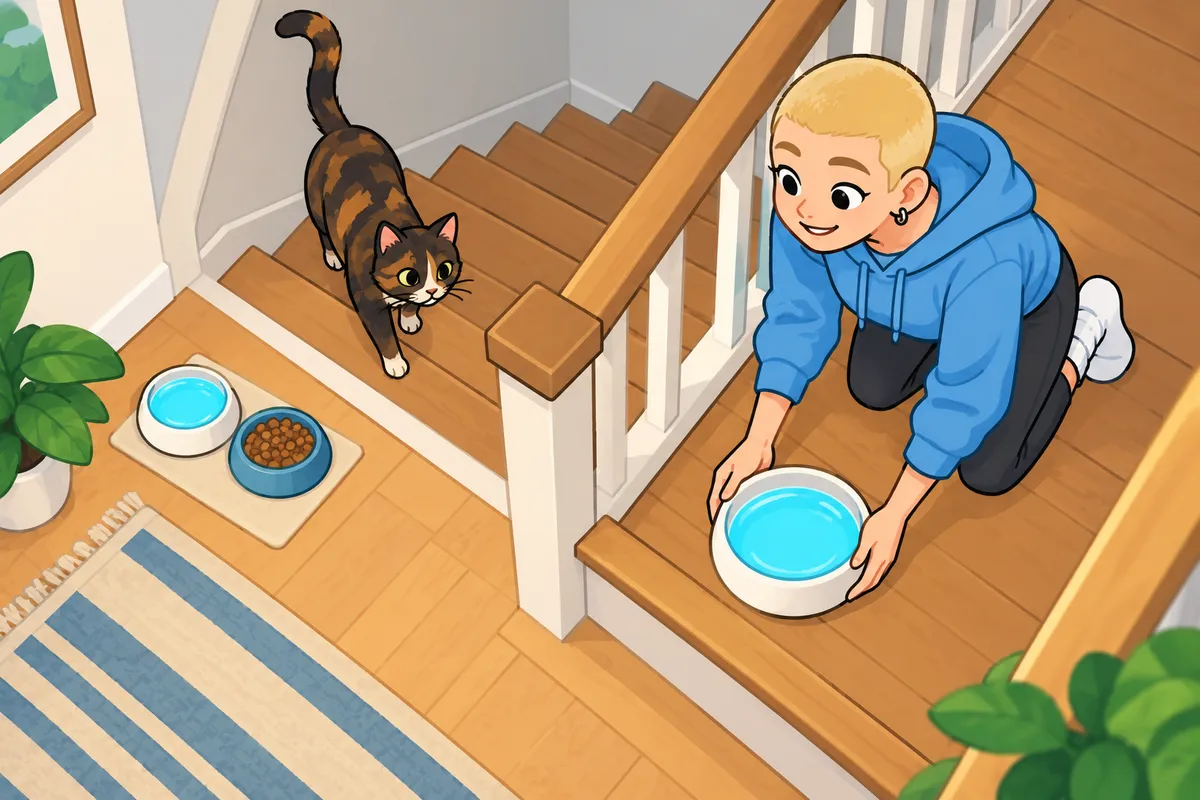
Merck's nutrition chapter adds that multiple water sources encourage drinking, which it calls particularly important in cats. Bowls on different floors also mean no single bowl can be held by one pet.
How Can You Tell How Much Water Your Cat Drinks?
Measure the bowls over one full day. International Cat Care describes the method: fill the bowls to the brim with a measured amount and measure what is left after 24 hours.
One day of drinking, measured
- Fill every bowl to the brim with a measured amount
- Leave them 24 hours, topping up with measured amounts if needed
- Subtract what is left from what went in
- Add the water in the day's food, then compare with the bars above
Do it on an ordinary day. International Cat Care warns that shared bowls make this tricky and suggests keeping pets apart for the 24 hours only if that does not upset them; otherwise you get a household figure.
If a bowl sits in a sunny or warm room, some of the missing water may have evaporated, so a measured day in a cool room gives the cleaner number.
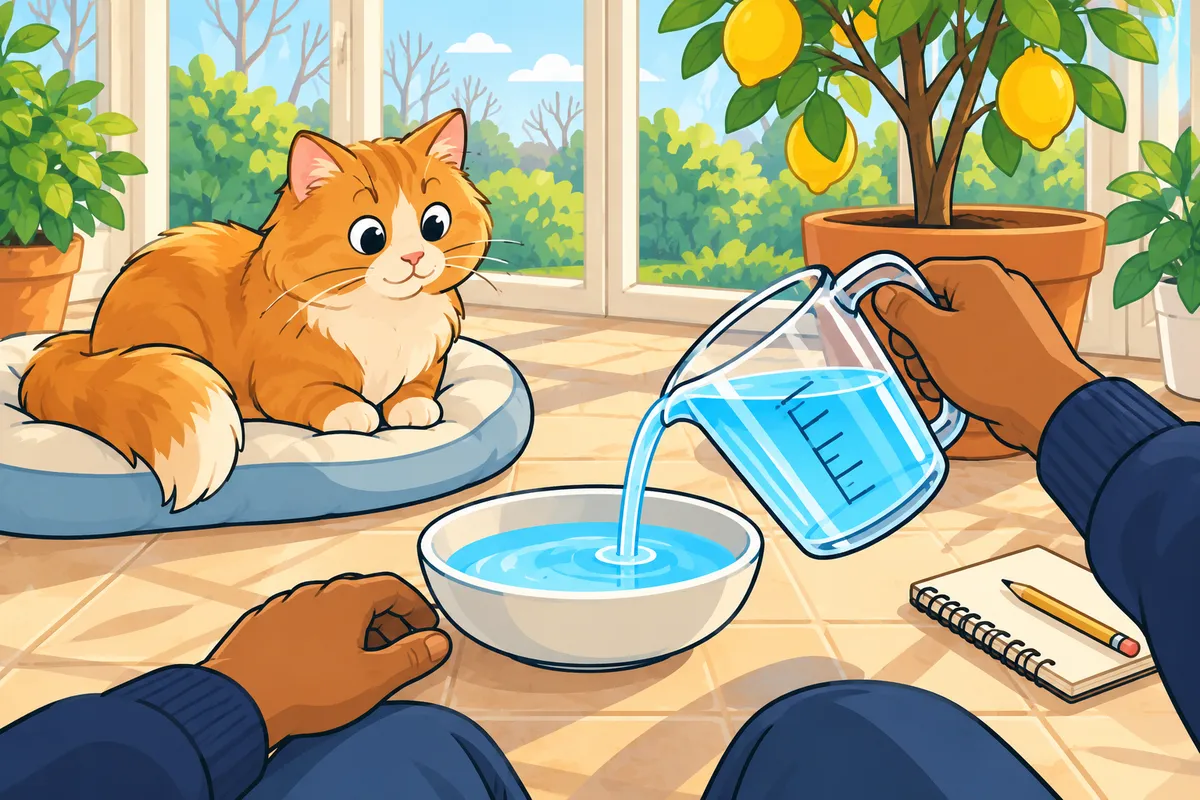
If the number comes out high, the opposite problem applies: International Cat Care says a cat drinking more than 100 ml per kg a day is drinking more than usual and should be seen by a vet.
When Should You Worry About a Cat Not Drinking Water?
When the drop comes with other changes. Cornell lists lethargy, weakness, a poor appetite and dry mucous membranes as signs of dehydration, with sunken eyes in severe cases, and advises contacting a vet promptly if you are concerned.
A cat on dry food that has stopped drinking deserves a closer watch even before these signs appear, because almost all of its water comes from the bowl.
The time a cat can safely go without any water is shorter than many owners expect. Cornell's skin-tent and gum tests let you check at home while you wait to speak to the vet.
Old Cats Need Extra Care
Older cats are harder to read. Cornell notes that geriatric cats may show poor skin elasticity even when well hydrated, so the skin test can mislead; judge an older cat by its appetite, energy and the measured bowl.
How Can You Get a Cat to Drink More Water?
Start with the bowl, since it costs nothing:
- Keep it away from food and the litter tray.
- Fill it to the brim.
- Use a wide, shallow bowl of glass or ceramic.
International Cat Care says cats prefer those to plastic, and that a cat "will drink more if food and water are offered in separate locations." Try one change at a time, so the measured bowl tells you which one worked.
Where to Put the Bowl
A quiet spot works best: away from busy doors and noisy machines such as a washing machine, and not against a wall, so the cat can reach it from every side. Hill's adds that a bowl next to the litter tray puts cats off and that a dirty dish with hair or food in it does too, so rinse and refill it daily.
What Else Gets a Cat to Drink
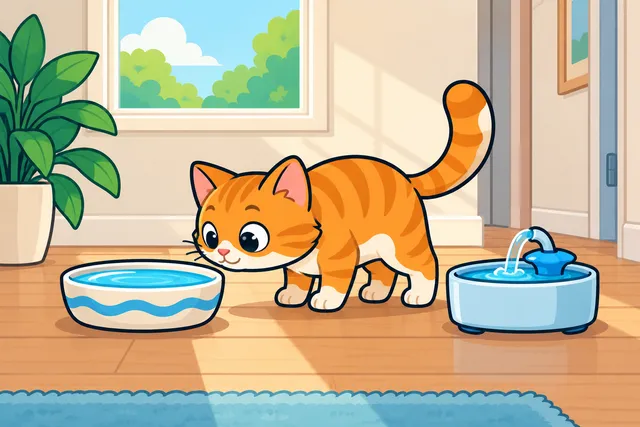
Some cats like moving water, so try a pet fountain introduced gradually, or a dripping tap. Cornell also lists wet food, or water stirred into food, as ways to raise intake.
For flavor, International Cat Care mentions the poaching water from plain chicken or fish. It says to avoid salty liquids, milk and anything with onion.
If your cat does this, try this
- Walks past a bowl that sits beside the foodMove it to a quiet spot away from food and the litter tray
- Sips the rim or flicks the water outA wide, shallow glass or ceramic bowl, filled to the brim
- Drinks from the tap or the shower trayA pet fountain, introduced gradually
- Eats only dry food and drinks littleAdd wet food, or stir water into meals; ask your vet before changing the diet
- Lives with other cats that guard the bowlOne bowl per cat plus one extra, set apart on different floors
What to Write Down Before You Call the Vet
A few notes turn a vague worry into an answer the vet can use, and they take five minutes to write.
Your cat's water notes
5 items- Measured water from the bowls over 24 hours
- What and how much your cat ate, wet or dry
- When you first noticed the change
- Any lethargy, hiding, vomiting or diarrhea
- Your cat's weight, if you know it
Bring the notes to the call or the visit. Two or three measured days tell a vet far more than "drinking less than usual".
General information for healthy adults, not medical advice. If a doctor has set your fluid amount, follow that.

More in Pets

Sources
- Cornell Feline Health Center. Hydration, 2021.
- International Cat Care. Increased Thirst and Drinking, 2025.
- International Cat Care. How to Encourage Your Cat to Drink, 2025.
- Hill's Pet Nutrition. Why Cats Are Not Drinking Water and Dehydration, 2026.
- Merck Veterinary Manual. Nutritional Requirements of Small Animals, 2024.
Sources checked by the Glubbo Editorial Team on Oct 19, 2026. General information, not medical advice. How we write and check our guides.

