How Is Tap Water Treated? From Source to Faucet
A source-to-faucet tour of ordinary municipal treatment and the choices that change with the source water.
 By the Glubbo Editorial Team · Updated Oct 24, 2026 · 3 min read
On This Page
Short answer
Treatment uses several barriers from source to distribution.
- Coagulation and flocculation gather small particles into larger floc.
- Settling and filtration remove material before disinfection.
- The exact train changes with the source and local conditions.
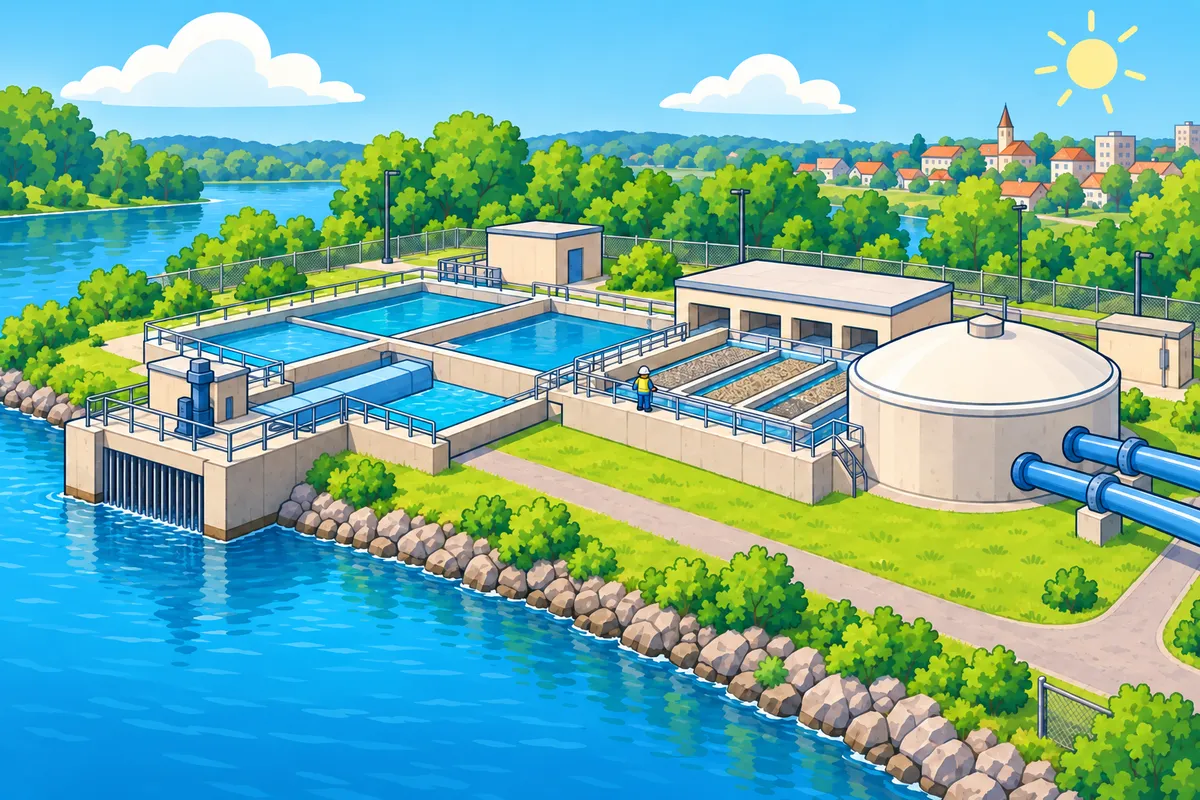
Tap water is usually treated in several linked stages. A conventional surface-water plant gathers small particles, settles them, filters the water, disinfects it, and sends it into protected storage and pipes. Groundwater or unusually clean sources may need a different and shorter train.
How Is Tap Water Treated?
The CDC treatment guide describes coagulation, flocculation, sedimentation, filtration, and disinfection. Operators adjust each stage to the incoming water instead of running one fixed recipe all year.
The Ordinary Surface-Water Treatment Train
- 12:15 AM
- 1:15 AM
- 2:15 AM
- 3:15 AM
- 4:15 AM
- 5:15 AM
| Stage | Its job | What it does not do alone |
|---|---|---|
| Intake | Bring source water under controlled flow | Make the water drinkable |
| Coagulation/flocculation | Collect fine material into removable floc | Remove every dissolved chemical |
| Sedimentation | Separate heavy floc by gravity | Replace a filter or disinfectant |
| Filtration | Remove smaller particles and support germ reduction | Protect the miles of pipe after the plant |
| Disinfection | Inactivate susceptible germs | Repair a broken main or premise plumbing |
| Distribution | Deliver protected water at pressure | Erase every change inside a building |
What Happens at a Water Treatment Plant?
Operators tune the barriers to today's source water
Operators test water and change doses, mixing, filter operation, and other controls as conditions move. Three examples:
- A storm can raise turbidity.
- An algae event can change taste and odor.
- A seasonal temperature shift can change process behavior.
The plant is therefore both a physical treatment train and a continuously monitored operation.
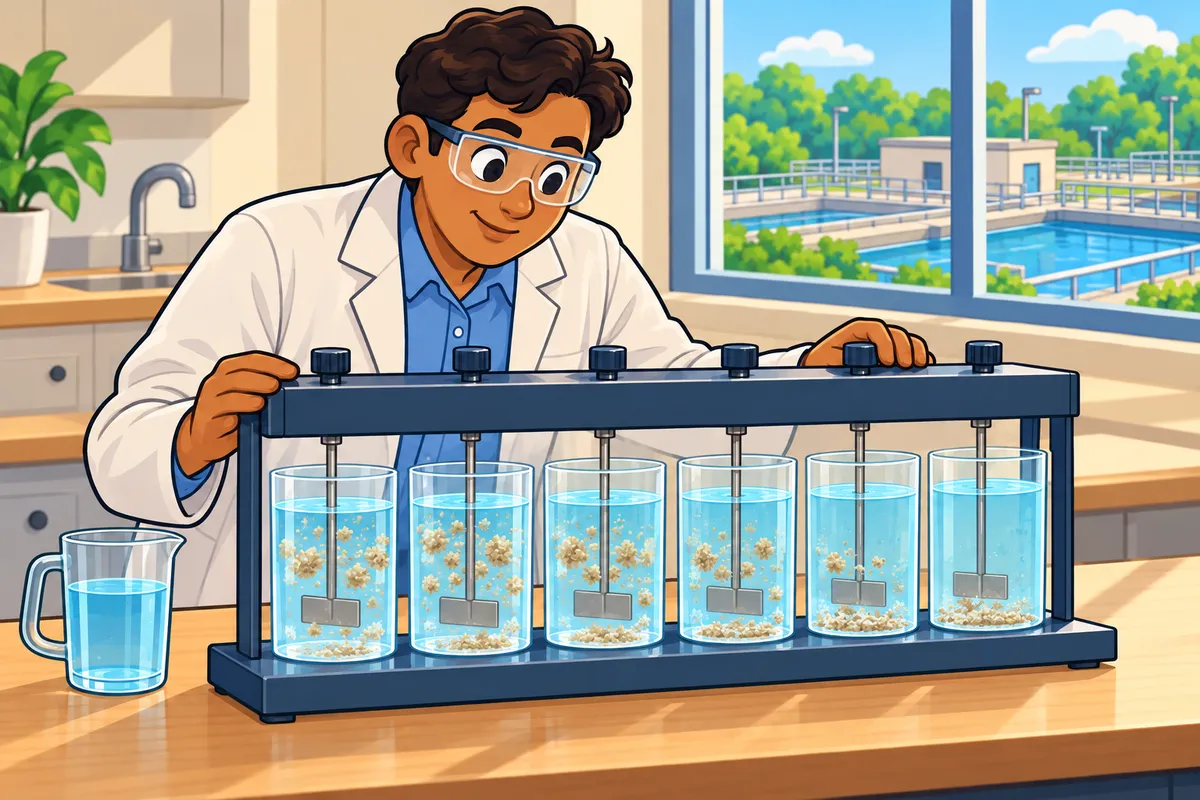
Filters eventually need cleaning, and operators remove settled material. Instruments and laboratory samples confirm that each barrier is doing its job. No single basin carries the whole safety burden; the sequence provides multiple opportunities to remove or inactivate hazards.
Why Plants Use Different Treatment Trains
The Source Changes the Design
Protected groundwater
Often simpler
- May begin with fewer suspended particles
- Still monitored and treated as required
Suits you if a protected aquifer with stable chemistry
River or reservoir
Conventional train
- Particle removal is central
- Conditions can change with weather
Suits you if surface water with variable turbidity
Specific dissolved concern
Added process
- A targeted technology may be added
- Selection follows monitoring evidence
Suits you if a source with a known treatment need
The EPA's technology overview covers additional methods used for particular contaminants and operating goals. Their presence is not a quality ranking between towns; it reflects the source and the problems the system must control.
Why Is Disinfectant Left in Tap Water?
Treatment continues beyond the clearwell. Water may travel many miles and remain in tanks before reaching a home. A disinfectant residual can continue protecting it in the network.
The amount, type, monitoring, and taste questions belong to the chlorine guide, while an official boil-water advisory gives temporary instructions after an incident.
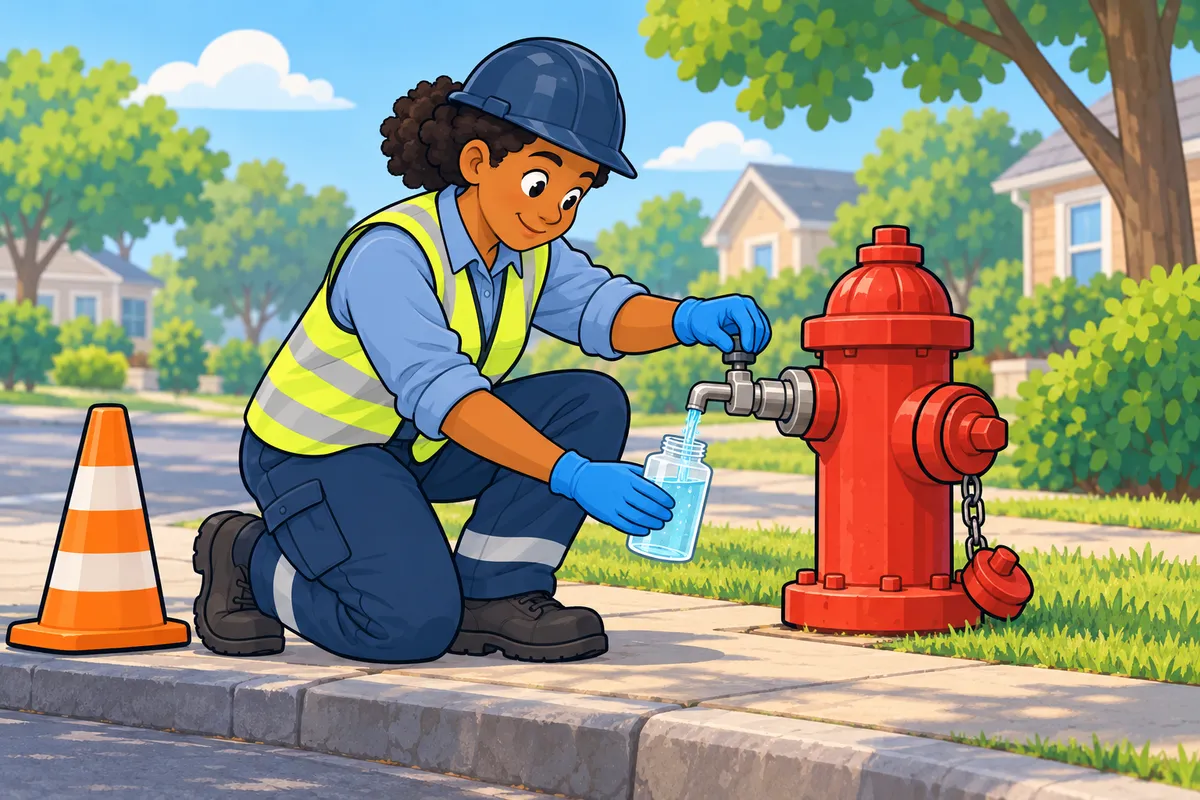
Follow Your Own Water From Source to Tap
Open your utility's current annual water quality report and find three items:
- The named source.
- The treatment description.
- The required contaminant table.
Then check the utility's notices for current work or advisories. That combination explains both the ordinary treatment train and any short-term condition affecting delivery today.
Common Questions
Does every plant use the same steps?
No. The source water, contaminants, plant design, and regulatory needs determine which processes a utility uses and how it operates them.
Is treatment finished when water leaves the plant?
No. Utilities also manage storage, pressure, disinfectant residual, sampling, and repairs across the distribution network.
General information for healthy adults, not medical advice. If a doctor has set your fluid amount, follow that.

More in Water at Home
Sources
- CDC. How Water Treatment Works, 2024.
- US Environmental Protection Agency. Overview of Drinking Water Treatment Technologies, 2026.
Sources checked by the Glubbo Editorial Team on Oct 24, 2026. General information, not medical advice. How we write and check our guides.

