Why Is My Tap Water Cloudy? Try the Glass Test
Air commonly clears from the bottom upward; persistent or colored water needs a different response.
 By the Glubbo Editorial Team · Updated Oct 24, 2026 · 2 min read
On This Page
Short answer
Bottom-up clearing usually points to tiny air bubbles.
- Fill a clear glass with cold water and set it still.
- Air bubbles rise, so the bottom clears first.
- Persistent haze, particles, color, odor, or an area-wide change needs utility follow-up.
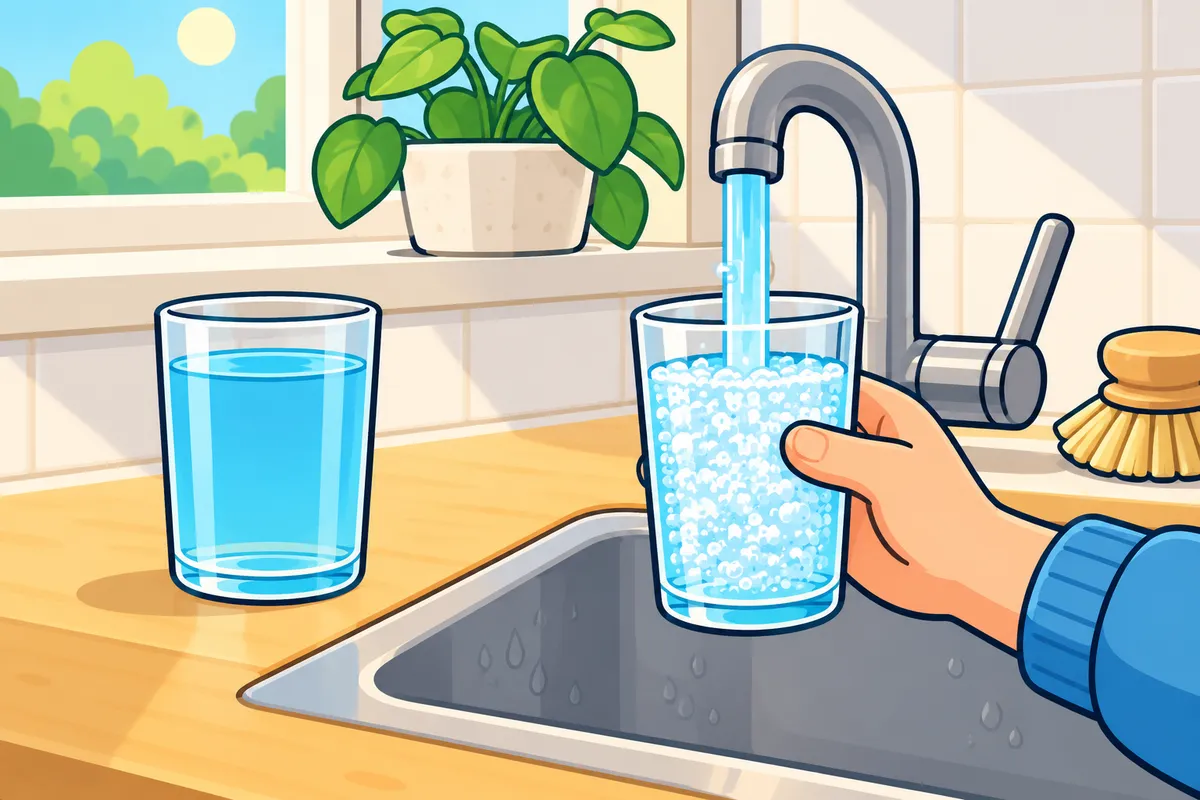
Cloudy tap water is often dissolved air. Fill a clear glass with cold water and leave it still. When the cloud clears from the bottom upward, rising microbubbles are the likely explanation.
Cloudiness deserves another response when it:
- Stays.
- Carries particles or color.
- Smells unusual.
- Affects neighbors.
Run the Glass Test
- Fill a clean clear glass from the cold tap
- Set it on a level surface without stirring
- Watch the bottom and sides for several minutes
- Record whether it clears bottom-to-top, settles, or remains uniform
Why Is My Tap Water Cloudy?
USGS explains that cold pressurized water can hold more dissolved air. At the faucet, pressure falls and the air forms tiny bubbles that make the glass look milky. The bubbles rise and leave clear water behind.

Match the Observation to the Next Step
Clears bottom-up
Usually air
- Tiny bubbles rise
- Often linked to pressure or temperature
Suits you if monitor if no other change exists
Persistent haze
Needs checking
- Does not clear while standing
- Ask the utility about current work
Suits you if save a sample and call
Particles or settling
Different symptom
- Material remains or sinks
- Compare taps and hot versus cold
Suits you if document before flushing or repair
How Do I Do the Cloudy-Water Glass Test?
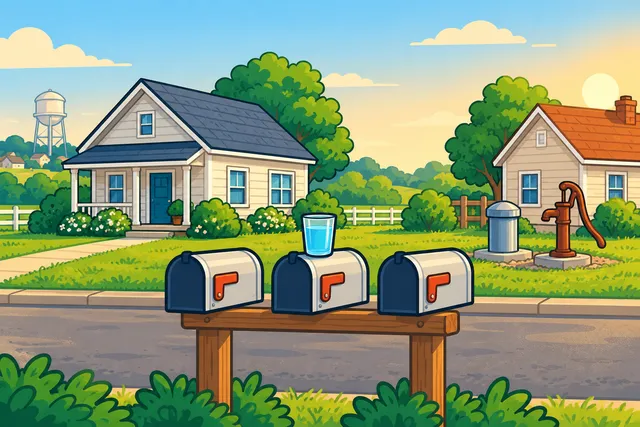
Use cold water because a hot-water issue may belong to the heater. Compare a second cold tap and, if possible, a nearby home served by the same utility. Do not:
- Add chemicals.
- Boil the sample.
- Treat the glass test as a laboratory result.
Read the direction and the final clarity
| Observation | Likely class | Action |
|---|---|---|
| Clears bottom-to-top | Rising air bubbles | Monitor and ask utility if persistent at taps |
| Material settles downward | Particles or sediment | Photograph, avoid guessing, contact utility/plumber |
| Brown, yellow, or orange | Colored-water issue | Use the brown-water guide |
| Odor or area-wide change | Supply or plumbing investigation | Call utility and check notices |
Is Cloudy Tap Water Safe?
The appearance test cannot prove safety. Temporary air is not itself a contaminant, but persistent haze or another sensory change should be reported. Phoenix Water Services advises customers to contact the utility about unusual water-quality changes.
Follow any official boil-water advisory exactly; otherwise the broader tap-water guide explains reports and testing.
Call the Utility With Useful Details
5 items
Keep One Glass and Make One Call
Best practice is to observe before flushing everything away. The reason is practical: the direction of clearing, temperature, taps affected, and neighborhood pattern give the utility or plumber evidence they can use.
Common Questions
Why is hot water cloudy but cold clear?
Temperature and pressure can release dissolved air, but a hot-only recurring change can also involve the water heater; compare cold water first.
Should I call if neighbors see it too?
Yes. An area-wide change can point to distribution work or an incident, so contact the utility and check current notices.
General information for healthy adults, not medical advice. If a doctor has set your fluid amount, follow that.

More in Water at Home
Sources
- US Geological Survey. Why Does My Drinking Water Look Cloudy Sometimes?, 2019.
- City of Phoenix Water Services. Water Quality FAQs, 2026.
Sources checked by the Glubbo Editorial Team on Oct 24, 2026. General information, not medical advice. How we write and check our guides.

