Does Drinking Water Help You Lose Weight? What the Trials Found
See what the trials found, how many calories a drink swap saves you, and how to tell hunger from thirst.
 By the Glubbo Editorial Team · Updated Oct 19, 2026 · 9 min read
On This Page
Short answer
A little, and mostly as a swap for sugary drinks.
- Swap two regular sodas a day for water to cut 2,100 calories a week (CDC).
- 500 ml (17 oz) before meals added 1 to 2 kg of loss over 12 weeks in two trials.
- Peckish? Drink 250 ml (8 oz), wait 15 minutes, then decide if you still want food.
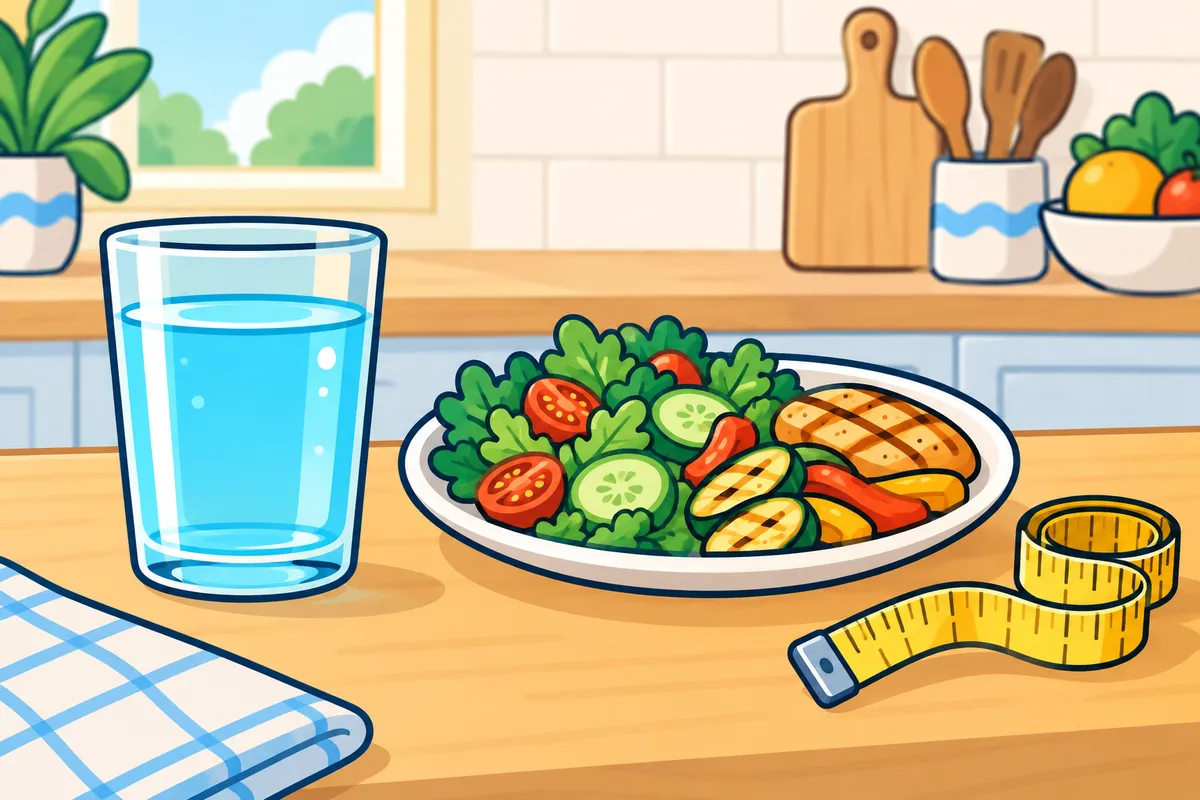
Drinking water helps you lose weight a little, and mostly in one way: it replaces drinks that have calories. Two small trials found that a large glass before each meal added 1 to 2 kg (2 to 4 lb) of extra loss over 12 weeks, in people who were already cutting calories.
The rest of the common claims, such as a faster metabolism or fat that water flushes out, are much smaller or have no trial behind them.
Does Drinking Water Help You Lose Weight?
A little, when it takes the place of sugary drinks or comes on top of a diet. The CDC says water has no calories, so replacing sugary drinks with plain water "can help reduce caloric intake." Water on its own, with nothing else changed, has no trial behind it as a weight-loss method.
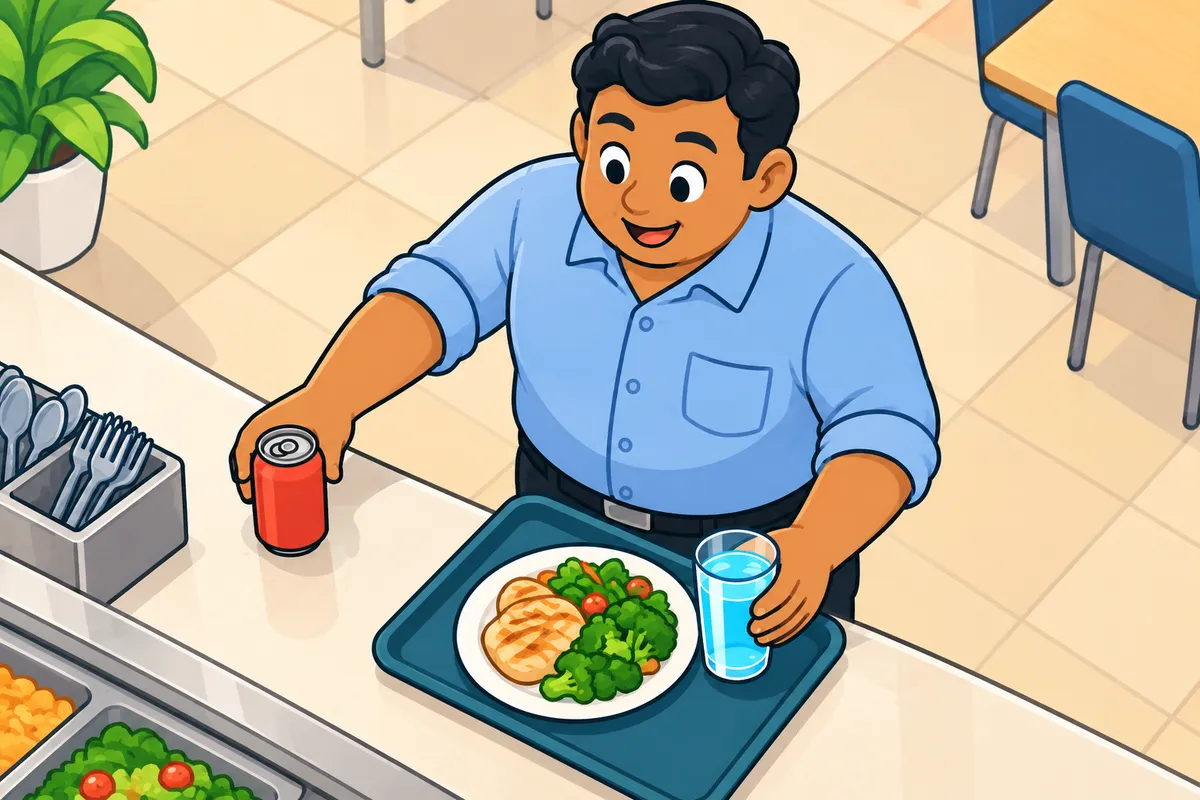
The swap is where the numbers are largest. A 12-oz can of regular soda holds about 155 calories, and the CDC's Rethink Your Drink page works it out for you: "Cutting out two regular sodas per day would reduce total calories by 2,100 in a week."
Do Diet Drinks, Sparkling Water or Lemon Water Work Too?
- Sparkling water, seltzer and water with a wedge of lime or lemon keep the zero-calorie benefit; the CDC lists them as low-calorie choices.
- Diet drinks are less certain. The CDC says their sweeteners may cut calories in the short term, with "many questions" about long-term weight control.
One 12-month study of dieting women found a gap. Those who drank more plain water lost more weight, while drinks with artificial sweeteners showed no such link, according to the authors of the Stanford study.
It only shows an association, so treat it as a reason to start with plain water rather than a rule. The 2020–2025 US Dietary Guidelines recommend limiting added sugar to less than 10 percent of daily calories for ages 2 and older.
Does Drinking Water Before Meals Help With Weight Loss?
In two small trials, yes, by about 1 to 2 kg over 12 weeks. Adults who drank 500 ml (17 oz) of water before their main meals lost a little more than a comparison group. Both trials were short, both groups also got diet advice or a diet, and neither tested people of normal weight.
| Dennis, 2010 | Parretti, 2015 | |
|---|---|---|
| Who | 48 adults aged 55 to 75, BMI 25 to 40 | 84 adults with obesity from family doctors in Birmingham, England |
| What they did | 500 ml of water before each of three daily meals, plus a low-calorie diet | 500 ml of water 30 minutes before main meals |
| Compared with | The same diet without the water | Imagining a full stomach before meals |
| Extra loss at 12 weeks | About 2 kg | 1.3 kg; 1.2 kg after adjusting for age, sex and other factors |
| Funded by | Institute for Public Health and Water Research | Royal College of General Practitioners' Scientific Foundation Board |
What the 2010 Trial Showed
Dennis and colleagues put 48 middle-aged and older adults on a calorie-controlled diet for 12 weeks; half also drank water before meals. The water group lost about 2 kg more. In a test meal at the start, people ate about 498 calories after the water against 541 without it.
The limits matter as much as the result:
- Only 41 of the 48 finished.
- The authors call the sample small.
- The meal effect had faded by week 12.
Measured as a share of starting weight, the gap (7.8 % against 6.5 %) was too small to rule out chance (P = 0.17).
What the 2015 Trial Added
Parretti and colleagues tested the same 500 ml habit on 84 adults with obesity, who got one weight-management talk and a follow-up call instead of a set diet. The water group lost 1.3 kg more than the comparison group. Once the authors adjusted for ethnicity, deprivation, age and gender, the gap was 1.2 kg and no longer statistically clear, so they called it "preliminary evidence".
Who These Results Fit
- Adults over 55 on a diet fit the first trial.
- Adults with obesity in a doctor's weight program fit the second.
- Neither trial says anything about a 25-year-old of healthy weight who wants to lose 3 kg for summer.
A third small trial gave a similar pre-meal habit to 40 adults with type 2 diabetes, and their fasting blood sugar fell along with their weight.
Which result fits you
- Over 55, on a low-calorie diet500 ml before each of three meals (2010 trial)
- Obesity, in a family doctor's weight program500 ml 30 minutes before main meals (2015 trial)
- You drink sugary drinks every daySwap them for water: the biggest saving
- Healthy weight, a few kilos to loseNo trial yet; the swap still counts
A habit that helps a little for 12 weeks is still worth having. A large glass before meals costs nothing, adds to your water, and may take a few bites off your plate.
Does Water Speed Up Your Metabolism by 30 Percent?
Not by an amount that changes your weight. The 30 % figure comes from one 2003 experiment by Boschmann and colleagues: 14 healthy, normal-weight volunteers drank 500 ml of water and their metabolic rate rose about 30 % within 10 minutes, peaking after 30 to 40 minutes.
That sounds large until you turn it into calories:
- The burst lasts under an hour.
- The authors themselves worked out that 2 liters of water a day would add about 400 kJ, or roughly 95 calories, to your daily burn, about a small cookie.
- They also found that around 40 % of the effect came from your body warming the water to body temperature.
That is why this is a small, one-off lift and not a fat-burning switch.
Am I Hungry or Thirsty?
You can tell them apart by checking for thirst's own signs and by timing. Thirst comes with a dry mouth and dark pee, and the NHS lists both as signs of dehydration. Hunger tends to build toward mealtimes.
The best data on the two come from a week-long diary. McKiernan and colleagues asked 50 adults to rate their hunger and thirst every hour for seven days. Hunger had two clear peaks in the day, while thirst ran stronger and steadier, and about 75 % of all drinking happened around meals.

The same diary found that most of the fluid came from drinks with calories, and that thirst ratings did not line up with drinking in the same hour (r = 0.03). Hunger ratings tracked eating only moderately (r = 0.30). Your gut feeling is a rough guide, so the check below leans on signs and a short wait.
A Two-Minute Check
- Note when you last ate, and how close your next meal is.
- Look for thirst signs: a dry mouth, lips or tongue, or dark yellow pee.
- Drink a glass of water, about 250 ml (8 oz).
- Wait 15 minutes, then decide whether you still want food.
Treat the result as information, not a rule. If you are still hungry after the glass, eat; skipping food to drink water is not a plan any study supports. If you are thirsty all day no matter how much you drink, that is a separate question, and constant thirst has causes a doctor can check.
How Much Water Should You Drink to Lose Weight?
The same amount as for good health, plus whatever you need to replace the drinks you cut. No health body sets a separate water target for weight loss. If you follow the before-meals habit from the trials, three 500 ml glasses give you 1.5 liters (51 oz), which covers a large share of most adults' daily goal.
More water than your body needs does not burn more fat. Healthy kidneys simply pass the extra, and drinking far beyond your needs in a short time can lower the sodium in your blood. Your own number takes ten seconds: put in your weight and how active you are.
When to Drink Before Meals
The 2015 trial set the glass 30 minutes before a main meal, not with the food. Three glasses spread like this reach 1.5 liters without a single big drink:
Three Glasses Before Meals
- 7 AM
- 11:30 AM
- 5:30 PM
What Water Does Not Do for Weight
Nothing in the trials above shows that extra water flushes out fat, and the metabolism lift is too small to change your weight. These claims are common on bottle labels and in challenge videos, beside the promise of clearer skin, and we make none of them.
What the Evidence Backs
- Fewer calories when water replaces sugary drinks (CDC)
- 1 to 2 kg extra over 12 weeks from a glass before meals, in two small trials of dieters
What No Study Shows
- A metabolism fast enough to change your weight
- Fat flushed out
- Weight loss from water alone, with nothing else changed
The one longer study points the same way, and it cannot prove cause. Stookey and colleagues followed 173 overweight women aged 25 to 50, who started out drinking under 1 liter of plain water a day, on diets for 12 months. Those who raised their plain water lost more weight and fat, after allowing for diet and activity.
Women who drink more water may differ in other ways, so this kind of study shows a link, not a cause.
Water also helps with things around a diet:
- More fiber needs more fluid to work, so raise your drinks as you add fiber.
- When the scale drops a kilo overnight after a hot day or a low-carb start, that kilo is lost water, and it comes back.
- Weight-loss medicines such as semaglutide can bring nausea, vomiting or diarrhea, which drain fluid. Their label signs and your doctor's number matter more than the glasses on this page.
Start With the Next Meal
- Pick the sugary drink you buy most often and swap it for water today. Note what it was, so you can count the calories you skipped in a week.
- Then pour a 500 ml (17 oz) glass 30 minutes before your next main meal and finish it before you sit down.
- Watch your pee color for a few days: pale yellow means you are drinking enough.
If you have had a kidney stone, the amount that helps prevent the next one comes before any weight-loss habit.
General information for healthy adults, not medical advice. If a doctor has set your fluid amount, follow that.

More in Water and Health

Sources
- CDC. About Water and Healthier Drinks, 2026.
- CDC. Rethink Your Drink, 2026.
- Obesity (Dennis and colleagues). Water consumption increases weight loss during a hypocaloric diet intervention in middle-aged and older adults, 2010.
- Obesity (Parretti and colleagues). Efficacy of water preloading before main meals as a strategy for weight loss in primary care patients with obesity: RCT, 2015.
- Obesity (Stookey and colleagues). Drinking water is associated with weight loss in overweight dieting women independent of diet and activity, 2008.
- Physiology and Behavior (McKiernan and colleagues). Relationships between human thirst, hunger, drinking, and feeding, 2008.
- NHS. Dehydration, 2026.
- Journal of Clinical Endocrinology and Metabolism (Boschmann and colleagues). Water-induced thermogenesis, 2003.
Sources checked by the Glubbo Editorial Team on Oct 19, 2026. General information, not medical advice. How we write and check our guides.

