Food and Electrolytes · Electrolytes and Minerals
Potassium for Dehydration: When You Need It and When Water Is Enough
How each kind of fluid loss drains potassium, which drinks and foods put it back, and when extra potassium does harm.
 By the Glubbo Editorial Team · Updated Oct 19, 2026 · 8 min read
On This Page
- Is Potassium Good for Dehydration?
- How Does Dehydration Lower Your Potassium?
- What Does Low Potassium Feel Like?
- Which Drinks Put Potassium Back?
- Can You Have Too Much Potassium When You Are Dehydrated?
- Does Dehydration Cause High Potassium?
- Does Magnesium Change the Picture?
- Fluid First, Then Potassium From Food
- Sources
Short answer
It helps after diarrhea or vomiting, far less after sweat.
- Diarrhea and vomiting drain potassium; sweat holds only 78 to 313 mg a liter.
- Water first; a rehydration solution adds 193 mg of potassium per cup (USDA).
- Kidney disease or an ACE inhibitor? Extra potassium can build up: ask first.

It helps when the fluid loss also drained potassium, mainly after diarrhea or vomiting, and it matters far less after sweat, which carries only 78 to 313 mg of potassium per liter. Either way the fluid comes first and potassium follows from drinks and food.
Potassium gets sold as the hydration mineral, on coconut water cartons and sachets alike. It does matter for the fluid inside your cells, but whether you need more of it after you dry out depends almost entirely on how the water left.
Is Potassium Good for Dehydration?
Partly. Potassium is one of the minerals that diarrhea and vomiting drain, and sweat carries a lot more sodium than potassium, so the fluid comes first in every case.
Potassium and sodium split the job of holding water. The NIH fact sheet explains that most potassium sits inside your cells, about 30 times more concentrated there than outside, where it maintains the fluid volume of each cell; sodium is "the main regulator of extracellular fluid volume, including plasma volume."
So the blood volume you lose when you are dehydrated depends more on sodium and water. Potassium becomes the issue when something pulls it out faster than your kidneys can hold it back. Diarrhea and vomiting do that; an hour of sweating mostly does not.
How Does Dehydration Lower Your Potassium?
Mostly through diarrhea and vomiting. The NIH says diarrhea lowers potassium through losses in the stool, while vomiting causes a shift in blood chemistry (metabolic alkalosis) that makes the kidneys release more potassium. Water pills and laxatives work the same way over time.
Common causes of low blood potassium
6 items- Diarrhea or vomiting
- Medicines such as diuretics (water pills)
- Laxative overuse, which can cause diarrhea
- Sweating
- Chronic kidney disease
- Low magnesium level
The WHO describes the losses during a bout of diarrhea in the same terms: water and electrolytes, naming sodium, chloride, potassium and bicarbonate, leave the body through stools, vomit, sweat, urine and breathing. Dehydration sets in when those losses are not replaced.
Low dietary intake alone rarely causes it. The NIH says hypokalemia is rare in healthy people with normal kidney function and "rarely caused by low dietary potassium intake alone."
How Much Potassium Do You Lose in Sweat?
Very little next to sodium. A 2019 review of sweat physiology puts potassium at 2 to 8 mmol per liter of sweat, about 78 to 313 mg, against 10 to 90 mmol of sodium. The NIH likewise calls the potassium lost in sweat "a very small amount."
- 78–313 mg
- potassium in a liter of sweat
- 230–2,070 mg
- sodium in the same liter
- 422 mg
- potassium in one medium banana (NIH)
The review's author works for the Gatorade Sports Science Institute, and its ranges match the studies it cites. One banana covers the potassium in one to five liters of sweat.

What Does Low Potassium Feel Like?
Often nothing at first. MedlinePlus says a small drop often causes no symptoms, or mild ones such as constipation, fatigue, muscle weakness or spasms, tingling and a feeling of skipped heartbeats. A large drop can cause abnormal heart rhythms, especially in people with heart disease.
The NIH adds a twist that ties back to fluid. Moderate to severe low potassium, below about 2.5 mmol per liter, can cause polyuria, a large volume of dilute urine, so a deep shortfall can make you lose more water.
Normal blood potassium runs from about 3.5 to 5.1 mmol per liter in the MedlinePlus figures (3.6 to 5.0 in the NIH's). Only a blood test tells you where you are, and nothing on this page replaces one.
Which Drinks Put Potassium Back?
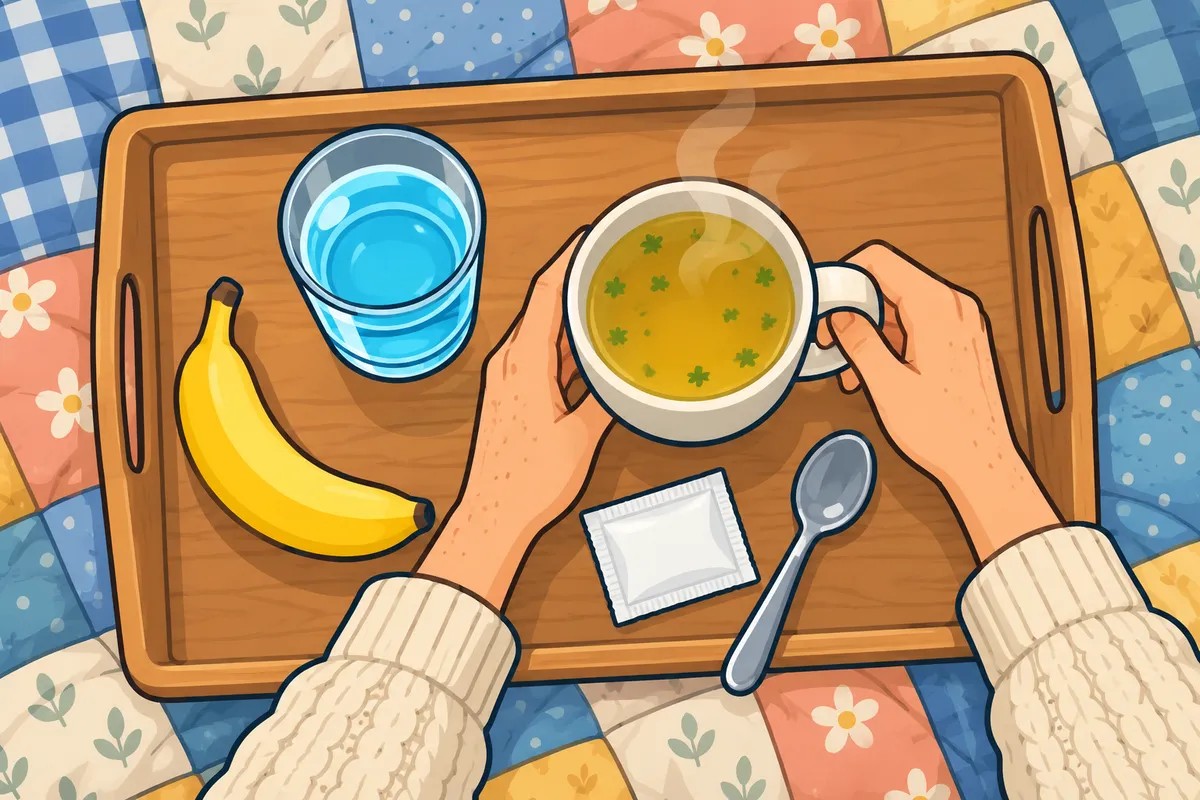
Orange juice, coconut water, milk and pharmacy rehydration solutions carry the most per cup, and water carries almost none. For diarrhea or vomiting, a rehydration solution is the one built for the job, because it brings sodium and sugar in set amounts along with the potassium.
| Drink, per cup (USDA) | Potassium | Sodium | Sugar |
|---|---|---|---|
| Orange juice | 496 mg | 2 mg | 20.8 g |
| Coconut water, unsweetened | 404 mg | 64 mg | 9.6 g |
| Whole milk | 322 mg | 105 mg | 12.3 g |
| Oral electrolyte solution (Pedialyte type) | 193 mg | 253 mg | 6.1 g |
| Sports drink, 8 fl oz | 37 mg | 95 mg | 12.8 g |
Source: USDA FoodData Central entries for electrolyte solution, coconut water, sports drink, orange juice and whole milk. Brands change their recipes, so check the label you buy.
Your situation, your drink
- Diarrhea or vomitingA pharmacy oral rehydration solution, sipped
- Hours of heavy sweatWater, plus a salted meal; juice or milk for the potassium
- An ordinary breakfastA cup of orange juice or milk adds 320 to 500 mg
- Kidney disease or a potassium-raising medicineAsk your doctor before choosing any of them
Why the Top Drink Is the Wrong Pick for Diarrhea
The juice tops the potassium chart, yet it is the wrong pick for diarrhea. The NHS says not to give young children fruit juice or fizzy drinks when they have diarrhea or vomiting because it can make it worse, and what coconut water does as a sports drink is a separate question from what it does on a sick day.
The electrolyte solution looks modest on potassium, but it carries the most sodium per cup in the table, 253 mg, with the least sugar, which is the kind of mix the NHS sends you to a pharmacist for. Food then tops up the potassium once you are eating, from a banana's 422 mg to a baked potato's 610 mg, as the full list of high-potassium foods shows.
Can You Have Too Much Potassium When You Are Dehydrated?
Yes, in some people. The NIH says that with chronic kidney disease, or on ACE inhibitors or potassium-sparing diuretics, even food below the daily target can raise blood potassium too high. Very large doses of potassium supplements or potassium salt substitutes can do the same even in healthy people.
Tablets and Salt Substitutes
That is why potassium tablets are no home remedy for dehydration. In healthy people with normal kidneys, the kidneys clear extra potassium from food in the urine and the NIH sets no upper limit for it; supplements and salt substitutes are a different matter, and salt substitutes can hold 440 to 2,800 mg of potassium per teaspoon.
Does Dehydration Cause High Potassium?
Not by itself, going by MedlinePlus. Its causes of high blood potassium are:
- Kidney disease and Addison disease
- Injuries, burns or surgery
- Poorly controlled type 1 diabetes
- The side effects of some medicines such as diuretics and antibiotics
Fluid loss from diarrhea, vomiting or heavy sweating appears on the list for low potassium instead.
Low potassium
- Irregular heartbeat
- Muscle cramps, weak or twitching muscles
- Fatigue and nausea
- Constipation
High potassium
- Arrhythmia, a problem with heart rate or rhythm
- Muscle weakness
- Fatigue and nausea
- Numbness or tingling
Both ends share fatigue, nausea, weakness and heart rhythm problems, so symptoms alone cannot tell you which side you are on. Only a blood test does.
Does Magnesium Change the Picture?
Sometimes. The NIH says magnesium depletion increases potassium losses in the urine, and that more than half of people with clinically significant low potassium might also be low in magnesium, so both are treated together. That is a job for a doctor's blood test, not a guess.
Long bouts of diarrhea drain both minerals, which is where the two stories meet. A magnesium pill is a poor fix at home, because high-dose magnesium supplements can cause diarrhea themselves.
Fluid First, Then Potassium From Food
Fix the fluid first, then let food do the potassium. A banana and a baked potato together bring about 1,030 mg, more than three liters of sweat carry even at the top of the review's range.
From the first sip to the next meal
- Sweat: drink water, then eat a normal salted meal
- Diarrhea or vomiting: sip a pharmacy rehydration solution
- Eating again: add a banana, potato or beans for potassium
- Kidney disease or potassium-raising medicine: ask before any supplement
For most healthy adults, that is all potassium needs. The daily target for women is 2,600 mg and for men 3,400 mg, with no upper limit for food when kidneys work normally, and two or three potassium-rich foods get you most of the way after a rough day.
General information for healthy adults, not medical advice. If a doctor has set your fluid amount, follow that.

More in Food and Electrolytes


Sources
- NIH Office of Dietary Supplements. Potassium, Fact Sheet for Health Professionals, 2022.
- MedlinePlus, US National Library of Medicine. Low blood potassium, 2025.
- World Health Organization. Diarrhoeal disease (fact sheet), 2024.
- Temperature (Baker). Physiology of sweat gland function: The roles of sweating and sweat composition in human health, 2019.
- USDA Agricultural Research Service, FoodData Central. Fluid replacement, electrolyte solution (include PEDIALYTE) (SR Legacy 169883), 2019.
- USDA Agricultural Research Service, FoodData Central. Beverages, Coconut water, ready-to-drink, unsweetened (SR Legacy 174831), 2019.
- USDA Agricultural Research Service, FoodData Central. Beverages, Gatorade, G performance O 2, ready-to-drink (SR Legacy 173660), 2019.
- NHS. Dehydration, 2026.
Sources checked by the Glubbo Editorial Team on Oct 19, 2026. General information, not medical advice. How we write and check our guides.

