Food and Electrolytes · Water in Food
Banana Water Content: Are Bananas Good for Dehydration?
The water, potassium and sugar in a banana, what it does after sweating or a stomach bug, and what it cannot replace.
 By the Glubbo Editorial Team · Updated Oct 19, 2026 · 8 min read
On This Page
- How Much Water Is in a Banana?
- Are Bananas Good for Dehydration?
- Is a Banana as Hydrating as Watermelon?
- Can a Banana Replace a Sports Drink?
- How Many Bananas Equal a Glass of Water?
- Should You Eat Bananas When You Have Diarrhea?
- Do Dried Bananas and Banana Chips Still Hydrate?
- Bananas on a Hot or Sick Day
- Sources
Short answer
A good snack while you rehydrate, not a fluid.
- A medium banana is 75 % water: about 88 g, close to 3 fl oz (USDA).
- It brings 422 mg of potassium and 27 g of carbohydrate, but only 1 mg of sodium.
- Eat it with water or a rehydration drink; on its own it barely moves your fluid.
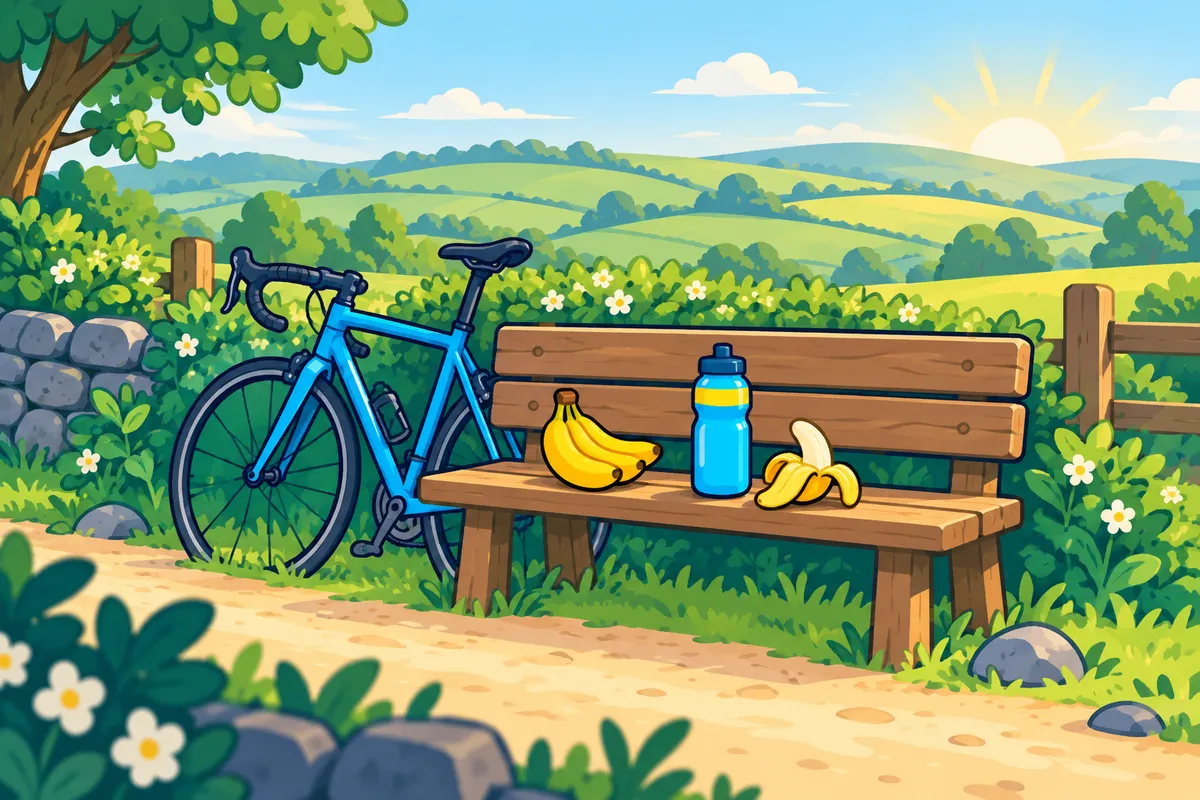
A banana helps when you are dehydrated as food, and it does little as a fluid: a medium one is about 75 % water, 88 g or close to 3 fl oz. It turns up in every list of foods for dehydration because of its potassium.
The USDA numbers below show the gap: a banana carries plenty of potassium and carbohydrate, a modest amount of water, and almost none of the sodium that sweat and diarrhea take most.
How Much Water Is in a Banana?
About three quarters of its weight. USDA FoodData Central lists raw banana at 74.9 g of water per 100 g, so a medium 118 g banana holds about 88 g of water, close to 3 fl oz. A large banana gives about 102 g and an extra-small one about 61 g.
| Banana size (USDA) | Weight, peeled | Water | Potassium | Sugar |
|---|---|---|---|---|
| Extra small, under 6 inches | 81 g | 61 g | 290 mg | 9.9 g |
| Small, 6 to 7 inches | 101 g | 76 g | 362 mg | 12.3 g |
| Medium, 7 to 8 inches | 118 g | 88 g | 422 mg | 14.4 g |
| Large, 8 to 9 inches | 136 g | 102 g | 487 mg | 16.6 g |
| Extra large, 9 inches or longer | 152 g | 114 g | 544 mg | 18.5 g |
| Sliced, 1 cup | 150 g | 112 g | 537 mg | 18.3 g |
Source: USDA FoodData Central, bananas, raw, worked from its values per 100 g and its portion weights.
That makes a banana a medium-water food. Watermelon sits above 90 % and dried banana near 3 %; the fresh banana falls in between.
Are Bananas Good for Dehydration?
Yes as food, no as a fluid. A banana gives a dehydrated person potassium, about 27 g of carbohydrate and a little water, all easy to eat. It does not replace the fluid you lost, and with 1 mg of sodium it does not replace salt either, so eat it alongside water or a rehydration drink.
- 88 g
- of water, about 3 fl oz
- 422 mg
- of potassium
- 1 mg
- of sodium, almost none
The NHS advice for dehydration comes to three points:
- It starts with fluids: "You should drink fluids if you have symptoms of dehydration."
- When you are being sick or have diarrhea, it adds that you need to put back sugar, salts and minerals.
- A pharmacist can recommend an oral rehydration solution.
A banana answers part of that list:
- It brings sugar and potassium, and its 422 mg of potassium is more than most snacks hold, as the NIH ranking of potassium foods shows.
- The salt and most of the fluid still have to come from what you drink.
Think of a banana as the food that goes with your water, not the water itself.
Why Potassium Is Not the Whole Answer
The NIH's potassium fact sheet lists urine as the main way you lose potassium and sweat as a small share. So after a hot workout, the mineral a banana is famous for is rarely the one you ran short of.
Diarrhea and vomiting are different: MedlinePlus lists both among the common causes of low blood potassium, and it names bananas among the foods that help treat and prevent it. Vomiting even makes the kidneys release extra potassium, and that is when a banana's 422 mg starts to count.
Is a Banana as Hydrating as Watermelon?
No. Watermelon is 91.4 % water and a banana 74.9 % in USDA data, so the same 118 g of watermelon holds about 108 g of water against the banana's 88 g. Dried banana and banana chips sit near zero, because drying removes the water and keeps everything else.
The banana still wins on what it carries besides water. Gram for gram it holds about three times the potassium of watermelon, 358 mg against 112 mg per 100 g, and far more carbohydrate, which is why athletes carry bananas and not melon slices.
Can a Banana Replace a Sports Drink?
For energy, it did in one trial; for fluid, only with water. In a 2012 study, 14 trained cyclists rode a 75-km time trial twice, once eating bananas and once drinking a 6 % carbohydrate sports drink, and finished in about the same time: 2.41 hours on bananas, 2.36 on the drink.
The detail that matters for hydration is in the methods. The riders "consumed with water to equal what was consumed" with the sports drink, so the bananas never had to supply the fluid. Dole Foods funded the study and two of its scientists were on the team.
Bananas plus water
- Same 75-km time as the sports drink
- Carbohydrate and potassium from food
- Water matched to the drink trial
- About 2 bananas an hour at 70 kg
6 % carbohydrate drink
- Fluid and carbohydrate in one bottle
- Some sodium, unlike a banana
- Nothing to chew while riding
- Blood glucose matched the banana trial
The riders took 0.2 g of carbohydrate per kg of body weight every 15 minutes, plus 0.4 g/kg before the start. For a 70 kg rider that is 14 g every 15 minutes, a little over two medium bananas an hour. On a shorter ride, one banana at the halfway stop with your usual bottle does the same job on a smaller scale.

How Many Bananas Equal a Glass of Water?
About three. A 250 ml (8.5 oz) glass of water is 250 g, and a medium banana brings 88 g of water, so it takes 2.8 bananas to match it, with roughly 40 g of sugar and 1,200 mg of potassium on the way. Nobody drinks water that way, and the arithmetic shows why a banana is a snack.
A banana blended into a smoothie is a better fit. The banana adds its 88 g of water and 422 mg of potassium, and the milk or water you blend it with adds the rest, which you log by the volume you drink.
Should You Eat Bananas When You Have Diarrhea?
Yes, if you feel like eating, as part of your normal diet. The NIDDK says that with acute diarrhea most people can eat their normal diet once they feel like eating again, and that most experts do not recommend a restricted diet or fasting. Fluids, or a rehydration solution, still come first.
That puts the old idea of living on bananas, rice, applesauce and toast in perspective. The NIDDK guidance asks you to avoid:
- Alcohol.
- Caffeine.
- Fatty food.
- Drinks or sweets with large amounts of simple sugars.
It does not ask you to narrow your plate to four foods.

For children the NHS gives similar advice: once dehydration has been treated, give small children their usual diet and regular small sips of rehydration solution. It also says not to give young children fruit juice or fizzy drinks, which can make diarrhea or vomiting worse.
Do Dried Bananas and Banana Chips Still Hydrate?
No. Drying takes the water out: dried banana is 3 % water and banana chips 4.3 % in USDA data. An ounce of dried banana keeps a medium banana's potassium, about 422 mg, packed into 28 g with almost no water.
Banana chips change the trade again. USDA lists 33.6 g of fat per 100 g of chips, and an ounce holds about 152 mg of potassium with barely a gram of water. They make a trail snack, never a rehydration food.
Bananas on a Hot or Sick Day
- Drink first: water on a hot day, an oral rehydration solution from the pharmacy for vomiting or diarrhea.
- Add a banana when you feel like eating; a medium one brings 422 mg of potassium and about 27 g of carbohydrate.
- After hours of sweating, pair it with something salty, because the banana holds 1 mg of sodium.
- Skip dried banana and chips while you rehydrate; they hold almost no water.
- On a potassium limit for kidney disease or a heart medicine, ask your doctor how bananas fit.
General information for healthy adults, not medical advice. If a doctor has set your fluid amount, follow that.

More in Food and Electrolytes


Sources
- USDA Agricultural Research Service, FoodData Central. Bananas, raw (SR Legacy 173944), 2019.
- USDA Agricultural Research Service, FoodData Central. Bananas, dehydrated, or banana powder (SR Legacy 173945), 2019.
- USDA Agricultural Research Service, FoodData Central. Snacks, banana chips (SR Legacy 168849), 2019.
- NIH Office of Dietary Supplements. Potassium, Fact Sheet for Health Professionals, 2022.
- PLoS ONE (Nieman and others). Bananas as an Energy Source during Exercise: A Metabolomics Approach, 2012.
- National Institute of Diabetes and Digestive and Kidney Diseases. Eating, Diet, & Nutrition for Diarrhea, 2024.
- NHS. Dehydration, 2026.
- MedlinePlus, US National Library of Medicine. Low blood potassium, 2025.
Sources checked by the Glubbo Editorial Team on Oct 19, 2026. General information, not medical advice. How we write and check our guides.

