Food and Electrolytes · Electrolytes and Minerals
Foods High in Potassium, Ranked by Milligrams per Serving
The NIH potassium table ranked by serving, with the drinks that count and who should hold back.
 By the Glubbo Editorial Team · Updated Oct 19, 2026 · 9 min read
On This Page
- What Foods Are Highest in Potassium?
- How Much Potassium Is in a Banana?
- What Vegetables Are High in Potassium?
- Which Foods Outside the NIH Table Are Also High in Potassium?
- What Drinks Are High in Potassium?
- How Much Potassium Do Most People Get?
- Do Potassium Supplements Add Much?
- Who Should Limit Potassium?
- What Foods Are Low in Potassium?
- How to Add 600 mg of Potassium to Your Day
- Sources
Short answer
Dried apricots, lentils and potatoes beat the banana.
- ½ cup of dried apricots holds 755 mg, a cup of lentils 731 mg, a baked potato 610 mg.
- A medium banana holds 422 mg, about 16 % of a woman's 2,600 mg target.
- With kidney disease or potassium-raising medicines, ask your doctor first.
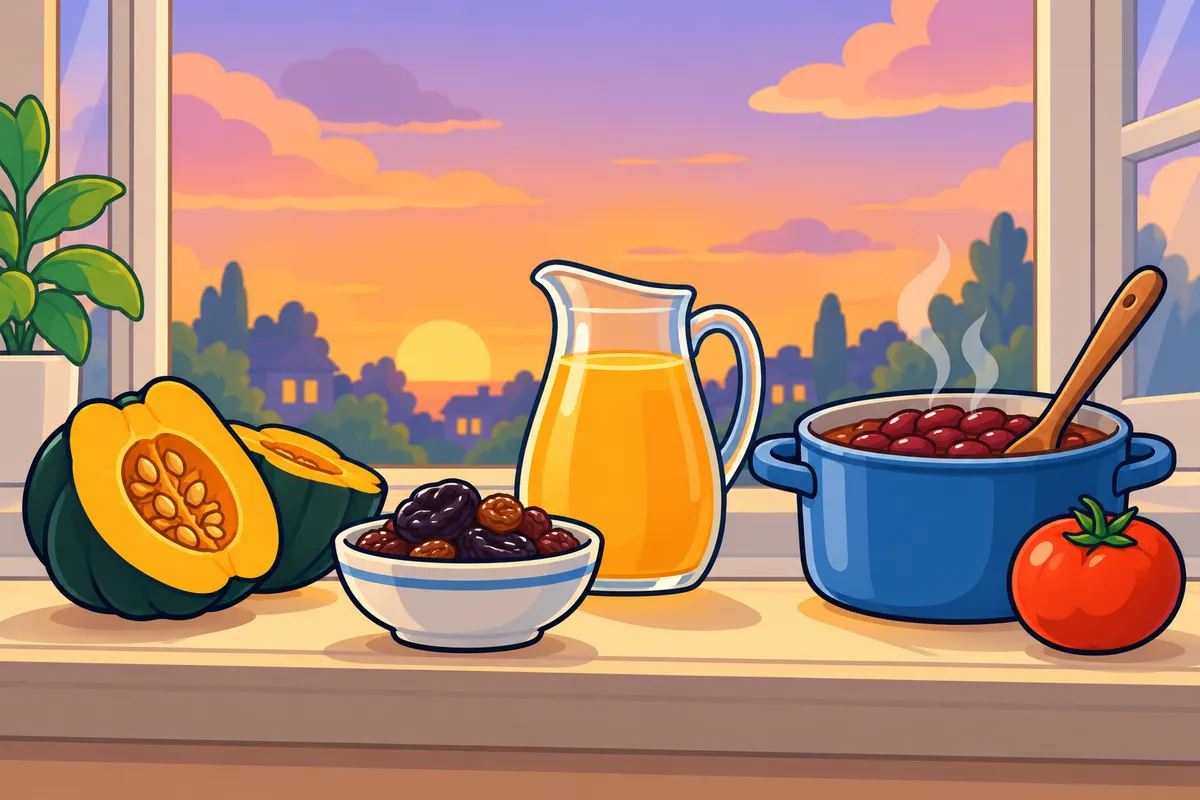
Dried apricots, lentils and a plain baked potato all hold more potassium than a banana. In the NIH's table of common foods the banana comes tenth, at 422 mg, behind dried fruit, beans, squash and the potato.
What Foods Are Highest in Potassium?
Dried fruit, beans, lentils and potatoes. Half a cup of dried apricots tops the NIH list at 755 mg, followed by a cup of cooked lentils at 731 mg and a cup of mashed acorn squash at 644 mg. Every food in the top ten beats a medium banana or matches it.
Portion size moves the ranking. Dried fruit packs its potassium into a small handful, while lentils and beans need a full cup, a normal side dish.
How Much Potassium Do You Need a Day?
The National Academies set the adequate intake at 2,600 mg for women and 3,400 mg for men aged 19 and older. Their 2019 report based it on the highest median intakes of healthy adults with normal blood pressure, and set no upper limit for potassium from food.
Food labels use a different number. The FDA's Daily Value is 4,700 mg, so a banana's 422 mg shows as 9 % DV on a label even though it covers more of an adult's actual target.
How Much Potassium Is in a Banana?
A medium banana holds 422 mg of potassium, per the NIH potassium fact sheet. Against the two daily targets, that is a sixth of a woman's day and an eighth of a man's.
- 422 mg
- potassium in one medium banana
- 16 %
- of a woman's 2,600 mg a day
- 12 %
- of a man's 3,400 mg a day
It would take six medium bananas to cover a woman's day, and nobody needs to eat that many: ordinary meals add up faster.
How Much Potassium Is in a Small or Large Banana?
Size changes the number more than ripeness does. USDA FoodData Central lists 358 mg of potassium per 100 g of raw banana, so the milligrams follow the weight of the fruit, from 290 mg in an extra small banana to 544 mg in an extra large one.
| Banana size (USDA) | Weight | Potassium |
|---|---|---|
| Extra small, under 6 in | 81 g | 290 mg |
| Small, 6 to 6⅞ in | 101 g | 362 mg |
| Medium, 7 to 7⅞ in | 118 g | 422 mg |
| Large, 8 to 8⅞ in | 136 g | 487 mg |
| Extra large, 9 in or longer | 152 g | 544 mg |
| 1 cup sliced | 150 g | 537 mg |
The medium banana is also about three quarters water, roughly 88 g, which is why it helps after a stomach bug as food rather than as a drink.
What Vegetables Are High in Potassium?
Potatoes, squash, beans and spinach. A baked potato holds 610 mg, a cup of mashed acorn squash 644 mg and two cups of raw spinach 334 mg. The NIH's 610 mg counts the potato's flesh alone; a medium baked potato eaten with its skin holds 926 mg.
Best potassium picks by food group
Vegetables
Potato leads
- Baked potato flesh: 610 mg
- Raw spinach, 2 cups: 334 mg
- Raw tomato, 1 medium: 292 mg
Suits you if you want potassium with dinner without changing much.
Beans and lentils
Highest per meal
- Lentils, 1 cup: 731 mg
- Kidney beans, 1 cup: 607 mg
- Soybeans, ½ cup: 443 mg
Suits you if you can add a bean dish or soup a few times a week.
Fruit
Dried fruit wins
- Dried apricots, ½ cup: 755 mg
- Prunes, ½ cup: 635 mg
- Banana, 1 medium: 422 mg
Suits you if you want a snack you can carry in a bag.
Fish, meat and dairy
Steady extra
- Grilled chicken, 3 oz: 332 mg
- Farmed salmon, 3 oz: 326 mg
- Fruit yogurt, 6 oz: 330 mg
Suits you if you eat these already and want to count them.
Vegetables
Beyond the potato, the NIH lists half a cup of cooked broccoli at 229 mg and half a cup of cooked asparagus at 202 mg. Iceberg lettuce sits low, at 102 mg per shredded cup, because it is mostly water.
Beans, Lentils and Soy
Beans give the most potassium per normal portion. A cup of lentils or canned kidney beans brings 600 to 730 mg, a quarter of a woman's day in one bowl.
Grains
Whole grains beat refined ones. A cup of brown rice holds 154 mg against 54 mg for white rice, and a slice of whole-wheat bread 81 mg against 37 mg for white, in the NIH table.

Which Foods Outside the NIH Table Are Also High in Potassium?
Cooked leafy greens, white beans, potatoes eaten with the skin, sweet potatoes and avocado. The NIH table lists only some foods. The Dietary Guidelines for Americans publish a longer list, and its leaders are cooked beet greens at 1,309 mg a cup, more than any food in the NIH table.
| Food and serving | Potassium |
|---|---|
| Beet greens, cooked, 1 cup | 1,309 mg |
| Swiss chard, cooked, 1 cup | 961 mg |
| White (lima) beans, cooked, 1 cup | 955 mg |
| Potato, baked, with skin, 1 medium | 926 mg |
| Acorn squash, cooked, 1 cup | 896 mg |
| Spinach, cooked, 1 cup | 839 mg |
| Sweet potato, cooked, 1 cup | 572 mg |
| White beans, cooked, ½ cup | 502 mg |
| Avocado, ½ cup | 364 mg |
Cooking changes the cup. A cup of cooked spinach holds 839 mg, against 334 mg in two cups of raw leaves in the NIH table, because the leaves wilt and a cup packs in several times more of them.
What Drinks Are High in Potassium?
Orange juice, milk and soymilk. A cup of orange juice holds 496 mg of potassium, a cup of 1 % milk 366 mg and a cup of soymilk 287 mg. The NIH says milk, coffee, tea and other non-alcoholic drinks are among the top sources of potassium for US adults, alongside potatoes.
| Drink, 1 cup | Potassium | Share of a woman's 2,600 mg |
|---|---|---|
| Orange juice | 496 mg | 19 % |
| Milk, 1 % | 366 mg | 14 % |
| Soymilk | 287 mg | 11 % |
| Coffee, brewed | 116 mg | 4 % |
| Black tea, brewed | 88 mg | 3 % |
Coffee and tea look small per cup. Three mugs of coffee a day still add about 350 mg, which is why they rank among Americans' top sources.
Coconut water fits in this group too, with 404 mg in a cup of the packaged kind. Each of these drinks also counts toward your fluid for the day.

How Much Potassium Do Most People Get?
A little less than they need. The NIH reports that US men aged 20 and older get 3,016 mg a day from food on average and women 2,320 mg. Women fall about 280 mg short of 2,600 mg, and men about 380 mg short of 3,400 mg.
That gap is one food. A baked potato (610 mg) or a cup of orange juice (496 mg) closes it on its own. Magnesium and calcium arrive in many of the same foods, and a full day of electrolytes in everyday food adds them up together.
Do Potassium Supplements Add Much?
Not much. Most potassium-containing supplements hold no more than 99 mg per serving, about a quarter of a banana. In the NIH's survey data, the 12 % of Americans aged 2 and over who take one add a mean of only 87 mg to their day, so food is where potassium comes from.
Salt substitutes are the exception. Many swap sodium chloride for potassium chloride to help people who need to eat less sodium, and the NIH says they hold about 440 to 2,800 mg of potassium per teaspoon.
Who Should Limit Potassium?
People with kidney disease or on medicines that hold potassium in the body. The NIH says that in people with chronic kidney disease, or who take ACE inhibitors or potassium-sparing diuretics, even food below the target can raise blood potassium too high.
For everyone else, food is the safe route. The NIH notes that in healthy people with normal kidney function, abnormally high or low blood potassium is rare, because the kidneys adjust what they clear.
What Foods Are Low in Potassium?
Apples, berries, grapes, pineapple, cabbage, cauliflower, cucumber, green beans, lettuce, onions, peppers, white rice and pasta. The National Kidney Foundation counts a food as lower in potassium at under 200 mg per serving, with a serving set at half a cup unless noted. A large helping of a low food can still turn it into a high one.
Lower in potassium
- Apple, berries, grapes, pineapple, peaches
- Cabbage, cauliflower, cucumber, green beans, zucchini
- Lettuce, onions, peppers, radish, corn
- White rice, pasta, bread that is not whole grain
Higher in potassium
- Banana, orange and orange juice, dried fruit, cantaloupe
- Potatoes, tomatoes, cooked spinach and broccoli
- Beans, lentils, nuts, milk, yogurt
- Salt substitutes and lite salt
Preparation matters too. The foundation says soaking sliced vegetables and boiling them in plenty of unsalted water pulls out some, but not all, of the potassium, and that the liquid from canned fruit and vegetables is best left in the can. A renal dietitian sets how much of any of these suits one person's blood test.
How to Add 600 mg of Potassium to Your Day
Any one of the first two lines below covers 600 mg on its own; the others add 100 to 500 mg each. The milligrams come from the NIH and Dietary Guidelines lists above.
Tomorrow's potassium list
6 items- Afternoon snack: ½ cup of dried apricots, 755 mg
- Dinner side: a baked potato with the skin, 926 mg
- Soup or salad: ½ cup of cooked white beans, 502 mg
- Breakfast drink: a cup of orange juice, 496 mg
- Count the milk and coffee you already drink: 366 mg and 116 mg a cup
- Swap white rice for brown: 154 mg a cup instead of 54 mg
General information for healthy adults, not medical advice. If a doctor has set your fluid amount, follow that.

More in Food and Electrolytes
Sources
- NIH Office of Dietary Supplements. Potassium, Fact Sheet for Health Professionals, 2022.
- National Academies of Sciences, Engineering, and Medicine. Dietary Reference Intakes for Sodium and Potassium, Report Highlights, 2019.
- U.S. Department of Agriculture and U.S. Department of Health and Human Services. Food Sources of Potassium, Dietary Guidelines for Americans, 2024.
- USDA FoodData Central. Bananas, raw (SR Legacy 173944), 2019.
- National Kidney Foundation. High-Potassium Foods and Low-Potassium Choices, 2025.
Sources checked by the Glubbo Editorial Team on Oct 19, 2026. General information, not medical advice. How we write and check our guides.

