Food and Electrolytes · Water in Food
High Water Foods for Weight Loss: More Food for Fewer Calories
Why water in food fills you when water in a glass does not, with foods ranked by how much you get for 100 calories.
 By the Glubbo Editorial Team · Updated Oct 19, 2026 · 9 min read
On This Page
- Which Water-Rich Foods Fill You Up on the Fewest Calories?
- What Is Energy Density?
- What Is the Volumetrics Diet?
- Does Water in Food Fill You More Than Drinking Water?
- Does Eating Soup Before a Meal Help You Eat Less?
- Which Soups Fill You Up for the Fewest Calories?
- Do Water-Rich Foods Help You Lose Weight Over Time?
- Which Foods Undo a Water-Rich Plate?
- A Water-Rich Day From Breakfast to Dinner
- Sources
Short answer
Pick foods that are mostly water: you eat more, for less.
- 100 calories buys 667 g of cucumber, 333 g of watermelon, but 33 g of raisins (USDA).
- Soup before lunch cut the whole meal by 20 %, or 134 calories, in a Penn State trial.
- Water drunk beside food did not fill people; water cooked into soup did.
Foods that are mostly water let you eat a full plate for fewer calories: 100 calories buys 667 g of cucumber or 333 g of watermelon, but only 33 g of raisins. Penn State researchers tested the idea in the lab and over a full year of dieting, and soup, fruit and vegetables did the work.
Which Water-Rich Foods Fill You Up on the Fewest Calories?
Raw vegetables, fruit, broth soups and cooked grains. In USDA data, 100 calories buys 667 g of cucumber, 714 g of iceberg lettuce and 333 g of watermelon, against 33 g of raisins or 17 g of almonds. The more water a food holds, the more of it you can eat for the same calories.
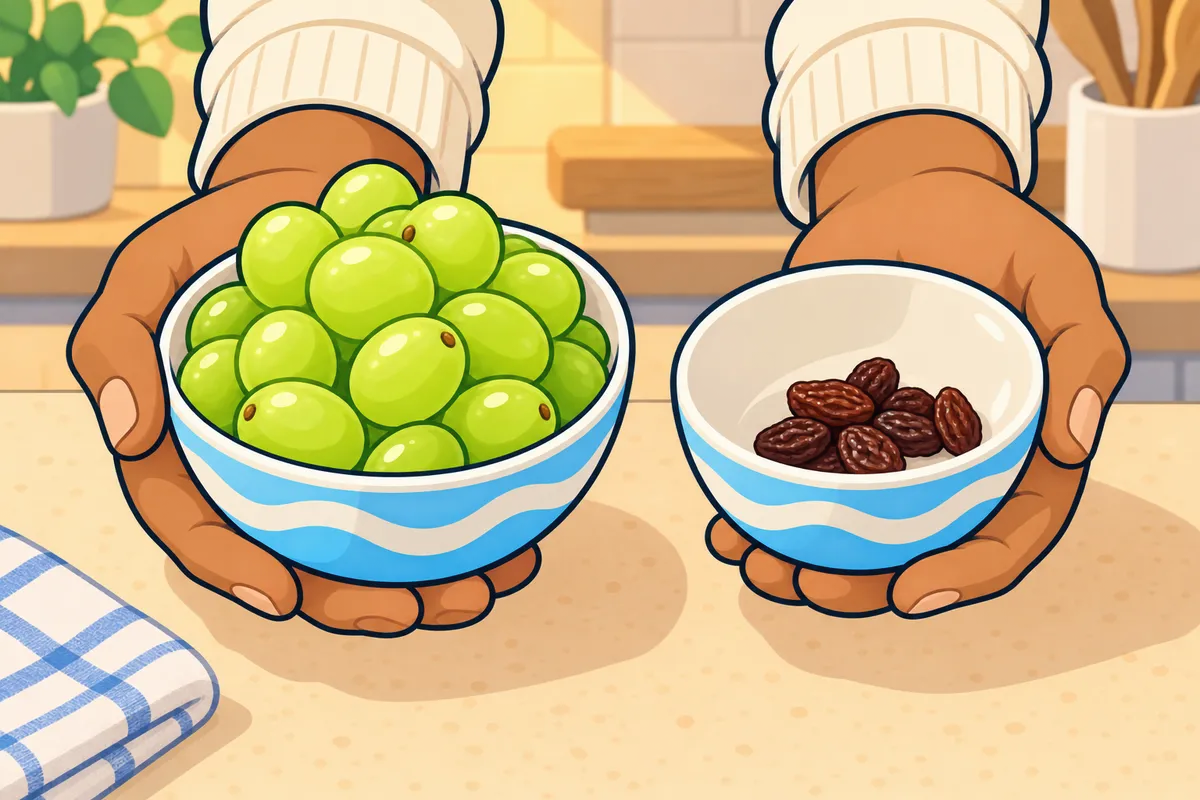
Grapes, 1 cup
- 151 g, a full bowl
- 104 calories
- 80.5 % water
Raisins, ¼ cup
- About 36 g, a small handful
- 108 calories
- 15.5 % water
Both come from the same fruit; drying took the water out and left the sugar and calories in a smaller pile. Figures from USDA FoodData Central: grapes 69 calories per 100 g, raisins 299.
Why Cooked Oats and Rice Count
Dry oats hold 379 calories per 100 g; cooked with water they hold 71, because the pot adds water and no calories.
Cooked grains, pasta and rice earn their place on a filling plate for the same reason. A cup of cooked brown rice weighs 202 g and holds 248 calories; the same 248 calories of almonds is about 43 g, a small handful.
What Is Energy Density?
Energy density is the calories in each gram of a food. Water adds weight with no calories, so it pulls energy density down; fat, at 9 calories a gram against 4 for carbohydrate and protein, pushes it up, as the 2007 Penn State trial explains. Divide a food's calories by its grams to get it.
| Food | Water | Calories per gram | Calories in 1 common portion |
|---|---|---|---|
| Cucumber, with peel | 95.2 % | 0.15 | 45 in a whole 301 g cucumber |
| Watermelon | 91.5 % | 0.30 | 86 in a 286 g wedge |
| Strawberries | 91.0 % | 0.32 | 46 in a cup of halves (144 g) |
| Apple, with skin | 85.6 % | 0.52 | 95 in a medium apple (182 g) |
| Plain low-fat yogurt | 85.1 % | 0.63 | 143 in an 8 oz pot (227 g) |
| Baked potato, with skin | 74.9 % | 0.93 | 161 in a medium potato (173 g) |
| Chicken breast, roasted | 65.3 % | 1.65 | 142 in half a breast (86 g) |
| White bread | 36.4 % | 2.66 | 77 in one slice (29 g) |
| Cheddar cheese | 36.8 % | 4.03 | 114 in 1 oz (28 g) |
| Potato chips | 1.9 % | 5.32 | 149 in 1 oz (28 g) |
Source: USDA FoodData Central, SR Legacy, energy and water per 100 g and the database's own portion weights.
The table shows that water content does most of the sorting. Chips and cheese sit at the top because they hold almost no water and plenty of fat, while chicken, with two thirds of its weight as water, lands in the middle.
What Is the Volumetrics Diet?
It is an eating approach built on energy density, developed by Barbara Rolls, the Penn State nutrition researcher behind the trials on this page. You eat satisfying portions of low-energy-dense foods and less of the dense ones, instead of cutting portion sizes.
A 2005 review by Rolls and colleagues sums up the method: lower the energy density of meals by adding water-rich fruit, vegetables, cooked grains and soups, and by cutting fat. Its authors argue that this lowers calories "without reducing food volume", so people avoid feeling hungry and deprived.
In practice the plate shifts like this:
- More of: raw and cooked vegetables, fresh fruit, broth soups, cooked grains, lean fish and chicken
- Less of: dried fruit, chips, crackers, cheese, fried food and heavy dressings
- The same: the size of the plate, so you do not leave hungry
Nothing is banned and there is nothing to buy.
Does Water in Food Fill You More Than Drinking Water?
Yes, in the lab. Penn State researchers served 24 lean women the same chicken and rice dish three ways before lunch: as a casserole, as a casserole with a glass of water (356 g), or blended with that water into a soup. Only the soup filled them up: the same water drunk beside the food did nothing.
What the Women Ate at Lunch
| Before lunch they ate | Calories eaten at lunch |
|---|---|
| Chicken rice soup (casserole blended with the water) | 289 |
| Casserole with a 356 g glass of water | 396 |
| Casserole alone | 392 |
Every starter held the same 270 calories, and the women did not make up the difference at dinner, reported the 1999 study. Soup saved them about 100 calories at lunch.
So a glass of water with lunch is good for your water, but it will not stand in for a bowl of soup. Drinking water before meals has its own trials, and what drinking water does for weight is a separate story with smaller effects.
Does Eating Soup Before a Meal Help You Eat Less?
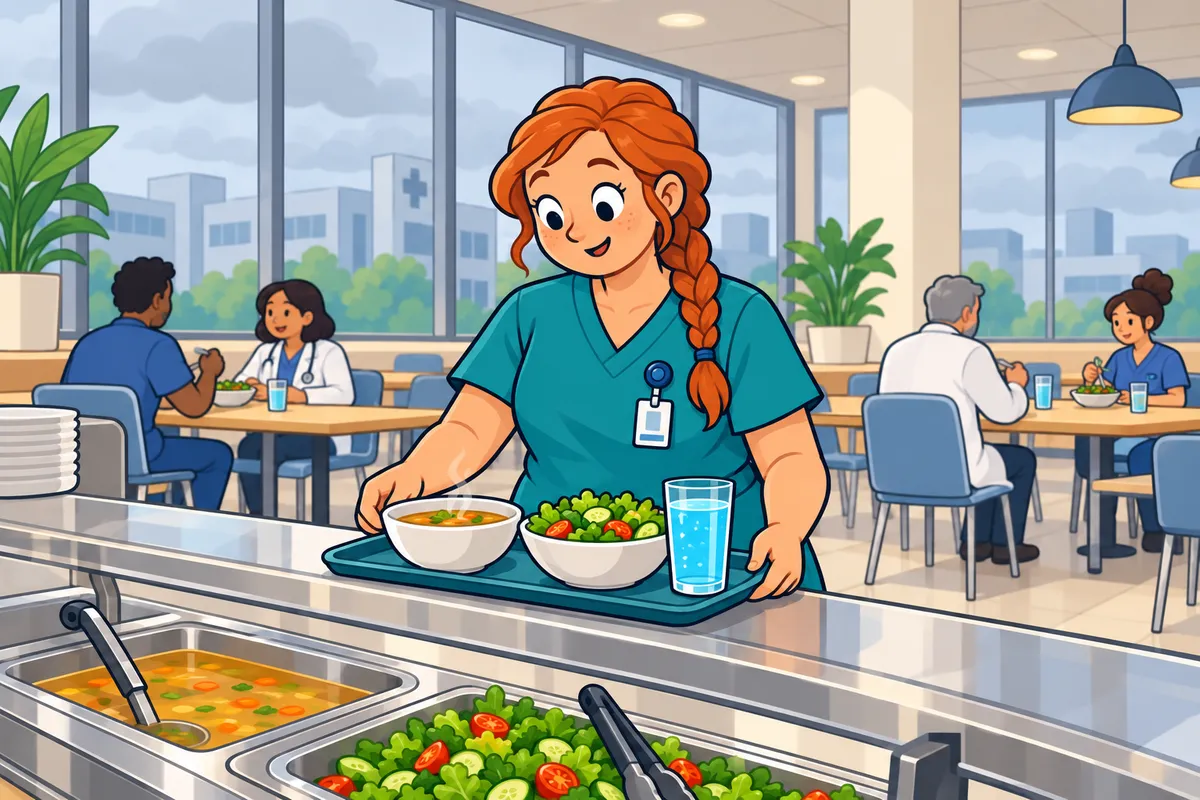
Yes, in the trials. In a 2007 study of 60 normal-weight men and women, a vegetable soup eaten before a pasta lunch cut the whole meal, soup included, by 20 %, or 134 calories, compared with no soup. Chunky, smooth or served as broth and vegetables side by side, every form worked about the same.
The women's bowl in that Appetite study was 396 g of broth, vegetables and a little butter, 129 calories in all, followed by a cheese tortellini lunch. The men's bowl was larger. That is a big bowl of food for fewer calories than two slices of white bread.
Soup brings sodium too, so check soup labels against your daily sodium limit or make it with low-sodium broth.
Which Soups Fill You Up for the Fewest Calories?
Broth and vegetable soups made with water. A cup of canned chicken broth holds 39 calories and a cup of vegetable beef soup 80, while a cup of clam chowder made with 2 % milk holds 154. What went into the pot decides the number: milk, cream and meat add calories, and water does not.
| Canned soup, 1 cup (USDA) | Calories | Sodium |
|---|---|---|
| Chicken broth, 244 g | 39 | 747 mg |
| Chicken noodle, 248 g | 60 | 831 mg |
| Tomato, 248 g | 79 | 461 mg |
| Vegetable beef, 241 g | 80 | 610 mg |
| Minestrone, 241 g | 82 | 612 mg |
| Clam chowder, made with water, 248 g | 87 | 630 mg |
| Cream of mushroom, made with water, 248 g | 97 | 843 mg |
| Clam chowder, made with 2 % milk, 252 g | 154 | 688 mg |
| Split pea with ham, made with water, 253 g | 190 | 1,007 mg |
Every row is the canned soup diluted with an equal volume of water, except the milk chowder. The sodium column is the catch: a cup of canned chicken broth holds more than a quarter of the 2,300 mg daily limit in the Dietary Guidelines, so low-sodium versions or homemade soup suit anyone who eats it daily.
Do Water-Rich Foods Help You Lose Weight Over Time?
Yes, in the one long trial run on it. Penn State researchers started 97 women with obesity on a year-long program: one group was told to cut fat, the other to cut fat and eat more water-rich fruit and vegetables, with no calorie goal for either. The results below are for the 71 who finished.
- 7.9 kg
- lost in a year by women adding water-rich foods
- 6.4 kg
- lost by women who only cut fat
- 225 g
- more food a day eaten by the water-rich group
The water-rich group ate 25 % more food by weight each day and still lost more, and its members reported less hunger, the trial found. Both groups cut fat by about the same amount; the difference came from piling on fruit and vegetables.
The gap was 1.5 kg after a year, which is real but modest. Both groups also had regular counseling sessions and added about 2,400 steps a day, so the trial shows the approach works alongside other changes, not that cucumbers alone melt weight away.
Which Foods Undo a Water-Rich Plate?
Dense extras added on top. A salad of lettuce and cucumber is mostly water, but fat brings 9 calories a gram, so heavy dressing, cheese and fried toppings can outweigh the vegetables underneath. The swaps below keep the volume and lose the density.
| Slip | Why it backfires | Swap |
|---|---|---|
| Dried fruit as a light snack | Raisins: 299 calories per 100 g | Grapes: 69 per 100 g |
| A salad buried in cheese | Cheddar: 403 calories per 100 g | More lettuce (14) and tomato |
| Chips beside lunch | 149 calories in 1 oz | An apple: 95 calories for 182 g |
| A glass of water instead of soup | Drunk beside food, it did not cut lunch | Broth soup at about 0.33 calories per gram |
Sources: USDA FoodData Central, Rolls 1999, Flood and Rolls 2007.
When Fruit Juice Takes the Place of Fruit
Juice keeps the fruit's water but loses the bulk you chew. A cup of orange juice holds 112 calories in USDA data, close to the calories of two medium oranges at 62 each. Eating the oranges gives you the bulk to chew for the same calories.
Water-rich foods also add to your fluid. Watermelon, cucumber and soup count toward the water you take in each day, a small bonus on top of the calories you save. A whole cucumber holds close to a large glass of water.
A Water-Rich Day From Breakfast to Dinner
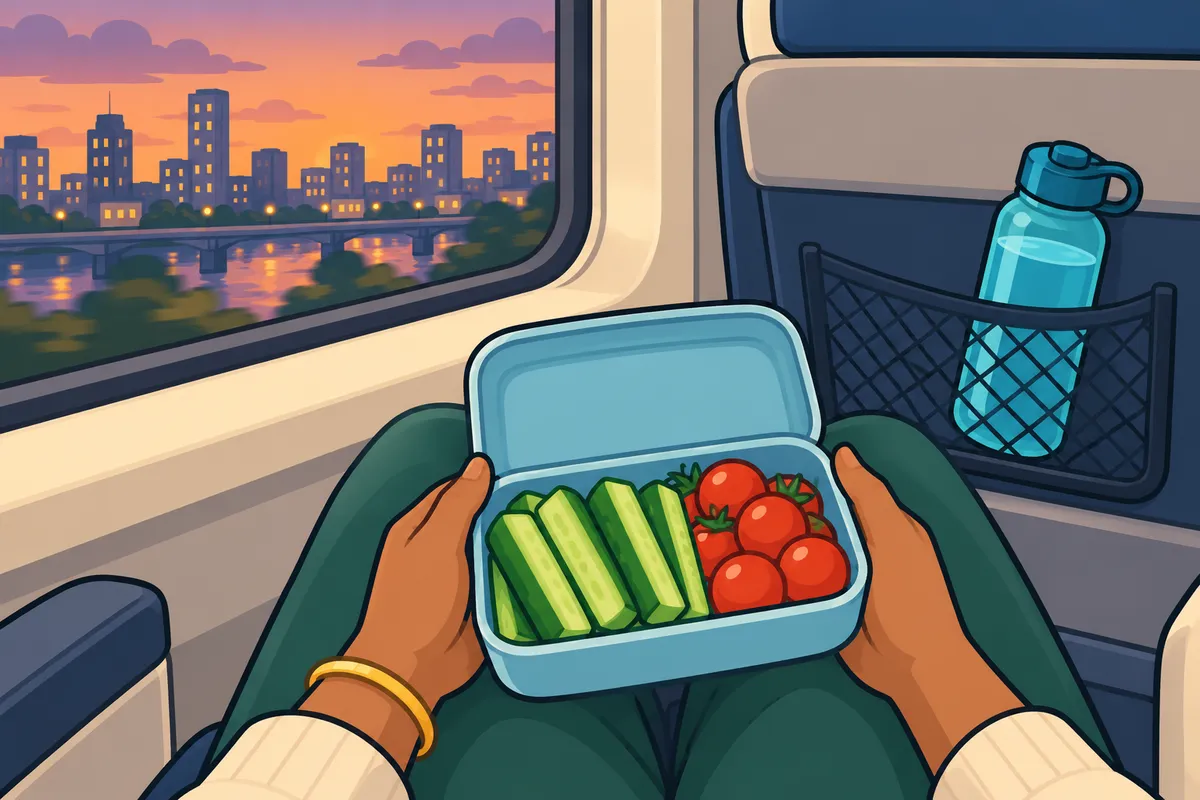
Spread the swaps across your day so every meal starts or ends with something mostly water. The times are only an example; keep the order that fits your routine.
One day built on water-rich food
- 7:30 AM
- 10:30 AM
- 12:30 PM
- 3:30 PM
- 7 PM
General information for healthy adults, not medical advice. If a doctor has set your fluid amount, follow that.

More in Food and Electrolytes
Sources
- American Journal of Clinical Nutrition (Rolls, Bell and Thorwart). Water incorporated into a food but not served with a food decreases energy intake in lean women, 1999.
- Appetite (Flood and Rolls). Soup preloads in a variety of forms reduce meal energy intake, 2007.
- American Journal of Clinical Nutrition (Ello-Martin and others). Dietary energy density in the treatment of obesity: a year-long trial comparing 2 weight-loss diets, 2007.
- Journal of the American Dietetic Association (Rolls, Drewnowski and Ledikwe). Changing the energy density of the diet as a strategy for weight management, 2005.
- USDA Agricultural Research Service. FoodData Central, SR Legacy (energy and water per 100 g, portion weights), 2018.
Sources checked by the Glubbo Editorial Team on Oct 19, 2026. General information, not medical advice. How we write and check our guides.

