Food and Electrolytes · Electrolytes and Minerals
How Much Electrolytes per Day Is Safe? The Limit for Each Mineral
The official target and ceiling for each electrolyte, what sweat takes, and what a daily drink mix does to your totals.
 By the Glubbo Editorial Team · Updated Oct 19, 2026 · 10 min read
On This Page
- How Much Electrolytes per Day Is Safe?
- Is It Safe to Drink Electrolytes Daily?
- How Much of Each Electrolyte Does Sweat Take?
- What Is in One Serving of an Electrolyte Drink?
- Which Electrolyte Limit Do You Hit First?
- Is Water an Electrolyte?
- How Much Electrolytes per Day While Fasting?
- What Happens If You Take Too Many Electrolytes?
- Who Should Not Take Electrolytes Every Day?
- Set Your Own Electrolyte Plan
- Sources
Short answer
Each mineral has its own limit; sodium is the one to watch.
- Sodium: cut back above 2,300 mg a day; most Americans already eat 3,400 mg.
- Magnesium: 350 mg a day from supplements; calcium: 2,000 to 2,500 mg in all.
- Potassium has no upper limit from food, except with kidney disease or some drugs.
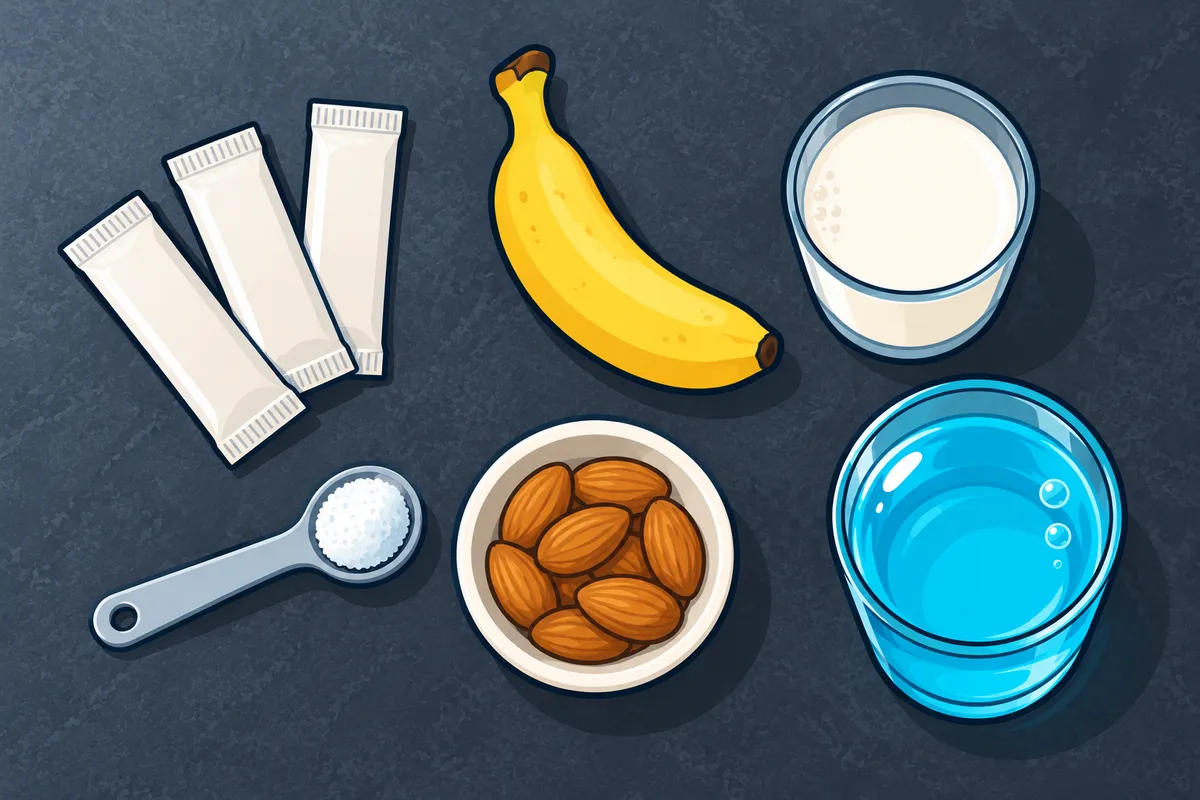
Each electrolyte has its own limit, and sodium is the one to watch: five different minerals follow five different rules. Some have a hard ceiling, one has a level you should stay under, and one has no ceiling at all for healthy people.
The US National Academies set the figures for sodium, chloride and potassium, and the NIH fact sheets give them for magnesium and calcium.
How Much Electrolytes per Day Is Safe?
It depends on the mineral. Adults should reduce sodium if they eat more than 2,300 mg a day, keep chloride under 3,600 mg, keep magnesium from supplements under 350 mg and calcium under 2,500 mg (2,000 mg from age 51). Potassium has no upper limit for people with healthy kidneys.
The ceiling for each electrolyte, adults
Sodium
Stay under 2,300 mg
- Adequate intake 1,500 mg
- Reduce if above 2,300 mg
- No toxic upper limit set
Suits you if you want the one number most people already pass.
Chloride
Travels with salt
- Adequate intake 2,300 mg, ages 19–50
- Upper limit 3,600 mg
Suits you if you track salt; chloride follows it.
Potassium
No limit from food
- 2,600 mg women, 3,400 mg men
- No upper limit set
- Kidney disease or some drugs: ask
Suits you if your kidneys work normally and you eat it as food.
Magnesium
Pills only are capped
- 310–320 mg women, 400–420 mg men
- 350 mg a day from supplements
Suits you if you take a supplement or a mix that lists magnesium.
Calcium
Total intake capped
- 1,000 to 1,200 mg by age and sex
- 2,500 mg to age 50, then 2,000 mg
Suits you if you use calcium supplements or antacids.
The sodium rule is different in kind. The Academies found no toxic level to set as an upper limit, so in 2019 they set a Chronic Disease Risk Reduction Intake instead: "reduce intakes if above 2,300 mg/day" for everyone 14 and older, because cutting sodium above that point lowers the risk of high blood pressure and heart disease.
Chloride's figures come from the older 2005 report. The IOM set chloride's adequate intake equal to sodium's on a molar basis, 2.3 g a day for younger adults and 2.0 and 1.8 g for older age groups, because almost all chloride arrives as salt; its upper limit is 3.6 g, set in 2005 next to a sodium upper limit that the 2019 report replaced.
The magnesium cap counts only pills, powders and medicines, not food, which is why the 350 mg supplement limit can sit below the daily target, while the calcium cap counts everything you take in.
What Most People Already Eat
Americans eat about 3,400 mg of sodium on an average day, the FDA says, well past the 2,300 mg point, and over 70 % of it comes from packaged and prepared foods. The Academies' 2019 report agrees: most US and Canadian groups eat sodium above both the 1,500 mg target and the 2,300 mg line, with no worry about too little.
Potassium and magnesium run the other way. The NIH caps magnesium at 350 mg only for pills, so food cannot push you past it, and the NIH sets no upper limit for potassium. Before any drink mix, most adults already sit over the sodium line, and that is the backdrop for the daily-electrolyte question below.
Is It Safe to Drink Electrolytes Daily?
For most healthy adults, one serving a day stays inside the limits for potassium, magnesium and calcium. The catch is sodium: a mix with 1,000 mg added to an average 3,400 mg day brings you to about 4,400 mg, nearly twice the 2,300 mg point. That is only a fair trade if you sweat it back out.
Daily mix makes sense
- Hours of heavy sweating most days
- Hot outdoor or kitchen work
- Long endurance training in the heat
- No salt or fluid limit from a doctor
Daily mix adds risk
- Desk days with little sweat
- High blood pressure or heart failure
- Kidney disease
- Already taking a magnesium pill

A single workout rarely needs a mix at all: a session under an hour is covered by plain water. The limits on this page stay the ceiling either way.
How Much of Each Electrolyte Does Sweat Take?
Mostly sodium and chloride, then a little potassium, and only traces of calcium and magnesium. A 2019 review of sweat physiology gives these ranges per liter, which show why salt, not potassium or magnesium, is what heavy sweaters need to replace.
| Mineral | In 1 liter of sweat | Daily target for adults | 2 liters of salty sweat take |
|---|---|---|---|
| Sodium | 230–2,070 mg | 1,500 mg (reduce above 2,300) | up to 4,140 mg |
| Chloride | 355–3,190 mg | 2,300 mg (ages 19–50) | up to 6,380 mg |
| Potassium | 78–313 mg | 2,600–3,400 mg | up to 626 mg |
| Calcium | 8–80 mg | 1,000–1,200 mg | up to 160 mg |
| Magnesium | 0.5–10 mg | 310–420 mg | up to 20 mg |
Source: Baker 2019, mmol per liter converted to mg; daily targets from NASEM, IOM and NIH ODS as above.
The top of each range is a salty sweater on a long, hot day. Most people sit lower, and a normal salted meal after a short workout covers what they lost.
What Is in One Serving of an Electrolyte Drink?
Anything from a pinch of sodium to 1,000 mg. In USDA data, a cup of a Pedialyte-type solution holds 253 mg of sodium and 193 mg of potassium, and a 20 oz bottle of Gatorade 238 mg of sodium; one stick of LMNT lists 1,000 mg of sodium, 200 mg of potassium and 60 mg of magnesium.
Read the serving size first. A sachet that looks small can hold four times the sodium of a sports drink bottle, and the sports drink brings about 32 g of sugar per 20 oz in the USDA entry, which the stick does not.
USDA's sports drink entry dates from 2019, so check the current bottle; brands reformulate. A full comparison of powders and sachets, sugar and price included, is a separate job from the limits here.
Which Electrolyte Limit Do You Hit First?
Sodium, almost always, because you start the day close to it. After that, magnesium is the one people pass by stacking products: a daily magnesium pill plus a mix with 60 mg a serving reaches the 350 mg supplement cap quickly.
- 1 stick
- of a 1,000 mg sodium mix takes an average day to about 4,400 mg
- 6 sticks
- at 60 mg of magnesium each pass the 350 mg supplement cap
- 250 mg
- magnesium pill plus two 60 mg sticks: 370 mg, over the cap
Potassium is hard to overdo from drinks if your kidneys are healthy; the NIH says the kidneys clear the excess and no upper limit is set. Calcium rarely comes from electrolyte drinks at all, so its ceiling matters for supplements and antacids, which can push blood calcium up and drain fluid when taken in large amounts.

How Many Electrolyte Sticks a Day?
Count the stick like any other source and stack it on top of your food. This table uses the LMNT label values (1,000 mg sodium, 60 mg magnesium, 200 mg potassium per stick) and the 3,400 mg sodium an average American already eats:
| Sticks a day | Sodium from sticks | Sodium with an average diet | Magnesium from sticks | Potassium from sticks |
|---|---|---|---|---|
| 1 | 1,000 mg | 4,400 mg | 60 mg | 200 mg |
| 2 | 2,000 mg | 5,400 mg | 120 mg | 400 mg |
| 3 | 3,000 mg | 6,400 mg | 180 mg | 600 mg |
An average diet crosses the 2,300 mg sodium line before the first stick. Only a day of heavy sweating makes more than one stick a fair trade, and a doctor sets the number if you have a condition that limits salt.
Is Water an Electrolyte?
No. MedlinePlus defines electrolytes as "minerals that have an electric charge when they are dissolved in water or body fluids, including blood", and names sodium, potassium, chloride, calcium, magnesium, phosphate and bicarbonate. Water is what they dissolve in, not one of them.
Tap and mineral water do carry some minerals. The NIH puts magnesium in tap, mineral and bottled waters at 1 mg to over 120 mg per liter, so a high-mineral water adds a little to your magnesium.
Your body balances the two together. MedlinePlus lists heavy sweating and severe vomiting or diarrhea among the common causes of an imbalance, because they take water and minerals out at once.
How Much Electrolytes per Day While Fasting?
The same amounts as on any other day: the targets and ceilings above do not change when you skip meals. What changes is the intake, because food supplies most of it; the FDA says over 70 % of dietary sodium comes from packaged and prepared foods.
So a fasting day usually brings less sodium, not more. A long fast with heavy sweating is the one case where a calorie-free mix fills a real gap, and a 1,000 mg stick still counts toward the same 2,300 mg line. Whether a packet keeps a strict fast comes down to its calories, and the label rules for "calorie free" drinks settle that.
What Happens If You Take Too Many Electrolytes?
Too much of one mineral shows up as blood levels outside the normal range, and the two to know are sodium and potassium. MedlinePlus lists too much dietary salt among the causes of high blood sodium, beside fluid loss from heavy sweating or diarrhea and not drinking enough. Normal blood sodium is 135 to 145 mEq/L.
High blood potassium often has no symptoms, and when it does they include:
- Nausea or vomiting
- Palpitations
- A slow, weak or irregular pulse
- Chest pain and trouble breathing
MedlinePlus names kidney disease, potassium supplements, salt substitutes and some blood pressure medicines as the usual routes, so a salt substitute counts toward your potassium like a drink mix does.
Who Should Not Take Electrolytes Every Day?
Four groups should ask a doctor before a daily mix, and each has its own reason:
| If you | Why a daily mix is a problem |
|---|---|
| have high blood pressure or heart failure | The FDA links high-sodium diets to high blood pressure, and a stick adds 1,000 mg of sodium |
| have kidney disease | Healthy kidneys clear extra potassium; failing ones may not |
| take an ACE inhibitor, an ARB or a potassium-sparing diuretic | These medicines can raise blood potassium too high, even from food |
| were told to limit fluid or salt | A daily mix is a medicine-sized dose of sodium, and the decision belongs with your doctor |
Set Your Own Electrolyte Plan
Your day, your next step
- A desk day with little sweatSkip the mix; water and your meals cover it
- Hours of sweating in the heat most daysOne stick on those days, counted against 2,300 mg of sodium
- High blood pressure, heart failure or kidney diseaseAsk your doctor before any daily mix
- You already take a magnesium or calcium pillAdd up every label against the supplement caps
- A mix you have not usedRead the serving size and the sodium line first
General information for healthy adults, not medical advice. If a doctor has set your fluid amount, follow that.

More in Food and Electrolytes


Sources
- National Academies of Sciences, Engineering, and Medicine. Dietary Reference Intakes for Sodium and Potassium, Report Highlights, 2019.
- Institute of Medicine (National Academies). Dietary Reference Intakes for Water, Potassium, Sodium, Chloride, and Sulfate, Chapter 6: Sodium and Chloride, 2005.
- NIH Office of Dietary Supplements. Magnesium, Fact Sheet for Health Professionals, 2026.
- MedlinePlus, US National Library of Medicine. Fluid and Electrolyte Balance, 2024.
- NIH Office of Dietary Supplements. Calcium, Fact Sheet for Health Professionals, 2026.
- NIH Office of Dietary Supplements. Potassium, Fact Sheet for Health Professionals, 2022.
- US Food and Drug Administration. Sodium in Your Diet, 2024.
- Temperature (Baker). Physiology of sweat gland function: The roles of sweating and sweat composition in human health, 2019.
- MedlinePlus, US National Library of Medicine. Sodium blood test, 2024.
- MedlinePlus, US National Library of Medicine. High potassium level (hyperkalemia), 2024.
- LMNT. LMNT Recharge electrolyte drink mix, product page (as of 19 October 2026), 2026.
- USDA Agricultural Research Service, FoodData Central. Fluid replacement, electrolyte solution (include PEDIALYTE) (SR Legacy 169883), 2019.
- USDA Agricultural Research Service, FoodData Central. Beverages, Gatorade, G performance O 2, ready-to-drink (SR Legacy 173660), 2019.
Sources checked by the Glubbo Editorial Team on Oct 19, 2026. General information, not medical advice. How we write and check our guides.

