Is Decaf Coffee Bad for You? The Solvent, Your Heart and Reflux
What the US solvent rule allows, how decaf compares with regular coffee in big studies, and who should be careful.
 By the Glubbo Editorial Team · Updated Nov 3, 2026 · 9 min read
On This Page
- What the Evidence Says About Decaf in Three Numbers
- Is the Solvent in Decaf Coffee Safe?
- How Can You Tell if Your Decaf Used a Solvent?
- What Are the Benefits of Decaf Coffee?
- Is Decaf Better for Acid Reflux?
- Who Should Still Be Careful With Decaf?
- Is Decaf Tea Bad for You?
- Choosing a Decaf for Your Own Reason
- Common Questions
- Sources
Short answer
No: decaf is fine for most healthy adults.
- US law caps the solvent methylene chloride at 10 ppm in decaf roasted and instant coffee.
- In 449,563 UK adults, 2 to 3 decafs a day went with lower death and heart disease rates.
- Decaf still holds a little caffeine, so people told to avoid it should count it.

Decaf coffee is not bad for you if you are a healthy adult. In a UK Biobank study of 449,563 adults, people who drank 2 to 3 cups of decaf a day had lower rates of heart disease and death than people who drank no coffee. The solvent that worries people has a legal ceiling of 10 parts per million in US decaf.
Two things keep decaf from being a free pass:
- It still holds a few milligrams of caffeine.
- A petition the FDA made public in January 2024 asks it to strike that solvent from the list of allowed food additives.
What the Evidence Says About Decaf in Three Numbers
Decaf coffee holds up well in the evidence: the large studies link it to the same kind of lower death rate that regular coffee shows, and the solvent residue it may carry has a fixed legal limit.
- 10 ppm
- the most methylene chloride US law allows in decaf roasted or instant coffee
- 0.86
- hazard ratio for death at 2 to 3 decafs a day, against no coffee, in UK adults
- 2–15 mg
- caffeine in an 8 oz cup of decaf, by the FDA's figure
A hazard ratio of 0.86 means the decaf drinkers died at a rate about 14 % lower over 12.5 years of follow-up, after the researchers adjusted for other differences between the groups.
These are observational studies. They show that decaf drinkers did well; they cannot prove the decaf caused it.
Is the Solvent in Decaf Coffee Safe?
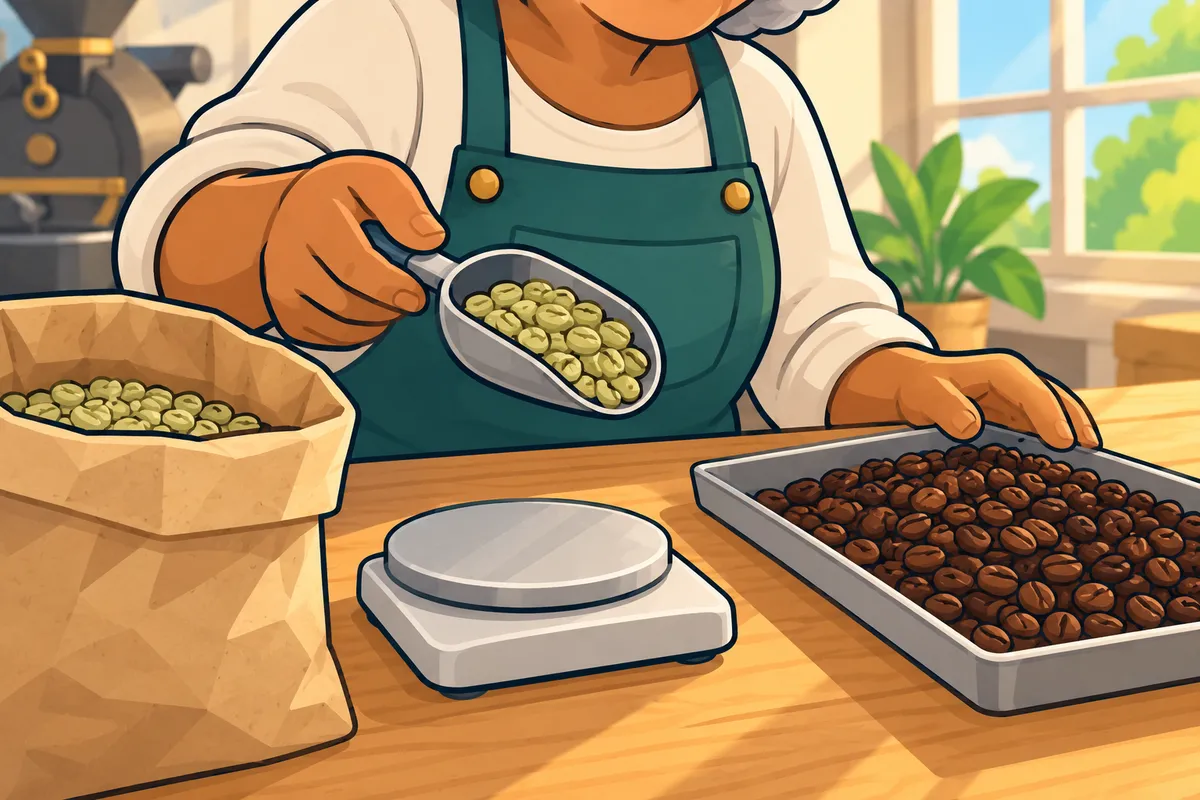
At the amounts US law allows, the FDA treats it as safe: methylene chloride, also called dichloromethane, may pull caffeine out of green coffee beans if no more than 10 parts per million stays in the decaf. 21 CFR 173.255 sets that limit, 0.001 percent of the coffee's weight, for decaf roasted coffee and for decaf instant coffee.
The worry comes from the chemical itself: in 2014 the International Agency for Research on Cancer moved dichloromethane up from "possibly" to "probably carcinogenic to humans", its Group 2A.
In April 2024 the EPA finalized a rule that prohibits methylene chloride for all consumer uses. Food sits outside that rule: the law behind it, the Toxic Substances Control Act, leaves out any food or food additive, so the residue in decaf stays under the FDA.
Is the FDA Banning Methylene Chloride in Decaf?
Not yet. On 11 January 2024 the FDA announced that it had filed, on 21 December 2023, a petition from the Environmental Defense Fund and four co-petitioners that asks it to remove methylene chloride and three other solvents from the food additive rules. The petition rests on the Delaney Clause, which says no food additive is safe if it is found to cause cancer in people or animals.
On 28 May 2026 the FDA reopened comments until 29 June 2026. It asked for new data and for how food makers would phase these uses out if it granted the petition in part or in whole.
That notice neither grants nor denies the petition, and the 10 ppm limit in 21 CFR 173.255 stays in force until the FDA changes the rule.
How Much Methylene Chloride Could Be in Your Grounds?
At most 10 mg per kilogram of decaf coffee, since 10 parts per million of 1 kg is 10 mg. The rule caps the coffee, not the drink, so a home brewer can work out the ceiling for their own scoop.
If even that ceiling bothers you, a decaf made without the solvent takes the question off the table.
How Can You Tell if Your Decaf Used a Solvent?
Read the bag: a decaf sold as "Swiss Water Process" had its caffeine removed without a solvent, while a bag that says only "decaf" may not name its method. Swiss Water says its process "uses only water, temperature, and time" and uses no esters or solvents.
The bag names a water process
- Swiss Water Process: water, temperature and time, per the maker
- No methylene chloride residue to cap
- You can check the method on the bag
The bag says only "decaf"
- May have used methylene chloride, capped at 10 ppm in the US
- The method may not appear on the label
- The roaster or shop can tell you which method
A simple way to settle it is to email the roaster, or ask at the counter, which decaffeination method their decaf uses.
What Are the Benefits of Decaf Coffee?
Decaf drinkers in large studies had lower rates of death and heart disease than people who drank no coffee, and a lower type 2 diabetes risk with each daily cup, close to what regular coffee showed. Heart rhythm was the one outcome where decaf fell short: only caffeinated coffee went with fewer arrhythmias.
Decaf vs Regular Coffee Health Benefits, Outcome by Outcome
| Outcome | Regular coffee | Decaf | People in the study |
|---|---|---|---|
| Death from any cause | HR 0.73 (ground) and 0.89 (instant) at 2–3 cups a day | HR 0.86 at 2–3 cups a day | 449,563 UK adults, median age 58, followed 12.5 years (Chieng 2022) |
| Heart disease, heart failure or ischaemic stroke | Lower risk, lowest at 2–3 cups | Lower risk, lowest at 2–3 cups | Same UK adults |
| Arrhythmia | HR 0.83 (ground, 4–5 cups), 0.88 (instant, 2–3 cups) | No lower risk | Same UK adults |
| Death, a second analysis | HR 0.88 at 2–3 cups, 0.84 at 6–7 cups (all coffee) | "Similar associations" | 498,134 UK adults aged 38–73, up to 10 years, median 7 (Loftfield 2018) |
| Type 2 diabetes | RR 0.91 per extra daily cup | RR 0.94 per extra daily cup | 28 studies (27 of them cohorts), 1,109,272 people (Ding 2014) |
| Reflux in people with reflux disease | Acid in the gullet 17.9 % of 3 hours | 3.1 % of 3 hours | 17 patients, double-blind (Pehl 1997) |
An HR or RR under 1 means a lower rate than in people who drank no coffee, or, for diabetes, a lower risk with each extra daily cup. The gap between 0.91 and 0.94 was not statistically significant (P = 0.17), so the diabetes review counts both drinks as linked to lower risk.
Why Decaf Did Not Track With Fewer Arrhythmias
In the 2022 UK study, ground and instant coffee at 1 to 5 cups a day went with fewer arrhythmias, and decaf did not. Caffeine is the main difference between the drinks, though a study of this design does not test the cause.
Decaf is not a treatment for a rhythm problem. If you have one, your cardiologist decides whether any caffeine limit applies to you.
What These Studies Cannot Tell You
Every death and disease figure above comes from people who chose their own drinks and reported them on a questionnaire. Decaf drinkers may differ from non-drinkers in ways no adjustment fully removes, so the studies show a link, not proof that decaf protects you.
The Loftfield authors read their results as pointing to the "noncaffeine constituents" of coffee, since decaf behaved like regular coffee. They wrote that the findings "provide further reassurance that coffee drinking can be a part of a healthy diet."
Is Decaf Better for Acid Reflux?
For people with reflux disease, decaf coffee caused much less reflux than regular coffee in one small trial. In Pehl 1997, 17 patients spent a median 17.9 % of the three hours after breakfast with acid in the gullet after regular coffee, against 3.1 % after decaf, in random order with neither side knowing which cup was which.
An earlier trial by the same group, in 16 healthy volunteers, found that decaffeinating coffee cut reflux, but adding caffeine to plain water caused none. The authors concluded that other parts of coffee, more than caffeine alone, drive the reflux.

So decaf is worth a try if coffee gives you heartburn, and if heartburn keeps coming back whatever you drink, take that to your doctor.
Cold brew is often sold as the gentler choice, yet the lab study behind its lower acid load tested the drink, not people with reflux.
Who Should Still Be Careful With Decaf?
People told to avoid caffeine altogether should count decaf, because it still contains some. The FDA says decaf coffees and teas "still contain some caffeine" and that people who react strongly to caffeine may want to avoid them altogether.
Count Your Decaf Cups if You
4 items- Were told by a doctor to avoid caffeine
- React strongly to even a little caffeine
- Are pregnant, trying to become pregnant or breastfeeding
- Take a medicine that makes caffeine hit harder
The cup-by-cup milligrams, from a small decaf to a decaf espresso, sit on the page about the caffeine left in decaf. In pregnancy, decaf cups count toward the daily mg limit your health body sets like any other cup.
Is Decaf Tea Bad for You?
Decaf tea is no worse than decaf coffee on the evidence: the FDA says it also keeps a little caffeine. The US methylene chloride rule lists only coffee, spice extracts and hops, and does not mention tea.
In the 1994 reflux trial, among the 6 volunteers who tested tea, regular tea caused no more reflux than tap water and decaffeinating tea changed nothing, so a reflux-prone drinker gains less from decaf tea than from decaf coffee.
If you want no caffeine at all, a chamomile, hibiscus or ginger infusion is the cup with none. Decaf of either kind still counts toward your water for the day.
Choosing a Decaf for Your Own Reason
Start from why you switched, because the right decaf depends on it.
Match the Decaf to Why You Drink It
- I want coffee after dinner without losing sleepAny decaf, starting with your last cup of the day
- Coffee gives me heartburnTry decaf coffee for two weeks and note the evenings
- I would rather avoid any solventA bag labelled Swiss Water Process
- My doctor told me to avoid caffeineA herbal infusion, or count each decaf with your doctor
- I am pregnantDecaf, counted toward your daily mg limit
For the evening cup, the hours your last coffee needs before bed apply to regular coffee; a decaf at that hour holds only a few milligrams.
Common Questions
Is sugarcane decaf made without a solvent?
No. Sugarcane decaf takes its caffeine out with ethyl acetate made from sugarcane, a solvent that 21 CFR 173.228 allows for decaffeinating coffee and tea; a water or CO2 process uses no organic solvent.
Does CO2 decaf use a chemical solvent?
No organic solvent: supercritical CO2 itself dissolves the caffeine out. A 1999 review names it as one of three main decaffeination methods beside organic solvents and water, so neither methylene chloride nor ethyl acetate is used.
General information for healthy adults, not medical advice. If a doctor has set your fluid amount, follow that.

More in Coffee and Tea


Sources
- US Code of Federal Regulations (eCFR). 21 CFR 173.255 Methylene chloride, 2026.
- Federal Register (US Food and Drug Administration). Filing of Food Additive Petition From Environmental Defense Fund, et al.; Request To Amend the Food Additive Regulations To Remove the Solvents Benzene, Ethylene Dichloride, Methylene Chloride, and Trichloroethylene, 2024.
- Federal Register (US Food and Drug Administration). Food Additive Petition From Environmental Defense Fund, et al.; Reopening of the Comment Period, 2026.
- International Agency for Research on Cancer. IARC Monographs Volume 110: evaluation of five chemicals, 2014.
- US Environmental Protection Agency. Risk Management for Methylene Chloride, 2026.
- US Code (via Cornell LII). 15 U.S.C. 2602, Definitions (Toxic Substances Control Act), 2026.
- European Journal of Preventive Cardiology (Chieng, Canovas, Segan and others). The impact of coffee subtypes on incident cardiovascular disease, arrhythmias, and mortality: long-term outcomes from the UK Biobank, 2022.
- JAMA Internal Medicine (Loftfield, Cornelis, Caporaso and others). Association of Coffee Drinking With Mortality by Genetic Variation in Caffeine Metabolism: Findings From the UK Biobank, 2018.
- Diabetes Care (Ding, Bhupathiraju, Chen, van Dam and Hu). Caffeinated and Decaffeinated Coffee Consumption and Risk of Type 2 Diabetes: A Systematic Review and a Dose-Response Meta-analysis, 2014.
- Alimentary Pharmacology & Therapeutics (Pehl, Pfeiffer, Wendl and Kaess). The effect of decaffeination of coffee on gastro-oesophageal reflux in patients with reflux disease, 1997.
- Alimentary Pharmacology & Therapeutics (Wendl, Pfeiffer, Pehl, Schmidt and Kaess). Effect of decaffeination of coffee or tea on gastro-oesophageal reflux, 1994.
- US Food and Drug Administration. Spilling the Beans: How Much Caffeine is Too Much?, 2024.
- Swiss Water Decaf. Coffee decaffeination process, 2026.
- US Code of Federal Regulations (via Cornell LII). 21 CFR 173.228 Ethyl acetate, 2026.
- Critical Reviews in Food Science and Nutrition (Ramalakshmi and Raghavan). Caffeine in coffee: its removal. Why and how?, 1999.
Sources checked by the Glubbo Editorial Team on Nov 3, 2026. General information, not medical advice. How we write and check our guides.

