Does Herbal Tea Have Caffeine? Which Cups Are Truly Free
Which herbal teas have no caffeine at all, which plants sold as tea do, and how to read the box before a bedtime cup.
 By the Glubbo Editorial Team · Updated Oct 19, 2026 · 7 min read
On This Page
Short answer
No, unless it holds a caffeine plant.
- USDA lists 0 mg of caffeine for brewed chamomile, hibiscus and ginger tea.
- A 2008 lab test found no caffeine in any herbal tea it brewed.
- Yerba mate, guayusa, guarana and real tea leaves do bring caffeine.
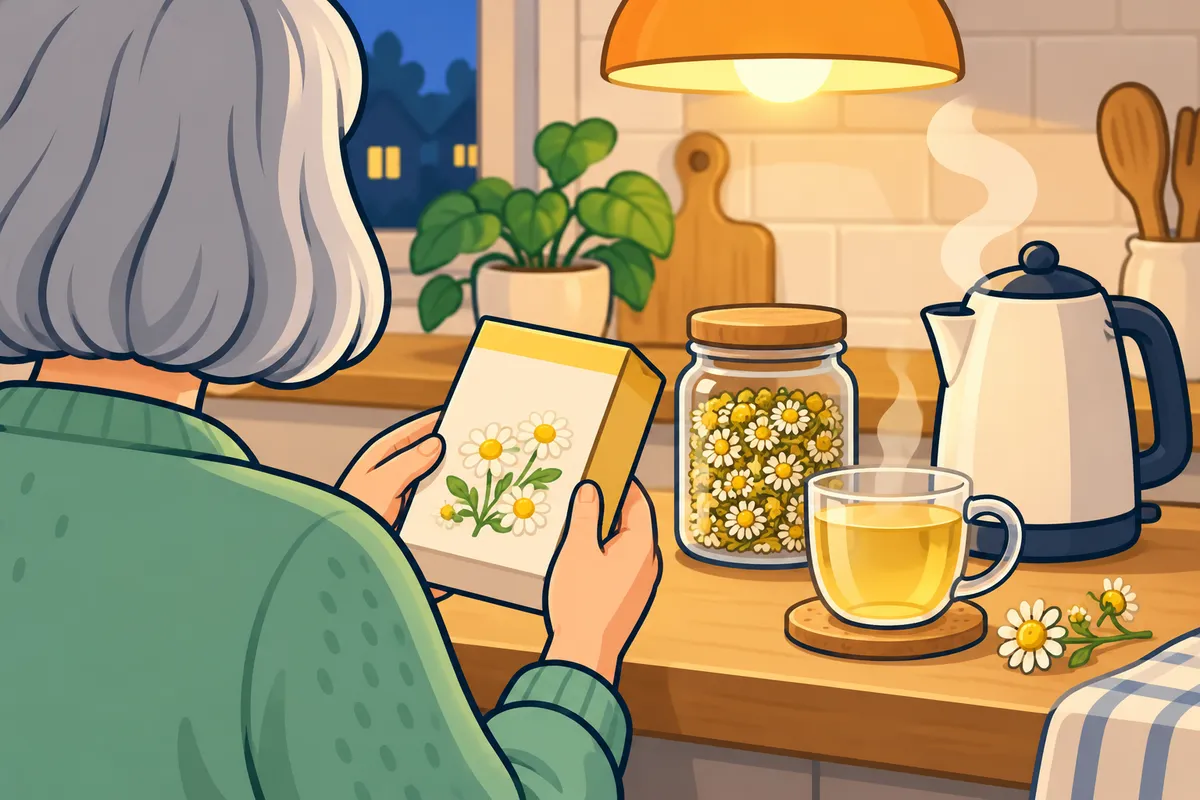
A herbal tea made only from herbs has no caffeine. Chamomile, hibiscus and ginger all come out at 0 mg in the USDA's food database, and a lab that brewed herbal teas found none.
The catch is the word "tea" on the box. Some cups sold as herbal hold a plant that makes caffeine, or mix herbs with real tea leaves, and those cups count like tea.
Is Herbal Tea Caffeine Free?
Not when it is made only from herbs, flowers, fruit or roots. USDA FoodData Central lists 0 mg per 100 g for brewed chamomile and for other brewed herb teas, and the 2008 lab study of 20 commercial teas detected no caffeine in its herbal teas.
Caffeine comes from specific plants. MedlinePlus says it occurs naturally in more than 60 of them, including coffee beans, tea leaves, kola nuts and cacao pods, so a cup has caffeine only if one of those plants is in it.
Caffeine Plants That Turn Up in "Herbal" Cups
6 items- Black, green or white tea leaves (Camellia sinensis)
- Yerba mate
- Guayusa
- Guarana
- Kola nut
- Cacao
If none of these is on the ingredient list, the cup has no caffeine to count. If one is, read the next sections.
Does Chamomile Tea Have Caffeine?
No. USDA lists brewed chamomile at 0 mg of caffeine per 100 g, and chamomile is not one of the caffeine plants. A cup of chamomile at bedtime adds nothing to your caffeine for the day.
Caffeine-free does not mean free of effects. NCCIH notes allergic reactions in some people, more likely if you react to related plants such as ragweed, and reported interactions with warfarin and some drugs processed by the liver.
Five Cups and Their Caffeine (8 oz)
Chamomile
Caffeine-free
- 0 mg (USDA)
- Check with ragweed allergy
Suits you if you want a warm cup right before bed
Hibiscus
Caffeine-free, tart
- 0 mg (USDA)
Suits you if you want a fruity cup with no caffeine at all
Ginger
Caffeine-free, warming
- 0 mg (USDA)
Suits you if you want a spicy cup in the evening
Yerba mate
Has caffeine
- About 30 mg, our scaling of Zaki 2026
- 60 mg per 500 ml from 7.5 g leaf
Suits you if you want a lift that is gentler than coffee
Herbal blend with green tea
Counts as tea
- Count it as green tea, about 28 mg
Suits you if you like the taste and count it with your tea
The ginger figure comes from the USDA's survey database entry for ginger tea, 0 mg per 100 g. The green-tea blend uses the plain green tea figure, since the herbs in it add no caffeine of their own.
Which Herbal Teas Have Caffeine?
Yerba mate and guayusa, two South American holly leaves, plus any blend with guarana, kola, cacao or real tea leaves. Health Canada names guarana and yerba mate as natural caffeine sources it counts in energy drinks, and a 2024 study found that guayusa infusions held more caffeine than mate.
How Much Caffeine Is in Yerba Mate?
About 60 mg in 500 ml (17 oz) made from 7.5 g of leaves. In a 2026 trial, two commercial mates held 7.96 and 8.36 mg of caffeine per gram of leaf, about 59.7 and 62.7 mg in each 500 ml infusion.
Scaled to an 8 oz (237 ml) cup, that is about 28 to 30 mg, close to a cup of green tea. More leaf means more caffeine, so a cup made with twice the leaf carries about twice as much, and a gourd packed with leaf and refilled for an hour holds more again.
Does Cold-Brewed Yerba Mate Have Less Caffeine?
Yes, in the lab. A 2024 study brewed commercial mates at 1 g of leaf to 25 ml of water for 10 minutes, hot at 80 °C and cold at 3 °C, and cold brewing pulled out a good deal less.
| Brew, 10 minutes | Caffeine per 100 ml |
|---|---|
| Hot, 80 °C | 1.04 to 3.14 mg |
| Cold, 3 °C | 0.17 to 1.29 mg |
That recipe is stronger than the 7.5 g in 500 ml trial above, so use the table to compare hot with cold, not to count a cup. The same paper found that brewing time changed the caffeine a great deal and temperature changed it little, and a longer cold steep still did not reach hot-brew levels.
Does a Longer Steep Add Caffeine?
For mate and for tea leaves, yes. The 2008 tea study also reported that steeping time changed the caffeine in the cup, so a longer steep puts more in the cup. A herbal blend with tea leaves in it follows the same rule.
Herbal Blends With Tea Leaves
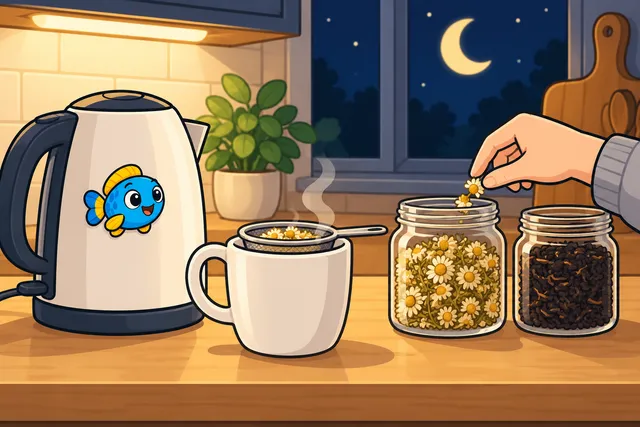
Many boxes mix herbs with green or black tea. Count these as the tea they contain: about 28 mg per 8 oz for green and 47 mg for black on USDA figures, which the plain tea comparison sets out cup by cup.
Why Doesn't the Box Say "Caffeine"?
The ingredient list names the plant, not always the caffeine. The FDA requires caffeine on the list only when it is added on its own; when an ingredient that naturally holds caffeine goes in, such as chocolate, caffeine will not appear, but that ingredient will.
So a box listing "green tea, lemongrass, mint" has caffeine even though the word never shows up. Read each plant name against the checklist above, and give the box the benefit of the doubt only when every ingredient is an herb, flower, fruit or root.
Is Decaf Tea the Same as Herbal Tea?
No. Decaf tea is real tea with most of the caffeine removed, so a little stays: the 2008 lab study found under 12 mg a serving in decaf teas, and USDA lists decaf black tea at 1 mg per 100 g. Herbal tea never had caffeine to remove.
The same holds for coffee. Decaf coffee still holds 2 to 15 mg a cup by the FDA's figures, while a herbal cup holds none.
When a Herbal Cup Is Not Caffeine-Free
The evening is where the 0 mg matters most. EFSA says a single 100 mg dose of caffeine may affect sleep in some adults, especially close to bedtime, and a herbal cup keeps you at zero while a regular tea or coffee late in the day does not.
How Much Herbal Tea Can You Drink When Pregnant?
The NHS says to avoid drinking more than 4 cups of herbal tea a day in pregnancy and to avoid teas containing liquorice root. It adds that there is not much research on herbal teas in pregnancy, so limiting how much you drink is safest; a caffeine-free cup also leaves your 200 mg pregnancy allowance for coffee and tea.
Herbal tea also counts toward your fluids: a mug of it adds its whole volume, the same way tea and coffee count toward your water.
Reading the Ingredient List on the Box
Read the side of the box, not the front: the front names the mood, and the ingredient list names the plants.
Is This Cup Caffeine-Free?
- Turn the box to the ingredient list
- Check each ingredient against the caffeine plants
- None of them: 0 mg, drink it at any hour
- One of them: count it like tea, about 28 to 47 mg a cup
General information for healthy adults, not medical advice. If a doctor has set your fluid amount, follow that.

More in Coffee and Tea
Sources
- USDA FoodData Central. Beverages, tea, herb, brewed, chamomile (FDC 174156), 2019.
- USDA FoodData Central. Beverages, tea, hibiscus, brewed (FDC 171946), 2019.
- USDA FoodData Central. Tea, ginger (FNDDS, FDC 2710507), 2024.
- USDA FoodData Central. Beverages, tea, herb, other than chamomile, brewed (FDC 173232), 2019.
- Journal of Analytical Toxicology (Chin, Merves, Goldberger, Sampson-Cone and Cone). Caffeine content of brewed teas, 2008.
- MedlinePlus (US National Library of Medicine). Caffeine, 2021.
- Health Canada. Caffeinated energy drinks, 2024.
- Current Developments in Nutrition (Zaki and colleagues). Acute Effects of Commercial Yerba Mate Products on Cardiometabolic Responses during Submaximal Cycling, 2026.
- Antioxidants (Płatkiewicz and colleagues). Antioxidant Capacity, Phenolic Compounds, and Other Constituents of Cold and Hot Yerba Mate (Ilex paraguariensis) Infusions, 2024.
- NHS. Foods to avoid in pregnancy, 2026.
- National Center for Complementary and Integrative Health (NIH). Chamomile, 2024.
- US Food and Drug Administration. Spilling the Beans: How Much Caffeine is Too Much?, 2024.
- European Food Safety Authority. Caffeine (topic page on the 2015 scientific opinion), 2015.
Sources checked by the Glubbo Editorial Team on Oct 19, 2026. General information, not medical advice. How we write and check our guides.

