Can You Drink Coffee While Breastfeeding? Daily mg and Baby Signs
How much coffee fits a breastfeeding day, what caffeine in breast milk can do to a baby, and why newborns need less.
 By the Glubbo Editorial Team · Updated Oct 19, 2026 · 6 min read
On This Page
- Can You Drink Coffee While Breastfeeding?
- How Much Caffeine Passes Into Breast Milk?
- Should You Wait to Breastfeed After Drinking Coffee?
- Can Caffeine in Breast Milk Keep a Baby Awake?
- How Much Coffee Can You Drink While Breastfeeding a Newborn?
- What 200 mg of Caffeine Looks Like While Nursing
- Why a Mug Is Not a Cup
- Does Decaf Help While Breastfeeding?
- Sources
Short answer
Yes, about 200 to 300 mg of caffeine a day.
- NHS: "no more than 200mg a day"; Health Canada: 300 mg.
- CDC: 300 mg or less a day, about 2 to 3 cups of coffee, is low to moderate.
- Newborns and premature babies clear caffeine more slowly: have less.
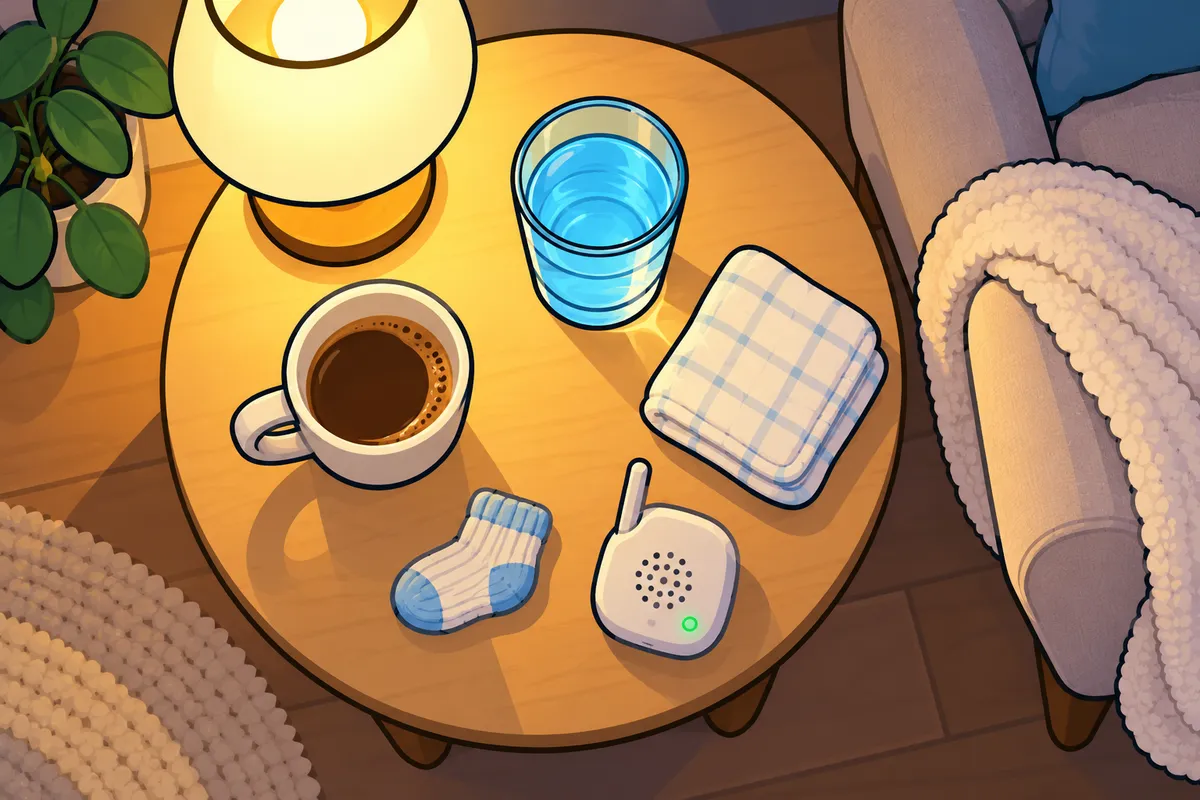
Yes. The NHS recommends no more than 200 mg of caffeine a day while you breastfeed, about two mugs of coffee, and the CDC calls up to 300 mg low to moderate. Only a small share of what you drink reaches your baby, and the one thing to watch is how your baby behaves afterwards.
Newborns clear caffeine more slowly than older babies, so the first months call for the lower line.
Can You Drink Coffee While Breastfeeding?
Yes, in moderate amounts. The CDC calls 300 mg of caffeine a day or less, "about 2 to 3 cups of coffee", a low to moderate amount, and the NHS recommends "no more than 200mg a day".
| Public body | Limit while breastfeeding | Note |
|---|---|---|
| NHS (UK) | 200 mg a day | cut down more while the baby is under 6 months |
| EFSA (EU) | 200 mg a day | listed for pregnant and lactating women |
| Health Canada | 300 mg a day | the same figure as in pregnancy |
| CDC (US) | 300 mg or less is low to moderate | very high is about 10 cups of coffee or more |
| FDA (US) | no number | talk to your health care provider |
Sources: NHS, EFSA, Health Canada, CDC, FDA.
The limits differ by only 100 mg: 200 mg satisfies every body in the table. The breastfeeding figures match the ones for pregnancy, so a mother who kept to 200 mg while pregnant can keep the same cups.
How Much Caffeine Passes Into Breast Milk?
A small amount. The CDC says caffeine "passes from the mother to infant in small amounts through breast milk". A 1984 study in Pediatrics followed 15 lactating women after one caffeinated drink and put the baby's share at 0.06% to 1.5% of the mother's dose, with the peak in milk about an hour after the drink.
- 0.06–1.5%
- of the mother's dose reached the baby, after one caffeinated drink
- About 1 hour
- until caffeine peaked in the milk
That study used a single drink, so it describes one cup and not a day of five. For the daily picture there is no firm number: the NHS says there is "not enough information to say how much caffeine is too much" for a baby. The advice therefore rests on two things you can see, your own total and your baby's behavior.
Should You Wait to Breastfeed After Drinking Coffee?
You do not have to. Neither the CDC nor UK advice asks mothers to wait after a cup. In one study of 15 women, caffeine in milk peaked within about an hour of the drink.
Can Caffeine in Breast Milk Keep a Baby Awake?
It can, mostly at high intakes. The NHS says a lot of caffeine "may make your baby restless and keep them awake", and the CDC reports the signs below in babies whose mothers had very high caffeine intakes, about 10 cups of coffee or more a day.
Signs Reported in Babies of Mothers With Very High Caffeine Intake
4 items- Irritability
- Poor sleeping patterns
- Fussiness
- Jitteriness
If your baby seems fussier or more irritable after you have had a lot of caffeine, the CDC says you "should consider decreasing" your intake.
How to Tell if Caffeine Is the Cause
Babies have fussy spells for many reasons, and a growth spurt or a cold can look the same, so test one change at a time.
A One-Week Caffeine Test
- Write down your usual cups for 3 days and how your baby feeds and sleeps
- Swap every caffeinated drink for decaf or herbal tea for 3 to 4 days
- Keep feeds, naps and everything else the same, and note any change
- No change: tell your baby's doctor or health visitor what you tried

How Much Coffee Can You Drink While Breastfeeding a Newborn?
Less than later on. The CDC says preterm and younger newborn babies "break down caffeine more slowly", and that their mothers "might consider consuming even less caffeine". UK advice adds that you should cut down especially while your baby is under 6 months old.
Neither body gives a lower number for newborns. The CDC's "even less" points the direction without an amount, so 200 mg stays your ceiling and your baby's pediatrician or a lactation consultant is the one to set anything lower.
What 200 mg of Caffeine Looks Like While Nursing
About two mugs of coffee, or a coffee and two cups of tea. A mug of coffee counts as 90 mg and a mug of tea as 55 mg, so most days have room for your usual cups.
| Drink or food | Caffeine each | How many fit in 200 mg |
|---|---|---|
| Mug of coffee | 90 mg | 2 |
| 250 ml (8.5 oz) can of energy drink | 80 mg | 2 |
| Mug of tea | 55 mg | 3 |
| Mug of green tea | 38 mg | 5 |
| Can of cola | 37 mg | 5 |
| 50 g plain dark chocolate | under 25 mg | 8 or more |
Mix them as you like; the total is what counts. A shop cup is the exception, and so is a US energy drink: the FDA finds 113 to 247 mg in a 12 oz brewed coffee and up to 328 mg in a 16 oz energy drink, so one large cup or can can be a whole day's 200 mg on its own.
Caffeine also turns up in medicine. MedlinePlus notes that some pain relievers and cold medicines contain it, so ask the pharmacist before taking one on a day you have already had your coffee.
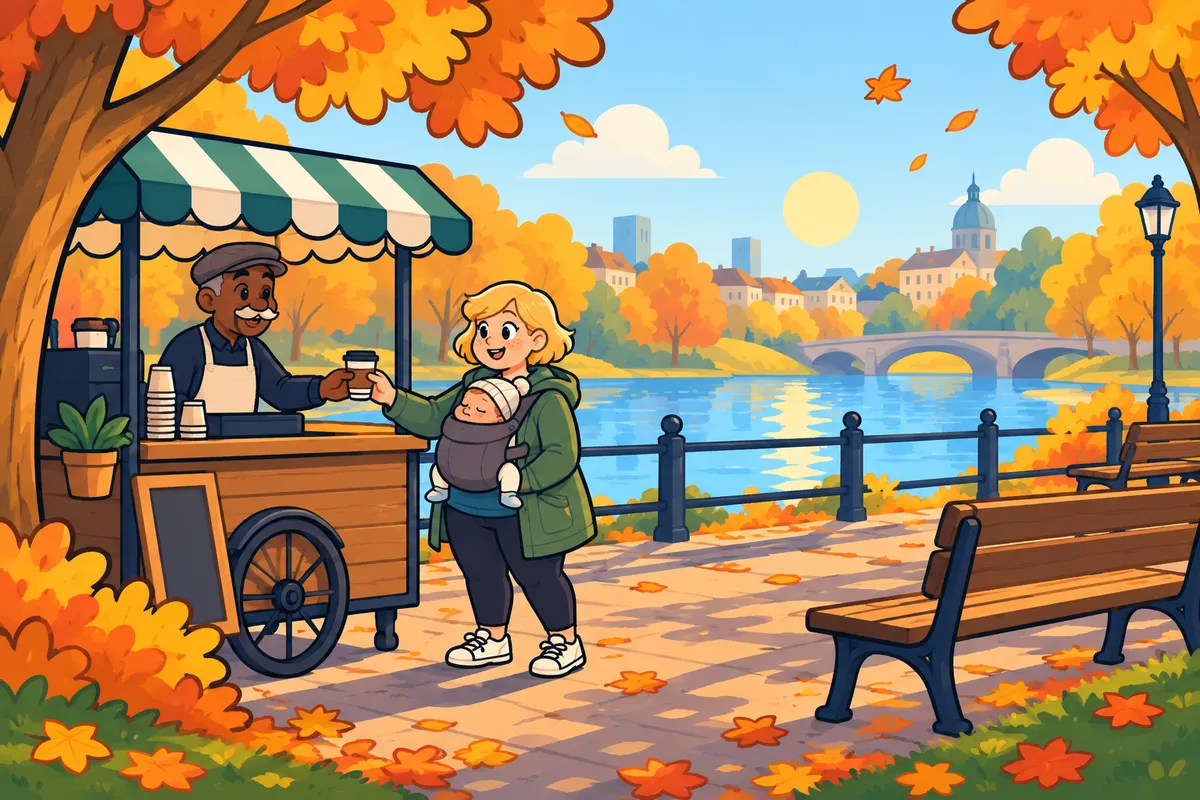
Why a Mug Is Not a Cup
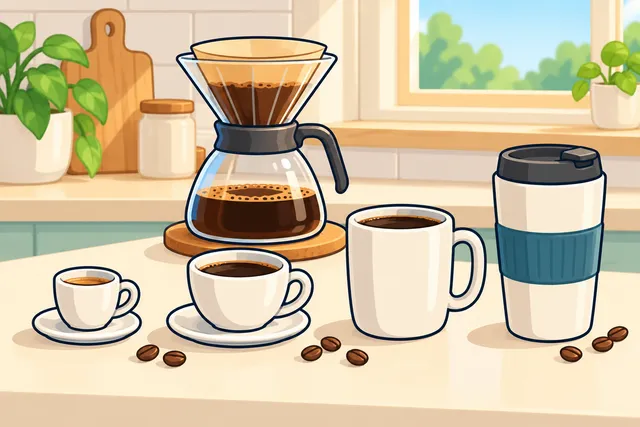
The same 200 mg buys a different number of drinks depending on whose "cup" you use. The NHS table counts a mug of coffee as 90 mg, Health Canada averages 135 mg for an 8 oz cup of brewed coffee, and the FDA's range for a 12 oz cup is 113 to 247 mg.
| Coffee you pour | Caffeine | Fits in 200 mg |
|---|---|---|
| Mug on the NHS list | 90 mg | 2 |
| 8 oz cup, Health Canada average | 135 mg | 1 |
| 12 oz cup, FDA low end | 113 mg | 1 |
| 12 oz cup, FDA high end | 247 mg | none, it is over by 47 mg |
If you brew strong or fill a big mug, count the cup you actually pour, not the "2 to 3 cups" in the headline advice. A kitchen scale or a marked mug makes that easy: fill it once with water, note the ounces, and use that size from then on.
Does Decaf Help While Breastfeeding?
Yes, when you want more cups than your limit allows. The caffeine left in decaf is so small that a second or third mug adds almost nothing to your total, and herbal tea is another swap.
Herbal teas vary, and some herbal blends do contain caffeine from added tea leaves or yerba mate. Read the box.
General information for healthy adults, not medical advice. If a doctor has set your fluid amount, follow that.

More in Coffee and Tea

Sources
- US Centers for Disease Control and Prevention. Maternal Diet (Breastfeeding Special Circumstances), 2026.
- NHS. Breastfeeding and diet, 2026.
- Health Canada. Caffeine in foods, 2025.
- European Food Safety Authority. Caffeine (topic page on the 2015 scientific opinion), 2015.
- MedlinePlus (US National Library of Medicine). Caffeine, 2021.
- US Food and Drug Administration. Spilling the Beans: How Much Caffeine is Too Much?, 2024.
- Pediatrics (Berlin et al.). Disposition of dietary caffeine in milk, saliva, and plasma of lactating women, 1984.
Sources checked by the Glubbo Editorial Team on Oct 19, 2026. General information, not medical advice. How we write and check our guides.

