Caffeine Overdose Symptoms: How Much Is Toxic and When to Get Help
The signs of a caffeine overdose, the amount the FDA links to seizures, and what to do when someone has taken too much.
 By the Glubbo Editorial Team · Updated Oct 19, 2026 · 7 min read
On This Page
- Caffeine Overdose Symptoms
- Too Much Caffeine or an Overdose?
- How Much Caffeine Is Toxic?
- Can You Die From Caffeine?
- What Should You Do if Someone Has Too Much Caffeine?
- What Should You Do After Too Much Coffee or an Energy Drink?
- How Long Does a Caffeine Overdose Last?
- What Happens at the Hospital After a Caffeine Overdose?
- Keep a Long Day From Becoming a Dangerous One
- Sources
Short answer
Vomiting, a racing heart, confusion and seizures.
- MedlinePlus lists rapid or irregular heartbeat, vomiting, confusion and seizures.
- The FDA sees toxic effects such as seizures at about 1,200 mg taken quickly.
- US Poison Help: 1-800-222-1222; call 911 for a seizure or trouble breathing.
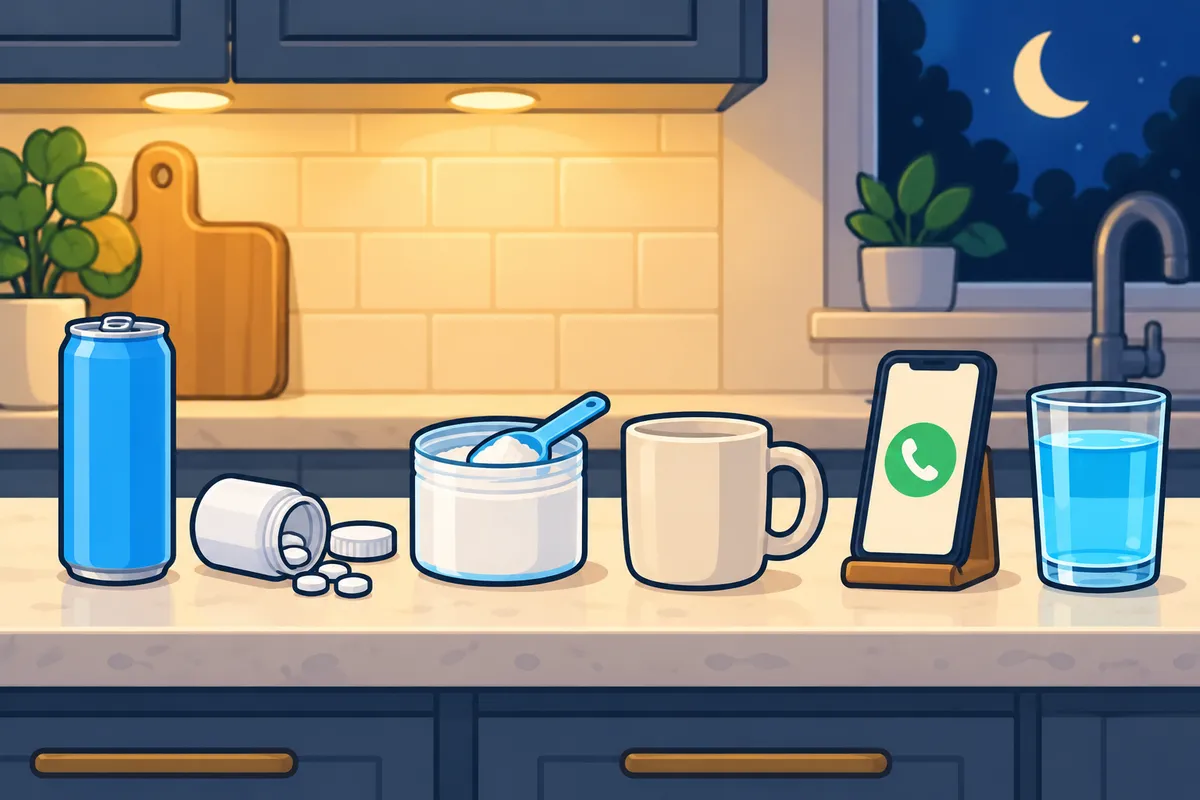
Too much coffee usually means a shaky afternoon and a poor night. An overdose is different: it comes from far more caffeine, often taken fast, and it can affect the heart and brain.
Most overdoses do not come from a coffee pot. They come from pills, powders and stacked energy products, where a dangerous amount fits in a spoon or a handful.
Caffeine Overdose Symptoms
They range from vomiting and a pounding, irregular heartbeat to confusion and seizures. MedlinePlus, the US National Library of Medicine's health site, lists the signs below. A seizure, an irregular heartbeat or trouble breathing means calling emergency services now.
Signs of a Caffeine Overdose
9 items- Rapid heartbeat, irregular heartbeat
- Convulsions (seizures)
- Changes in alertness, agitation, confusion, hallucinations
- Dizziness, muscle twitching
- Nausea, vomiting, diarrhea
- Increased thirst, increased urination
- Fever
- Breathing trouble
- Sleeping trouble
The FDA names the most serious effects of caffeine toxicity as "rapid or dangerously erratic heartbeat, seizures and death", and adds vomiting, diarrhea, stupor and disorientation.
What Are the Signs of Caffeine Overdose in a Child?
Babies show it differently: muscles that alternate between very tense and very relaxed, nausea and vomiting, rapid deep breathing, a rapid heartbeat, shock and tremors. A toddler who has swallowed caffeine pills or powder needs a call to Poison Help even before any sign shows, and so does an older child who took a few tablets from a bottle.
Too Much Caffeine or an Overdose?
The difference is the amount and the body systems it hits. Above your usual amount you feel jittery and anxious and sleep badly; far above it, the heart rhythm, the gut and the brain are affected.
Too Much Caffeine
- Jitters, anxiety, a fast heart rate
- Upset stomach, headache, poor sleep
- Usually passes as the caffeine clears
Caffeine Overdose
- Irregular heartbeat, vomiting
- Confusion, hallucinations, seizures
- Needs Poison Help or emergency care
The milder list comes from the FDA's signs of having more than your body can handle, which can show up below 400 mg in a sensitive person. The overdose list describes a person who took far more than a normal amount, usually in a short time.
How Much Caffeine Is Toxic?
About 1,200 mg taken quickly, by the FDA's estimate. The FDA says toxic effects such as seizures "can be observed with rapid consumption of around 1,200 milligrams of caffeine", which it notes is less than half a teaspoon of pure caffeine.
For comparison, EFSA treats up to 200 mg in one sitting as no concern for a healthy adult, and 400 mg spread over a day. The level the FDA links to seizures is three times that full daily amount, taken in one go.
| To reach about 1,200 mg | Serving | Servings |
|---|---|---|
| Brewed coffee, strongest in the FDA range | 12 oz at 247 mg | about 5 |
| Brewed coffee, weakest in the FDA range | 12 oz at 113 mg | about 11 |
| Energy drink, strongest in the FDA range | 16 oz at 328 mg | about 4 |
| Espresso, Hong Kong shop average | 1 shot at 97 mg | about 12 |
| Pure caffeine powder | less than ½ teaspoon | one spoonful |
Sources: FDA for coffee, energy drinks and powder; Centre for Food Safety, Hong Kong for espresso.
Drinks make 1,200 mg hard to reach quickly, since few people drink five strong mugs in one sitting. Four large strong energy drinks, or energy drinks on top of pills or pre-workout powder, get there faster than most people expect.
Less than half a teaspoon of pure powder holds about 1,200 mg, the amount in five strong mugs of coffee.
Why the Same Dose Hits People Differently
Body size and sensitivity both change the picture. EFSA's single-dose level marks the most that raises no safety concern for a healthy adult, so it is a safety line rather than an overdose line. The FDA notes wide variation in how sensitive people are to caffeine and how fast they clear it, and EFSA scales its single-dose level at about 3 mg per kg of body weight.
On that scale, a 50 kg teenager reaches EFSA's single-dose level at about 150 mg, while a 90 kg adult reaches it at about 270 mg. A product dosed for a large adult is a much bigger dose for a small one.
| Body weight | EFSA single dose, 3 mg/kg | One 200 mg tablet is | One 16 oz can at 328 mg is |
|---|---|---|---|
| 45 kg (99 lb) | about 135 mg | about 1.5 times the level | about 2.4 times the level |
| 60 kg (132 lb) | about 180 mg | just over the level | about 1.8 times the level |
| 75 kg (165 lb) | about 225 mg | under the level | about 1.5 times the level |
| 90 kg (198 lb) | about 270 mg | under the level | about 1.2 times the level |
Sources: EFSA for 3 mg per kg; FDA for the strongest 16 oz energy drink.
Can You Die From Caffeine?
Yes, though it is rare. In severe cases "death may result from convulsions or an irregular heartbeat", MedlinePlus says, and the FDA links pure and highly concentrated caffeine products to at least two deaths in the United States.
Those products are the main danger, far more than tablets taken at their 100 to 200 mg label dose. The FDA says one teaspoon of pure powdered caffeine can hold as much caffeine as 28 cups of coffee, and half a cup of a highly concentrated liquid more than 20 cups.
What Should You Do if Someone Has Too Much Caffeine?
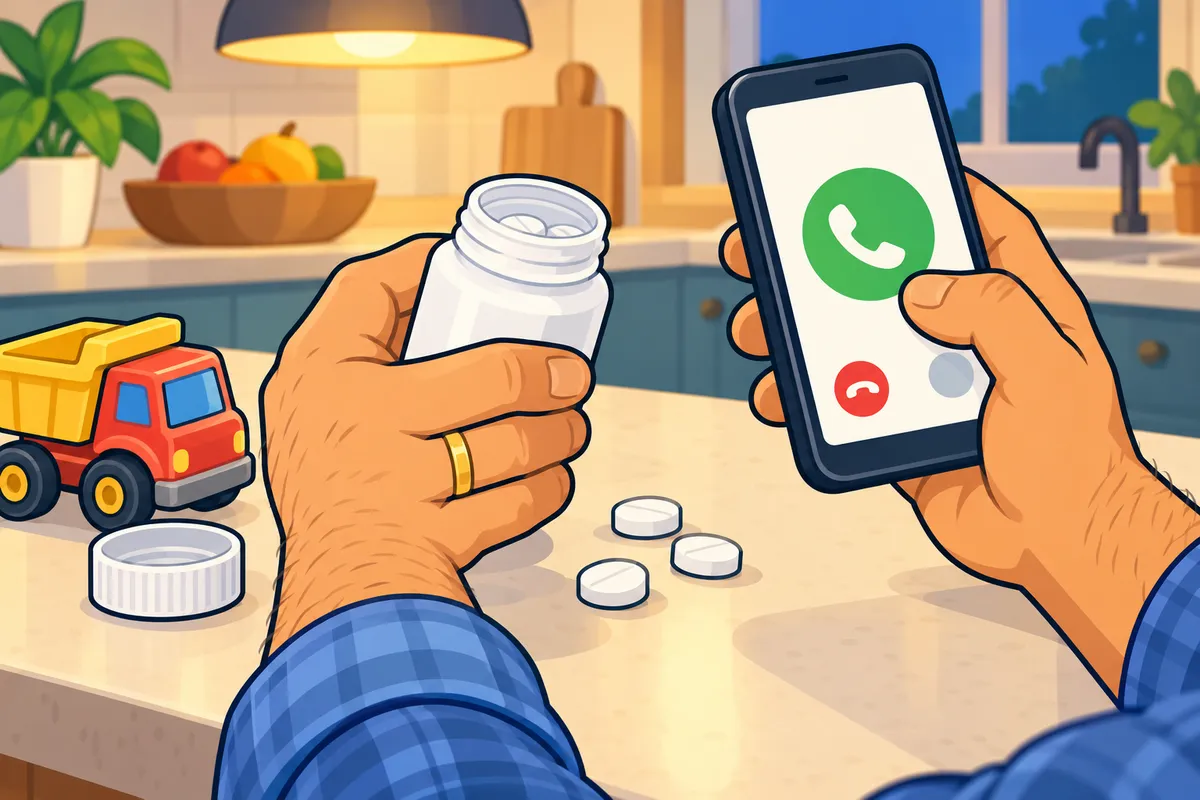
Get help fast and do not try to treat it at home. MedlinePlus says to seek medical help right away, to call your local emergency number for an actual overdose, and not to make the person throw up unless Poison Control or a health care provider tells you to.
When Someone Has Taken Too Much Caffeine
- Seizure, irregular heartbeat or trouble breathing: call 911 or your local emergency number
- Otherwise call Poison Help, 1-800-222-1222 in the US, free and open 24/7
- Have ready: age, weight, the product, its strength, the time and the amount
- Do not make the person vomit unless Poison Control tells you to
Call Poison Help even if you are unsure; it is free, confidential and open 24/7, and it takes calls that are not emergencies. Bring the container to the hospital if you can.
What Should You Do After Too Much Coffee or an Energy Drink?
Three things apply while you wait it out:
- Stop all caffeine, including tea, cola and pills.
- Drink water.
- Do not make anyone vomit unless Poison Control or a health care provider tells you to.
Cleveland Clinic says a provider may suggest drinking water to stay hydrated and watching for changes in your body, and it warns against trying to treat a real overdose at home.
If the only signs are the milder list above, the FDA advises talking with a health care professional about them. Vomiting that keeps coming, an irregular heartbeat, confusion or trouble breathing move you to the steps in the section above.
How Long Does a Caffeine Overdose Last?
Plan on many hours. Cleveland Clinic says caffeine usually takes 3 to 10 hours to break down, and that overdose symptoms can last longer because the stomach absorbs caffeine quickly. A review in Current Neuropharmacology gives a half-life of 2 to 12 hours between people.
A half-life is the time it takes to lose half the dose. Take 5 hours, a figure inside that range, and a 600 mg dose decays like this:
| Time after the dose | Caffeine still in the body |
|---|---|
| 5 hours | about 300 mg |
| 10 hours | about 150 mg |
| 15 hours | about 75 mg |
That is why a late-evening overdose can still be felt at dawn, and why a person with a 12-hour half-life clears it far more slowly than this table shows.
What Happens at the Hospital After a Caffeine Overdose?
Staff watch the heart and run tests, then treat what they find. Emergency care may include blood and urine tests, a chest X-ray and an ECG, with activated charcoal, breathing support, fluids through a vein, a laxative, medicine for symptoms, and an electric shock to the heart for serious rhythm problems.
A brief hospital stay may be needed, which is one more reason to call early rather than wait to see if the symptoms pass.
Keep a Long Day From Becoming a Dangerous One
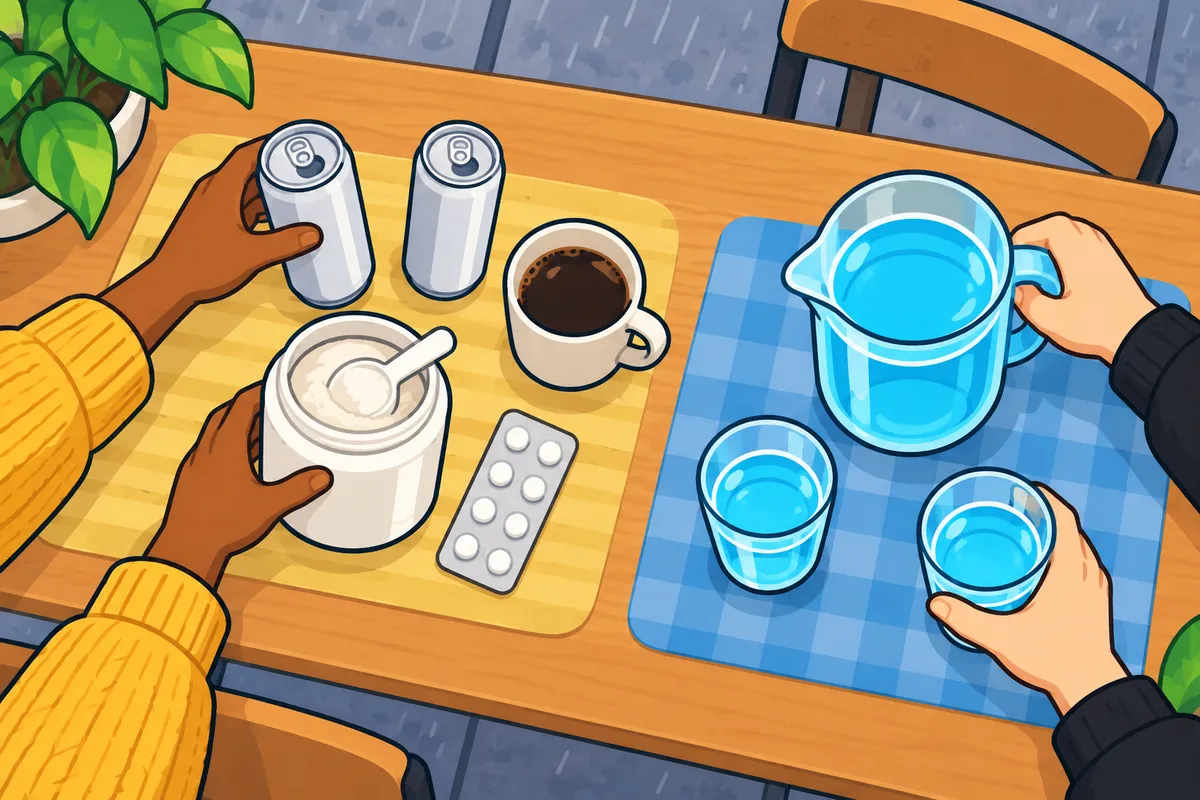
The risky days are the ones where products stack up: exams, night shifts and hard training. Those are the days to count.
Three habits help: read the caffeine on every can and label, never measure pure powder with a kitchen spoon, and keep pills and powders out of reach of children. If your heart races or you start to vomit, stop all caffeine and call for help.
General information for healthy adults, not medical advice. If a doctor has set your fluid amount, follow that.

More in Coffee and Tea

Sources
- MedlinePlus (US National Library of Medicine). Caffeine overdose, 2025.
- US Food and Drug Administration. Spilling the Beans: How Much Caffeine is Too Much?, 2024.
- US Food and Drug Administration. Pure and Highly Concentrated Caffeine, 2023.
- European Food Safety Authority. Caffeine (topic page on the 2015 scientific opinion), 2015.
- Centre for Food Safety, Hong Kong. Caffeine Content in Coffee and Milk Tea Prepared in Local Food Premises, 2013.
- Cleveland Clinic. Caffeine Overdose, 2025.
- Current Neuropharmacology (Cappelletti et al.). Caffeine: Cognitive and Physical Performance Enhancer or Psychoactive Drug?, 2015.
Sources checked by the Glubbo Editorial Team on Oct 19, 2026. General information, not medical advice. How we write and check our guides.

