Are Caffeine Pills Dangerous? Label Doses, Powders and FDA Warnings
What a caffeine pill holds, how often the label allows one, why pure powder is far riskier, and who should avoid both.
 By the Glubbo Editorial Team · Updated Oct 19, 2026 · 8 min read
On This Page
- Are Caffeine Pills Dangerous?
- How Much Caffeine Is in a Caffeine Pill?
- How Many Caffeine Pills Is Too Many?
- Is Pure Caffeine Powder Dangerous?
- Caffeine Pills, Powders and Hidden Sources Compared
- Who Should Not Take Caffeine Pills?
- Caffeine Pills or a Short Nap?
- How Long Do Caffeine Pills Take to Work and Last?
- Can You Take Caffeine Pills Every Day?
- Sources
Short answer
A label dose is about a cup of coffee; powder is the danger.
- US label rules: 100 to 200 mg, not more often than every 3 to 4 hours.
- The label says a dose holds about as much caffeine as a cup of coffee.
- FDA: a teaspoon of pure powder can equal 28 cups of coffee.

A US over-the-counter caffeine tablet holds 100 to 200 mg per dose, and its label says that is about as much caffeine as a cup of coffee. Pure caffeine powder is another matter: the FDA says one teaspoon can hold as much as 28 cups.
The risk with tablets sits in what they make easy. Three go down in a minute, and they stack on top of coffee and energy drinks without anyone tallying the milligrams.
Are Caffeine Pills Dangerous?
US rules for over-the-counter caffeine tablets set 100 to 200 mg per dose, and the required label says the dose "contains about as much caffeine as a cup of coffee". The danger comes from stacking doses, mixing them with other caffeine and, above all, from pure powder.
One 200 mg Tablet
- A fixed, printed dose
- Swallowed in seconds
- Easy to take a second without noticing
One 12 oz Brewed Coffee
- 113 to 247 mg, by the FDA's range
- Drunk over half an hour or more
- Strength unknown unless the shop says
Are Caffeine Pills Worse Than Coffee?
No, dose for dose, though they are easier to overdo. A tablet is no stronger than many mugs of coffee: the FDA's range for a 12 oz brewed coffee runs from 113 to 247 mg, and the top of that range beats a 200 mg tablet.
The real difference is speed. Swallowing three tablets takes a moment; drinking three strong mugs takes an hour, and most people stop before the third.
How Much Caffeine Is in a Caffeine Pill?
Usually 100 or 200 mg, because that is the dose the US rules allow for over-the-counter stimulant tablets. 21 CFR 340.50 sets the directions for adults and children 12 and over at "100 to 200 milligrams not more often than every 3 to 4 hours".
- 100–200 mg
- per dose on a US over-the-counter caffeine tablet
- 3–4 h
- at least, between doses
- 12
- the youngest age on the label; not for younger children
The same rule fixes the warnings every box must carry. Among them: limit "caffeine-containing medications, foods, or beverages" while taking the tablets, because too much caffeine "may cause nervousness, irritability, sleeplessness, and, occasionally, rapid heart beat".
Supplements sold outside these drug rules can carry other doses. Read the milligrams per tablet or capsule, not the number of tablets per serving.
How Often Can You Take Caffeine Pills?
The label allows one dose every 3 to 4 hours, but that is a gap between doses, not a daily target. Taken at 200 mg every 3 hours for 12 hours, that is five doses and 1,000 mg, far past the 400 mg a day the FDA and EFSA name for healthy adults.
The label itself says "For occasional use only" and "Not intended for use as a substitute for sleep". Count every tablet into the same daily total as your coffee, tea and cans.
| Tablets in a day (per label) | At 100 mg each | At 200 mg each | Against the limits |
|---|---|---|---|
| 1 | 100 mg | 200 mg | within EFSA's 200 mg single dose |
| 2 | 200 mg | 400 mg | up to the 400 mg day |
| 3 | 300 mg | 600 mg | past 400 mg at 200 mg each |
| 5, one every 3 hours | 500 mg | 1,000 mg | two and a half times the 400 mg day |
Sources: doses from 21 CFR 340.50; limits from EFSA and the FDA.
How Many Caffeine Pills Is Too Many?
Two 200 mg tablets in a day is already the whole 400 mg the FDA names for most healthy adults, and the same FDA page puts the level where seizures can occur at about 1,200 mg taken quickly. At 200 mg a tablet, that is six tablets in one sitting; at 100 mg, twelve.
| Your weight | EFSA one sitting, 3 mg/kg | One 200 mg tablet is |
|---|---|---|
| 45 kg (99 lb) | about 135 mg | about 1.5 times the level |
| 60 kg (132 lb) | about 180 mg | just over the level |
| 75 kg (165 lb) | about 225 mg | under the level |
EFSA says the same 3 mg per kg can be applied to children and teenagers, so a small adult or a teen is the person for whom one full-strength tablet is already a lot. The label itself says not to give the tablets to children under 12.
Is Pure Caffeine Powder Dangerous?
Yes, very. The FDA says one teaspoon of pure powdered caffeine can hold as much caffeine as 28 cups of coffee, and links pure and highly concentrated products to at least two deaths in the United States.
The dose that causes seizures is small. The FDA estimates that toxic effects, like seizures, can come from about 1,200 mg taken quickly, "or less than 1/2 teaspoon of pure caffeine", and warns that safe amounts of these products "can be difficult or nearly impossible to measure accurately with common kitchen measuring tools".
With pure powder, the gap between a dose and a dangerous dose is smaller than a kitchen spoon can measure.
Liquids carry the same risk in a different form. The FDA says half a cup of a highly concentrated liquid caffeine holds more than 20 cups of coffee's worth. If someone has taken a powder or liquid and has a racing heart, vomits or seems confused, treat it as a caffeine overdose and call for help.

Caffeine Pills, Powders and Hidden Sources Compared
The forms differ most in how easy it is to take too much. Tablets come in fixed doses; powders and concentrates leave the measuring to you.
Where Concentrated Caffeine Comes From
Caffeine tablets
Fixed dose
- 100 to 200 mg per dose (US label)
- Every 3 to 4 hours at most
Suits you if you want a known dose and count it as a coffee
Pure caffeine powder
Avoid
- 1 teaspoon = 28 cups of coffee (FDA)
- Kitchen spoons cannot measure it
Suits you if never
Liquid caffeine concentrate
Avoid
- ½ cup = over 20 cups of coffee (FDA)
Suits you if never; the dose is too easy to get wrong
Pain and cold medicines
Hidden source
- Some contain caffeine (MedlinePlus)
- Check the active ingredients
Suits you if you take them on a day you also drink coffee
Pre-workout powders and energy shots sit between these. They come in scoops or small bottles with a stated dose, so they behave like tablets when you follow the label, and like powder when you heap the scoop.
Who Should Not Take Caffeine Pills?
Children under 12, by the label, and anyone who should limit caffeine anyway. MedlinePlus asks these people to check with a health care provider about caffeine:
- People who are pregnant or breastfeeding.
- People who have sleep disorders, migraines, anxiety, GERD or ulcers.
- People who have an irregular heartbeat or high blood pressure.
- People who take certain medicines.
Pregnancy is the clearest case. EFSA sets 200 mg a day from all sources in pregnancy, so one 200 mg tablet would be a whole day's caffeine, and each public body's pregnancy limit sits at 200 or 300 mg.
Caffeine Pills or a Short Nap?
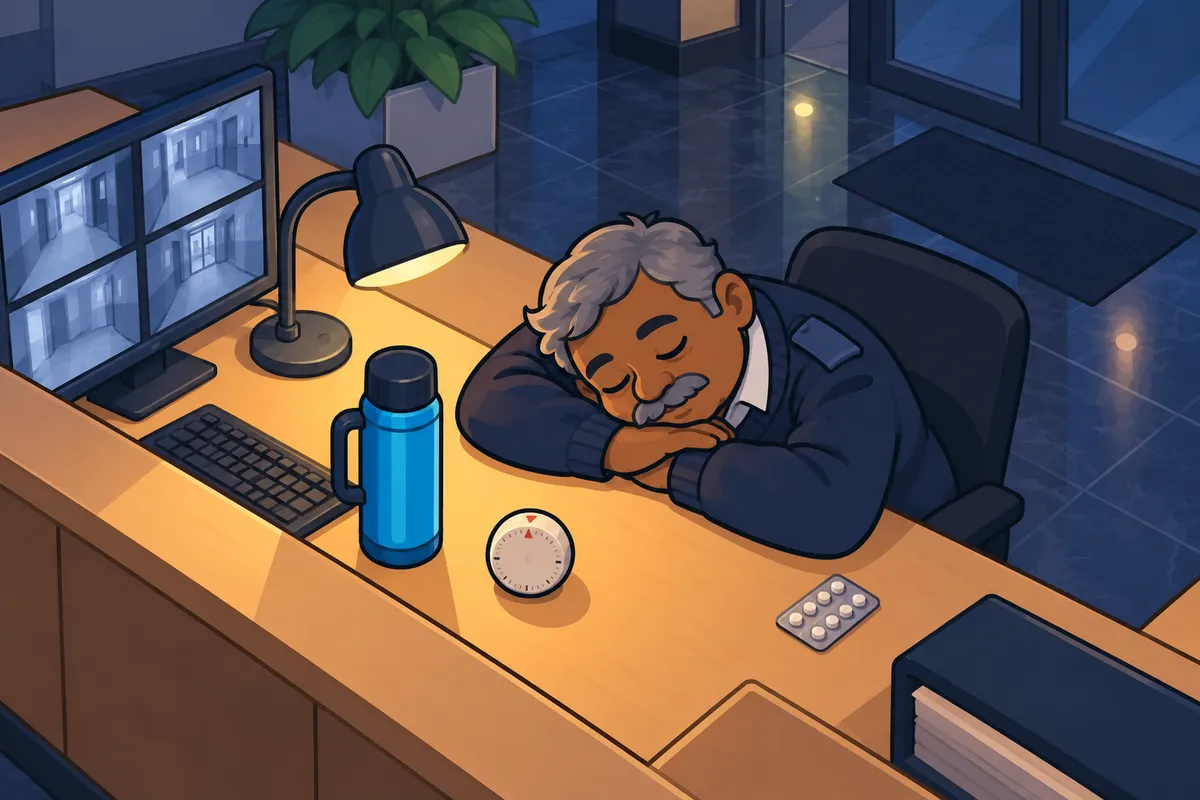
For tiredness that keeps returning, a nap or more sleep. The tablet label itself says the product is "not intended for use as a substitute for sleep" and asks you to see a doctor if fatigue persists.
A short nap often does the job without the bedtime cost: 10 to 20 minutes gives most adults the best lift. A 200 mg tablet at 4 PM, by contrast, is still working at bedtime.
How Long Do Caffeine Pills Take to Work and Last?
Expect the peak within an hour and the effect for four to six hours. MedlinePlus says caffeine reaches its peak level in your blood within one hour of eating or drinking it, and that you may feel the effects for four to six hours.
That window is why a tablet taken in the afternoon belongs on a clock, not only in a daily total. Worked out from those two figures for one tablet:
| Tablet taken at | Peak in the blood by | Still felt until about |
|---|---|---|
| 12 PM | 1 PM | 4 PM to 6 PM |
| 3 PM | 4 PM | 7 PM to 9 PM |
| 6 PM | 7 PM | 10 PM to midnight |
| 9 PM | 10 PM | 1 AM to 3 AM |
EFSA notes that a single dose of 100 mg may affect sleep duration and patterns, especially near bedtime, so a 200 mg tablet that is still felt at your bedtime costs sleep. Count the full six hours when you pick the last time to take one.
Can You Take Caffeine Pills Every Day?
Not as the label intends. The required wording is "For occasional use only", and it asks you to see a doctor if fatigue or drowsiness persists or keeps coming back, because needing a tablet every day is a reason to look at your sleep first.
If you do take them daily, stopping suddenly can bring withdrawal. MedlinePlus lists headaches, sleepiness, irritability, nausea and trouble concentrating, usually gone after a couple of days, and the withdrawal guide covers a taper.
General information for healthy adults, not medical advice. If a doctor has set your fluid amount, follow that.

More in Coffee and Tea

Sources
- US Code of Federal Regulations, 21 CFR 340.50 (Legal Information Institute). Labeling of stimulant drug products, 2026.
- US Food and Drug Administration. Pure and Highly Concentrated Caffeine, 2023.
- US Food and Drug Administration. Spilling the Beans: How Much Caffeine is Too Much?, 2024.
- European Food Safety Authority. Caffeine (topic page on the 2015 scientific opinion), 2015.
- MedlinePlus (US National Library of Medicine). Caffeine, 2021.
- Health Canada. Caffeine in Foods, 2025.
Sources checked by the Glubbo Editorial Team on Oct 19, 2026. General information, not medical advice. How we write and check our guides.

