Water Intake · Rules and Myths
How Long Can You Go Without Water? What the Experiments Measured
See what real experiments measured, where your own danger line sits and why heat cuts the time short.
 By the Glubbo Editorial Team · Updated Oct 19, 2026 · 10 min read
On This Page
- How Long Can You Survive Without Water?
- What Happens to Your Body Without Water?
- Where Is the Danger Line?
- How Fast Does Heat Shorten It?
- Signs to Watch For, and When to Get Help
- Who Runs Dry Faster?
- What Does an Ordinary Day Cost You?
- Why Some People Last Longer Than Others
- What This Means for Your Everyday Number
- Common Questions
- Sources
Short answer
You can last days without water, far less in heat.
- In a 1944 study, two scientists drank nothing for days and lost about 5 % of body weight.
- Past a loss of 10 % of your body weight as water, you need medical help.
- In the heat you can sweat 1 liter an hour, so the clock runs in hours, not days.
You can go a few days without water, and far less in the heat. No one can give a better number, because no one can run the experiment that would find the real limit. What researchers can tell you is how fast the body loses water, what it feels like, and where the danger line sits.
Those numbers also explain why your daily water matters even on a quiet day: your body spends water every hour, whether you drink or not.
How Long Can You Survive Without Water?
For days, not weeks, and the hotter and more active you are, the fewer. No study states an exact number, because no one may test it. A 2010 review in Nutrition Reviews says the absence of water "will be lethal within days", and the US National Academies report that people stranded in very hot places without water died.
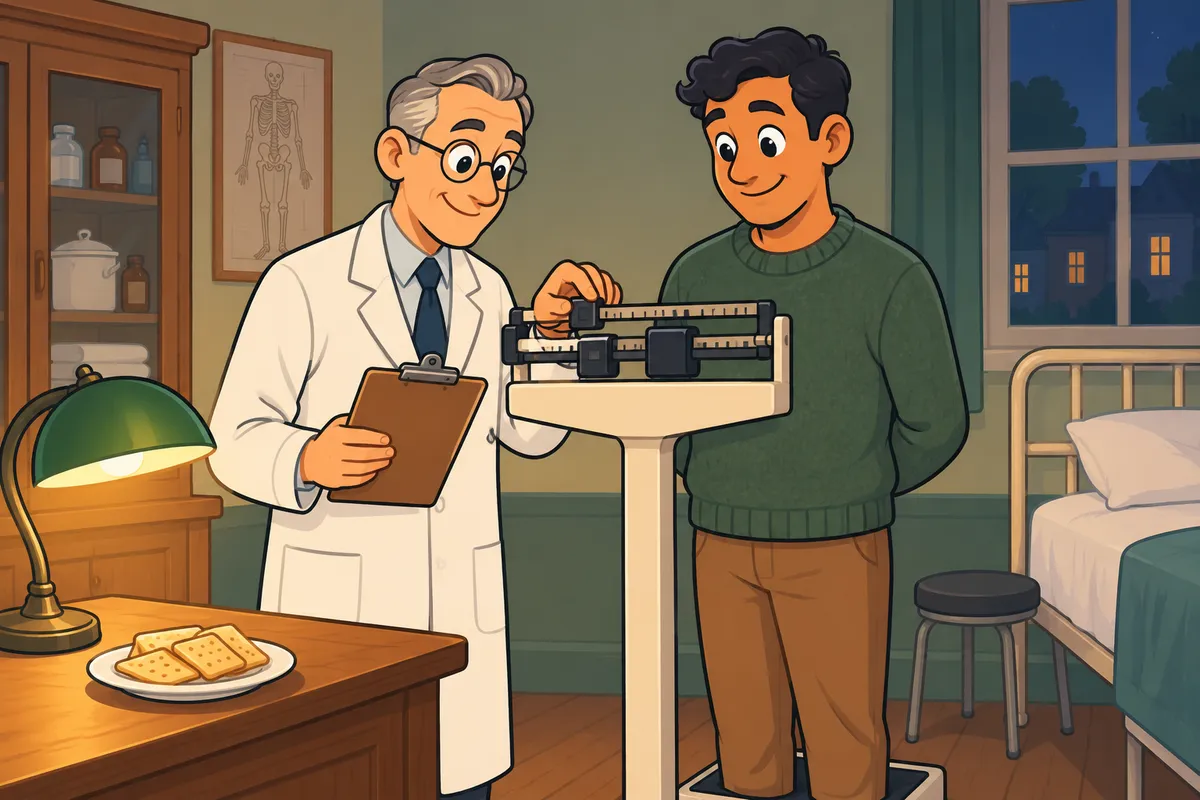
That 2010 review gives no figure of its own, and Nestle Waters funded it alongside US National Institutes of Health grants. The firmest numbers come from a 1944 experiment in which two scientists went without water for over three days and lost about 5 % of their body weight, as a 2019 review in Nutrients reports.
The US National Academies go further on the danger line. They write:
- that you "can lose 10 percent of body weight as water and have little increased risk of death" unless other severe stressors come with it
- that people in survival situations who dried out beyond 10 % needed medical help to recover
For a 70 kg adult, 10 % is 7 kg, about a sixth of the 42 liters of water such a body holds.
Why No One Can Give You an Exact Number
- An experiment that found the limit would have to let someone die. A 2019 review notes that the 1944 water-deprivation study "would now have major ethical concerns," and the researchers stopped the experiment after several days.
- Real cases cannot fill the gap either. A person lost in the desert or trapped in rubble usually has some water, some shade or some food, and nobody weighs them every day.
Is the Three-Day Rule True?
As a rough warning, maybe; as a fact, no. No primary source states three days as a limit. The 1944 researchers stopped the experiment after several days, both subjects well below the 10 % line that the US National Academies mark as the point where people in survival situations needed medical help to recover.
Even a small amount of water changes the picture: no water at all and a little water are two very different situations.
What Happens to Your Body Without Water?
You keep losing water through your breath, your skin and your urine, and nothing comes in to replace it. As that goes on:
- Your blood grows saltier.
- Your mouth and throat dry out.
- Thinking gets harder.
A 2019 review reports that the 1944 subjects lost about 5 % of their body weight and their blood sodium rose about 10 %, and that their discomfort faded within hours of drinking again.
Day by Day in the 1944 Experiment
Two Cambridge scientists ate a dry diet with enough protein, salt and calories and drank nothing for over three days. The doctors weighed them every day and collected their urine. The original paper (Black, McCance and Young, Journal of Physiology, 1944) is available on PMC only as scanned page images; the details confirmed here come from a 2019 review in Nutrients that quotes and summarises it.
| When | Noticed or measured |
|---|---|
| The first days | Concentration slipped; early discomfort was mild |
| By day 3 | "Dry mouths, husky voices, and difficulty swallowing," the 2019 review quotes |
| Days 3 to 4 | Became "temperamental, hollow, and pale," the 2019 review quotes |
| Last dry day | About 5 % of body weight lighter; blood sodium about 10 % higher (2019 review) |
| After drinking | The look of illness gone within a few hours |
The men were "never unbearably thirsty," a 2019 review of the study reports. In this study, how thirsty the men felt said little about how much water they had lost.
Where the Water Goes
Even with no drinks at all, a dry diet still holds some water, and burning food makes even more. But losses through breath, skin and urine far outstrip those small gains.
At those minimum rates, a sedentary adult in mild weather loses at least 1,100 ml a day after subtracting the water the body makes from food. Over three days, that is well over 3 liters, consistent with the 2019 review's report of about 5 % body mass lost in the 1944 experiment. Real losses are higher: skin and urine together range up to 2,900 ml a day, the Academies' table shows, pushing the net daily loss to as much as 3.1 liters without any sweat from heat or exercise.
A dry diet brings little water of its own, while fruit and vegetables are mostly water.
Where Is the Danger Line?
Two lines from the US National Academies help. At a loss of 2 % of body weight or more, your thinking starts to slip; past 10 %, people in survival situations needed medical help to recover. Your own weight sets both lines:
| Body weight | 2 %: thinking slips | 10 %: medical help needed |
|---|---|---|
| 55 kg (121 lb) | 1.1 kg (2.4 lb) | 5.5 kg (12.1 lb) |
| 70 kg (154 lb) | 1.4 kg (3.1 lb) | 7.0 kg (15.4 lb) |
| 90 kg (198 lb) | 1.8 kg (4.0 lb) | 9.0 kg (19.8 lb) |
The two scientists in 1944 stopped at about 5 %, as reported in the 2019 review, between the lines. The Academies' animal studies show why heat changes everything: dehydrated dogs kept in the heat saw their body temperature climb fast, and deaths followed.
How Fast Does Heat Shorten It?
Very fast, because sweat outruns everything else. The US National Academies record sweat rates of about 0.7 liters an hour for women and 1.0 liters an hour for men running long distances in mild weather. At that pace, hours do the work that took the 1944 scientists days.
The two examples below are our own arithmetic for a 70 kg man. His 2 % line is 1.4 kg, so losing at least 1.1 liters (about 1.1 kg) a day gets him there in about 1.3 days, and sweating 1.0 liter an hour gets him there in 1.4 × 60 = 84 minutes, about 1 hour 25 minutes.
Resting in the shade, 70 kg man
- Loses at least 1.1 liters a day
- Reaches his 2 % line (1.4 kg) after about 1.3 days
- Days before the danger line
Running, 70 kg man
- Sweats about 1.0 liter an hour
- Reaches the same 2 % line in about 1 hour 25 minutes
- Hours before the danger line
Skin losses can reach 2.0 liters an hour in hard activity in the heat, the 2010 review notes.
So the question "how long without water" has two answers. Sitting in the shade, days. Working or walking in the sun, the clock runs in hours, which is why the stranded people the Academies describe lived or died by whether they had water.
Signs to Watch For, and When to Get Help
Long before the 10 % line, your body tells you. The NHS lists the signs for adults and children, and they fall into four groups:
Signs that you are running dry
4 items- Thirst, and a dry mouth, lips and tongue
- Dark yellow, strong-smelling pee, and peeing less often than usual
- A headache, feeling light-headed or dizzy
- Feeling tired, and sunken eyes
What Happened When They Drank Again
The 1944 doctors gave their men fluid back slowly, and the worst of the discomfort lifted within a few hours, though the body took longer to recover in full. If someone shows any of the emergency signs above, call for help first.
After an everyday gap, sip steadily and eat something salty with it.
Who Runs Dry Faster?
Dehydration is more likely if you:
- have diabetes
- have been sick or had diarrhea
- have been in the sun or a hot place too long
- have drunk a lot of alcohol
- sweat a lot exercising
- have a high temperature
- take a diuretic (a medicine that makes you pee more)
- depend on other people for your drinks
All of those come from the NHS list of causes. If one of them applies, the clock in this page runs faster, and the first thing to do is small sips, as the NHS advice says.
What Does an Ordinary Day Cost You?
Even a sedentary adult in mild weather spends water all day. The US National Academies' estimate of the minimum daily losses in healthy sedentary adults, which leaves out sweat from heat or exercise, runs like this:
| Where the water goes | Minimum loss a day |
|---|---|
| Breath | 250 to 350 ml |
| Urine | 500 to 1,000 ml |
| Skin (insensible) | 450 to 1,900 ml |
| Stool | 100 to 200 ml |
| Made by your body from food | 250 to 350 ml back |
Net, that is about 1,050 to 3,100 ml a day (35 to 105 oz) to replace, before any sweating. The 1944 scientists lost about 5 % of their body weight in just over three days, which sits at the low end of this range.
Why Some People Last Longer Than Others
Five things move the number, and you can see each one in the figures above. None of them turns days into weeks without at least a little water.
- Heat and sun: sweat can reach a liter an hour or more, against about a liter a day through skin and lungs on an ordinary day.
- Effort: walking for help in the heat costs far more water than waiting in the shade.
- Body size: a bigger body holds more water, so the 10 % line sits further away in liters.
- Food: fruit, vegetables and soup bring water, and dry food brings little.
- Small sips: the 1944 authors noted that people "may survive on very small amounts of water for several weeks".
What This Means for Your Everyday Number
The experiments show how steadily you spend water: the 1944 scientists lost about 5 % of their body weight in just over three days, and the table above puts the net daily loss for a sedentary adult at about 1 to 3.1 liters. You refill most of that through drinks, and food adds the rest. Any safe water does the job, and alkaline water refills you no faster than the tap.
Eight 8 oz glasses come to about 1.9 liters, inside that range, though the rule itself has no study behind it. Food carries part of the load, so the water you drink and your total water are two different numbers.
Your size changes the answer, and so does your day. Your own goal from your weight, activity and climate takes a few seconds to work out.
Common Questions
How much water does a person need a day to survive?
About 2.5 to 3 liters a day, counting the water in drinks and food, is the World Health Organization's survival figure for emergencies. Heat and a person's own body move it up or down.
Can you drink seawater to survive?
No. Your kidneys can only make urine that is less salty than seawater, so you pass more water than you drank and grow more dehydrated, NOAA explains.
General information for healthy adults, not medical advice. If a doctor has set your fluid amount, follow that.

More in Water Intake
Sources
- The Journal of Physiology (Black, McCance and Young). A study of dehydration by means of balance experiments, 1944.
- National Academies of Sciences. Dietary Reference Intakes for Water, Potassium, Sodium, Chloride, and Sulfate: Chapter 4, Water, 2005.
- Nutrition Reviews (Popkin, D'Anci and Rosenberg). Water, hydration, and health, 2010.
- Nutrients (Watso and Farquhar). Hydration Status and Cardiovascular Function, 2019.
- NHS. Dehydration, 2026.
- World Health Organization. Technical Notes on Drinking-Water, Sanitation and Hygiene in Emergencies, Note 9: How much water is needed in emergencies, 2013.
- NOAA National Ocean Service. Can humans drink seawater?, 2026.
Sources checked by the Glubbo Editorial Team on Oct 19, 2026. General information, not medical advice. How we write and check our guides.

