Why Is My Mouth Always Dry? Dehydration and the Other Causes
The six common causes and the clue that points to each, why water alone may not fix it, and when to get it checked.
 By the Glubbo Editorial Team · Updated Oct 19, 2026 · 10 min read
On This Page
- Why Is My Mouth Always Dry?
- Does Dehydration Cause Dry Mouth?
- Why Is My Mouth Dry at Night?
- Can Medicines Cause a Dry Mouth?
- Is a Dry Mouth a Sign of Diabetes?
- What Else Causes a Dry Mouth Besides Dehydration?
- Who Gets a Dry Mouth Most Often?
- What Helps a Dry Mouth?
- When Does a Dry Mouth Need a Doctor?
- A Two-Week Plan for a Dry Mouth
- Sources
Short answer
Often dehydration; medicines and mouth breathing too.
- NHS causes: dehydration, medicines, mouth breathing, anxiety, cancer treatment, thrush.
- Hundreds of medicines lower saliva, NIDCR says; never stop one without advice.
- About 1 in 3 adults over 60 report a dry mouth, a 2026 review of 128 studies found.
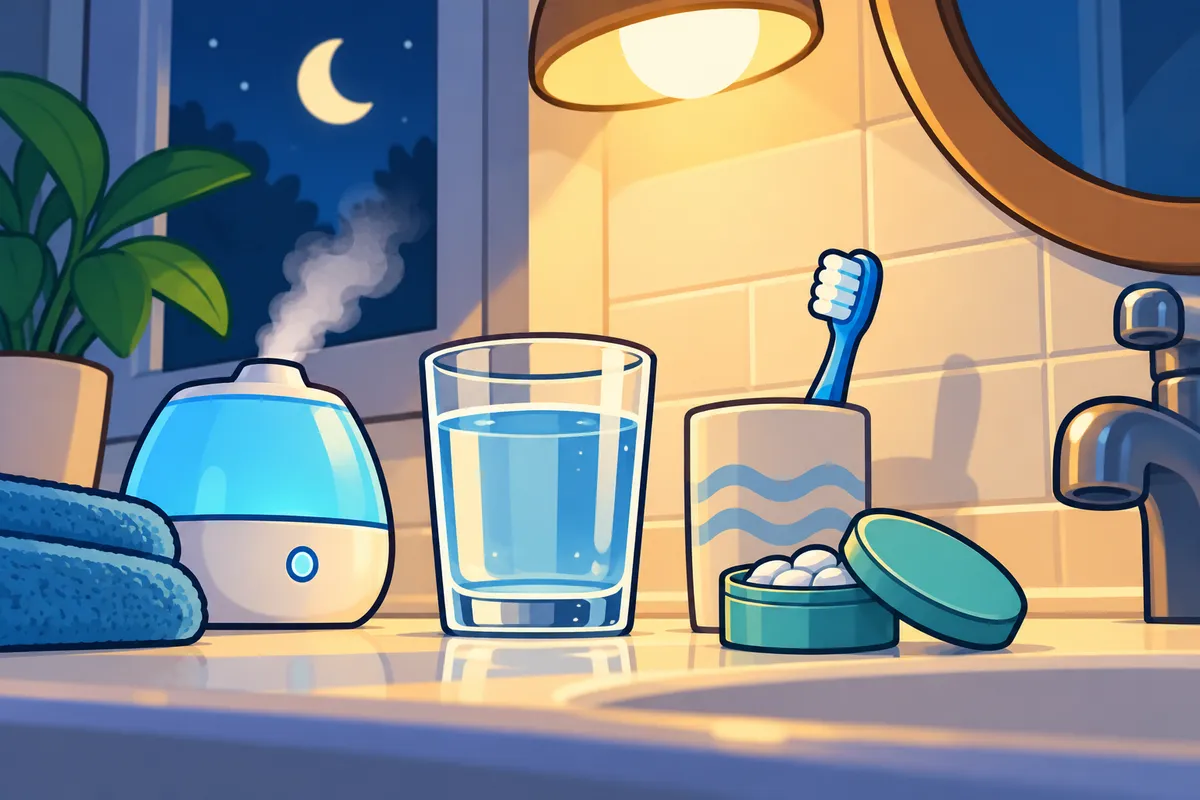
Usually dehydration, a medicine, or breathing through your mouth at night. The NHS lists six common causes and says a dry mouth is rarely a sign of anything serious, though one that does not go away can come from a condition such as diabetes or Sjögren's.
Maybe you drink a glass of water, your mouth feels fine for ten minutes, and then the sticky, cotton-wool feeling is back. If that has gone on for weeks, more water may not be the whole answer, and each cause leaves a different clue.
Why Is My Mouth Always Dry?
The medical name is xerostomia: not having enough saliva to keep the mouth wet, in the words of the US National Institute of Dental and Craniofacial Research (NIDCR). It adds that a dry mouth is not a normal part of aging, even though it is common in older people.
The pattern of your dry mouth usually points to one cause. The table pairs each cause with the clue it tends to leave and the first thing to try.
| Cause | The clue | First thing to try |
|---|---|---|
| Dehydration | Dark pee, thirst, a hot day, sweating or a stomach bug | Drink more through the day; check your pee turns pale |
| A medicine | Started or changed a medicine recently | Read the leaflet; ask your doctor or pharmacist, do not stop it |
| Mouth breathing at night | Worst on waking, often with a blocked nose | Water by the bed; ask a pharmacist about a blocked nose |
| Anxiety | Comes and goes with stress | Sip water; tell your doctor if anxiety is frequent |
| Cancer treatment | During or after radiotherapy or chemotherapy | Tell your care team; radiation can damage the salivary glands |
| Oral thrush | White patches, soreness | See a doctor or pharmacist |
| Diabetes or Sjögren's | Lasts for weeks, with peeing a lot or dry eyes | See a doctor |
Does Dehydration Cause Dry Mouth?
Yes; it heads the list of common causes. When your body is short of water it makes less saliva, and a 2026 study of 39 young men linked their resting saliva flow to how concentrated their urine was. Drinking enough through the day is the first fix, in regular sips of cold water.
The same study found a twist. Ito and colleagues measured these across the seasons:
- Saliva flow.
- Urine concentration.
- Room temperature and humidity.
- Two stress markers.
Saliva flow at rest tracked room temperature, humidity, hydration and chromogranin A, a marker of stress, while stimulated saliva flow tracked none of them, and the feeling of a dry mouth tracked chromogranin A alone.
A mouth can feel dry from stress even when you have drunk enough, and a warm or dry room can shift your saliva even when you are not thirsty. It is a small study of young men, but it may help explain why a glass of water does not always fix the feeling.
Why Does My Mouth Stay Dry After I Drink Water?
Because water refills you, but it does not fix a medicine, a blocked nose, stress or a dry room. NIDCR also warns that "caffeine can dry out the mouth and lead to dehydration," and says tobacco and alcohol dry out the mouth too.
If a drink only helps for a few minutes, look at the clue table above before you add more glasses. Thirst that never switches off is a separate question with its own list of causes, diabetes among them.
Do Caffeine, Alcohol and Smoking Make It Worse?
Yes, all three. NIDCR says:
- Tobacco and alcohol dry out the mouth.
- "Caffeine can dry out the mouth and lead to dehydration," so it suggests cutting back on caffeinated coffee, tea and some sodas.
The NHS list adds fizzy drinks, acidic foods such as lemons, and spicy, salty or sugary foods.
The practical swap is cold water or an unsweetened cold drink in small sips, and sugar-free gum between meals. If you smoke, the NHS says to stop, and a dry mouth is one more reason to ask for help.
Why Is My Mouth Dry at Night?
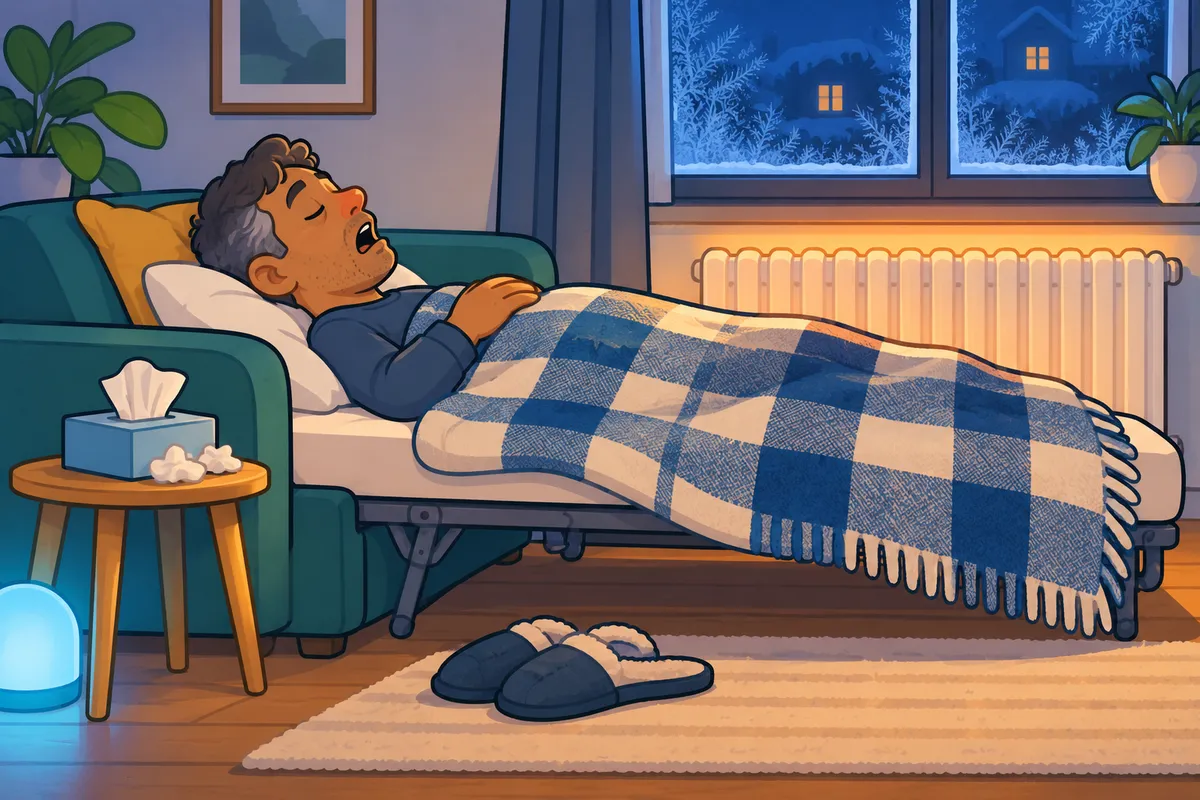
Mostly from breathing through your mouth while you sleep. Keep some cold water by your bed, and run a humidifier at night, which NIDCR suggests.
If a blocked nose is behind it, a pharmacist may suggest a decongestant. Two other points matter at night:
- Do not sleep with dentures in.
- Keep alcohol and caffeine low in the evening.
Can Medicines Cause a Dry Mouth?
Yes, very often. NIDCR says "hundreds of medicines can cause the salivary glands to make less saliva." Check your medicine's leaflet for dry mouth as a side effect, and look first at these three kinds that NIDCR says often cause it:
- medicines for high blood pressure
- medicines for depression
- medicines for bladder-control problems
Never stop a prescribed medicine on your own. Your doctor can check the cause and recommend treatment, and a pharmacist can suggest gels, sprays or lozenges that keep the mouth moist in the meantime.
If your tablet is for blood pressure, it is worth knowing how fluid and blood pressure interact before you change how much you drink.
Is a Dry Mouth a Sign of Diabetes?
It can be, especially with other signs. The NHS says a dry mouth that does not go away may be caused by a condition like diabetes, and asks you to see a doctor if it comes with other symptoms such as needing to pee a lot. A 2025 review of 23 studies and 2,486 people found about 42 % of people with type 2 diabetes reported a dry mouth.
A dry mouth alone does not mean diabetes. The two signs go together because high blood sugar pulls water out through your kidneys, and the NHS says a GP can check what the cause might be.
Could It Be Sjögren's Disease?
It is one of the conditions NIDCR names, along with diabetes and HIV/AIDS. Dry eyes alongside the dry mouth are the clue the NHS gives for asking a doctor, and a doctor can look for the cause.
What Else Causes a Dry Mouth Besides Dehydration?
Cancer treatment, nerve damage and several diseases, on top of the causes in the clue table.
Other causes of a dry mouth
4 items- Radiation to the head or neck, which can damage the salivary glands
- Chemotherapy and immunotherapy, which can make saliva thicker
- A head or neck injury that damages the nerves signaling the glands
- Sjögren's disease, HIV/AIDS and diabetes
If you are in treatment, tell your care team about a dry mouth early, because it also raises your risk of tooth decay and mouth infections. Tobacco and alcohol dry the mouth further, so they belong on the list of things to change before you blame water.
Who Gets a Dry Mouth Most Often?
Older adults, people on several medicines, and people with diabetes. A 2026 meta-analysis of 128 publications and 174,698 people aged 60 and over found that about 1 in 3 reported a dry mouth, and about 1 in 3 had measurably low saliva.
- 32.4 %
- of adults 60 and over report a dry mouth
- 33.0 %
- of adults 60 and over have measurably low saliva
- 42.5 %
- of people with type 2 diabetes report a dry mouth
The ranges are wide: 29.6 to 35.2 % for a dry mouth in older adults, 25.7 to 42.0 % for low saliva, and 36.1 to 48.5 % in type 2 diabetes. The older-adult review pooled 119 groups for dry mouth and 32 for low saliva, and the studies disagreed with each other far more than chance explains.
The older-adult review left out people with conditions known to cause dry mouth and anyone who had had radiotherapy, so those figures do not come from people already known to be ill. The studies varied a lot and most were at high risk of bias, and the diabetes studies were mostly small and relied on people describing their own dryness, so treat all three numbers as rough.
What Helps a Dry Mouth?
Regular sips of cold water, sugar-free gum and fewer drying drinks. These are the things to do and to avoid; work through them for a few weeks before you decide the self-care has failed.
Do
- Drink plenty of cold water, in regular sips
- Suck ice cubes or ice pops
- Chew sugar-free gum or suck sugar-free candy
- Use lip balm if your lips are dry
- Brush twice a day; use alcohol-free mouthwash
Avoid
- Lots of alcohol, caffeine or fizzy drinks
- Acidic, spicy, salty or sugary foods
- Smoking
- Sleeping with dentures in
- Stopping a prescribed medicine without advice
NIDCR adds sipping water or a sugarless drink with meals, and its tip sheet suggests 8 to 12 cups of water a day (64 to 96 oz, or 2 to 3 liters). Your own daily amount depends on your size and day, so treat that as a rough guide and spread it across your waking hours.
What a Pharmacist Can Offer
Products that keep the mouth moist. A pharmacist can suggest treatments you can buy, which come as gels, sprays, tablets or lozenges, and may suggest a decongestant if a blocked nose is behind it. One warning: do not use acidic artificial saliva products if you still have your own teeth.
Why Saliva Matters for Your Teeth
Saliva protects your teeth. NIDCR explains that it contains minerals such as calcium and phosphate "that help keep teeth strong and fight tooth decay," so a mouth that stays dry gets more cavities and more fungal infections, and chewing, swallowing and talking get harder. Tell your dentist about a dry mouth at your next check-up.
When Does a Dry Mouth Need a Doctor?
A Two-Week Plan for a Dry Mouth
- Today, check your pee and your leaflets: pale pee points away from dehydration, and a leaflet that lists dry mouth points to a medicine.
- Tonight, put cold water by the bed and run a humidifier if you have one; take dentures out, and keep alcohol and caffeine low in the evening.
- Through the week, sip cold water on a schedule you can keep, and carry sugar-free gum for the moments between drinks.
- If your mouth is still dry after a few weeks of this, book a visit with your doctor or dentist, and bring the list of every medicine, vitamin and supplement you take so they can check each one for dryness as a side effect.
General information for healthy adults, not medical advice. If a doctor has set your fluid amount, follow that.

More in Water and Health


Sources
- NHS. Dry mouth, 2025.
- US National Institute of Dental and Craniofacial Research. Dry Mouth, 2025.
- BMC Oral Health (Boonyoung K et al.). Prevalence of xerostomia and hyposalivation in older adults: a systematic review and meta-analysis, 2026.
- PLOS ONE (Ito K et al.). Impact of temperature, humidity, dehydration, and psychological stress on salivary flow and xerostomia in young men: An observational study, 2026.
- BMC Oral Health (Huang S et al.). Prevalence of xerostomia in patients with type 2 diabetes mellitus: a systematic review and meta-analysis, 2025.
Sources checked by the Glubbo Editorial Team on Oct 19, 2026. General information, not medical advice. How we write and check our guides.

