Can Dehydration Cause Diabetes? Which Way the Link Really Runs
Why diabetes makes you thirsty, what a 9-year study of water and blood sugar found, and the signs that need help now.
 By the Glubbo Editorial Team · Updated Oct 19, 2026 · 8 min read
On This Page
Short answer
No. High blood sugar dries you out, not the reverse.
- NIDDK: type 2 diabetes comes from insulin resistance and too little insulin.
- Thirst and peeing a lot are early diabetes symptoms, the NHS says.
- Adults drinking under 0.5 L of water a day had more high blood sugar in a 9-year study.
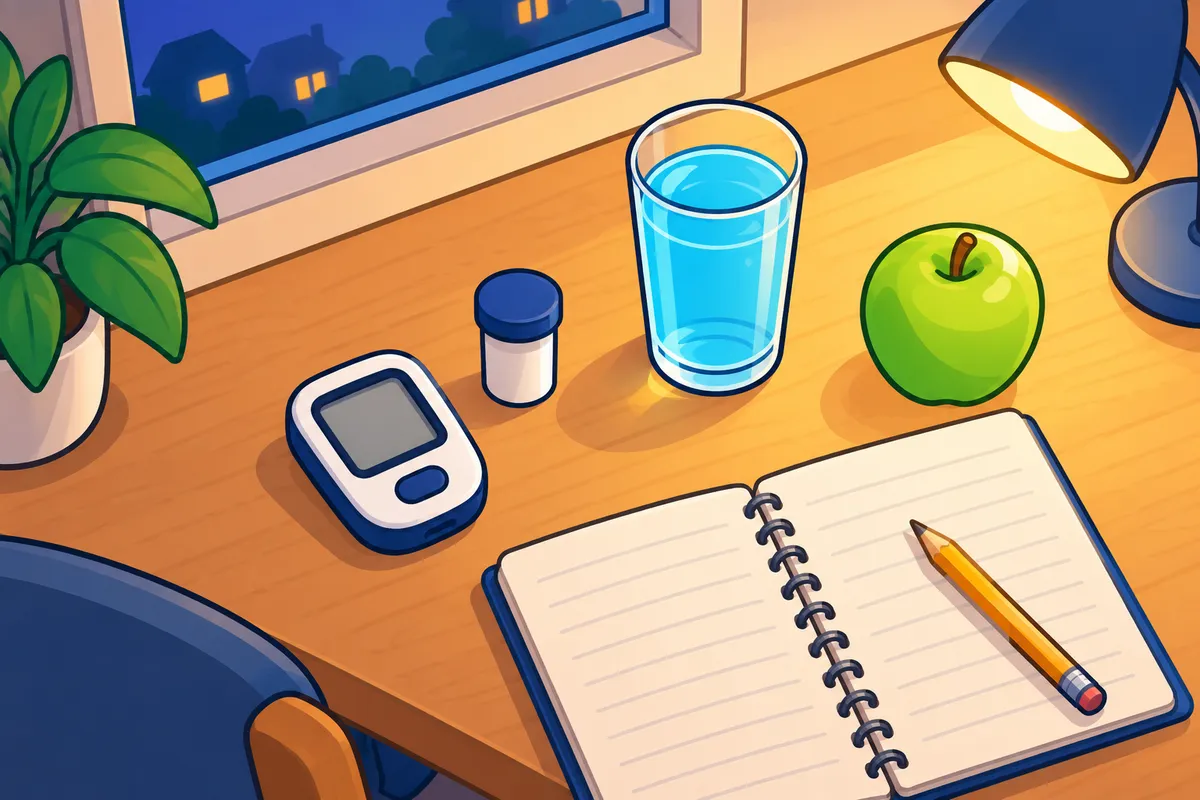
No, dehydration does not cause diabetes. The link runs the other way: high blood sugar pulls water out of you, and the thirst is your body asking for it back.
It sounds plausible the other way round, because both come with a dry mouth. If you are thirsty all the time and get up twice a night to pee, see a doctor: the NHS asks anyone who thinks they may have type 2 diabetes to see a GP.
Can Dehydration Cause Diabetes?
No. The NIDDK says:
- Type 1 diabetes develops when the immune system destroys the insulin-making cells in the pancreas.
- Type 2 develops when the pancreas does not make enough insulin and the body has trouble using it.
Not drinking enough appears in neither cause.
The CDC's list of what raises your chance of type 2 diabetes is about weight, age, family, activity and pregnancy history. Water is not on it.
What raises your risk of type 2 diabetes
7 items- Have overweight or obesity
- Are age 45 or older
- Have a parent or sibling with type 2 diabetes
- Are physically active less than 3 times a week
- Have non-alcoholic fatty liver disease (NAFLD)
- Have ever had gestational diabetes or given birth to a baby who weighed over 9 pounds
- Are African American, Hispanic or Latino, American Indian or Alaska Native
Does Diabetes Cause Dehydration?
Yes, when blood sugar runs high. The NHS lists peeing more than usual and feeling thirsty all the time among the common symptoms of type 2 diabetes, beside tiredness and losing weight without trying. The NIDDK names increased urination and feeling very thirsty for every type.
Why Does High Blood Sugar Make You Thirsty?
Your kidneys normally keep sugar in your blood. MedlinePlus explains that the kidneys hold on to glucose and send it back to the bloodstream, which is why urine holds very little or none. Diabetes is the most common cause of high glucose in urine.
When glucose spills into urine, water follows it out. You pee more, your body runs short, and thirst switches on to make up the loss. The thirst is the result of high blood sugar, so drinking more eases the dryness but leaves the cause where it was.
That loop is why diabetes so often shows up first as thirst. Children with type 1 diabetes often need to pee more, feel very thirsty and lose weight even while eating more, the NIDDK says.
Does Drinking More Water Lower the Risk of Diabetes?
Possibly a little, but no trial has shown it. The best long-term data come from a French study of 3,615 middle-aged adults with normal blood sugar, followed for 9 years. People who drank less than half a liter (17 oz) of water a day developed high blood sugar more often than those who drank more.
What the 9-Year Study Found
Roussel and colleagues asked people on a questionnaire how much plain water they drank each day, then counted who developed high fasting blood sugar (6.1 mmol/L or more, which is 110 mg/dL, or diabetes treatment). They recorded 565 new cases, 202 of them diabetes. After adjusting for other factors, the odds looked like this:
The 0.5 to 1 L group had an odds ratio of 0.68 (95 % confidence interval 0.52 to 0.89), and the group above 1 L had 0.79 (0.59 to 1.05). That second interval includes 1.00, so the top group's own result is not statistically clear, and it did no better than the middle group.
The questionnaire means the study shows a link and cannot prove that water caused the difference. The authors point to vasopressin, the hormone that holds water in your body and rises when you drink little, as a possible reason, and they call for trials. The only small trial so far, in which low drinkers added 1.5 liters a day for six weeks, is on the blood sugar page.
Sugary Drinks Are the Clearer Risk
The drink that does show up in diabetes research is the sweet one.
- 310,819
- people in the pooled studies
- 15,043
- of them developed type 2 diabetes
- 26 %
- higher risk for the heaviest sugary-drink drinkers
In that meta-analysis, the people who drank the most sugar-sweetened drinks, most often 1 to 2 servings a day, had a 26 % greater risk of type 2 diabetes than those who drank the least (relative risk 1.26, 95 % confidence interval 1.12 to 1.41).
So the strongest water advice for diabetes risk is a swap. Water in place of a daily soda takes away both the sugar and the calories, and a 12-ounce can of regular soda holds about 10 teaspoons of sugar. The same daily soda also comes with more gout in two large Harvard cohorts.
Do Diabetics Need More Water?
There is no separate official amount for people with diabetes, so ask your diabetes care team for yours. What changes is the risk of running short: high blood sugar makes you pee more, and some diabetes medicines do too.
The NHS page on dapagliflozin, one of these medicines, lists peeing more than usual as a common side effect. It warns that vomiting, diarrhea or a fever while you take it brings a risk of dehydration, and asks you to talk to a pharmacist or doctor or follow the advice you already have.
Between sick days, the basic dehydration signs still apply. The NHS lists:
- Thirst.
- Dark yellow and strong-smelling pee.
- Light-headedness.
- Tiredness.
- A dry mouth.
- Headache.
With diabetes, thirst can also mean high blood sugar, so follow your care team's advice on when to check it.
Glubbo's goal formula is built for healthy adults. With diabetes, use the app for reminders and enter the goal your care team gives you.
What Should You Drink Besides Water?
Water first, then low-calorie drinks. The CDC's meal-planning advice says to choose water or a low-calorie drink such as unsweetened iced tea with your meal.
Juice is the common trap: the CDC notes that fruit juice raises blood sugar faster than eating whole fruit, and that a cup of milk counts as a carb food. A drink that looks healthy can still use up your carb budget, so ask your care team how to count it.
What to Drink on a Sick Day With Diabetes
Sick days are when running short gets dangerous. MedlinePlus says to drink at least twelve 8-ounce cups, about 3 liters, of fluid a day, and names water, club soda, caffeine-free diet soda, tomato juice and chicken broth. Sugary drinks are for the times your blood sugar is under 100 mg/dL or falling quickly.
When to call your provider on a sick day
- Blood sugar above 240 mg/dL (13.3 mmol/L) for more than 1 dayCall your provider
- Moderate-to-large ketones on a urine testCall your provider
- Fever of 100 °F (37.7 °C) or higherCall your provider
- Vomiting or diarrhea for more than 4 hoursCall your provider
- You cannot keep food or liquids downGo to the emergency room
When Is Dehydration With Diabetes an Emergency?
When very high blood sugar and fluid loss feed each other, and two emergencies do exactly that. In diabetic ketoacidosis (DKA), the body runs short of insulin and makes ketones; the NHS says it mostly affects people with type 1 diabetes, can happen in type 2 on insulin, and can be the first sign of undiagnosed type 1, particularly in children. Its symptoms usually develop over 24 hours, but it can be faster.
The second, the hyperosmolar hyperglycemic state (HHS), is extremely high blood sugar without ketones. MedlinePlus lists older age and limited access to water among its risk factors, names infection, another illness and medicines that increase fluid loss as triggers, and says symptoms may worsen over days or weeks.
| Diabetic ketoacidosis (DKA) | HHS (hyperosmolar state) | |
|---|---|---|
| Mostly affects | Type 1 diabetes, and type 2 on insulin | Type 2 diabetes that is not under control, often older adults |
| What drives it | Too little insulin; ketones build up | Extremely high blood sugar with no ketones |
| How fast it builds | Usually over about 24 hours | Over days or weeks |
| First signs | Thirst, peeing more, feeling sick or being sick, deep breathing, fruity breath | Thirst and peeing more, then weakness, dry mouth, confusion |
From a Thirsty Week to a Blood Test
From a thirsty week to an answer
- Write down for three days how often you pee, day and night
- Drink water to thirst, and swap one sugary drink a day for water
- Book a doctor visit if thirst, frequent peeing or weight loss lasts
- Ask for a blood test; urine glucose alone cannot diagnose diabetes
- If you have diabetes, keep your team's sick-day rules where you can see them
If thirst comes without the other signs, something else is more likely: a salty dinner, a hot day or a medicine that dries your mouth can all leave you thirsty for days.
General information for healthy adults, not medical advice. If a doctor has set your fluid amount, follow that.

More in Water and Health
Sources
- National Institute of Diabetes and Digestive and Kidney Diseases (NIDDK). Symptoms and Causes of Diabetes, 2024.
- US Centers for Disease Control and Prevention. Diabetes Risk Factors, 2024.
- NHS. Symptoms of type 2 diabetes, 2025.
- MedlinePlus (US National Library of Medicine). Glucose in Urine Test, 2024.
- Diabetes Care (Roussel R et al., D.E.S.I.R. Study Group). Low water intake and risk for new-onset hyperglycemia, 2011.
- Diabetes Care (Malik VS et al.). Sugar-sweetened beverages and risk of metabolic syndrome and type 2 diabetes: a meta-analysis, 2010.
- NHS. Diabetic ketoacidosis, 2023.
- MedlinePlus (US National Library of Medicine). Diabetes - when you are sick, 2024.
- MedlinePlus (US National Library of Medicine). Hyperosmolar hyperglycemic state, 2024.
- NHS. Side effects of dapagliflozin, 2025.
- US Centers for Disease Control and Prevention. Diabetes Meal Planning, 2024.
- NHS. Dehydration, 2026.
Sources checked by the Glubbo Editorial Team on Oct 19, 2026. General information, not medical advice. How we write and check our guides.

