Cups, Ounces and Liters · Conversions
How Many Ounces Are in a Can of Soda and Other Drinks?
Common US drink packages run from 6.75 fl oz juice boxes to 2-liter bottles holding 67.6 fl oz.
 By the Glubbo Editorial Team · Updated Oct 23, 2026 · 9 min read
On This Page
- How Many Ounces Are in a Standard Soda Can?
- How Many Ounces Are in a 2-Liter Bottle?
- How Many Ounces Are in a Mini Can?
- How Many Ounces Are in a Juice Box?
- How Many Ounces Are in a Milk Carton?
- Is the Serving Size the Same as the Container Size?
- How Many Cups Can You Pour From Each Container?
- What Changes Outside the United States?
- How Much Drink Should You Buy for a Group?
- How Do You Compare Prices Across Container Sizes?
- How Should You Record a Container Size You Use Often?
- The Fast Way to Check Any Container
- Sources
Short answer
A standard US soda can holds 12 fl oz.
- A 2-liter bottle holds 67.6 US fl oz, or about 5.6 standard cans.
- Mini cans commonly hold 7.5 fl oz; single bottles commonly hold 16.9 or 20 fl oz.
- Juice boxes and milk cartons vary, so read the net quantity on the front.
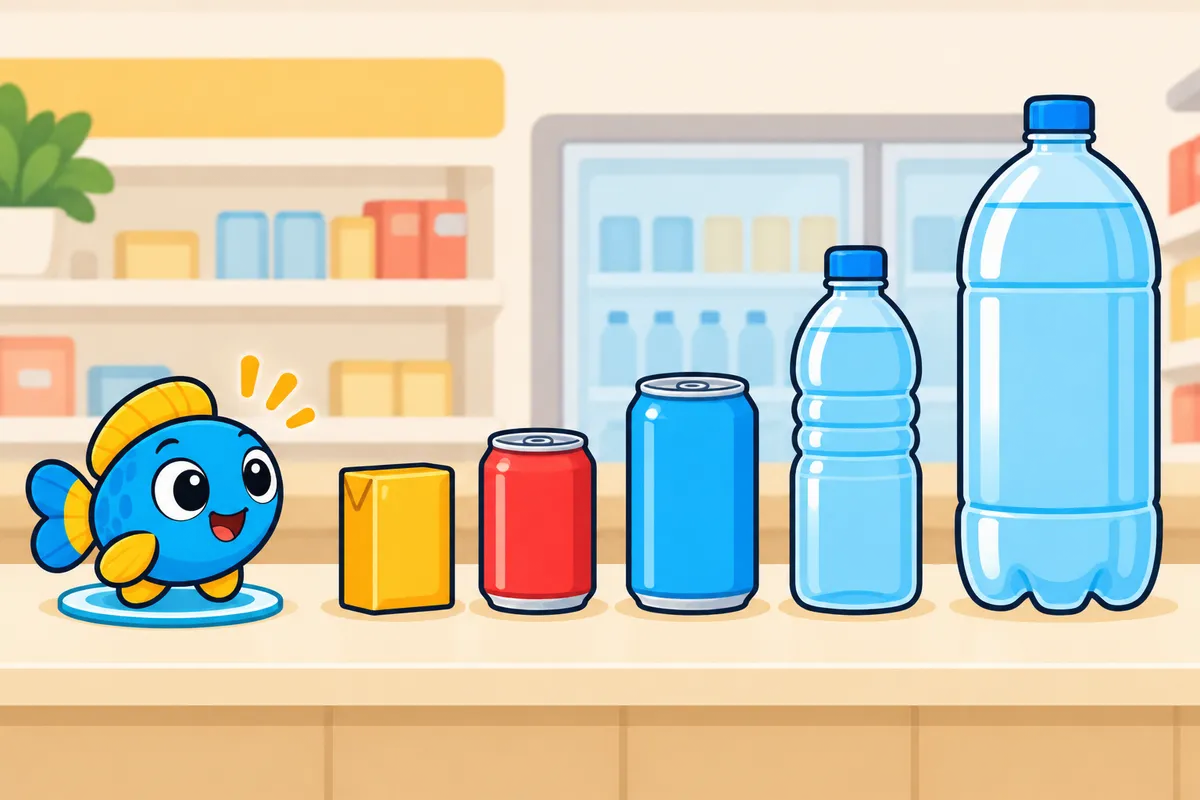
A standard US soda can holds 12 US fluid ounces (355 mL). A mini can commonly holds 7.5 fl oz, a single bottle may hold 16.9 or 20 fl oz, and a 2-liter bottle holds 67.6 fl oz.
Package sizes vary by brand and country. The net quantity printed on the front is the final answer for the container in your hand.
How Many Ounces Are in a Standard Soda Can?
A standard US soda can is 12 fl oz, equal to about 355 mL or 1.5 US cups. Coca-Cola's current US product page lists 12 fl oz among its available sizes and shows one 12 fl oz can as a serving.
The word “standard” describes the common US package, not a legal size that every soda must use. Slim cans, energy drinks, mixers and cans sold outside the US can hold different amounts.
| Container | US fluid ounces | Milliliters | US cups |
|---|---|---|---|
| Mini soda can | 7.5 fl oz | 222 mL | 0.94 cup |
| Small can | 8 fl oz | 237 mL | 1 cup |
| Standard US can | 12 fl oz | 355 mL | 1.5 cups |
| Tall can | 16 fl oz | 473 mL | 2 cups |
| 500 mL bottle | 16.9 fl oz | 500 mL | 2.11 cups |
| Single bottle | 20 fl oz | 591 mL | 2.5 cups |
| 1.25 L bottle | 42.3 fl oz | 1,250 mL | 5.28 cups |
| 2 L bottle | 67.6 fl oz | 2,000 mL | 8.45 cups |
Milliliters and ounces above use NIST's factor of 29.5735 mL per US fluid ounce. Cup totals use 8 fl oz per US cup.
How Many Ounces Are in a 2-Liter Bottle?
Two liters equal 67.628 US fluid ounces, normally printed or discussed as 67.6 fl oz. Divide 2,000 mL by 29.5735 mL per fluid ounce:
2,000 ÷ 29.5735 = 67.628 fl oz
That is about 5.64 standard 12 oz cans, 8.45 US cups or 4.23 US pints. A 2-liter bottle therefore gives five full cans with 7.6 fl oz left, rather than six full cans.
Six 12 oz Cans
- 72 fl oz total
- 2.13 liters
- 4.4 fl oz more than 2 L
One 2 Liter Bottle
- 67.6 fl oz total
- 8.45 US cups
- About 5.6 standard cans
For a party, count servings by the cup size you will actually pour. One 2-liter bottle gives:
- ten 6 oz cups with 7.6 oz left
- eight 8 oz cups with 3.6 oz left
- five 12 oz cups with 7.6 oz left
How Many Ounces Are in a Mini Can?
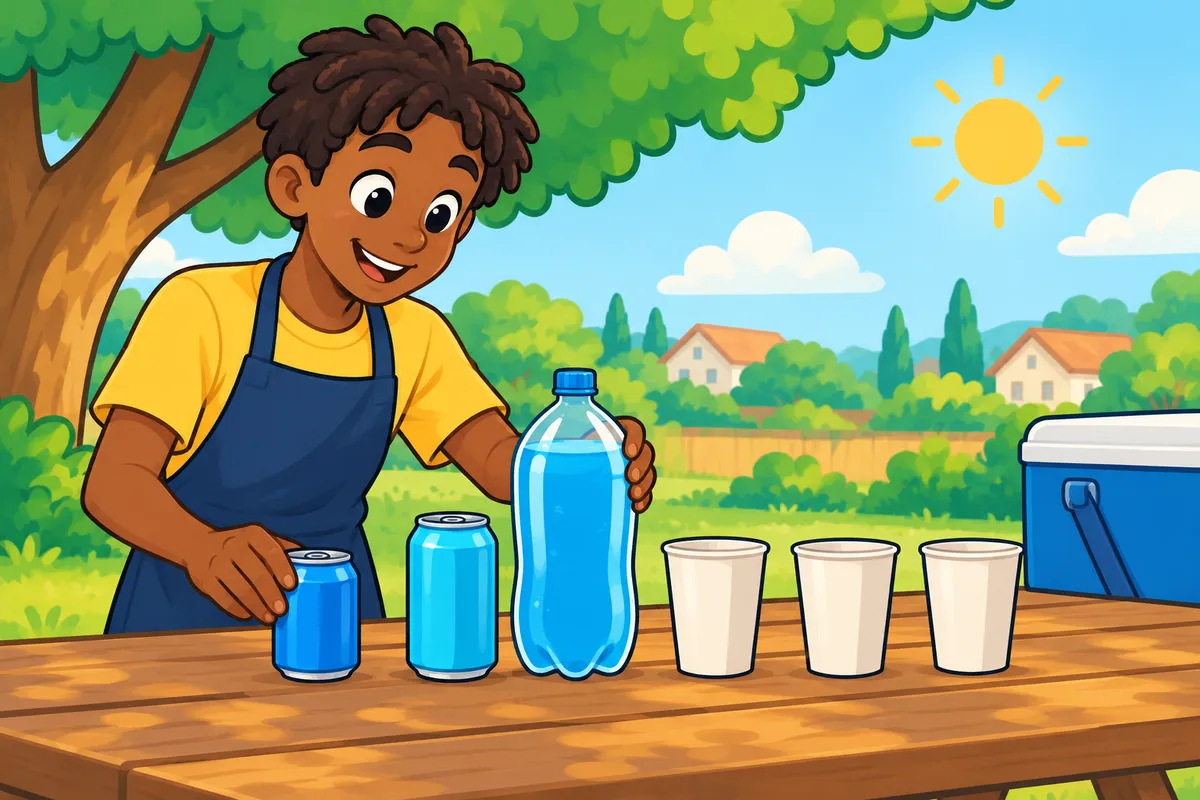
A US mini soda can commonly holds 7.5 fl oz (222 mL). Coca-Cola describes its mini cans as 7.5 oz and about half the size of a standard 12 oz can.
“About half” is packaging language: 7.5 is 62.5% of 12. Two mini cans total 15 fl oz, which is 3 fl oz more than one standard can.
The smaller can is also slightly under one US cup. If you log drinks in cups, count it as 0.94 cup; if you log in ounces, use the printed 7.5. Keep the decimal instead of rounding every mini can up to a cup.
How Many Ounces Are in a Juice Box?
Juice boxes do not have one standard capacity. Small boxes commonly appear around 6 to 8 fl oz, but the package label is the source for a specific product.
Some cartons state only milliliters in markets outside the US. Convert the printed amount by dividing by 29.5735:
| Printed size | US fl oz | Useful comparison |
|---|---|---|
| 180 mL | 6.09 fl oz | Small box |
| 200 mL | 6.76 fl oz | Common metric box |
| 250 mL | 8.45 fl oz | Metric cup |
| 330 mL | 11.16 fl oz | Small carton or can |
| 1 L | 33.81 fl oz | Family carton |
Do not infer box size from the serving shown in Nutrition Facts. The FDA explains that serving size reflects how much people typically consume, while the front net quantity tells you how much the whole package contains.
How Many Ounces Are in a Milk Carton?
Milk cartons range from single-serving school cartons to half-gallon family cartons. In US customary sizes, common capacities convert cleanly:
| Carton or jug | Fluid ounces | Cups | Milliliters, approximate |
|---|---|---|---|
| Half pint | 8 fl oz | 1 | 237 mL |
| Pint | 16 fl oz | 2 | 473 mL |
| Quart | 32 fl oz | 4 | 946 mL |
| Half gallon | 64 fl oz | 8 | 1,893 mL |
| Gallon | 128 fl oz | 16 | 3,785 mL |
A carton marked 1 liter is 33.8 fl oz, slightly larger than a US quart. A 2-liter carton is 67.6 fl oz, slightly larger than a half gallon. The liter-to-ounces table covers the metric sizes without rounding them into US packages.
Is the Serving Size the Same as the Container Size?
Sometimes, but not always. Container size is the total drink inside. Serving size is the amount used to calculate one column of nutrition information.
Read a Drink Label in the Right Order
- Find NET CONTENTS on the front for the whole container
- Find Serving size at the top of Nutrition Facts
- Check Servings per container before using calories or sugar
- Use the whole-container column when the label provides one
A 20 fl oz bottle can be one labeled serving. A larger bottle may contain several servings even if you drink from it directly. The FDA says some containers show information both per serving and per package, so follow the heading above the numbers.
Container size also does not tell you what the drink contributes nutritionally. A 12 fl oz package states capacity; calories, sugar and other nutrients still come from the label. The drink comparison guide handles water, milk and other beverages by composition.
How Many Cups Can You Pour From Each Container?
Divide the container's fluid ounces by the size of the cup. This is more useful than dividing by a Nutrition Facts serving when you are planning a cooler or a table.
| Container | 6 oz cup | 8 oz cup | 12 oz cup |
|---|---|---|---|
| 7.5 oz mini can | 1.25 | 0.94 | 0.63 |
| 12 oz standard can | 2.00 | 1.50 | 1.00 |
| 16.9 oz bottle | 2.82 | 2.11 | 1.41 |
| 20 oz bottle | 3.33 | 2.50 | 1.67 |
| 2 L bottle, 67.6 oz | 11.27 | 8.45 | 5.64 |
Round down to full cups when serving a group. The remainder is real drink but cannot fill another cup to the planned line.
Plan for Ice and Unopened Extras
Ice reduces the drink needed for each filled cup, but the amount varies with cube size and melt. For predictable planning, calculate the liquid without ice, then keep one unopened container as a reserve. You can return it to storage if nobody needs it.
What Changes Outside the United States?
Metric package sizes are often round numbers such as 250, 330, 500, 1,000 or 2,000 mL. Their US-ounce equivalents look irregular because 1 US fl oz is 29.5735 mL.
A can marked 330 mL holds 11.16 US fl oz, not 12. A 500 mL bottle holds 16.91 US fl oz, which US labels round to 16.9. Imperial fluid ounces differ again, so use the milliliters as the stable comparison when packages come from different countries.
How Much Drink Should You Buy for a Group?
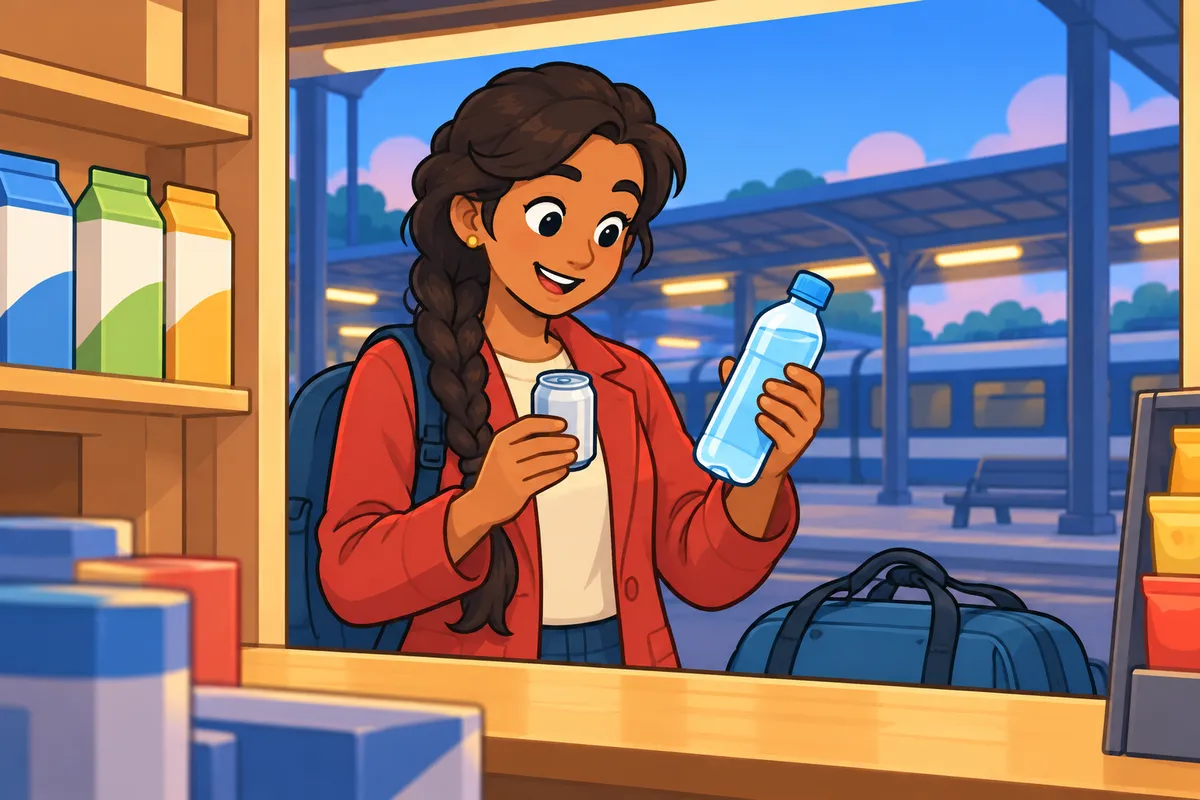
Multiply the number of people by the planned ounces per person, then divide by the container size and round up. Use fluid ounces throughout the calculation so a 2-liter bottle, a can and a carton can be compared on the same basis.
For example, 24 people receiving one 8 oz serving need 24 × 8 = 192 fl oz. A 2-liter bottle holds about 67.6 fl oz, so 192 ÷ 67.6 = 2.84; three bottles cover one serving each with about 10.9 fl oz left.
| Plan | Total needed | 12 oz cans | 2 L bottles |
|---|---|---|---|
| 12 people × 8 oz | 96 fl oz | 8 cans | 2 bottles |
| 24 people × 8 oz | 192 fl oz | 16 cans | 3 bottles |
| 30 people × 12 oz | 360 fl oz | 30 cans | 6 bottles |
The table rounds every package count up. A six-pack may be convenient, but convenience does not change the volume needed; compare the package total with the event total before buying.
Add a reserve when refills are likely, the event is outdoors or the container must stay unopened until needed. A practical plan is to calculate the guaranteed first serving, then add the specific number of refill portions you expect rather than applying an unexplained percentage.
How Do You Compare Prices Across Container Sizes?
Divide the package price by its total fluid ounces. This gives a price per fluid ounce that can compare a multipack of cans with a bottle even when the package counts differ.
If a 12-pack contains twelve 12 fl oz cans, its total volume is 144 fl oz. A six-pack of 16.9 fl oz bottles contains 101.4 fl oz. Divide each shelf price by those totals, but also consider whether opening a large bottle will create leftovers or whether separate cans are needed for serving.
Use the net contents for this calculation, not the serving size. Serving size belongs to nutrition information; unit price needs all the drink sold in the package.
How Should You Record a Container Size You Use Often?
Write both the printed metric amount and US fluid ounces in a shopping or event note. Recording “500 mL / 16.9 fl oz” is safer than “medium bottle,” because a later brand may use the same shape for a different capacity.
For a reusable dispenser, fill it with a known bottle or weigh the added water once, then record the usable fill below the lid. That gives a repeatable planning number without assuming the manufacturer's brim capacity is the amount you can carry or serve without spilling.
The Fast Way to Check Any Container
Read the net quantity, keep fl oz separate from weight ounces, and convert only when you need a common unit. A standard US can is 12 fl oz, but its shape alone cannot prove its size.
- Use the front net-contents line for the full package.
- Use milliliters when comparing packages from different countries.
- Use Nutrition Facts serving size only for nutrients per serving.
For reusable water bottles, use the separate water bottle size chart. For any number printed in milliliters, the Water Unit Converter returns fluid ounces and cups without rounding it to the nearest familiar package.
General information for healthy adults, not medical advice. If a doctor has set your fluid amount, follow that.
More in Cups, Ounces and Liters

Sources
- Coca-Cola US. Coca-Cola Original Product Sizes, 2026.
- Coca-Cola US. Mini Coke Cans, 2026.
- NIST. Handbook 130, SI/U.S. Customary Conversion Factors, 2018.
- US Food and Drug Administration. Serving Size on the Nutrition Facts Label, 2025.
Sources checked by the Glubbo Editorial Team on Oct 23, 2026. General information, not medical advice. How we write and check our guides.

