Cups, Ounces and Liters · Measuring at Home
How Many Ounces Are in a Mason Jar? Full Size Chart
Mason jars range from small jelly jars to 64 fl oz half-gallon jars. Pint and quart jars hold 16 and 32 fl oz.
 By the Glubbo Editorial Team · Updated Oct 23, 2026 · 8 min read
On This Page
- How Many Ounces Are in a Mason Jar?
- How Many Ounces Are in a Quart Mason Jar?
- What Is the Standard Mason Jar Size?
- What Is the Largest Mason Jar Size?
- Does Wide Mouth Change the Jar Capacity?
- How Much Does Headspace Reduce the Fill?
- Can You Use a Different Jar Size in a Canning Recipe?
- How Many Glasses Fit in a Mason Jar?
- How Can You Measure an Unmarked Jar's Capacity?
- How Many Jars Do You Need for a Batch?
- Should You Count the Lid and Ring When Comparing Sizes?
- Read the Capacity Before Choosing the Lid or Recipe
- Sources
Short answer
A pint Mason jar holds 16 fl oz.
- A half-pint holds 8 fl oz; a quart holds 32 fl oz.
- Home-canning jars also come in 12, 24 and 64 fl oz sizes.
- Regular and wide mouth describe the opening, not the capacity.
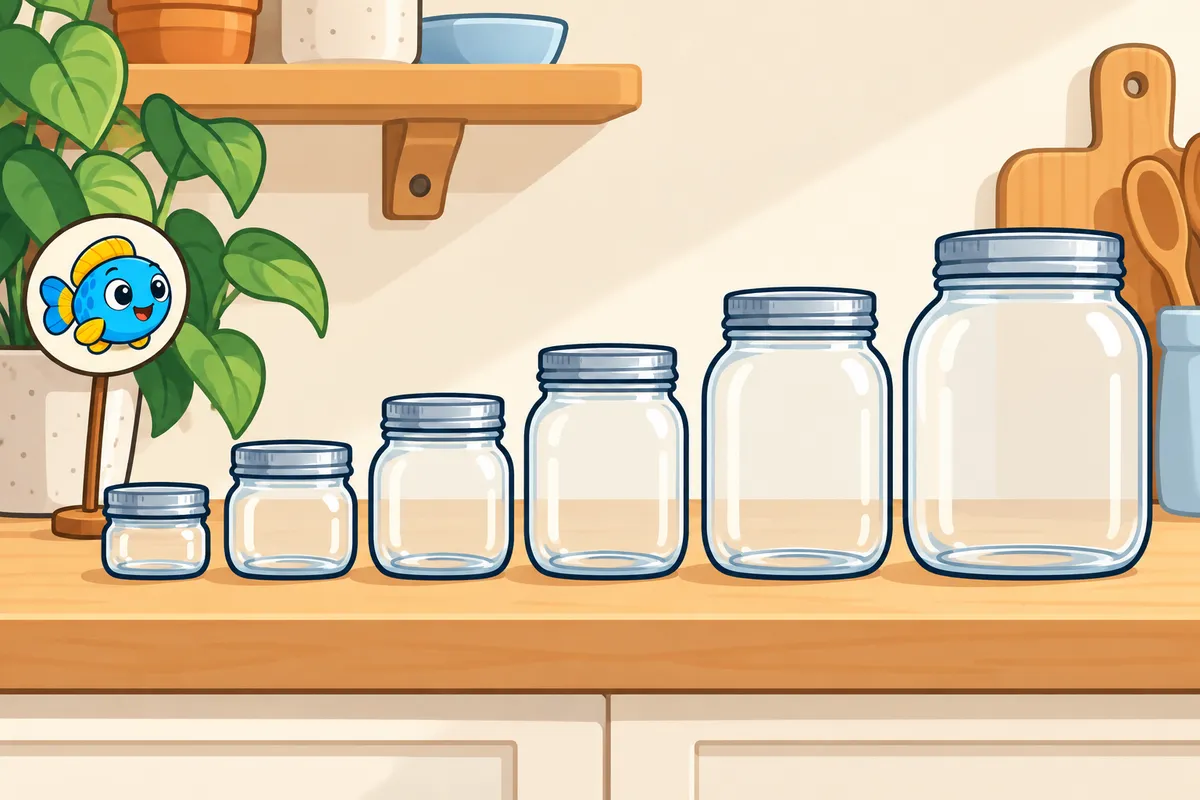
There is no single Mason jar capacity. Common home-canning sizes include 8 fl oz half-pint, 16 fl oz pint, 24 fl oz 1 1/2-pint, 32 fl oz quart and 64 fl oz half-gallon jars.
Small jelly jars may hold 4, 8 or 12 fl oz. Read the molded capacity or package because shape and mouth width cannot prove the volume.
How Many Ounces Are in a Mason Jar?
A pint Mason jar holds 16 US fluid ounces, but the name “Mason jar” covers a family of sizes. The National Center for Home Food Preservation lists half-pint, pint, 1 1/2-pint, quart and half-gallon home-canning jars.
| Jar name | US fluid ounces | US cups | Milliliters, approximate |
|---|---|---|---|
| 4 oz jelly jar | 4 fl oz | 1/2 cup | 118 mL |
| Half-pint | 8 fl oz | 1 cup | 237 mL |
| 12 oz jelly jar | 12 fl oz | 1 1/2 cups | 355 mL |
| Pint | 16 fl oz | 2 cups | 473 mL |
| Pint and a half | 24 fl oz | 3 cups | 710 mL |
| Quart | 32 fl oz | 4 cups | 946 mL |
| Half gallon | 64 fl oz | 8 cups | 1,893 mL |
The metric amounts use NIST's kitchen relationships for cups, pints, quarts and gallons. Manufacturers may print rounded metric capacities such as 240, 475 or 950 mL.
How Many Ounces Are in a Quart Mason Jar?
A quart Mason jar holds 32 fl oz, equal to 4 US cups, 2 pints or about 946 mL. The capacity describes the jar filled to its nominal volume, not the amount of food allowed in every canning recipe.
Canning directions require empty space below the lid. The actual food volume is therefore less than 32 fl oz when the recipe calls for headspace.
| Comparison | Pint jar | Quart jar |
|---|---|---|
| Fluid ounces | 16 fl oz | 32 fl oz |
| US cups | 2 cups | 4 cups |
| Metric volume | about 473 mL | about 946 mL |
Two pint jars equal one quart by nominal capacity. They are not always interchangeable in a canning process because tested times can depend on jar size.
What Is the Standard Mason Jar Size?
There is no official “standard” capacity. Pint and quart jars are the familiar general-purpose sizes, while half-pints are common for jams and jellies.
When a recipe says only “one jar,” look for a yield line elsewhere, such as “makes four half-pints.” Do not choose a pint because its shape looks average.
Names Can Hide the Number
“Jelly,” “pint,” “wide mouth,” “regular mouth” and “decorator” describe different traits. Only a capacity word or printed ounce amount answers how much the jar holds.
The preservation center notes that regular-mouth decorator jelly jars appear in 8 and 12 oz sizes. The same use name can therefore cover two volumes.
What Is the Largest Mason Jar Size?
A half-gallon home-canning jar holds 64 fl oz, or 8 cups. Larger decorative glass jars exist, but “larger” does not mean a tested home-canning size.
For canning, half-gallon jars have a narrow approved use. The preservation center allows them for very acidic juices, and its FAQ limits its recommendations to tested apple and grape juice processes.
Use a food-safe half-gallon jar for dry storage or serving. For shelf-stable canning, follow a tested recipe that names the jar size; do not scale a pint process by guessing. Capacity alone cannot supply a safe processing time.
Does Wide Mouth Change the Jar Capacity?
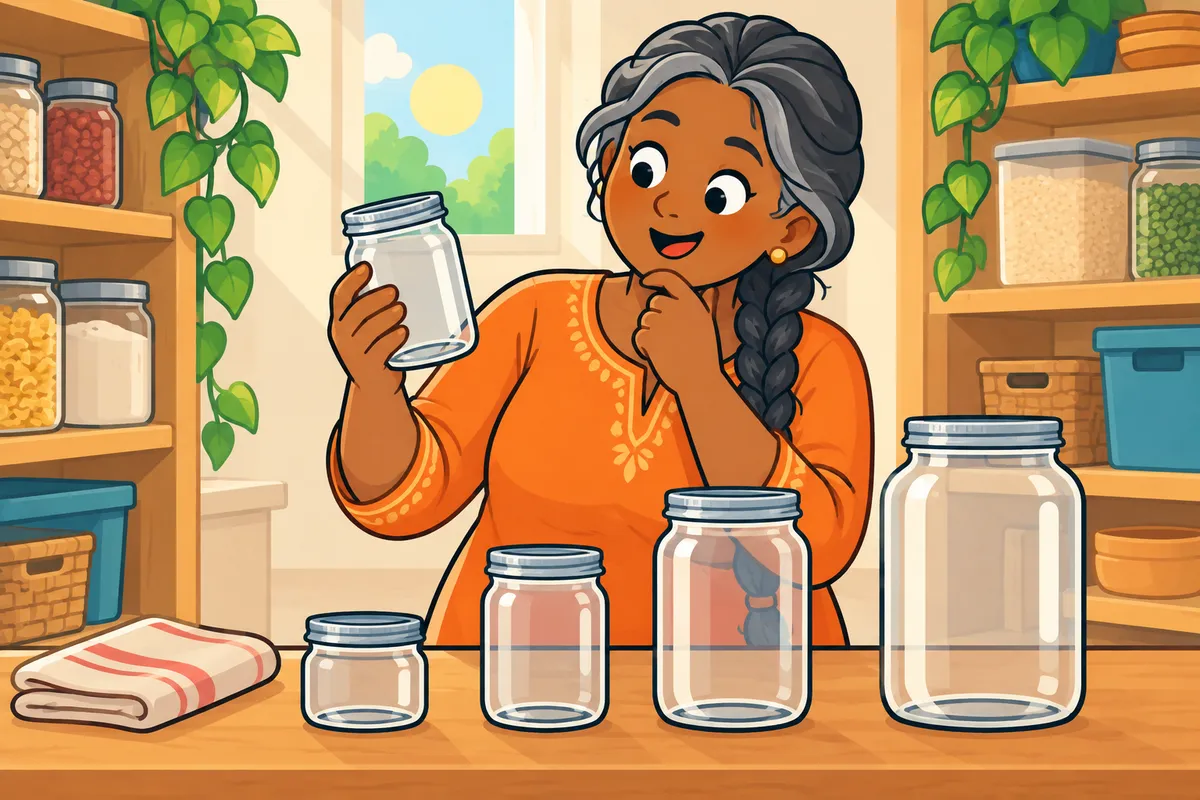
No. Wide mouth describes the opening, not the volume. A pint jar can have a regular or wide mouth and still hold 16 fl oz.
The preservation center gives approximate openings of 2 3/8 inches for standard mouth and 3 inches for wide mouth. A wide opening makes chunky foods easier to add and remove; it does not turn a pint into a quart.
Capacity, Mouth and Shape Are Separate Choices
Capacity
How much it holds
- Shown in oz, pints or quarts
- Controls recipe yield
Suits you if Choose this first
Mouth width
Size of the opening
- Regular or wide mouth
- Changes filling and emptying access
Suits you if Choose for the food and tools
Jar shape
Tall, squat or decorative
- Does not prove capacity
- Read the molded number
Suits you if Choose only after checking intended use
How Much Does Headspace Reduce the Fill?
Headspace leaves a measured gap between the food and lid, so the filled food amount is below the nominal jar capacity. The exact gap comes from the tested recipe, not a general percentage.
The National Center for Home Food Preservation gives several common headspace directions, and the tested recipe selects the one for the food and process:
- 1/4 inch for jams and jellies;
- 1/2 inch for many fruits and tomatoes;
- 1 to 1 1/4 inches for low-acid foods processed under pressure.
This measured space allows expansion and helps a vacuum form as the jar cools.
Do not convert those inch gaps into a fixed number of ounces. Jar shoulders and diameters differ, so the same vertical gap can represent different volumes. Measure the gap with a headspace tool or ruler at the jar rim.
Can You Use a Different Jar Size in a Canning Recipe?
Use only a size supported by the tested process. Moving to a larger jar can require a longer process, and sometimes no tested time exists.
Check a Jar Before Canning
- Read the tested recipe and identify every allowed jar size
- Match your jar's molded capacity, not its apparent shape
- Leave the headspace stated for that food and process
- Do not invent a time for an unlisted larger jar
The preservation center addresses newer 24 and 28 oz jars directly: use the quart time only when a tested quart process exists; if the directions list only pint or half-pint jars, there is no tested process for the larger size.
This restriction applies to canning safety. For refrigerated leftovers, dry goods, crafts or drinking water, choose a clean food-safe jar sized for the task.
How Many Glasses Fit in a Mason Jar?
Divide the jar capacity by the amount you pour:
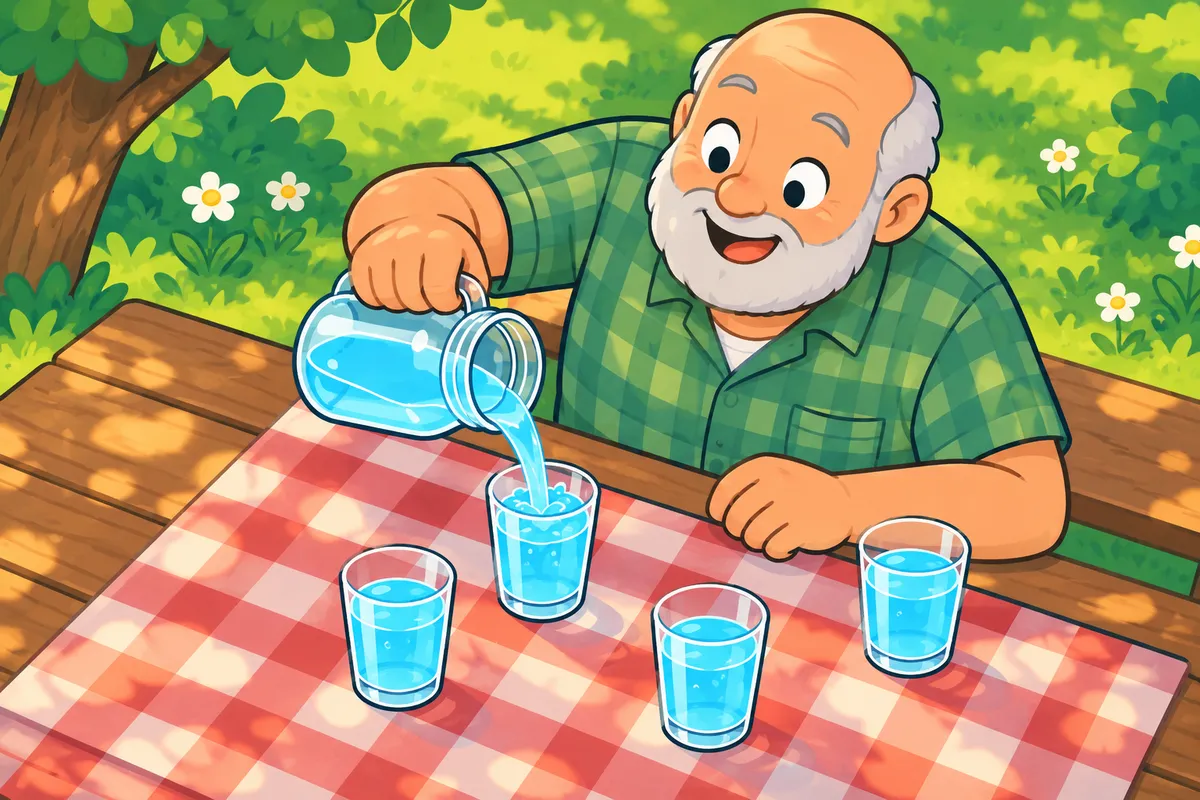
- A pint jar holds two 8 oz servings.
- A quart holds four.
- A half gallon holds eight.
| Jar | 6 oz servings | 8 oz servings | 12 oz servings |
|---|---|---|---|
| Half-pint, 8 oz | 1 full | 1 full | 0 full |
| Pint, 16 oz | 2 full | 2 full | 1 full |
| Quart, 32 oz | 5 full | 4 full | 2 full |
| Half gallon, 64 oz | 10 full | 8 full | 5 full |
The table rounds down to complete servings. Ice, fruit and a straw take up space, so the liquid amount in a filled drinking jar may be lower.
How Can You Measure an Unmarked Jar's Capacity?
For drinking, dry storage or refrigerated leftovers, weigh how much water the jar holds to your normal fill line:
- Put the empty jar on a scale, press tare, add water and treat the gram reading as approximately the same number of milliliters.
- Convert the result to US fluid ounces by dividing milliliters by 29.5735.
- A reading near 473 g indicates about 16 fl oz, while a reading near 946 g indicates about 32 fl oz.
Repeat the test once because heavy glass, an unstable scale or a different fill line can change the result. Record the usable capacity below the rim, not the amount obtained by creating a raised meniscus or filling until the lid touches liquid.
This home test does not certify a jar for heat processing. For canning, identify an actual canning jar, read its molded capacity and follow a tested recipe that lists that jar size; an unknown decorative jar should stay out of the canner.
How Many Jars Do You Need for a Batch?
Divide the expected yield by the nominal capacity of an allowed jar, then round up and prepare one extra jar. A 72 fl oz refrigerated sauce batch needs five pint jars because 72 ÷ 16 = 4.5; four jars would leave 8 fl oz without a container.
| Batch yield | Jar size | Minimum jars by volume |
|---|---|---|
| 48 fl oz | Half-pint, 8 oz | 6 |
| 48 fl oz | Pint, 16 oz | 3 |
| 80 fl oz | Pint, 16 oz | 5 |
| 80 fl oz | Quart, 32 oz | 3 |
Nominal capacity is a planning tool, not permission to switch canning sizes. Headspace means the food fill sits below the rim, and the tested processing directions still control which jar sizes you may use.
Batch yields also vary with trimming, evaporation and how completely the cook scrapes the pan. Preparing one additional clean jar keeps a larger-than-expected batch from forcing an untested container change at the end.
Should You Count the Lid and Ring When Comparing Sizes?
No. Lid diameter identifies regular or wide mouth, while jar capacity describes the space in the glass body. Two jars can use the same lid and hold different amounts, and two jars with the same capacity can use different mouth widths.
Store lids by mouth size and jars by molded capacity. That simple separation prevents a matching lid from being mistaken for proof that two jars belong to the same tested size.
Read the Capacity Before Choosing the Lid or Recipe
Use the molded ounce, pint or quart amount as the jar's size. Then choose mouth width for access and follow the recipe's jar-size and headspace directions.
For the unit ladder behind pint and quart names, see cups, pints, quarts and gallons. It converts capacity without deciding whether a jar is safe for a particular canning process.
General information for healthy adults, not medical advice. If a doctor has set your fluid amount, follow that.
More in Cups, Ounces and Liters

Sources
- National Center for Home Food Preservation. Recommended Jars and Lids, 2026.
- National Center for Home Food Preservation. Ensuring High-Quality Canned Foods, 2026.
- National Center for Home Food Preservation. Jar Size Choices Have You Frustrated?, 2019.
- NIST. Metric Kitchen: Cooking Measurement Equivalencies, 2026.
Sources checked by the Glubbo Editorial Team on Oct 23, 2026. General information, not medical advice. How we write and check our guides.

