Cups, Ounces and Liters · Measuring at Home
How Many Tablespoons Are in a Quarter Cup? Fraction Chart
One quarter cup is 4 tablespoons. Use the full chart for eighths, thirds, halves, two-thirds and three-quarters.
 By the Glubbo Editorial Team · Updated Oct 23, 2026 · 8 min read
On This Page
- How Many Tablespoons Are in a Quarter Cup?
- How Many Tablespoons Are in One Third Cup?
- How Many Tablespoons Are in Half a Cup?
- How Many Tablespoons Are in Three Quarters of a Cup?
- How Many Tablespoons Are in Two Thirds of a Cup?
- How Many Tablespoons Are in an Eighth Cup?
- How Do You Halve or Double Cup Fractions?
- Should You Use Spoons or a Fractional Cup?
- Do Australian Tablespoons Change the Chart?
- How Many Tablespoons Are in Odd Eighths of a Cup?
- How Can You Prevent Spoon-Counting Errors?
- How Do You Convert a Mixed Cup Amount to Spoons?
- The Fraction Pattern to Remember
- Sources
Short answer
One quarter cup equals 4 tablespoons.
- One third cup is 5 tablespoons plus 1 teaspoon.
- One half cup is 8 tablespoons; three quarters is 12.
- Two thirds cup is 10 tablespoons plus 2 teaspoons.
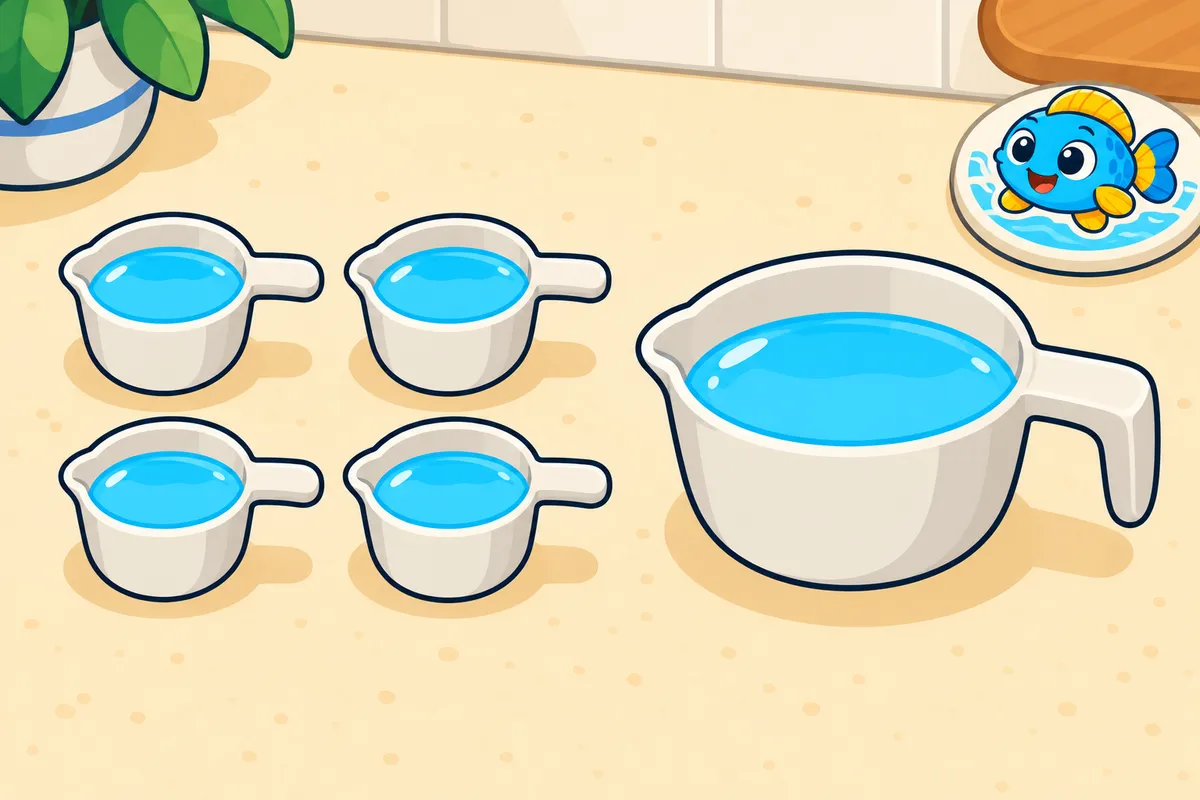
One quarter US cup equals 4 tablespoons. One third cup is 5 tablespoons plus 1 teaspoon, one half cup is 8 tablespoons, two thirds cup is 10 tablespoons plus 2 teaspoons, and three quarters cup is 12 tablespoons.
The full system starts with 1 cup = 16 tablespoons = 48 teaspoons.
How Many Tablespoons Are in a Quarter Cup?
There are 4 tablespoons in 1/4 cup. The USDA volume-equivalents table shows 1/4 cup as 4 tablespoons and 2 fluid ounces.
| US cup fraction | Tablespoons | Teaspoons | Fluid ounces | Kitchen mL |
|---|---|---|---|---|
| 1/16 cup | 1 tbsp | 3 tsp | 1/2 fl oz | 15 mL |
| 1/8 cup | 2 tbsp | 6 tsp | 1 fl oz | 30 mL |
| 1/4 cup | 4 tbsp | 12 tsp | 2 fl oz | 60 mL |
| 1/3 cup | 5 tbsp + 1 tsp | 16 tsp | 2 2/3 fl oz | 80 mL |
| 3/8 cup | 6 tbsp | 18 tsp | 3 fl oz | 90 mL |
| 1/2 cup | 8 tbsp | 24 tsp | 4 fl oz | 120 mL |
| 2/3 cup | 10 tbsp + 2 tsp | 32 tsp | 5 1/3 fl oz | 160 mL |
| 3/4 cup | 12 tbsp | 36 tsp | 6 fl oz | 180 mL |
| 7/8 cup | 14 tbsp | 42 tsp | 7 fl oz | 210 mL |
| 1 cup | 16 tbsp | 48 tsp | 8 fl oz | 240 mL |
The milliliter column uses NIST's practical kitchen equivalents: 1 tablespoon = 15 mL, 1 teaspoon = 5 mL and 1 cup = 240 mL. Exact US customary values differ slightly, but the ratios between cups and US measuring spoons stay the same.
How Many Tablespoons Are in One Third Cup?
One third cup equals 5 tablespoons plus 1 teaspoon. In decimal tablespoons, it is 5 1/3 tablespoons because one tablespoon contains three teaspoons.
The teaspoon matters. Rounding one third cup down to 5 tablespoons removes 1 teaspoon; rounding it up to 6 tablespoons adds 2 teaspoons. Either error can affect a small baking recipe.
| Thirds comparison | One third cup | Two thirds cup |
|---|---|---|
| Tablespoons and teaspoons | 5 tbsp + 1 tsp | 10 tbsp + 2 tsp |
| Total teaspoons | 16 tsp | 32 tsp |
| Kitchen milliliters | about 80 mL | about 160 mL |
Land O'Lakes gives the same household equivalents: 5 tablespoons plus 1 teaspoon for 1/3 cup and 10 tablespoons plus 2 teaspoons for 2/3 cup.
How Many Tablespoons Are in Half a Cup?
There are 8 tablespoons in 1/2 cup. Half a cup also equals 24 teaspoons, 4 fluid ounces or about 120 mL in a US kitchen chart.
This fraction is easy to halve again: 1/4 cup is 4 tablespoons. Doubling it returns to 1 cup at 16 tablespoons.
- Half of 1/2 cup: 1/4 cup or 4 tablespoons.
- Double 1/2 cup: 1 cup or 16 tablespoons.
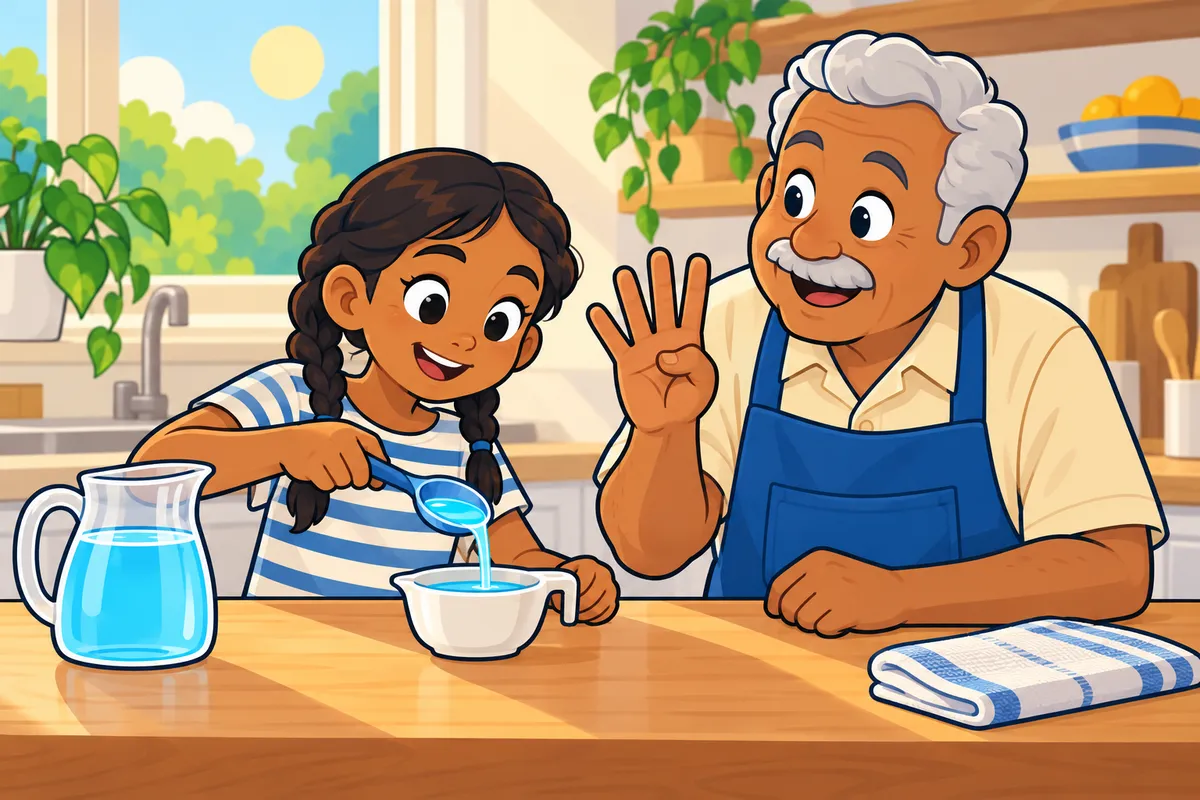
How Many Tablespoons Are in Three Quarters of a Cup?
There are 12 tablespoons in 3/4 cup. Think of it as three quarter-cups, each holding 4 tablespoons:
3 × 4 tablespoons = 12 tablespoons
It also equals 36 teaspoons, 6 fluid ounces or about 180 mL. If you have a half-cup and quarter-cup measure, one fill of each makes the same 3/4 cup with fewer transfers.
Use 1/2 cup + 1/4 cup when both vessels are available; use 12 tablespoons when they are not.
How Many Tablespoons Are in Two Thirds of a Cup?
Two thirds cup equals 10 tablespoons plus 2 teaspoons. It is twice the one-third amount: twice 5 tablespoons gives 10, and twice 1 teaspoon gives 2.
Do not replace it with 11 tablespoons. Eleven tablespoons equal 33 teaspoons, one teaspoon more than the 32 teaspoons in 2/3 cup.
- Exact spoon form: 10 tablespoons + 2 teaspoons.
- Decimal tablespoon form: 10 2/3 tablespoons.
How Many Tablespoons Are in an Eighth Cup?
One eighth cup equals 2 tablespoons, 6 teaspoons, 1 fluid ounce or about 30 mL. It is half of a quarter cup.
This is often easier to measure with spoons because many cup sets start at 1/4 cup. Level two standard measuring tablespoons rather than estimating halfway up a quarter-cup vessel.
- Double 1/8 cup to get 1/4 cup.
- Halve 1/8 cup to get 1 tablespoon.
How Do You Halve or Double Cup Fractions?
Convert awkward fractions to tablespoons and teaspoons first, then divide or multiply the spoon count. This prevents mistakes such as treating half of 1/3 cup as 1/6 tablespoon.
| Original amount | Half the amount | Double the amount |
|---|---|---|
| 1/8 cup | 1 tbsp | 1/4 cup |
| 1/4 cup | 2 tbsp | 1/2 cup |
| 1/3 cup | 2 tbsp + 2 tsp | 2/3 cup |
| 1/2 cup | 1/4 cup | 1 cup |
| 2/3 cup | 1/3 cup | 1 1/3 cups |
| 3/4 cup | 6 tbsp | 1 1/2 cups |
Half of 1/3 cup needs one extra step. One third cup is 16 teaspoons; half is 8 teaspoons, which becomes 2 tablespoons plus 2 teaspoons.
Scale an Awkward Cup Fraction
- Convert the cup fraction to teaspoons using 48 tsp per cup
- Multiply or divide the teaspoon count for the new batch
- Convert groups of 3 teaspoons back into tablespoons
- Keep any remaining 1 or 2 teaspoons
One and a Half Batch Example
A recipe uses 2/3 cup of milk, or 32 teaspoons. Multiply by 1.5 to get 48 teaspoons, which equals exactly 1 cup. Working in teaspoons avoids multiplying the mixed spoon form of 10 tablespoons plus 2 teaspoons.
Should You Use Spoons or a Fractional Cup?
Use the tool that needs fewer transfers while still producing a level, readable amount. A 1/4 cup is faster than four tablespoons, while two tablespoons are easier than guessing half of that cup.
Pick the Shortest Reliable Measurement
Use the cup
Exact size is available
- One fill means fewer counting errors
- Good for 1/4, 1/3 and 1/2 cup
Suits you if Best for everyday recipe amounts
Use tablespoons
Cup size is missing
- Best for 1/8 cup and 3/8 cup
- Count in groups to avoid losing place
Suits you if Best for small or uncommon fractions
Use a scale
Recipe gives grams
- Avoids repeated spoon transfers
- Needs the ingredient's own gram weight
Suits you if Best for baking and batch scaling
For liquids, fill the spoon to its level edge without a domed surface. For dry ingredients, fill and strike the top flat. A dining spoon is not a measuring tablespoon.
Do Australian Tablespoons Change the Chart?
Yes, if the recipe specifically uses the Australian 20 mL tablespoon. The US tablespoon is about 14.79 mL and the practical US kitchen tablespoon is 15 mL, so cup-to-spoon counts based on 16 tablespoons assume US spoons.
A 250 mL metric cup divided by 20 mL is 12.5 Australian tablespoons. Do not apply the 16-tablespoon US chart to a recipe that names Australian measures.
The recipe's country and unit note decide which system to use. The milliliters-in-a-cup guide compares the 236.6 mL US cup with 240 and 250 mL conventions. Keep one system for the whole recipe.
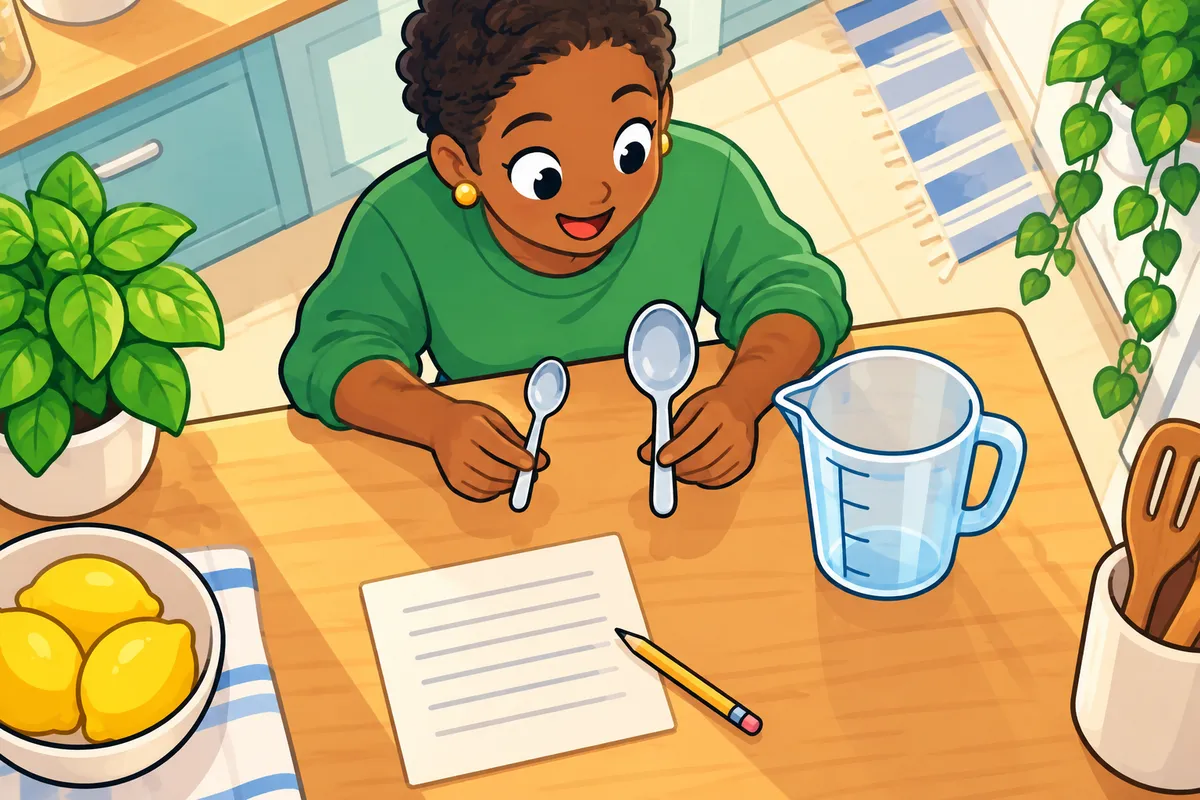
How Many Tablespoons Are in Odd Eighths of a Cup?
Three eighths of a US cup is 6 tablespoons, five eighths is 10 tablespoons, and seven eighths is 14 tablespoons. Each eighth of a cup adds 2 tablespoons because one full cup contains 16 tablespoons.
| Cup fraction | Tablespoons | Teaspoons | Useful combination |
|---|---|---|---|
| 1/8 cup | 2 tbsp | 6 tsp | Two tablespoons |
| 3/8 cup | 6 tbsp | 18 tsp | 1/4 cup + 2 tbsp |
| 5/8 cup | 10 tbsp | 30 tsp | 1/2 cup + 2 tbsp |
| 7/8 cup | 14 tbsp | 42 tsp | 3/4 cup + 2 tbsp |
These odd-eighth amounts are easier to build from a nearby standard cup plus two tablespoons. That uses fewer transfers than counting 6, 10 or 14 separate spoonfuls and reduces the chance of losing count.
The same pattern helps subtraction. If a recipe needs 7/8 cup and you have a 1-cup measure, fill the cup and remove 2 tablespoons; the remaining amount is 14 tablespoons, or 7/8 cup.
How Can You Prevent Spoon-Counting Errors?
Group tablespoons in sets that map to familiar cup fractions. Four tablespoons make 1/4 cup, eight make 1/2 cup and twelve make 3/4 cup, so pause at each group instead of counting one uninterrupted sequence to sixteen.
- Set a small token beside the bowl after each group of four, or write tally marks before pouring. This matters when several ingredients are being measured and an interruption can make you forget whether the last spoon was number seven or eight. Start the count again if you cannot verify the last transfer.
- For a liquid, empty each spoon completely before refilling. For flour or sugar, level every spoon the same way because four heaped spoonfuls do not reproduce one level quarter cup.
- When the count becomes long, switch tools. A 3/4-cup measure is more reliable than twelve tablespoon transfers, and a scale is better when the recipe already gives an ingredient-specific gram amount.
How Do You Convert a Mixed Cup Amount to Spoons?
Convert the whole cups and fractional part separately, then add them. For 1 3/8 cups, one cup contributes 16 tablespoons and 3/8 cup contributes 6, giving 22 tablespoons total.
For 2 2/3 cups, work in teaspoons because thirds do not divide evenly into whole tablespoons. Two cups are 96 teaspoons and 2/3 cup is 32 teaspoons, totaling 128 teaspoons. Convert groups of three back only if tablespoons are easier to measure.
Writing the improper total before scaling also makes batch changes cleaner. Doubling 22 tablespoons gives 44 tablespoons; that converts back to 2 cups plus 12 tablespoons, or 2 3/4 cups.
The Fraction Pattern to Remember
Start with 16 tablespoons in a cup. Halves and quarters divide evenly; thirds leave teaspoons because 16 is not divisible by 3.
For the whole-cup relationships among tablespoons, teaspoons and fluid ounces, see tablespoons and teaspoons in a cup. This page keeps the fractional amounts together so you do not need a separate conversion for every numerator.
General information for healthy adults, not medical advice. If a doctor has set your fluid amount, follow that.
More in Cups, Ounces and Liters
Sources
- USDA Food and Nutrition Service. Guide to Volume Equivalents for Liquids, 2025.
- NIST. Metric Kitchen: Cooking Measurement Equivalencies, 2026.
- Land O'Lakes. Measurements and Abbreviations, 2026.
Sources checked by the Glubbo Editorial Team on Oct 23, 2026. General information, not medical advice. How we write and check our guides.

