How Much Caffeine Is in a Can of Coke? 10 Sodas by Can
Milligrams of caffeine in a can of Coke, Diet Coke, Mountain Dew, Pepsi and Sprite, and how many cans fit your day.
 By the Glubbo Editorial Team · Updated Nov 2, 2026 · 7 min read
On This Page
- How Much Caffeine Is in a Can of Coke?
- Caffeine in Diet Coke and Coke Zero
- How Much Caffeine Is in Mountain Dew?
- How Much Caffeine Is in Pepsi?
- Which Sodas Have No Caffeine?
- Caffeine in a 12 oz Can, Side by Side
- How Many Cans of Coke Equal a Cup of Coffee?
- How Many Cans of Soda a Day Are Safe?
- Can Kids and Teens Drink Soda With Caffeine?
- Your Soda Plan for Tomorrow
- Sources
Short answer
34 mg in a 12 oz can of Coke.
- Diet Coke has 46 mg; Coke Zero Sugar 34 mg; Mountain Dew 54 mg.
- The FDA finds 23 to 83 mg in a 12 oz caffeinated soft drink.
- A 12 oz coffee holds 113 to 247 mg, so it takes 3 to 7 cans of Coke to match.
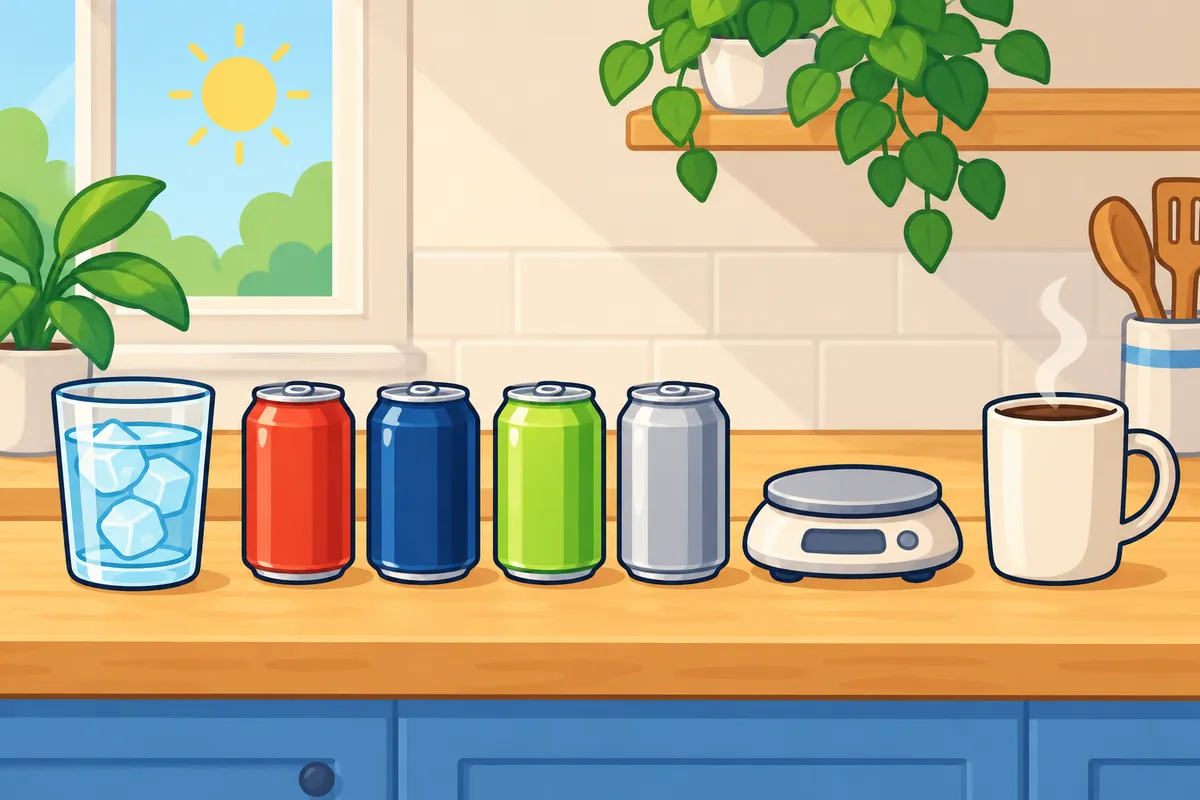
A 12 oz can of Coke has 34 mg of caffeine, Coca-Cola's US site says. That is less than a third of a typical 12 oz coffee, and the other big sodas range from none at all to 68 mg.
Diet Coke, Mountain Dew and Pepsi each have their own number, and the makers publish a figure for most of their 12 oz cans. The table further down puts them side by side.
How Much Caffeine Is in a Can of Coke?
Coca-Cola Original has 34 mg in a 12 fl oz (355 ml) can, by Coca-Cola's own answer, as of 2 November 2026. Its ingredient list ends with caffeine, so the caffeine is added to the drink.
Health Canada lists a wider 36 to 46 mg for a 355 ml can of regular cola, the range Health Canada gives for that size. The FDA's range for any caffeinated soft drink is 23 to 83 mg per 12 fl oz, so Coke sits in the lower third.
- 34 mg
- in a 12 fl oz can of Coca-Cola Original, about 2.8 mg per fluid ounce (34 ÷ 12)
- 113–247 mg
- in a 12 fl oz cup of regular brewed coffee, the FDA's range
- 400 mg
- a day, the amount the FDA has cited for most adults as not generally linked to harm
Caffeine in Diet Coke and Coke Zero
Diet Coke has the most of the Coke drinks listed here at 46 mg a can; Coke Zero Sugar and Diet Cherry Coke sit at 34 mg. The sugar-free names do not mean less caffeine.
How Much Caffeine Is in Diet Coke?
46 mg per 12 fl oz, 12 mg more than regular Coke. Diet Cherry Coke is listed on the same page at 34 mg per 12 fl oz, and Caffeine Free Diet Coke has none.
How Much Caffeine Is in Coke Zero?
34 mg per 12 fl oz, the same as regular Coke, per Coca-Cola's Zero Sugar page. "Zero" does not mean zero caffeine: the same page sells a separate Coca-Cola Zero Sugar Caffeine Free for people who want the taste without it.
How Much Caffeine Is in Mountain Dew?
Mountain Dew has 54 mg in a 12 fl oz can, PepsiCo's product facts show. That is 20 mg more than a Coke, in the same size can.
The diet and zero versions are not weaker, as PepsiCo lists them:
- Diet Mountain Dew: 54 mg per 12 fl oz
- Mountain Dew Zero Sugar: 68 mg per can, the most of any can in this guide
The American Academy of Pediatrics also gives 54 mg for a 12 oz Mountain Dew.

How Much Caffeine Is in Pepsi?
38 mg in a 12 fl oz can, by PepsiCo's product facts. The 20 fl oz Pepsi bottle lists 63 mg, which is 20 ÷ 12 ≈ 1⅔ cans.
Pepsi Zero Sugar is also 38 mg per 12 fl oz on its page, so regular and zero sit together. Both are a little above Coke and well under Mountain Dew.
Which Sodas Have No Caffeine?
Sprite and the caffeine-free versions of the Coke colas, and nothing else on this list. The plain name of a cola, diet or zero included, means the drink has caffeine.
- Sprite Original: "a caffeine-free soft drink"
- Sprite Zero Sugar: "zero caffeine"
- Coca-Cola Caffeine Free: the Original recipe "with no caffeine"
- Caffeine Free Diet Coke and Coca-Cola Zero Sugar Caffeine Free, each sold beside its caffeinated sibling
Look for the words on the can, since the regular and caffeine-free cans sit side by side on the shelf.
Caffeine in a 12 oz Can, Side by Side
Mountain Dew Zero Sugar tops the list at 68 mg, and Sprite and the caffeine-free colas sit at the bottom. Every row comes from the maker's own page, as of 2 November 2026.
| Soda | Size | Caffeine | Source |
|---|---|---|---|
| Coca-Cola Original | 12 fl oz | 34 mg | Coca-Cola |
| Coca-Cola Zero Sugar | 12 fl oz | 34 mg | Coca-Cola |
| Diet Cherry Coke | 12 fl oz | 34 mg | Coca-Cola |
| Diet Coke | 12 fl oz | 46 mg | Coca-Cola |
| Pepsi | 12 fl oz can | 38 mg | PepsiCo |
| Pepsi Zero Sugar | 12 fl oz | 38 mg | PepsiCo |
| Mountain Dew | 12 fl oz can | 54 mg | PepsiCo |
| Diet Mountain Dew | 12 fl oz | 54 mg | PepsiCo |
| Mountain Dew Zero Sugar | 12 fl oz can | 68 mg | PepsiCo |
| Sprite Original and Zero Sugar | 12 fl oz | none | Coca-Cola |
Bigger bottles carry more. A 20 oz Pepsi has 63 mg, which is 20 ÷ 12 ≈ 1⅔ cans of Pepsi, so the can numbers above do not apply to it. Other brands' bottles differ, so read the label.
How Many Cans of Coke Equal a Cup of Coffee?
Three to seven. A 12 oz cup of regular brewed coffee holds 113 to 247 mg, the FDA says, and 113 ÷ 34 is 3.3 cans while 247 ÷ 34 is 7.3 cans.
Health Canada's average cup is smaller: 135 mg in 8 oz of brewed coffee, or about four cans of Coke. Brew method moves the coffee number more than any soda does, and coffee by brew shows how far.
How Many Cans of Soda a Day Are Safe?
For most adults, up to 400 mg of caffeine a day, the FDA says, an amount not generally linked to negative effects. That is 11 cans of Coke or 7 of Mountain Dew if soda were your only source.
That count is for caffeine only. A can of Coke also has 39 g of sugar, so 11 cans would be 429 g, and sugar is the tighter limit. Sugar per can gives the amounts.
- Coca-Cola Original, 34 mg: 11 cans (374 mg)
- Pepsi, 38 mg: 10 cans (380 mg)
- Diet Coke, 46 mg: 8 cans (368 mg)
- Mountain Dew, 54 mg: 7 cans (378 mg)
- Mountain Dew Zero Sugar, 68 mg: 5 cans (340 mg)
Those counts leave out coffee, tea and chocolate, so they are a ceiling for a day with nothing else in it. The caffeine pillar sets 400 mg against the groups who need less.

Time matters as much as the total. A can with a late movie leaves caffeine in your body well past midnight, and how long caffeine lasts and the cutoff hour for a last can gives the hours.
Can Kids and Teens Drink Soda With Caffeine?
The American Academy of Pediatrics says avoiding caffeine is the best choice for all kids, and it names soda as one of the drinks that carry it. Sprite and the caffeine-free colas are the choice when a child wants a soda.
Health Canada gives 2.5 mg per kilogram of body weight a day as the most for children and adolescents up to 18, and says the figure rests on limited data. The FDA warns that too much caffeine in children and teens can cause increased heart rate.
For pregnancy, Health Canada's maximum is 300 mg a day, the same as for breastfeeding. US guidance from ACOG differs, so follow the limit your doctor gives you. The pregnancy guide lays the sources out, and the warning box below covers when to call for help.
Your Soda Plan for Tomorrow
Soda adds fluid as well as caffeine, and whether a can counts toward your water has a clear answer. The sugar in the same can is a separate count.
An energy drink is a different league, with up to 328 mg in a 16 oz can at the top of the FDA range.
Counting soda caffeine in four steps
- Find your soda and its size in the table; a 20 oz bottle counts about 1⅔ cans
- Multiply by the cans you plan to drink
- Add the day's coffee, tea and chocolate
- Move the last caffeinated can to the afternoon, or switch it to Sprite or a caffeine-free cola
General information for healthy adults, not medical advice. If a doctor has set your fluid amount, follow that.

More in Coffee and Tea

Sources
- The Coca-Cola Company. Coca-Cola Original (US product page and FAQ), 2026.
- The Coca-Cola Company. Coca-Cola Zero Sugar (US product page), 2026.
- The Coca-Cola Company. Diet Coke products (US), 2026.
- The Coca-Cola Company. Sprite products (US), 2026.
- PepsiCo. Product facts: Mountain Dew, 12 fl oz can, 2026.
- PepsiCo. Product facts: Mountain Dew Zero Sugar, 2026.
- PepsiCo. Product facts: Diet Mountain Dew, 12 fl oz, 2026.
- PepsiCo. Product facts: Pepsi, 12 fl oz can, 2026.
- PepsiCo. Product facts: Pepsi Zero Sugar, 12 fl oz, 2026.
- PepsiCo. Product facts: Pepsi, 20 fl oz bottle, 2026.
- US Food and Drug Administration. Spilling the Beans: How Much Caffeine is Too Much?, 2024.
- Health Canada. Caffeine in Foods, 2025.
- American Academy of Pediatrics (HealthyChildren.org). The Effects of Caffeine on Kids: A Parent's Guide, 2025.
Sources checked by the Glubbo Editorial Team on Nov 2, 2026. General information, not medical advice. How we write and check our guides.

