Sleep and Recovery · Sleeping Better
How Long Before Bed Should You Stop Eating? 3 Hours for a Meal
The 3-hour gap for a full meal, what a survey of 124,239 people found about late eating, and the snack that fits.
 By the Glubbo Editorial Team · Updated Oct 19, 2026 · 10 min read
On This Page
- How Long Before Bed Should You Stop Eating?
- Is It Bad to Eat Right Before Bed?
- Does Eating Late Make You Wake Up at Night?
- Why Does a Late Dinner Give Me Heartburn in Bed?
- What Should You Eat Before Bed?
- Does Eating Late at Night Make You Gain Weight?
- What If You Get Home Too Late to Eat Early?
- What About Drinks Before Bed?
- Is a Glass of Warm Milk Before Bed Backed by Evidence?
- A Seven-Night Trial of an Earlier Dinner
- Sources
Short answer
Finish a full meal about 3 hours before bed.
- The NIDDK says meals 3 hours before bed may ease night-time reflux.
- In a survey of 124,239 people, eating in the last hour before bed went with more waking.
- A small, low-fat snack later is fine; the NHS warns against a big meal late at night.
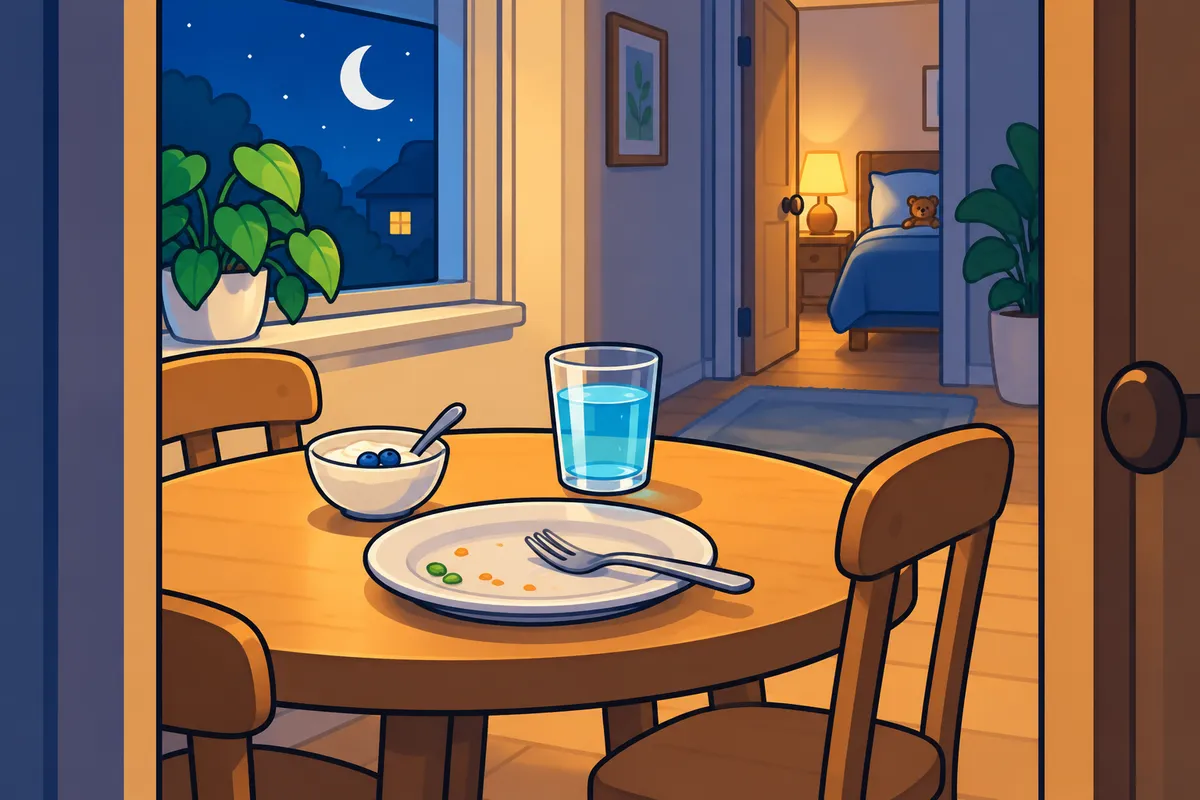
Finish a full meal about 3 hours before bed, and keep anything you eat after that small, plain and low in fat. That is the gap the NIDDK names for night-time reflux, and the late-eating studies point the same way.
A plate of pasta at 10 PM and lights out at 10:30 is how many people end a weekday. Some sleep through it; others wake at 2 AM with a burning chest or a busy stomach.
How Long Before Bed Should You Stop Eating?
About 3 hours for a full meal. The NIDDK, the digestive health institute of the US National Institutes of Health, says eating meals at least 3 hours before you lie down may improve reflux symptoms at night. The NHS gives the same direction for anyone who sleeps badly: "do not eat a big meal late at night".
A 10:30 PM bedtime, worked back
- 7:30 PM
- 9:30 PM
The 3 hours is a target for a full meal, not a ban on food. A small snack an hour or two before bed is a different thing from a second dinner, and size and timing both count in the studies below.
Is It Bad to Eat Right Before Bed?
A big meal right before bed is the habit the evidence warns against; a small snack carries far less risk. The CDC lists "avoiding large meals and alcohol before bedtime" among its tips for better sleep, and the largest survey on the question found more broken sleep after late eating.
What a Survey of 124,239 Americans Found
The American Time Use Survey asks people to log every activity of one day. Iao and colleagues took 124,239 weekday diaries from 2003 to 2018 and compared people who ate or drank in the hour before bed with everyone else. The late eaters slept about 29 minutes longer, but they spent more of the night awake.
| Ate/drank within 1 h of bed | Everyone | Women | Men |
|---|---|---|---|
| Share who did it | 6.4 % | 5.5 % | 7.5 % |
| Extra time awake during the night | 7.7 min | 4.2 min (not significant) | 13.3 min |
| Odds of 30+ minutes awake | 2.26 × | 2.03 × | 2.64 × |
| Extra sleep time | 29 min | 35 min | 25 min |
Weekday results, adjusted for age and other factors. The effects faded as the gap between eating and bed grew, which is the case for leaving a few hours.
What That Survey Cannot Tell You
It cannot show cause. Each person kept one diary day, and the diary records that someone ate or drank, not what: a glass of wine and a bowl of oatmeal look the same.
The authors say cause is hard to establish. One reading is that a meal close to bedtime makes sleep less efficient and people stay in bed longer to make up for it. Another is that people who sleep badly are the ones up late eating.
Does Eating Late Make You Wake Up at Night?
It can, especially after a large or fatty meal. A lab study and a sleep-clinic study add to the survey: what you eat and when shows up in how deeply and how steadily you sleep.
St-Onge and colleagues kept 26 normal-weight adults aged 30 to 45 in a sleep lab. They ate a set diet for four days and chose their own food on day five. After the choose-your-own day they took longer to fall asleep and had less deep sleep.
- More fiber that day predicted more deep sleep and less of the lightest stage.
- A higher share of calories from saturated fat predicted less deep sleep.
- More calories from sugar went with more arousals, brief shifts toward waking.
Food is one lever among several, alongside daytime exercise and a warm evening bath.
The sleep-clinic study is narrower. Among 296 people with sleep apnea, Lopes and colleagues found that late eaters took longer to fall asleep, woke more and had more breathing pauses than early eaters, though the authors note some differences were small.

Why Does a Late Dinner Give Me Heartburn in Bed?
Because lying down with a full stomach makes it easier for acid to rise into your food pipe. That is reflux, and the NIDDK's 3-hour advice exists for the night-time version of it; a big or high-fat meal makes it more likely.
A 2021 systematic review of 72 studies put numbers on the habits linked to reflux disease. Zhang and colleagues found the strongest links for a high-fat diet and for less than 3 hours between dinner and bed.
These come from studies of different designs and countries, so the numbers rank the habits more than they say what each adds for you. The top two are still the two this topic is about: a heavy meal, eaten late.
Which Foods Make Night-Time Reflux Worse?
The NIDDK lists these as common triggers, so keep them away from the evening if heartburn wakes you:
- acidic foods, "such as citrus fruits and tomatoes"
- alcoholic drinks
- chocolate
- coffee and other sources of caffeine
- high-fat foods
- mint
- spicy foods
If Reflux Still Wakes You
Raise your head and chest, not only your head. The NIDDK's treatment page suggests raising your head 6 to 8 inches off the bed with a foam wedge or extra pillows under your head and upper back, so your chest sits above your stomach. Pillows under the head alone only bend your neck.
What Should You Eat Before Bed?
If you are hungry, something small, low in fat and not spicy. No study names one perfect bedtime snack, but the sources agree on what to leave out: big portions, fatty and spicy food, chocolate, mint and caffeine. One food has a small trial behind it, and the cards below set it beside the usual late-evening choices.
Late-evening choices and what the studies say
Two kiwifruits
Small trial
- Eaten 1 hour before bed for 4 weeks
- 24 adults, no comparison group
Suits you if You are hungry at 9 PM and want something light
A small, plain snack
Fits the evening
- Small portion, low in fat
- Fiber went with deeper sleep
Suits you if You ate dinner early and are hungry before bed
A full plate of dinner
Needs 3 hours
- Under 3 hours to bed: 7.45 × reflux odds
- The NHS says no big meal late at night
Suits you if You can finish it 3 hours before lights out
Chocolate or a sweet dessert
Wake-ups and reflux
- Chocolate is a reflux trigger (NIDDK)
- Sugar went with more arousals
Suits you if An afternoon treat rather than a bedtime one
The kiwi result is promising but modest. In Lin and colleagues' trial, 24 adults with sleep complaints ate 2 kiwifruits an hour before bed every night for 4 weeks. Their time to fall asleep fell 35 % and their time awake after falling asleep fell 29 %.
Nobody was in a comparison group, so treat it as a reason to try it, not as proof.
Does Eating Late at Night Make You Gain Weight?
Possibly, through hunger and a slower burn rather than through the clock itself. In a randomized crossover trial of adults with overweight or obesity, Vujovic and colleagues gave everyone the same meals on an early and a late schedule. Late eating raised hunger, shifted the appetite hormones ghrelin and leptin and lowered the calories burned while awake.
That does not make a midnight sandwich fattening by itself. The trial held calories, sleep and light the same, so the timing alone moved hunger and energy burned; it did not run long enough to measure weight gain.
What If You Get Home Too Late to Eat Early?
Move the big meal earlier and make the late one small. If your commute, a late shift or a child's bedtime pushes dinner to 9 PM, eat a proper meal at lunch or in the late afternoon and keep the evening plate light and low in fat.
Late, heavy evening
- Small lunch at noon
- Large dinner at 9:30 PM
- Dessert at 10 PM
- Bed at 10:30 PM: 1 hour after eating
Same day, food moved earlier
- Full lunch at noon
- Snack at 4:30 PM
- Small, low-fat dinner at 8:30 PM
- Bed at 11 PM: 2.5 hours after eating
The right-hand day keeps most of the food and shifts it, which is easier to stick to than skipping dinner.
If You Have Diabetes
Check with your care team before you drop a bedtime snack. The NIDDK says that blood glucose can drop while you sleep and stay low for several hours, and a snack is sometimes part of the plan that prevents it. The 3-hour advice above is written for reflux and ordinary sleepers, not for someone on glucose-lowering medicine.
What About Drinks Before Bed?
Treat them separately from food. Water itself only matters if you wake to pee: then stop full glasses about two hours before bed and drink more earlier in the day.
Alcohol and caffeine are the drinks that work against sleep. The NHS asks you not to drink alcohol, tea or coffee at least 6 hours before bed, and the NIDDK lists both among the drinks that can make reflux worse.
Late meals are one of several things that shorten nights, along with a hot bedroom and evening workouts, so a night that keeps ending at 6 hours is worth checking against everything on your evening list.
Is a Glass of Warm Milk Before Bed Backed by Evidence?
Partly. Milk contains tryptophan, a precursor to melatonin, and the 2016 trial by Maughan and colleagues found that both full-fat and skim milk kept more fluid in the body than water for a few hours. A small glass of warm milk carries about 120 to 150 mg of tryptophan, some calcium and no caffeine, so it fits the rules for a light, low-fat bedtime snack.
No large trial has shown that a glass of warm milk shortens the time it takes to fall asleep in adults. The belief may rest on the ritual as much as the tryptophan: a warm drink, dim light and a moment of stillness form a cue that a bedtime routine builds on for children and adults alike.
If reflux wakes you, skip the full-fat version. The NIDDK lists high-fat foods among the common reflux triggers, and whole milk carries about 8 g of fat per cup. Skim milk keeps the tryptophan and drops most of the fat.
A Seven-Night Trial of an Earlier Dinner
One evening proves little; seven nights tell you whether the change worked. If you still wake with a burning chest after a week at 3 hours, the doctor box above is your next step.
Seven nights, one change
- Bedtime minus 3 hours is the cutoff
- Move the big meal to lunch or late afternoon
- Keep any late plate small and plain
- Note each morning if you woke
General information for healthy adults, not medical advice. If a doctor has set your fluid amount, follow that.
More in Sleep and Recovery
Sources
- National Institute of Diabetes and Digestive and Kidney Diseases (NIH). Eating, Diet, & Nutrition for GER & GERD, 2020.
- National Institute of Diabetes and Digestive and Kidney Diseases (NIH). Treatment for GER & GERD, 2020.
- NHS. Insomnia, 2024.
- Centers for Disease Control and Prevention. About Sleep, 2024.
- British Journal of Nutrition (Iao and colleagues). Associations between bedtime eating or drinking, sleep duration and wake after sleep onset: findings from the American time use survey, 2022.
- Journal of Clinical Sleep Medicine (St-Onge and colleagues). Fiber and Saturated Fat Are Associated with Sleep Arousals and Slow Wave Sleep, 2016.
- Therapeutics and Clinical Risk Management (Zhang and colleagues). Dietary and Lifestyle Factors Related to Gastroesophageal Reflux Disease: A Systematic Review, 2021.
- Asia Pacific Journal of Clinical Nutrition (Lin and colleagues). Effect of kiwifruit consumption on sleep quality in adults with sleep problems, 2011.
- Cell Metabolism (Vujovic and colleagues). Late isocaloric eating increases hunger, decreases energy expenditure, and modifies metabolic pathways in adults with overweight and obesity, 2022.
- National Institute of Diabetes and Digestive and Kidney Diseases (NIH). Low Blood Glucose (Hypoglycemia), 2024.
- Journal of Clinical Sleep Medicine (Lopes and colleagues). Eating Late Negatively Affects Sleep Pattern and Apnea Severity in Individuals With Sleep Apnea, 2019.
Sources checked by the Glubbo Editorial Team on Oct 19, 2026. General information, not medical advice. How we write and check our guides.

