Sleep and Recovery · Sleeping Better
How to Get Deep Sleep, and What Quietly Cuts It Short
What deep sleep is, what research says raises it, why alcohol and age cut it, and why your tracker's number is a guess.
 By the Glubbo Editorial Team · Updated Oct 19, 2026 · 9 min read
On This Page
- How Do You Get Deep Sleep?
- What Is Deep Sleep?
- Why Am I Not Getting Enough Deep Sleep?
- Could Sleep Apnea Be Cutting Your Deep Sleep?
- Does Exercise Increase Deep Sleep?
- Does a Warm Bath Help You Sleep Deeper?
- Does Alcohol Give You Deeper Sleep?
- Does Sleep Loss Make Deep Sleep Deeper?
- Does Pink Noise Increase Deep Sleep?
- Does Magnesium Give You Deeper Sleep?
- Can You Trust the Deep Sleep Number on Your Tracker?
- Change One Thing for Two Weeks
- Sources
Short answer
Sleep enough hours; deep sleep comes first in the night.
- Deep sleep fills longer stretches in the first half of the night, says the NIH.
- Exercise had a small benefit for deep sleep in a review of 66 studies.
- Alcohol adds deep sleep early, then breaks up the second half of the night.
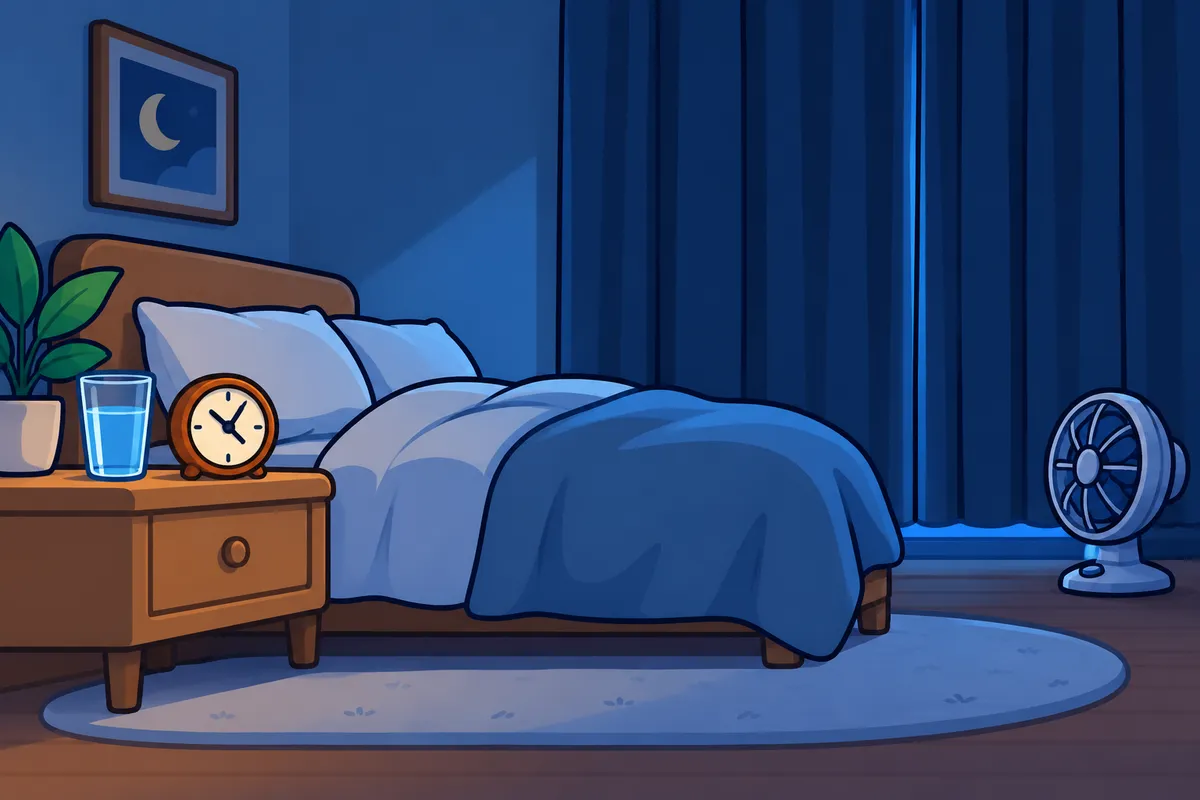
You cannot switch deep sleep on, but you can protect it. Give your brain enough hours on a regular schedule, keep the first half of the night unbroken, and be wary of the habits that mislead, starting with an evening drink.
Your watch says you got 38 minutes of deep sleep and you feel it, or you feel fine and the number still worries you. Either way, the question is the same: can you get more? Your brain decides when to go deep; what you control is how much night it has to work with and what breaks that night up.
How Do You Get Deep Sleep?
By giving your brain enough time asleep and as few interruptions as you can. Deep sleep "occurs in longer periods during the first half of the night," the NINDS sleep page says, so a short or broken night costs it first. Exercise and a warm bath help a little; alcohol misleads.
What studies say about each deep-sleep habit
Enough hours, same times
The base
- Deep sleep comes early in the night
- Same bedtime and wake time daily
Suits you if Suits you if your nights run short or vary a lot
Exercise by day
Small effect
- Small benefit for deep sleep in 66 studies
- NINDS: not within a few hours of bed
Suits you if Suits you if you sit most of the day
Warm bath 1 to 2 hours before bed
Helps you fall asleep
- 40 to 42.5 °C water
- As little as 10 minutes
Suits you if Suits you if you lie awake before drifting off
Alcohol in the evening
Misleading
- More deep sleep in the first half
- More waking in the second half
Suits you if Suits nobody who wants a full night
There is no switch you can press for deep sleep alone. The levers work on the whole night, and deep sleep is the part of it your brain protects first. Most people who want more deep sleep need more hours in bed, full stop.
What Is Deep Sleep?
The third stage of non-REM sleep, the one "you need to feel refreshed in the morning," NINDS says. During it:
- Your heartbeat and breathing slow to their lowest levels of the night.
- Your muscles relax.
- Brain waves slow down.
- It may be hard for anyone to wake you.
It does work for the body too. The NHLBI notes that deep sleep "triggers the body to release the hormone that promotes normal growth in children and teens."
How Much Deep Sleep Is Normal?
There is no official minute target. Non-REM sleep as a whole, light and deep together, accounts for about 75 % of total sleep time, Nir and Tononi note, and most of the rest is REM, the stage of vivid dreams, which grows longer toward morning.
The share of deep sleep falls as you get older. A meta-analysis of 65 studies covering 3,577 people aged 5 to 102 found the percentage of slow-wave sleep "significantly negatively correlated with age" in children and teens, and still decreasing with age in adults. A 60-year-old with less deep sleep than at 25 is not failing at the night; the same review found the size of the drop depended a lot on how carefully researchers screened out illness, medicines and sleep disorders.
Why Am I Not Getting Enough Deep Sleep?
Usually because the night is too short or keeps getting broken. The other common reasons:
- Alcohol
- An untreated breathing problem in sleep
- A late caffeine habit
A tracker can also simply be wrong.
Short and Broken Nights
Because deep sleep comes early and REM periods grow longer toward morning, an early alarm mostly costs you REM. Waking again and again during the first half of the night is what eats into deep sleep.
Night trips to the bathroom are a common cause. Moving most of your drinking earlier, so that your last big glass comes about two hours before bed, keeps the bladder from breaking up the stretch when deep sleep runs longest.
Caffeine, Big Meals and Late Screens
The CDC lists the habits that most often chip away at a night:
- Avoid large meals and alcohol before bedtime.
- Avoid caffeine in the afternoon or evening.
- Turn off electronic devices at least 30 minutes before bed.
The CDC adds a bedroom that is quiet, relaxing and cool.
Caffeine is the one people underrate. In a home study of 400 mg doses, caffeine taken even 6 hours before bedtime significantly disturbed sleep compared with placebo, which supports skipping substantial caffeine for at least 6 hours before bed.
Could Sleep Apnea Be Cutting Your Deep Sleep?
Sleep apnea makes breathing start and stop during sleep, and you may not know until someone tells you. The NHLBI lists these signs:
- At night: breathing that starts and stops, frequent loud snoring and gasping for air.
- Signs you may notice yourself: daytime sleepiness and waking often to urinate.
Does Exercise Increase Deep Sleep?
A little. A review of 66 studies looked at what a single bout of exercise did the night after:
- small benefits for total sleep time, falling asleep, sleep efficiency and slow-wave sleep
- a moderate benefit on time awake during the night
- a small effect on REM sleep

Regular exercise did more for how well people slept overall: moderate benefits for sleep quality and small-to-medium ones for how fast they fell asleep. The effects depended on age, sex, fitness, exercise type and the time of day, the authors report.
Timing is where people go wrong. NINDS suggests at least 30 minutes most days of the week, "but not within a few hours of bedtime."
Does a Warm Bath Help You Sleep Deeper?
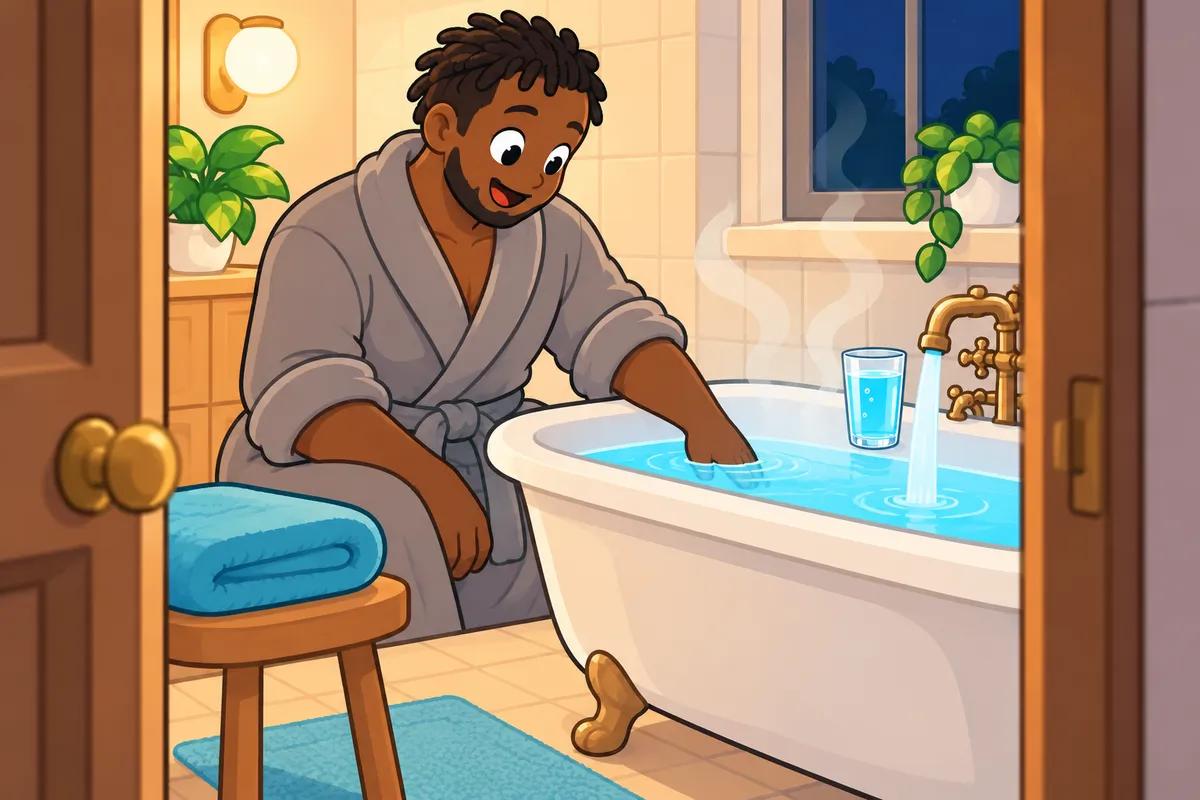
It helps you fall asleep faster; deeper sleep is less certain. A review of 17 studies found that a warm bath or shower improved self-rated sleep quality and sleep efficiency, and shortened the time to fall asleep when it met three conditions:
- water of 40 to 42.5 °C
- taken 1 to 2 hours before bed
- for as little as 10 minutes
The authors explain the effect through cooling. Warm water draws blood to the hands and feet, so the body sheds heat faster afterwards, and the drop in core temperature that follows helps sleep start.
Does Alcohol Give You Deeper Sleep?
In the first half of the night, yes, and that is the trap. A review of every known study on alcohol and sleep in healthy volunteers found that at all doses it shortened the time to fall asleep and raised sleep disruption in the second half, and most studies, across doses, ages and sexes, found more slow-wave sleep in the first half of the night.
First Half of the Night
- You fall asleep faster
- More slow-wave (deep) sleep in most studies
- First REM period delayed
Second Half of the Night
- More waking and disrupted sleep
- Less REM sleep over the night at moderate and high doses
That is why a tracker can show a good deep-sleep score after a few drinks while you lie awake at 3 AM. The early boost is real; the broken second half and the lost REM are the cost.
Does Sleep Loss Make Deep Sleep Deeper?
Yes, for a night or two. The pressure to sleep "gets stronger every hour you are awake and causes you to sleep longer and more deeply after a period without sleep," NINDS explains. After a short night, your next one runs deeper on its own.
That pressure is also why a long, late nap can thin out the night's deep sleep: it spends some of the pressure that would have pushed you deep at bedtime. A short nap in the early afternoon leaves most of it in place.
Does Pink Noise Increase Deep Sleep?
Only in a lab, and only when timed. In a study of 13 healthy adults aged 60 to 84, a computer watched each person's brain waves and played short pulses of pink noise on the upswing of each slow wave. Slow-wave activity rose during the pulses, but across the whole night it was similar to a night without them.
Does Magnesium Give You Deeper Sleep?
The evidence is thin, and the review below does not report deep sleep. A 2021 review of three small trials in 151 older adults with insomnia found:
- about 17 minutes faster to fall asleep on magnesium than on placebo
- 16 more minutes of total sleep, which was not statistically significant
- moderate-to-high risk of bias in all three trials, and low to very low quality evidence
If you are thinking of any supplement, melatonin is the other one people ask about, and a doctor or pharmacist should know what else you take first.
Can You Trust the Deep Sleep Number on Your Tracker?
Treat it as an estimate. Wearables and apps record sound, movement, heart rate and breathing, NINDS says, while the test that sorts sleep into stages is a sleep study (polysomnogram) that records brain waves, eye and limb movements, breathing and heart rate overnight.
A watch on your wrist does not read brain waves, so it infers your stages from the signals it has. Use the trend over weeks more than any single night's score, and judge by how you feel in the day.
Change One Thing for Two Weeks
Pick the lever that fits your night and keep everything else the same for two weeks:
- Nights run short: move bedtime earlier by 15 minutes at a time.
- Bathroom trips break the first half: move your last big drink earlier.
- Wine is part of dinner: skip it for the test.
Then judge by how many times you woke and how you feel at 3 PM, with the tracker's trend as a second opinion. Changing three things at once leaves you guessing which one worked.
General information for healthy adults, not medical advice. If a doctor has set your fluid amount, follow that.

More in Sleep and Recovery

Sources
- National Institute of Neurological Disorders and Stroke (NIH). Brain Basics: Understanding Sleep, 2025.
- Journal of Behavioral Medicine (Kredlow and colleagues). The effects of physical activity on sleep: a meta-analytic review, 2015.
- Sleep Medicine Reviews (Haghayegh and colleagues). Before-bedtime passive body heating by warm shower or bath to improve sleep: a systematic review and meta-analysis, 2019.
- Alcoholism, Clinical and Experimental Research (Ebrahim and colleagues). Alcohol and sleep I: effects on normal sleep, 2013.
- Sleep journal (Ohayon and colleagues). Meta-analysis of quantitative sleep parameters from childhood to old age in healthy individuals, 2004.
- Trends in Cognitive Sciences (Nir and Tononi). Dreaming and the brain: from phenomenology to neurophysiology, 2010.
- National Heart, Lung, and Blood Institute (NIH). How Sleep Affects Your Health, 2022.
- National Heart, Lung, and Blood Institute (NIH). Sleep Apnea Symptoms, 2022.
- CDC. About Sleep, 2024.
- Journal of Clinical Sleep Medicine (Drake and colleagues). Caffeine effects on sleep taken 0, 3, or 6 hours before going to bed, 2013.
- Frontiers in Human Neuroscience (Papalambros and colleagues). Acoustic enhancement of sleep slow oscillations and concomitant memory improvement in older adults, 2017.
- BMC Complementary Medicine and Therapies (Mah and Pitre). Oral magnesium supplementation for insomnia in older adults: a systematic review and meta-analysis, 2021.
Sources checked by the Glubbo Editorial Team on Oct 19, 2026. General information, not medical advice. How we write and check our guides.

