Habits and Routines · Daily Routines
Self Care Routine Ideas That Fit Into an Ordinary Week
The basics NIMH and the NHS list, turned into a weekly plan with minutes, a checklist and the signs that call for more.
 By the Glubbo Editorial Team · Updated Oct 19, 2026 · 9 min read
On This Page
- What Is a Self-Care Routine?
- What Are Some Self-Care Routine Ideas?
- How Much Time Does Self-Care Take?
- How Do You Make a Self-Care Routine?
- What Does a Weekly Self-Care Template Look Like?
- A Self Care Routine Checklist for the Day, Week and Month
- What Can You Do on a Low-Energy Day?
- Does Self-Care Help Mental Health?
- When Is Self-Care Not Enough?
- Self-Care When Your Week Is Different
- Where Self-Care Plans Go Wrong
- Sources
Short answer
Schedule the basics: sleep, movement, food, people, rest.
- NIMH: just 30 minutes of walking a day can boost your mood.
- 120 minutes a week in nature went with better health and wellbeing.
- Seek help if distressing symptoms last 2 weeks or more, NIMH says.

A self-care routine is a fixed place in your week for the basics that keep you well: sleep, movement, regular meals and water, time with people, and something restful. The routine part matters most, because these are the first things to slip in a busy or low week.
Bath bombs, candles and face masks can be pleasant, but they are not what public health bodies mean by the word. The National Institute of Mental Health defines self-care as "taking the time to do things that help you live well and improve both your physical health and mental health".
What Is a Self-Care Routine?
It is the schedule that turns a list of good intentions into slots in the week. NIMH lists eight kinds of self-care, and nothing on the list costs money.
What NIMH Lists as Self-Care
8 items- Get regular exercise
- Eat healthy, regular meals and stay hydrated
- Make sleep a priority
- Try a relaxing activity
- Set goals and priorities
- Practice gratitude
- Focus on positivity
- Stay connected
Most of it is small things done on a schedule, which is exactly what a routine is for.
What Are Some Self-Care Routine Ideas?
Pick one idea from each of five areas: move, rest, eat and drink, connect, and learn or make something. The NHS builds its five steps to mental wellbeing on similar areas, with connecting, being active and learning new skills among them.
Self-Care Ideas by Area
Move
30 minutes a day
- A walk at lunch or after dinner
- Short bouts count; they add up
Suits you if you sit most of the day
Rest
Every night, same times
- A fixed bedtime and wake time
- Screens down before bed
Suits you if you run on short or uneven nights
Eat and drink
Regular meals
- Three meals at roughly set times
- A water bottle that stays with you
Suits you if you skip lunch and snack at 4 PM
Connect
A few times a week
- A fixed dinner or call with someone
- Ask how someone is, and listen
Suits you if whole days pass without a real chat
Learn or make
Once a week
- Cook something new
- Fix the bike, plant a pot, paint
Suits you if your week is all work and screens
Connect With People on a Schedule
Put people in the diary the way you would a dentist appointment. The NHS suggests three ways to put people in the week:
- A fixed time to eat dinner together.
- Lunch with a colleague.
- A day out with friends you have not seen for a while.
The research behind this is strong. A meta-analysis by Holt-Lunstad and colleagues pooled 148 studies with 308,849 people followed for 7.5 years on average, and found a 50 % increase in the odds of survival for people with stronger social relationships, an effect the authors call comparable with well-established risk factors.

Get Outside for Two Hours a Week
Time in parks, woods or by water adds up to something measurable. In a survey of 19,806 adults in England, White and colleagues found that people who spent 120 minutes or more a week in nature were more likely to report good health and high well-being than people who spent none.
The authors describe 120 minutes as a tentative threshold, and the link flattened out at 200 to 300 minutes a week. They found no difference between one long visit and several short ones. The data were a single snapshot in time, so they show a link, not proof that the park caused the well-being.
Move a Little Every Day
NIMH puts it plainly: "Just 30 minutes of walking every day can boost your mood and improve your health." The CDC sets the adult target at 150 minutes of moderate activity a week, plus 2 days of muscle-strengthening, and short bouts count toward it, so three 10-minute walks are a 30-minute walk.
Learn or Make Something
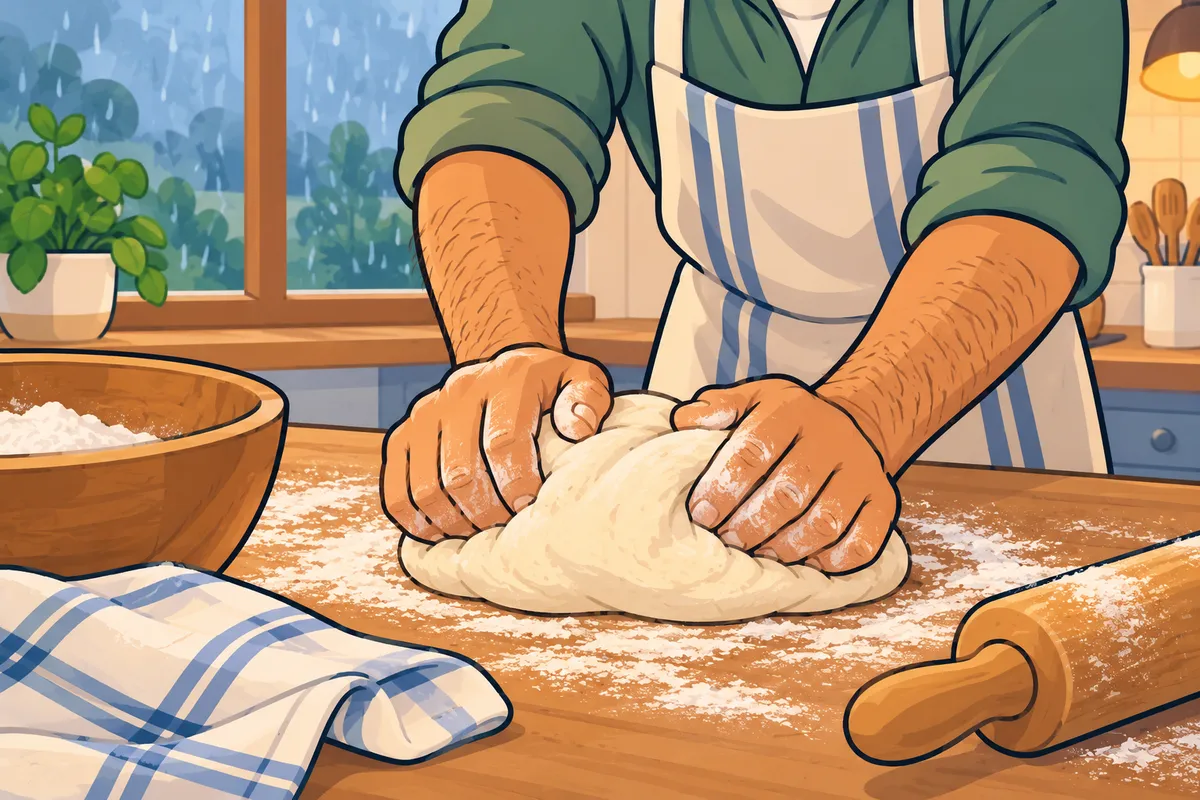
A weekly hour of making something gives the week a part that is only yours. The NHS suggests three kinds:
- Cooking something new.
- A DIY job such as fixing a bike or a garden gate.
- A hobby like painting.
It says you do not have to sit exams or earn qualifications for it to count.
How Much Time Does Self-Care Take?
Less than it seems, because the pieces overlap. A 30-minute walk with a friend in a park counts toward movement, nature and company at once; four of those a week reach the 120 minutes of nature from the White study and most of the CDC's 150 minutes.
| Area | Weekly amount | Where it comes from | One way to fit it |
|---|---|---|---|
| Movement | 150 minutes, plus 2 strength days | CDC | 30-minute walk, 5 days |
| Nature | 120 minutes or more | White and colleagues | The same walks, in a park |
| Sleep | 7 or more hours a night (18 to 60) | CDC | Same bedtime and wake time daily |
| People | No set number | NIMH, NHS | A fixed weekly call or dinner |
| Rest and hobbies | No set number | NIMH: schedule regular times | One evening or afternoon a week |
How Do You Make a Self-Care Routine?
Start with the one area that slips first when your week gets hard, choose one small action for it, and give that action a fixed slot. NIMH's own advice is to "schedule regular times" for healthy activities you enjoy, and to learn to say no to new tasks when you are taking on too much.
From Idea to Routine
- Notice which area slips first in a hard week
- Choose one small action for it
- Give it a day and a time, like an appointment
- Tie it to something you already do
- Look back each Sunday and adjust one thing
The fourth step is where most plans succeed or fail. "After I drop the kids at school, I walk the long way back" works better than "walk more", because the drop-off reminds you; anchoring a new step to an old one is the whole trick.
Mornings and evenings are the easiest slots to anchor to. A walk or daylight fits the first hour of the day, and a screen-free wind-down fits the last.
What Does a Weekly Self-Care Template Look Like?
Give each weekday one anchor you already have and one self-care action, and leave two slots open for the weekend. A week on one page makes gaps visible: if Wednesday and Friday are blank, that is where the plan will slip.
| Day | Anchor you already have | Self-care action |
|---|---|---|
| Monday | Lunch break | 30-minute walk |
| Tuesday | After dinner | Text or call a friend, 10 minutes |
| Wednesday | Lunch break | 30-minute walk |
| Thursday | Dinner | Eat with someone, phone away |
| Friday | Getting home from work | 15 minutes of something you enjoy, before the evening starts |
| Saturday | After breakfast | Two hours outside: a park, a trail or the water |
| Sunday | Evening | Plan the week, then lights out on time |
Copy it, replace the anchors with your own, and cross out any row you cannot keep for a month.
A Self Care Routine Checklist for the Day, Week and Month
Split the list by how often each thing happens, so the daily part stays short. Copy it, cross out what you already do, and keep two or three new lines.
| Daily (5 to 30 minutes each) | Weekly | Monthly |
|---|---|---|
| Same wake time, daylight early | A fixed call or meal with someone | A day out with a friend you rarely see |
| A walk, even 10 minutes at a time | Two strength sessions | A new recipe, project or class |
| Regular meals, water with each | Two hours in a park or by water | Look back: which area slipped? |
| Write down one thing you are grateful for | One evening for a hobby | Book any check-ups you have put off |
| Screens down before bed | Plan the coming week on Sunday | Clear one task you keep avoiding |
Gratitude is on NIMH's list, and a line a night is already a journal, in its smallest form.
What Can You Do on a Low-Energy Day?
Keep the slot and shrink the action. On a day when everything feels like too much, a five-minute version still protects the habit, and NIMH's advice to appreciate what you did get done at the end of the day is the better yardstick than the full plan.
Five-Minute Versions
5 items- Walk to the end of the street and back
- A glass of water and one piece of fruit
- Lights out at the usual time, phone in another room
- A short text to someone: how are you?
- Three slow breaths by an open window
Does Self-Care Help Mental Health?
It supports mental health, and it does not replace treatment. NIMH says self-care can help you manage stress, lower your risk of illness and increase your energy, and that it can "help support your treatment and recovery" if you have a mental illness.
The studies on this page fit that careful reading. The nature survey shows a link, not a cause, and the relationships review measured survival, not mood. Self-care keeps a good week good and a hard week less hard; it is not meant to carry an illness on its own.
When Is Self-Care Not Enough?
When low mood, poor sleep or worry last for weeks and start to stop you doing ordinary things. NIMH sets the line at severe or distressing symptoms lasting 2 weeks or more.
Self-Care When Your Week Is Different
The basics stay the same; the slot changes. Match the first change to the week you actually have.
Your Week, Your First Self-Care Step
- Long office days, no time leftMove lunch away from the desk: a 30-minute walk
- I work nights or rotating shiftsKeep one fixed sleep window on work days
- I moved and know nobody hereOne weekly class or volunteering slot
- I am exhausted and everything feels like too muchSleep first, and say no to one new task
- I forget to eat and drink until eveningWater with every meal, meals at set times
If water is the part that slips, a day of glasses tied to cues you already meet is the simplest version to start with.
Where Self-Care Plans Go Wrong
Most plans fail by starting with ten new things on a Monday. Pick two, and give them a month before adding a third.
Plans That Fade
- Ten new habits on one Monday
- No set day or time
- A missed walk counts as failure
- Things to buy instead of things to do
Plans That Last
- Two changes, a month each
- A fixed slot, like an appointment
- A missed walk is just a missed walk
- Sleep, movement, food and people first
The other common slip is guilt: a missed walk becomes proof the routine "failed". A check mark on paper for each day you did the one thing shows the week at a glance, and a gap in it is information, not a verdict.
General information for healthy adults, not medical advice. If a doctor has set your fluid amount, follow that.

More in Habits and Routines

Sources
- US National Institute of Mental Health. Caring for Your Mental Health, 2026.
- NHS. 5 steps to mental wellbeing, 2026.
- US Centers for Disease Control and Prevention. Adult Activity, An Overview, 2026.
- Scientific Reports (White, Alcock, Grellier and colleagues). Spending at least 120 minutes a week in nature is associated with good health and wellbeing, 2019.
- PLOS Medicine (Holt-Lunstad, Smith and Layton). Social Relationships and Mortality Risk: A Meta-analytic Review, 2010.
- US Centers for Disease Control and Prevention. About Sleep, 2026.
Sources checked by the Glubbo Editorial Team on Oct 19, 2026. General information, not medical advice. How we write and check our guides.

