Drinking Habits · When to Drink
How Much Water to Drink Before Donating Blood, and After You Give
The extra 16 oz on the day, the glasses for the day before, and what four donor studies found about fainting.
 By the Glubbo Editorial Team · Updated Oct 19, 2026 · 9 min read
On This Page
- How Much Water Should You Drink Before Donating Blood?
- Does Drinking Water Before Donating Really Prevent Fainting?
- Your Day Before and Morning Of
- How Much Water Should You Drink After Giving Blood?
- What Should You Eat and Avoid Before Donating Blood?
- Is Hydrating Different Before a Plasma Donation?
- Feeling Faint in the Chair or After You Leave
- Match the Plan to Your Donation
- Sources
Short answer
An extra 16 oz before you give, four glasses after.
- American Red Cross: an extra 16 oz (500 ml) on the day, four extra 8 oz glasses after.
- Lifeblood (Australia): 8 glasses the day before for women, 10 for men, then 750 ml.
- In donor studies, a drink of about 500 ml cut fainting-type reactions by 8 to 23 %.

On the day you give, the American Red Cross asks you to:
- drink an extra 16 oz (500 ml) of water or another nonalcoholic drink before the appointment;
- drink an extra four 8 oz glasses of liquids over the next 24 hours.
Blood services in other countries add a day-before plan, and four donor studies show what a pre-donation drink does for fainting.
You give about 470 ml of blood, and a service like England's hands you about 500 ml of water first. The two numbers are close on purpose, because the body has to make up that lost volume quickly.
How Much Water Should You Drink Before Donating Blood?
An extra 16 oz (500 ml) on donation day in the US, per the American Red Cross, on top of your normal drinking and a healthy meal. Young donors get a finer tip from the Red Cross: an extra glass about 10 to 30 minutes before the donation.
Blood services elsewhere ask for more advance notice, and the plans differ in what they count.
Three Blood Services, Three Fluid Plans
American Red Cross
United States
- Extra 16 oz on donation day
- Young donors: a glass 10 to 30 min before
- After: four extra 8 oz glasses in 24 h
Suits you if you donate in the US.
Lifeblood
Australia
- 8 glasses (women) or 10 (men) the day before
- 750 ml in the 3 hours before
- Any nonalcoholic fluid counts
Suits you if you want a day-before plan.
NHS Blood and Transplant
England
- 500 ml handed to you at the session
- Drunk over about 5 minutes
- Plenty of fluids in the 24 hours before
Suits you if you donate in England.
Lifeblood's own numbers set the glass size: three glasses make 750 ml, so one glass is about 250 ml (8 oz). That turns its day before into 2.5 liters for men, 2 liters for women. Water is best, it says, "but any non-alcoholic fluid will do the trick."
Milk, juice and tea all count, and juice and milk hold on to water a little longer than plain water because of their sugar, protein and salt.
Why Donors Are Asked to Drink So Much
Because your blood volume drops when you give. Lifeblood puts it plainly: "Your blood volume goes down a little when you donate," and being well hydrated helps you feel well afterwards. A full donation in England is 470 ml and usually takes 5 to 10 minutes, so you drink about as much at the session as you are about to give.
Does Drinking Water Before Donating Really Prevent Fainting?
It lowers the odds, by a modest amount. Four large donor studies found fewer fainting-type reactions, called vasovagal reactions, after donors drank about 300 to 500 ml shortly before giving, with drops between 8 and 23 %. The benefit was clearest in young and newer donors.
The High-School Study (2007)
Newman and colleagues, from the American Red Cross, gave some high-school donors a 473 ml (16 oz) drink of water after they were accepted to donate. Across 8,894 donations:
- 9.9 % of the water group had a reaction, against 12.5 % of those who did not drink.
- That is a 21 % drop, and the authors saw most of the benefit in white first-time donors.
- In a balanced subset of the 2004 donations the drop was 28 %.
The 330 or 500 ml Trial (2019)
Wiersum-Osselton and colleagues at the Dutch blood service Sanquin tested two drink sizes against a placebo of arm exercise in donors under 30 giving their first to fourth donation, with 6,921 of 8,300 returning a questionnaire. The results:
- In donors making their second to fourth donation, drinking water came with 23 % fewer reactions, and 330 ml worked as well as 500 ml.
- Brand-new donors saw no benefit in this trial.
A smaller drink worked as well as a bigger one, so you do not need to force down more than is comfortable.
Australia and Quebec, Every Donor (2020 and 2023)
Two programs asked every donor to do something simple:
- When Australia asked every whole-blood donor to drink water and tense their leg muscles during donation, reactions fell from 22.5 to 20.6 per 1,000 donations, an 8 % drop across 382,628 donations.
- In Quebec, Héma-Québec added water and a salty snack before blood, plasma and platelet donations, and the monthly reaction rate fell from 4.6 % to 4.3 %, about 15 % by the authors' analysis.
None of this makes a reaction impossible. Neither program reduced actual faints: Australia saw the fall in near-faints and Quebec in reactions of any severity.
Your Day Before and Morning Of
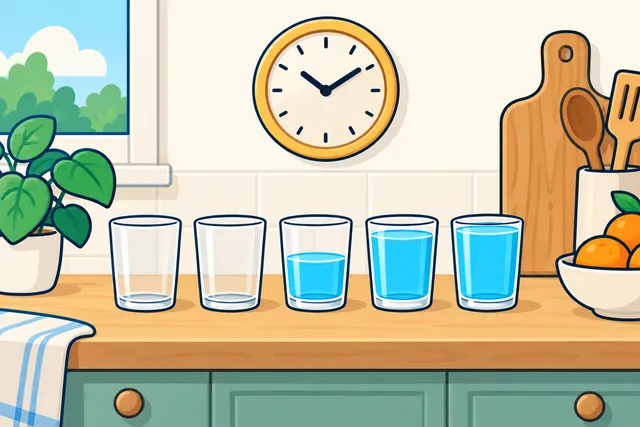
Spread the extra fluid out instead of downing it in the queue. A typical late-morning appointment leaves room for the day-before glasses, a 750 ml window and the session drink.
Olga's donation day, appointment at 11:00
- 7:30 AM
- 8:15 AM
- 9:15 AM
- 10:15 AM
- 10:55 AM
- 11:45 AM
- 1 PM
- 3 PM
- 5:30 PM
- 8 PM
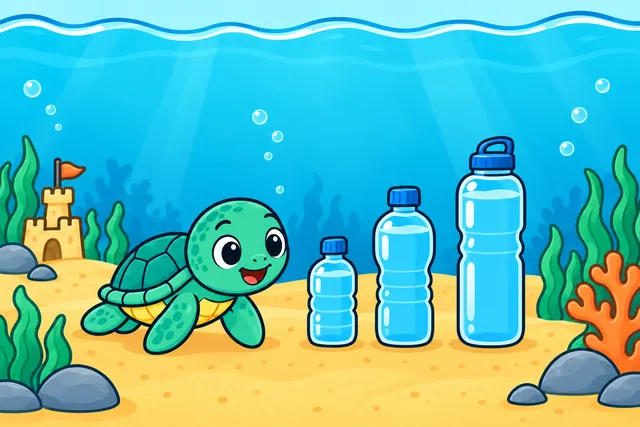
If you think in bottles rather than glasses, work out how many of yours the day before needs and line them up on the counter that night.
How Much Water Should You Drink After Giving Blood?
In the US, an extra four 8 oz glasses (about 1 liter) of liquids over the next 24 hours, and no alcohol, the Red Cross says. In England, the service asks you to relax in the refreshment area for at least 15 minutes and to have at least 2 drinks before you leave.

Spread those four glasses over the afternoon and evening, because four 8 oz glasses sipped at your desk or with dinner are easier to finish than a liter gulped in the parking lot. The Red Cross also asks you to:
- skip heavy lifting and vigorous exercise for the rest of the day;
- keep the bandage on for several hours.
If you feel dizzy or lightheaded, sit or lie down until it passes and avoid any activity where a faint could cause an injury for at least 24 hours.
After a faint-feeling donation, NHS Blood and Transplant asks you to
5 items- drink plenty of fluids such as water or juice, and have a salty snack
- eat your normal, regular meals
- avoid hot rooms and hot showers or baths
- avoid vigorous exercise or rushing about
- avoid standing for long periods
What Should You Eat and Avoid Before Donating Blood?
Eat a healthy meal with iron-rich foods and add something salty, and skip alcohol. The two services give these lists:
- The Red Cross lists red meat, fish, poultry, beans, spinach, iron-fortified cereals and raisins, and asks you to avoid fatty foods such as hamburgers, fries or ice cream on the day.
- The English service asks for regular meals and salty snacks, plenty of fluids in the 24 hours before, no alcohol because it can dehydrate you and delay recovery, and plenty of sleep.
Before You Give
- Regular meals, not an empty stomach
- Iron-rich foods and salty snacks
- Plenty of nonalcoholic fluids for 24 hours
- Plenty of sleep the night before
Leave Out Before You Give
- Alcohol, which can dehydrate you and delay recovery
- Fatty foods on the day: burgers, fries, ice cream
- Leaving part of the cup the staff hand you
- Arriving thirsty after a rushed morning
This is the opposite of a lab test. A fasting blood test allows only plain water, while a donation goes best on a full stomach and a full bottle.
Is Hydrating Different Before a Plasma Donation?
The drinking is the same: fluids the day before and on the morning of your appointment. What changes is the time. Lifeblood says a plasma donation takes about 45 minutes, so leave 1.5 hours for the whole appointment, and you can give plasma as often as every two weeks.
During plasma donation a machine separates your plasma and returns the rest of your blood to you. Héma-Québec's water and salty-snack routine covered plasma and platelet donors as well as whole blood, and Lifeblood's hydration page gives one set of fluid advice without splitting donors by type.
Giving every two weeks makes the day before a regular habit. Put a bottle in your bag on donation mornings and refill it on the way in.

Feeling Faint in the Chair or After You Leave
Tell the staff straight away and stay seated. The Red Cross teaches a leg-and-core squeeze it calls applied muscle tension, which it says reduces the chance of fainting or pre-faint symptoms by up to 83 %. The English service asks you to remind staff about its donation exercises too.
Applied muscle tension, the Red Cross way
- Cross your legs, squeeze your inner thighs or knees together, tighten your abdomen, point and flex your feet
- Hold for 5 seconds, relax for 5 seconds, repeat several times
- Do it before the needle goes in, if you feel lightheaded, before it comes out and before you stand up
- If that is hard, tighten your buttocks or the muscles above your knees instead
Match the Plan to Your Donation
A first donation, a regular one and a plasma appointment each change the plan a little. These pairings follow the blood services and studies above.
Your donation, your fluid plan
- First donation and you drank little yesterdayReschedule, as Lifeblood asks new donors
- Regular donor in the USAdd the extra 16 oz on the day and drink the session cup in full
- A plasma appointmentSame fluids, and leave 1.5 hours
- You felt faint last timeDrink the full 500 ml and use the muscle squeeze at each key point
Once the day is over, your usual daily rhythm of drinks takes over again; the everyday habits that keep a bottle moving are the same ones that make the day before a donation easy.
General information for healthy adults, not medical advice. If a doctor has set your fluid amount, follow that.
More in Drinking Habits


Sources
- American Red Cross. Tips For A Successful Blood Donation, 2026.
- American Red Cross. Information for Young Blood Donors, 2026.
- Australian Red Cross Lifeblood. Hydration: how much water should I drink?, 2026.
- Australian Red Cross Lifeblood. Plasma, 2026.
- NHS Blood and Transplant. What happens on the day, 2026.
- NHS Blood and Transplant. Feeling faint, 2026.
- Transfusion (Newman B et al.). The effect of a 473-mL (16-oz) water drink on vasovagal donor reaction rates in high-school students, 2007.
- Transfusion (Wiersum-Osselton J et al.). Can we prevent vasovagal reactions in young inexperienced whole blood donors? A placebo controlled study comparing effects of a 330 vs 500 mL water drink prior to donation, 2019.
- Transfusion (Thijsen A, Masser B, Davison TE). Reduced risk of vasovagal reactions in Australian whole blood donors after national implementation of applied muscle tension and water loading, 2020.
- Transfusion (Lewin A et al.). Pre-donation water and salty snacks to prevent vasovagal reactions among blood donors, 2023.
Sources checked by the Glubbo Editorial Team on Oct 19, 2026. General information, not medical advice. How we write and check our guides.

